Honeywell
RFQ Ready
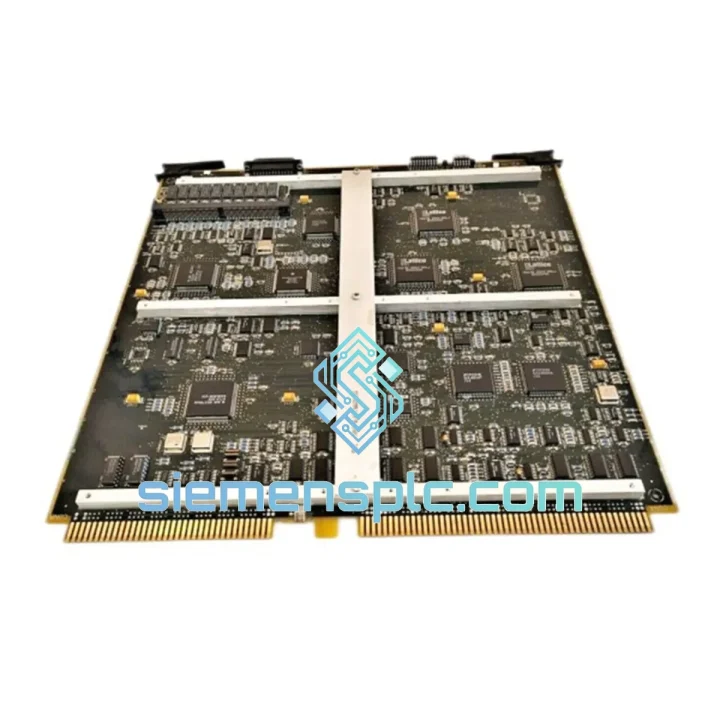
Honeywell K2LCN-4 51402615-400 LCN Interface Board
TDC 3000
Origin US
LCN Interface Board
Request verified availability, condition, replacement risk review, packing options and courier lead time for K2LCN-8.
Click Request Quote and the part number is inserted into the inquiry form automatically.
Core fields for model confirmation and RFQ routing. Detailed product narrative remains below.
The Honeywell K2LCN-8 is an 8-slot Local Control Network (LCN) node motherboard engineered as the physical and electrical backbone of the TDC 3000 Distributed Control System. Within a TDC 3000 cabinet, the K2LCN-8 serves as the passive backplane through which all resident modules — including the LCN Node Processor (K2LCN), Application Modules (AM), and High-Performance Process Managers (HPM) — exchange data across the 5 Mbps coaxial token-passing LCN bus. Its role is not peripheral: without a structurally sound and electrically verified backplane, deterministic real-time communication across the entire control loop collapses.
The LCN bus architecture underpinning the K2LCN-8 operates on a token-passing protocol that enforces strict cycle-time discipline. Each node on the LCN receives the token in sequence, transmits its data burst within an allocated time window, and passes the token forward. The K2LCN-8 backplane routes these bus signals across all eight module slots via a controlled-impedance PCB trace layout, maintaining signal integrity at the 5 Mbps data rate across the full operating temperature range. Any degradation in trace continuity, connector pin resistance, or bus termination impedance directly translates to increased cycle jitter, CRC errors, and ultimately node dropouts — failure modes that are notoriously difficult to diagnose in live plant environments.
In refining, petrochemical, and power generation facilities where TDC 3000 platforms remain the primary process control infrastructure, the K2LCN-8 is a non-negotiable spare. Its 8-slot capacity accommodates the full range of TDC 3000 functional modules, and its passive design means that board-level failures are rare but catastrophic when they occur. Procurement teams operating under turnaround maintenance schedules or emergency shutdown recovery scenarios require a verified, immediately deployable replacement — not a board of uncertain provenance that introduces additional diagnostic uncertainty into an already stressed plant environment.
Real-time Stock & RFQ: [email protected] | WhatsApp: +86 18359268345
| Parameter | Specification |
|---|---|
| Part Number | K2LCN-8 |
| Manufacturer | Honeywell Process Solutions |
| Platform Compatibility | TDC 3000 / TotalPlant Solution (TPS) |
| Module Function | 8-Slot LCN Node Backplane Motherboard |
| Bus Interface | Local Control Network (LCN) — 5 Mbps coaxial token-passing |
| Slot Count | 8 module slots (full-size TDC 3000 card format) |
| Bus Termination | Onboard controlled-impedance termination network |
| Power Distribution | Backplane power rails compatible with Honeywell K2PS series power supply modules |
| Operating Temperature | 0 °C to +60 °C |
| Storage Temperature | −40 °C to +85 °C |
| Relative Humidity | 5% to 95% RH, non-condensing |
| Board Weight | Approx. 2.86 kg (assembled) |
| Connector Standard | DIN 41612 / IEC 60603-2 backplane connectors |
| Compliance | CE (original manufacture); RoHS-compatible |
| Country of Origin | United States of America |
| Warranty | 12 months functional warranty from dispatch date |
The K2LCN-8’s PCB architecture reflects the design philosophy of a platform built for continuous, unattended operation in Class I Division 2 and Zone 2 hazardous area control rooms. Several hardware design decisions are worth examining in detail:
Controlled-Impedance Bus Routing: The LCN bus traces on the K2LCN-8 are routed as matched-impedance transmission lines, typically 75 Ω coaxial-equivalent, to suppress reflections at the 5 Mbps signaling rate. At this frequency, even a 10% impedance mismatch at a connector junction can produce standing-wave reflections sufficient to corrupt token-passing frames. The board’s multi-layer stackup isolates bus signal layers from power distribution planes using dedicated ground reference layers, maintaining consistent characteristic impedance across the full slot array.
EMC Shielding Architecture: The backplane incorporates a continuous ground plane beneath all signal routing layers, functioning as a Faraday reference plane that attenuates capacitively coupled interference from adjacent power conductors and external field sources. In refinery environments where variable-frequency drives, large motor starters, and high-current bus bars operate in proximity to DCS cabinets, this ground plane architecture is the primary defense against common-mode noise injection into the LCN bus signal path.
Connector Pin Redundancy and Contact Force Design: The DIN 41612 connectors used on the K2LCN-8 are specified with a minimum contact normal force of 1.0 N per pin, ensuring reliable electrical contact across the full thermal cycling range of the operating environment. The 96-pin connector format provides sufficient pin count to distribute power, ground, and signal functions across multiple parallel contacts, reducing the per-pin current density and the associated contact resistance rise over service life.
Power Rail Decoupling: Each slot position on the backplane incorporates local bulk decoupling capacitance on the +5 V and ±15 V power rails. This distributed decoupling architecture limits the propagation of switching transients generated by one module from coupling into adjacent module power rails — a critical design requirement when high-speed digital modules and analog I/O modules share the same backplane power distribution network.
Thermal Management: The passive backplane design generates negligible self-heating, but the board’s copper pour density on internal ground planes provides a low-thermal-resistance conduction path from module connector areas to the cabinet chassis, supporting the overall thermal management strategy of the TDC 3000 enclosure.
Every Honeywell K2LCN-8 dispatched from our Xiamen, China facility undergoes a structured four-stage verification protocol before it is cleared for shipment:
Stage 1 — Physical and Cosmetic Inspection: The board is examined under 10× magnification for PCB trace damage, connector pin deformation, component-level corrosion, solder joint cracking, and any evidence of remarking or counterfeit labeling. Units with any of these conditions are quarantined and not offered for sale.
Stage 2 — Electrical Continuity and Impedance Verification: Backplane bus traces are tested for continuity and spot-checked for impedance deviation using a calibrated TDR (Time Domain Reflectometer). Power rail distribution traces are verified for resistance within specification limits. Connector pin contact resistance is measured at representative positions across each slot.
Stage 3 — Functional Bench Test in TDC 3000 Environment: The K2LCN-8 is installed in a controlled TDC 3000 test chassis populated with known-good K2LCN node processor and module cards. LCN bus communication, slot power distribution, and module recognition are verified across all eight slot positions. Test results are logged with date, technician ID, and pass/fail criteria.
Stage 4 — Pre-Shipment Documentation and Packaging: Cleared units are anti-static bagged, foam-cushioned, and packed in double-wall corrugated cartons meeting ISTA 2A transport test requirements. Each shipment includes a Certificate of Conformance (COC), functional test report, commercial invoice, packing list, and Country of Origin declaration.
From Xiamen, we ship globally via DHL Express, FedEx International Priority, and UPS Worldwide Expedited. In-stock units are dispatched within 3–5 business days of order confirmation. For plant turnaround or emergency shutdown scenarios, next-flight-out arrangements are available on request. We provide full HS Code 8537.10 export documentation and assist with end-user declaration requirements for regulated destination markets including the EU, USA, and Middle East.
Email: [email protected]
WhatsApp: +86 18359268345
Web: siemensplc.com
Location: Xiamen, China
© 2026 siemensplc.com. All rights reserved.
We check the full part number, brand, series and visible nameplate information before quotation.
Sales confirms stock path, condition option, quantity and realistic lead time for export dispatch.
DHL, FedEx, UPS or buyer courier arrangements can be reviewed with packing requirements.
Similar brand or category products for fast comparison and multi-item RFQ lists.