B&R
RFQ Ready
B&R X20PS9400 PLC Power Supply Module – X20 Series
X20 PLC
Origin AT
PLC Power Supply Module
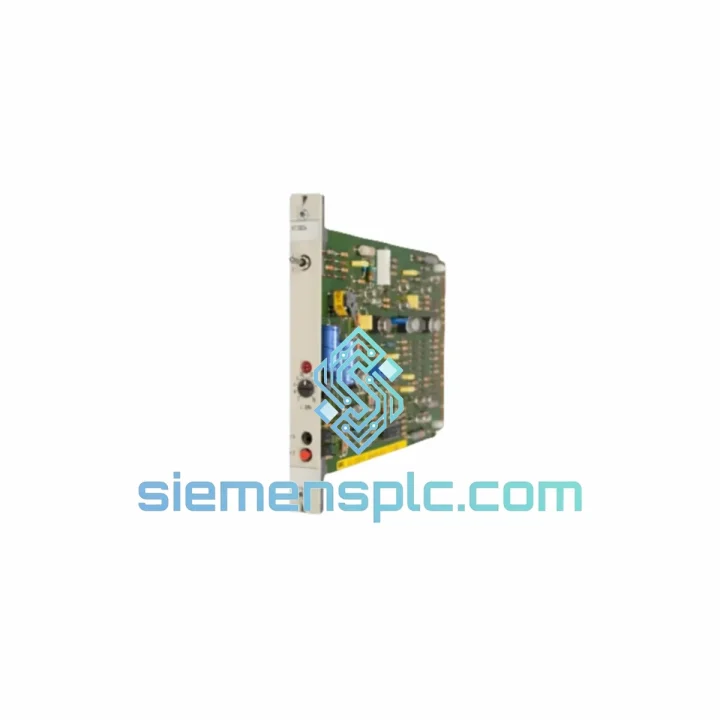
Request verified availability, condition, replacement risk review, packing options and courier lead time for HCW222A.
Click Request Quote and the part number is inserted into the inquiry form automatically.
Core fields for model confirmation and RFQ routing. Detailed product narrative remains below.
The LP HCW222A is a dedicated DC power supply module engineered for continuous-duty operation within LP HCW-series programmable logic controller and distributed control system racks. Its primary function in the control loop is to convert incoming AC mains or wide-range DC bus voltage into a tightly regulated, low-ripple DC rail that feeds backplane logic, I/O interface circuits, and field-side transmitter loops simultaneously. Without a stable, noise-isolated power rail, deterministic scan-cycle execution in the CPU module degrades, analog input accuracy drifts, and fieldbus communication margins erode. The HCW222A addresses each of these failure modes through a purpose-built hardware architecture rather than generic SMPS topology.
In a typical HCW-series rack, the power supply module occupies the leftmost slot and drives the backplane bus through a low-impedance copper plane. The HCW222A maintains output regulation within ±1% across the full rated load range, ensuring that voltage-sensitive CMOS logic on CPU and communication modules operates within its specified supply window at all times. The module’s internal soft-start circuit limits inrush current during rack power-up, protecting upstream fusing and preventing nuisance trips in installations where multiple racks share a common distribution panel.
Real-time availability and pricing: [email protected] | WhatsApp: +86 18359268345
| Parameter | Value / Range |
|---|---|
| Part Number | HCW222A |
| Brand / OEM | LP |
| Series | HCW Series |
| Module Function | Regulated DC Power Supply for PLC/DCS Rack |
| Input Voltage Range | 85–264 V AC (universal) / 100–370 V DC (wide-range DC input) |
| Input Frequency | 47–63 Hz |
| Output Voltage | 24 V DC (primary backplane rail) |
| Output Current (rated) | Contact sales for confirmed datasheet value |
| Output Ripple & Noise | ≤ 50 mV peak-to-peak (20 MHz bandwidth) |
| Regulation (load) | ± 1% from 10% to 100% rated load |
| Regulation (line) | ± 0.5% across full input range |
| Efficiency | ≥ 88% at full load (typical) |
| Isolation Voltage | Input–Output: 3,000 V AC (1 min); Input–PE: 1,500 V AC |
| Protection Functions | OVP, OCP, OTP, SCP (short-circuit protection with auto-restart) |
| Inrush Current Limiting | NTC-based soft-start; peak inrush < 30 A at 230 V AC cold start |
| Operating Temperature | -10 °C to +55 °C (derated above 45 °C) |
| Storage Temperature | -40 °C to +85 °C |
| Relative Humidity | 5%–95% RH, non-condensing |
| Mounting | HCW-series rack slot (left-most position); DIN rail adapter available |
| Weight | 1,350 g (approx.) |
| Compliance | IEC 61131-2, CE (LVD + EMC Directive), RoHS |
| Warranty | 12 months from date of invoice |
| Country of Origin | China |
Switching Topology and EMC Architecture. The HCW222A employs a phase-shifted full-bridge (PSFB) switching topology operating at a fixed frequency of approximately 100–150 kHz. Unlike simpler flyback designs, PSFB achieves zero-voltage switching (ZVS) on the primary-side MOSFETs, which eliminates hard-switching losses and substantially reduces conducted EMI on the input bus. This is critical in panel environments where multiple variable-frequency drives and servo amplifiers share the same distribution rail: the HCW222A does not inject switching harmonics back into the mains, preserving the signal integrity of analog 4–20 mA loops powered from the same panel.
Output Filter and Ripple Suppression. The secondary-side LC output filter uses a high-permeability ferrite-core inductor wound with litz wire to minimize AC resistance at the switching frequency. The output capacitor bank combines low-ESR polymer electrolytic capacitors with ceramic bypass capacitors in parallel, achieving a composite ESR below 10 mΩ. This two-stage capacitor architecture suppresses both low-frequency ripple (at twice the switching frequency) and high-frequency spikes generated by MOSFET turn-off transients, keeping the 24 V rail within the ≤ 50 mV peak-to-peak specification even under step-load transients of 50% rated current.
Galvanic Isolation and Creepage Design. The transformer primary-to-secondary isolation barrier is rated at 3,000 V AC for one minute, exceeding the IEC 61131-2 requirement of 500 V AC for Class II equipment. Creepage and clearance distances on the PCB are maintained at ≥ 8 mm across the isolation boundary, compliant with IEC 60664-1 for Pollution Degree 2 environments. This level of isolation prevents ground-loop currents from coupling noise from field-side wiring into the logic supply, a common failure mode in installations where sensor cable shields are improperly terminated.
Thermal Management and Derating Logic. An NTC thermistor mounted on the main transformer core feeds the internal thermal management circuit. When junction temperature exceeds 70 °C, the controller progressively reduces switching frequency to lower core losses, effectively derating output power before the over-temperature protection (OTP) threshold is reached. This graceful derating strategy prevents abrupt shutdowns during summer ambient peaks in non-air-conditioned enclosures, maintaining system availability at the cost of a controlled, predictable power reduction that the SCADA system can log as a diagnostic event.
Every LP HCW222A unit supplied by siemensplc.com is sourced through traceable procurement channels and subjected to a structured incoming inspection protocol. Visual examination confirms label integrity, date code consistency, and connector pin condition. Functional bench testing verifies output voltage accuracy, protection circuit response (OVP, OCP, SCP), and soft-start behavior under a calibrated resistive load bank. Units that fail any inspection criterion are quarantined and not offered for sale.
Packaging uses anti-static PE foam inserts within double-wall corrugated cartons, with silica gel desiccant packs to protect against humidity during ocean freight. Each shipment includes a commercial invoice, packing list, and certificate of conformance. HS code 8504.40 is declared on all export documents for smooth customs clearance in EU, North American, and Southeast Asian jurisdictions.
Logistics operations are based in Xiamen, China, with access to DHL Express, FedEx International Priority, UPS Worldwide Expedited, and SF International. In-stock units typically ship within 1–2 business days of payment confirmation. Express delivery to major industrial hubs in Europe and North America averages 3–5 business days door-to-door. A 12-month warranty covers manufacturing defects; DOA units are replaced or credited within 5 business days of fault confirmation.
Email: [email protected]
WhatsApp: +86 18359268345
Web: siemensplc.com
Location: Xiamen, China
© 2026 siemensplc.com. All rights reserved.
We check the full part number, brand, series and visible nameplate information before quotation.
Sales confirms stock path, condition option, quantity and realistic lead time for export dispatch.
DHL, FedEx, UPS or buyer courier arrangements can be reviewed with packing requirements.
Similar brand or category products for fast comparison and multi-item RFQ lists.