Omron
RFQ Ready
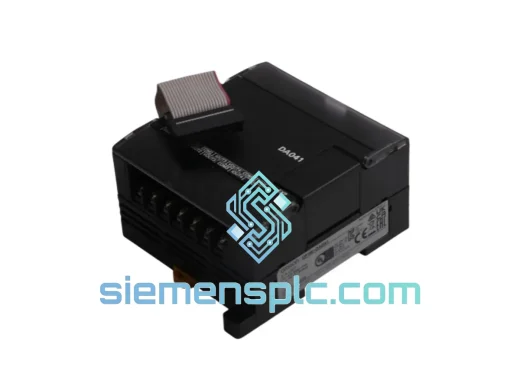
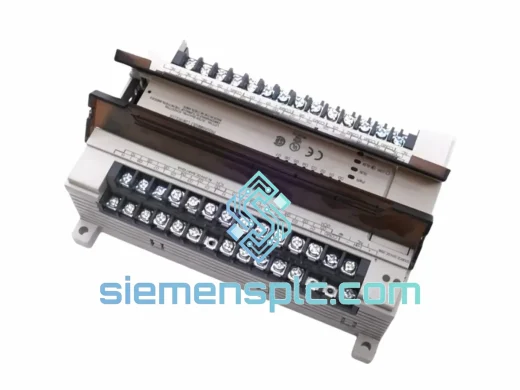
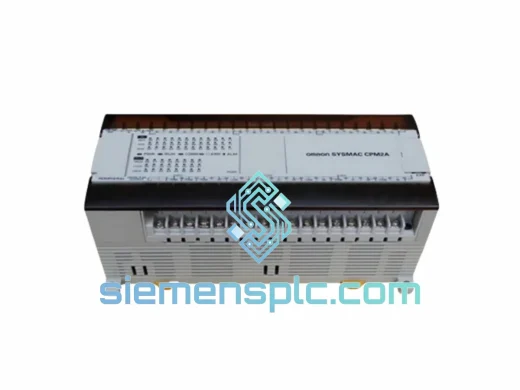
OMRON CPM2AE-60CDR-A Programmable Logic Controller
CPM2A Series
Origin JP
Programmable Logic Controller
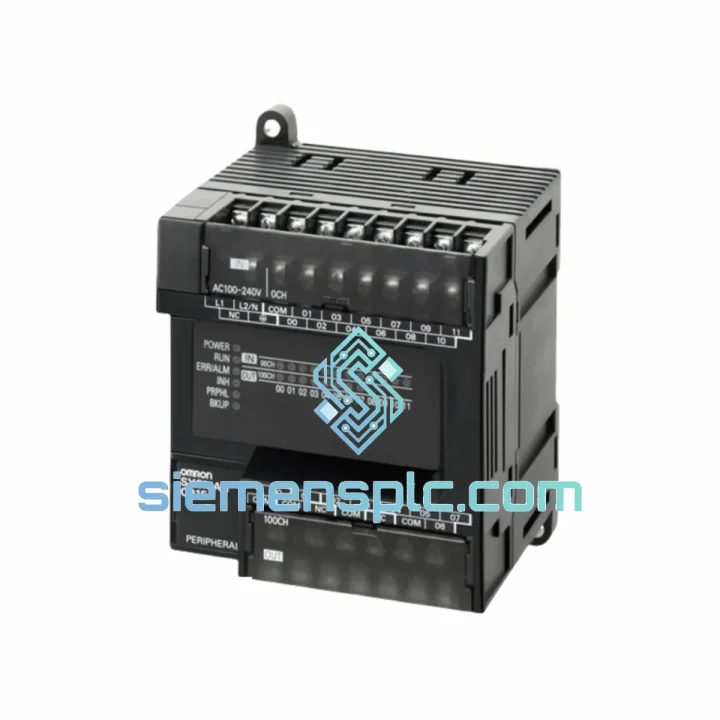
Request verified availability, condition, replacement risk review, packing options and courier lead time for CP1E-N40SDR-A.
Click Request Quote and the part number is inserted into the inquiry form automatically.
Core fields for model confirmation and RFQ routing. Detailed product narrative remains below.
The CP1E-N40SDR-A occupies a well-defined position in OMRON’s compact PLC hierarchy: it is the highest built-in I/O variant of the CP1E N-type CPU line, delivering 24 discrete inputs and 16 relay outputs within a single housing powered directly from 100–240 VAC. In control-loop terms, this unit functions as the sole execution engine for ladder-logic programs up to 8,000 steps, arbitrating all I/O scan, communication, and self-diagnostic tasks through a single-chip architecture with a basic instruction cycle of 0.1 μs. For machine builders targeting compact panel footprints without sacrificing I/O density, the N40 variant eliminates the first expansion unit in the majority of SME automation projects.
Real-time Stock & RFQ: [email protected] | WhatsApp: +86 18359268345
| Parameter | Value |
|---|---|
| Model Number | CP1E-N40SDR-A |
| Series | CP1E (Economy / Compact) |
| CPU Type | N-type Standard CPU |
| Built-in Inputs | 24 points (24 VDC sink/source) |
| Built-in Outputs | 16 points – Relay (SPST-NO, 250 VAC / 2 A per point) |
| Power Supply | AC 100–240 V, 50/60 Hz |
| Power Consumption | 60 VA max |
| Program Capacity | 8,000 steps (ladder) |
| Data Memory | 10,000 words (DM area) |
| Basic Instruction Speed | 0.1 μs / instruction |
| I/O Refresh Method | Cyclic refresh (synchronous with scan) |
| Communication Ports | USB (peripheral, mini-B) × 1; RS-232C × 1 |
| Expansion Capability | Up to 3 × CP1E Expansion I/O Units (max 100 total I/O) |
| Real-Time Clock | Built-in (battery-backed) |
| Programming Environment | CX-Programmer v9.x / Sysmac Studio |
| Mounting Method | 35 mm DIN rail or direct surface mount |
| Operating Temperature | 0 to +55 °C |
| Storage Temperature | −20 to +75 °C |
| Relative Humidity | 10–90% RH (non-condensing) |
| Vibration Resistance | 10–57 Hz: 0.075 mm amplitude; 57–150 Hz: 9.8 m/s² |
| Shock Resistance | 147 m/s² (3 times each in X, Y, Z axes) |
| Enclosure Rating | IP20 |
| Certifications | CE (LVD + EMC), UL, cUL, RoHS |
| Dimensions (W × H × D) | Approx. 250 × 90 × 85 mm |
| Weight | Approx. 700 g (unit only) |
| Warranty | 12 months from date of shipment |
The CP1E-N40SDR-A is built around OMRON’s single-chip CPU architecture, where program execution, I/O bus arbitration, and peripheral communication are handled by a single processor without a separate co-processor for I/O management. This design choice reduces inter-chip latency and makes scan-time behavior highly predictable — a critical property for relay-sequencing applications where output state changes must align precisely with input transitions.
Relay Output Stage: Each of the 16 output points uses an electromechanical relay with a rated switching capacity of 2 A at 250 VAC or 2 A at 24 VDC. The relay contacts are SPST-NO (normally open), and the mechanical service life is rated at 20 million operations minimum, with an electrical service life of 100,000 operations at rated load. This output topology allows the CPU to switch both AC and DC loads on the same output rail without external interface relays, which directly reduces panel wiring complexity and component count.
Input Circuit Architecture: The 24 input points use optocoupler isolation between the field wiring and the internal logic bus. The input impedance is approximately 3.9 kΩ at 24 VDC, with an ON voltage threshold of 14.4 V minimum and an OFF voltage threshold of 5.0 V maximum. The input filter time constant is software-configurable from 0 ms to 32 ms per input group, allowing the engineer to trade off noise immunity against response speed depending on the sensor type connected.
EMC Design: The CP1E-N40SDR-A carries CE marking under the EMC Directive (EN 61000-6-2 for industrial immunity, EN 61000-6-4 for emissions). The PCB layout employs ground plane segmentation to isolate the relay switching transients from the CPU logic domain. The AC power input section includes an internal line filter to suppress conducted emissions and protect the CPU from line-borne transients up to the levels specified in IEC 61000-4-4 (EFT/Burst, 2 kV) and IEC 61000-4-5 (Surge, 1 kV line-to-line).
Battery-Backed RTC and Memory: Program memory is stored in flash (non-volatile), so no battery is required to retain the ladder program across power cycles. The battery backs only the real-time clock and the DM area (data memory) that the user designates as battery-backed. This architecture means a depleted battery does not cause program loss — only RTC drift and loss of retained data values.
Every CP1E-N40SDR-A unit supplied through siemensplc.com is sourced as genuine OMRON product. Prior to dispatch, each unit undergoes a structured pre-shipment verification protocol:
Shipments originate from Xiamen, China, via DHL Express, FedEx International Priority, or UPS Worldwide Expedited. Transit times to major industrial hubs: Europe 3–5 business days, North America 4–6 business days, Southeast Asia 2–3 business days. All shipments include door-to-door tracking and are covered by the 12-month warranty from the date of shipment confirmation.
Email: [email protected]
WhatsApp: +86 18359268345
Web: siemensplc.com
Location: Xiamen, China
© 2026 siemensplc.com. All rights reserved.
We check the full part number, brand, series and visible nameplate information before quotation.
Sales confirms stock path, condition option, quantity and realistic lead time for export dispatch.
DHL, FedEx, UPS or buyer courier arrangements can be reviewed with packing requirements.
Similar brand or category products for fast comparison and multi-item RFQ lists.