Omron
RFQ Ready
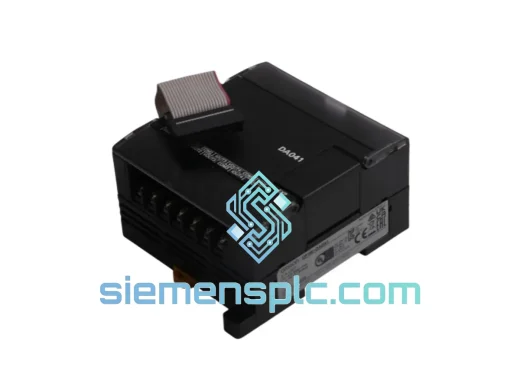
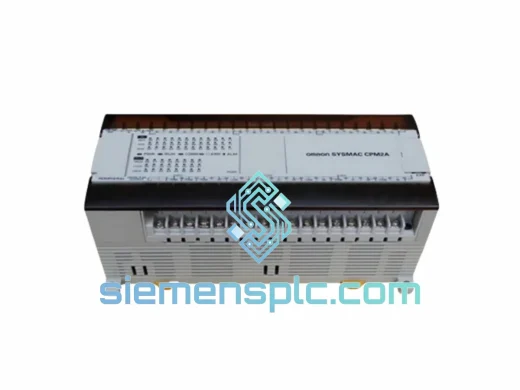
OMRON CPM2AE-60CDR-A Programmable Logic Controller
CPM2A Series
Origin JP
Programmable Logic Controller
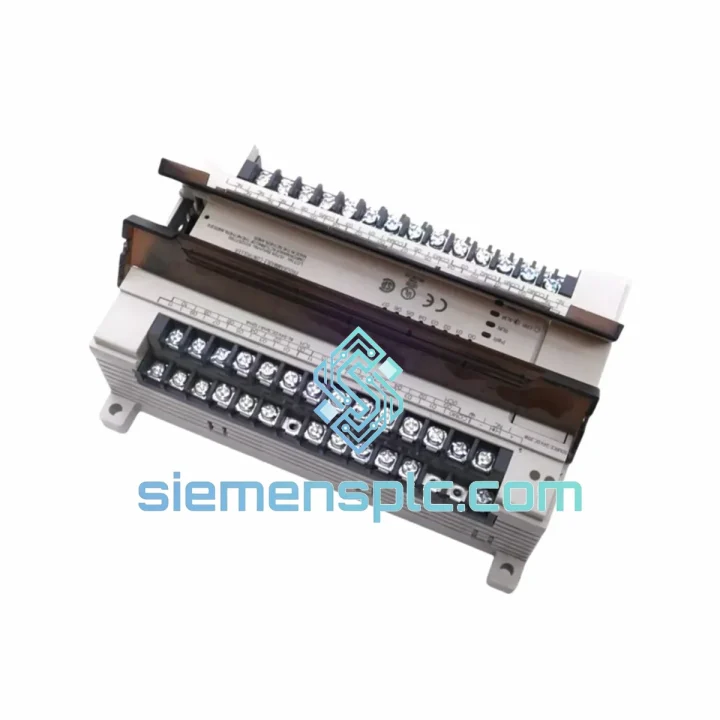
Request verified availability, condition, replacement risk review, packing options and courier lead time for TPM1A-40CDT-D-V1.
Click Request Quote and the part number is inserted into the inquiry form automatically.
Core fields for model confirmation and RFQ routing. Detailed product narrative remains below.
Every minute your line is down, you’re bleeding money. A failed CPM1A CPU doesn’t wait for procurement cycles — and neither do we. The OMRON TPM1A-40CDT-D-V1 is stocked, tested, and ready to leave our Xiamen warehouse today via DHL or FedEx. Whether you’re dealing with a blown transistor output stage, a corrupted program memory, or a power fault that took out the CPU, this is the exact unit you need to get back online — fast.
We’ve handled hundreds of emergency CPM1A replacements across automotive stamping lines, packaging OEMs, and food processing plants. We know what’s at stake. That’s why we don’t just ship a box — we ship confidence.
URGENT REQUIREMENT? Contact: [email protected] | WhatsApp: +86 18359268345
| Part Number | TPM1A-40CDT-D-V1 ✔ Ready to Ship |
| Brand | OMRON |
| Series | CPM1A |
| I/O Configuration | 40 Points — 24 Inputs / 16 Outputs |
| Output Type | Transistor, Sinking (NPN), DC |
| Power Supply | DC 24V |
| Program Capacity | 2,048 Instructions |
| Data Memory | 2,048 Words |
| High-Speed Counter | 4 channels, up to 20 kHz |
| Pulse Output | 2 channels, up to 10 kHz |
| Communication Port | Peripheral port (RS-232C compatible) |
| Operating Temperature | 0°C to 55°C |
| Storage Temperature | -20°C to 75°C |
| Humidity | 10% to 90% RH (non-condensing) |
| Vibration Resistance | 10–57 Hz, 0.075 mm amplitude; 57–150 Hz, 9.8 m/s² |
| Weight | Approx. 1,350 g |
| Certifications | CE, UL, cUL, RoHS |
| Country of Origin | Japan |
| Stock Status | ✔ In Stock — Ships within 24 hours |
After ten years of field work, here’s what actually goes wrong with the CPM1A-40CDT-D and what to watch for when you swap in a TPM1A-40CDT-D-V1:
1. ERR/ALM LED Solid Red — CPU Fatal Error
This is the most common reason for an emergency replacement call. A solid red ERR/ALM with no user program running usually means the flash memory has failed or the watchdog timer tripped on a hardware fault. Before condemning the CPU, check: (a) power supply ripple — the CPM1A is sensitive to anything above 5% ripple on the 24VDC rail; (b) ground loop issues from adjacent VFDs. If the power supply checks out, the CPU is gone. Swap it.
2. Program Transfer After Replacement
The TPM1A-40CDT-D-V1 ships with blank memory. You must upload the ladder program from a backup or from a working unit via CX-Programmer. Use the CS1W-CN226 cable or a USB-to-RS232 adapter (FTDI chipset recommended — Prolific chips cause handshake failures on some laptops). Connect at 9600 baud, 7-bit, even parity, 2 stop bits. If you don’t have a backup, check the SCADA historian or the machine builder’s documentation package.
3. DIP Switch Configuration — Don’t Skip This
The CPM1A has a 4-position DIP switch on the front panel. SW1 controls the startup mode (RUN vs. PROGRAM on power-up). If the original unit was set to auto-start in RUN mode and your replacement defaults to PROGRAM mode, the machine will appear dead after power-up. Match the DIP switch settings to the original unit before energizing. Photograph the original before you pull it.
4. Expansion I/O Bus Addressing
The CPM1A uses automatic bus addressing — expansion units are assigned word addresses sequentially from the CPU outward. There are no rotary switches or jumpers to set. However, if you’re adding a new expansion unit during the same maintenance window, be aware that inserting a unit in the middle of the chain will shift all downstream addresses. This will cause I/O mapping errors in the existing program. Always add expansion units at the end of the chain.
5. Firmware Version Mismatch
The V1 suffix on the TPM1A-40CDT-D-V1 denotes a hardware revision. This unit is fully backward-compatible with programs written for earlier CPM1A-40CDT-D units. No firmware update is required. However, if you are using a CPM1A-MAD01 analog I/O expansion unit manufactured before 2003, verify the analog scaling parameters in the program — early MAD01 units had a slightly different calibration offset that some programs compensate for in software.
6. Output Stage Failure Pattern
Transistor output failures on the CPM1A are almost always caused by inductive load kickback — solenoid valves and relay coils without flyback diodes. If you’re replacing a unit that failed in this way, install 1N4007 flyback diodes across every inductive load on the output circuit before powering up the replacement. Otherwise you’ll be ordering another unit in six months.
The CPM1A platform was designed for the factory floor, not the server room. The TPM1A-40CDT-D-V1 carries a vibration resistance rating of 10–150 Hz continuous, making it suitable for mounting directly on machine frames subject to motor and conveyor vibration. The conformal-coated PCB handles humidity up to 90% RH without condensation issues — relevant for food processing and outdoor enclosure applications in humid climates.
Operating temperature ceiling of 55°C means it survives inside poorly ventilated control panels during summer shutdowns. We’ve seen these units run continuously for 8–12 years in stamping press control panels with nothing more than periodic contact cleaning. The failure modes are well-understood and almost always traceable to external causes — power quality, inductive kickback, or physical connector damage — rather than internal component degradation.
For installations in high-vibration environments (presses, compressors, vibrating conveyors), use M4 DIN rail mounting with end stops and verify that the expansion bus connector is fully seated and latched. Vibration-induced connector fretting is the number-one cause of intermittent I/O faults on CPM1A systems in heavy industry.
Our warehouse is located in Xiamen, Fujian Province — one of China’s primary export hubs with direct access to DHL, FedEx, and UPS international gateways. Orders confirmed before 14:00 CST ship same day. Here’s how the process works:
Step 1 — Order Confirmation: Contact us via email or WhatsApp with your part number, quantity, and destination. We confirm stock and issue a proforma invoice within 2 hours during business hours.
Step 2 — Payment & Packing: Upon payment confirmation, the unit is pulled from stock, inspected, anti-static bagged, and packed in double-wall carton with foam cushioning. Export documentation (commercial invoice, packing list, HS code 8537.10) is prepared simultaneously.
Step 3 — Carrier Handoff: DHL Express and FedEx International Priority are our primary carriers for urgent shipments. Typical transit times: Southeast Asia 1–2 days, Europe 3–4 days, North America 3–5 days, Middle East 2–3 days, Australia 3–4 days.
Step 4 — Tracking: Tracking number is sent via WhatsApp and email within 1 hour of carrier pickup. We monitor shipments proactively and flag any customs holds immediately.
For customers in regions with complex import requirements (India, Brazil, Russia), we have experience preparing the correct customs documentation to minimize clearance delays. Contact us before ordering if you have specific import compliance requirements.
Email: [email protected]
WhatsApp: +86 18359268345
Web: siemensplc.com
© 2026 siemensplc.com. All rights reserved.
We check the full part number, brand, series and visible nameplate information before quotation.
Sales confirms stock path, condition option, quantity and realistic lead time for export dispatch.
DHL, FedEx, UPS or buyer courier arrangements can be reviewed with packing requirements.
Similar brand or category products for fast comparison and multi-item RFQ lists.