Pepperl+Fuchs
RFQ Ready
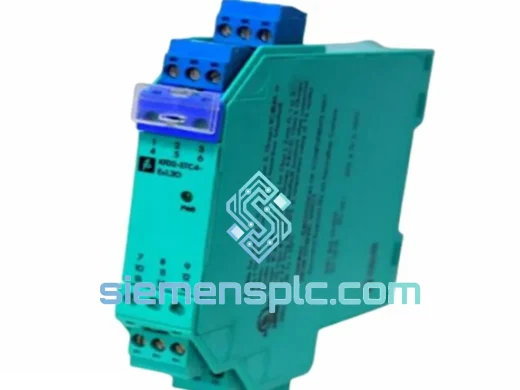
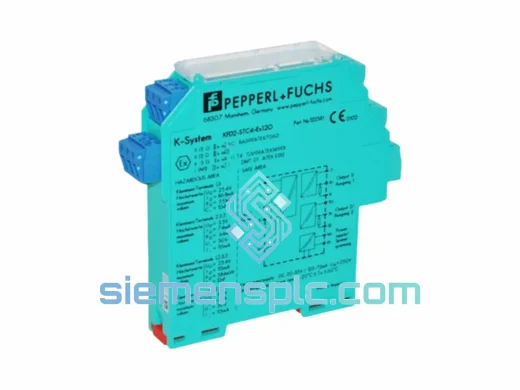
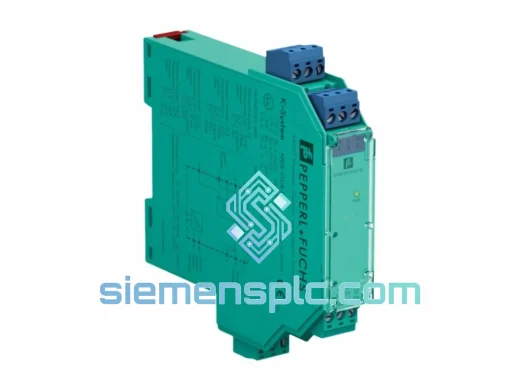
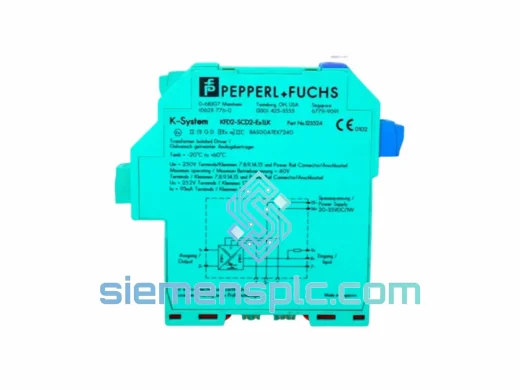
Pepperl+Fuchs SCD2-STC-EX1 Transmitter Power Supply
Origin DE
Transmitter Power Supply
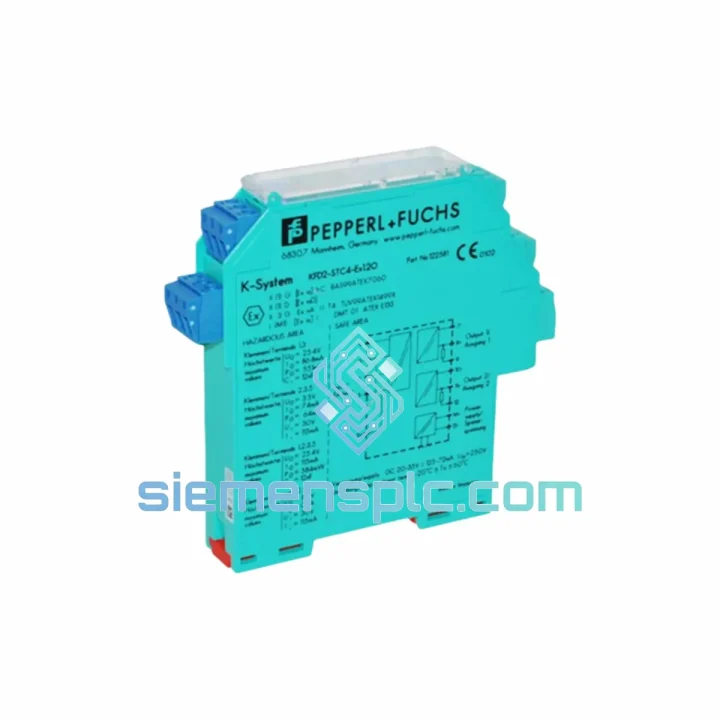
Request verified availability, condition, replacement risk review, packing options and courier lead time for KFD2-STC4-1.
Click Request Quote and the part number is inserted into the inquiry form automatically.
Core fields for model confirmation and RFQ routing. Detailed product narrative remains below.
A dead Pepperl+Fuchs KFD2-STC4-1 does not announce itself politely. One moment your DCS AI card is reading a clean 4–20 mA signal from the field transmitter; the next, the loop is at 0 mA, the operator alarm is screaming, and your shift supervisor is standing behind you asking for an ETA. We have been in that cabinet. We know what the next four hours look like if you cannot source the part fast.
The KFD2-STC4-1 is a single-channel, galvanically isolated transmitter power supply from Pepperl+Fuchs’ KFD2 series — a workhorse module found in marshalling cabinets across refineries, chemical plants, offshore platforms, and power generation facilities worldwide. When it fails, there is no workaround. The field transmitter loses its loop supply, the 4–20 mA signal collapses, and the control system loses its process variable. Production stops or runs blind.
We stock the KFD2-STC4-1 in our Xiamen warehouse. Orders confirmed before 14:00 CST ship same day via DHL Express or FedEx International Priority. From our shelf to your site in 24–72 hours depending on destination. No factory lead times. No distributor back-order queues. No excuses.
URGENT REQUIREMENT? Contact: [email protected] | WhatsApp: +86 18359268345
| Parameter | Specification |
|---|---|
| Part Number | KFD2-STC4-1 |
| Manufacturer | Pepperl+Fuchs GmbH |
| Series | KFD2 — Isolated Transmitter Power Supply |
| Channels | 1 (single-channel) |
| Function | Powers 2-wire field transmitters; galvanically isolates and repeats 4–20 mA signal to control side |
| Field Input | 4–20 mA, HART-transparent, Ex ia IIC / IIB hazardous area |
| Control Output | 4–20 mA, galvanically isolated, active source |
| Supply Voltage | 20–35 V DC via KFD2 power rail bus or external supply |
| Power Consumption | ≤ 1.0 W (typical operating) |
| Galvanic Isolation | 500 V AC between field / supply / output circuits |
| HART Transparency | Full pass-through; internal resistance 250 Ω (control side) |
| Signal Accuracy | ≤ 0.1% of full scale |
| Ambient Temperature | −20 °C to +60 °C |
| Mounting | 35 mm DIN rail, 12.5 mm module width |
| Housing / IP Rating | Polycarbonate, IP20 |
| Hazardous Area Approvals | ATEX, IECEx, UL, cUL, FM — Ex ia IIC Ga |
| Country of Origin | Germany |
| Stock Status | ✔ Ready to Ship — Xiamen Warehouse |
Ten years of field work across petrochemical and power generation sites teaches you that most KFD2-STC4-1 failures fall into three categories. Here is how to diagnose each one before you pull the module — and what to watch for when you put the replacement in.
Fault 1: Output frozen at 0 mA or 3.6 mA — DCS reads low-low alarm
Start at the power rail, not the module. Measure bus voltage at the KFD2-STC4-1 supply terminals (pins 14/15 on the KFD2 bus connector). It must be between 20 and 35 V DC. A sagging bus — typically caused by an overloaded or failing KFD2-EB2 power supply — will kill output on every module in the segment simultaneously. If bus voltage is within spec, measure field-side loop current directly at the transmitter terminals with a clamp meter or loop calibrator. If the transmitter is sourcing current but the KFD2-STC4-1 output is dead, the module’s output stage has failed. Replace it.
Fault 2: HART communication drops or is intermittent after module swap
The KFD2-STC4-1 requires a minimum 230 Ω load resistance on the control side for the HART FSK signal (1200/2200 Hz) to be readable by the HART modem or DCS HART card. If your AI card input impedance is below this threshold, insert an external 250 Ω HART resistor in series on the control-side loop. Also verify that cable capacitance on long field runs (above 1,500 m) is not attenuating the signal — HART is sensitive to capacitive loading above 0.3 µF.
Fault 3: Nuisance alarms or signal offset immediately after replacement
The KFD2-STC4-1 has no DIP switches, no firmware, and no self-addressing procedure. It is a passive signal conditioner on the signal path. If you are seeing offset or alarms after a swap, the cause is almost always one of two things: wiring polarity reversal on the field-side plug-in terminals (pins 1+ / 2−), or the KFD2 bus connector not fully seated — the gold bus contacts must click into the rail segment. Check both before suspecting the replacement module.
Hot-swap replacement procedure (live loop):
Configuration note: No configuration tool, no HART address assignment, no firmware update required. The KFD2-STC4-1 is operational the moment the bus connector seats. Total swap time for an experienced technician: under 3 minutes.
The KFD2 series was not engineered for a temperature-controlled instrument room. It was built for the marshalling cabinets of offshore platforms, desert refineries, and tropical chemical plants where ambient conditions are punishing and maintenance windows are rare.
Mechanical robustness: the module withstands continuous sinusoidal vibration up to 10 g across the 10–150 Hz frequency band — directly relevant for compressor skids, pump stations, and turbine control panels where cabinet panels transmit mechanical energy to DIN rail assemblies continuously. The plug-in terminal blocks are rated 300 V / 10 A with a vibration-resistant locking mechanism that prevents accidental disconnection under shock loads.
Environmental protection: the polycarbonate housing and conformal-coated PCB resist condensation and airborne chemical contaminants including H₂S and SO₂ — endemic in upstream oil and gas and sulfur recovery unit environments. The 500 V AC galvanic isolation barrier protects the control system from field-side ground faults, a critical feature in aging plants where grounding infrastructure is inconsistent and ground loops are a chronic source of signal corruption.
Thermal range: −20 °C to +60 °C operating without derating covers Siberian winter startups, Middle Eastern summer cabinet temperatures, and everything in between. In our field experience, the terminal block plug is the first mechanical wear point after a decade of service — if you are seeing intermittent signal loss on an old installation, reseat or replace the terminal plug before condemning the module itself.
Our dispatch hub is in Xiamen, Fujian Province — one of China’s primary export gateways with direct DHL Express and FedEx International Priority access. Here is exactly what happens from the moment you confirm your order:
Day 0 — Order Confirmation: Payment confirmed before 14:00 CST triggers same-day pick, pack, and export documentation. Commercial invoice, packing list, and HS code declaration (HS 8536.90 — electrical apparatus for switching or protecting electrical circuits) are prepared and submitted to the carrier electronically.
Day 1 — Dispatch: Shipment handed to DHL Express or FedEx International Priority at the Xiamen gateway facility. AWB tracking number sent to your registered email within 2 hours of carrier pickup confirmation.
Day 2–4 — Transit: Typical door-to-door transit times from Xiamen: Southeast Asia 1–2 business days, Middle East 2–3 days, Europe 3–4 days, North America 3–5 days, South America and Africa 4–6 days. FedEx International Priority runs parallel lanes with comparable windows.
Customs clearance: All shipments are pre-declared with accurate HS codes and commercial values. For EU destinations, EUR.1 movement certificates or supplier declarations for preferential origin are available on request. For destinations requiring import licenses for industrial electronics, we advise upfront — no surprises at customs, no shipments held for documentation errors.
Production-down emergency freight: For genuine plant-down situations, next-flight-out courier can be arranged on request. Contact us directly via WhatsApp for real-time coordination: +86 18359268345. We have shipped to active offshore platforms and remote mining sites — if there is a flight, we can get it on it.
Need a quote in the next 30 minutes? We respond fast because we know your clock is running.
📧 Email: [email protected]
💬 WhatsApp: +86 18359268345
🌐 Web: siemensplc.com
© 2026 siemensplc.com. All rights reserved.
We check the full part number, brand, series and visible nameplate information before quotation.
Sales confirms stock path, condition option, quantity and realistic lead time for export dispatch.
DHL, FedEx, UPS or buyer courier arrangements can be reviewed with packing requirements.
Similar brand or category products for fast comparison and multi-item RFQ lists.