Schneider Electric
RFQ Ready
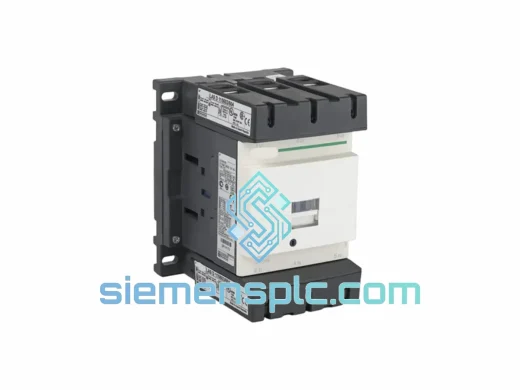
Schneider Electric LC1D150M7C Electromagnetic Contactor
220V AC Coil 3-Pole
Origin FR
Electromagnetic Contactor
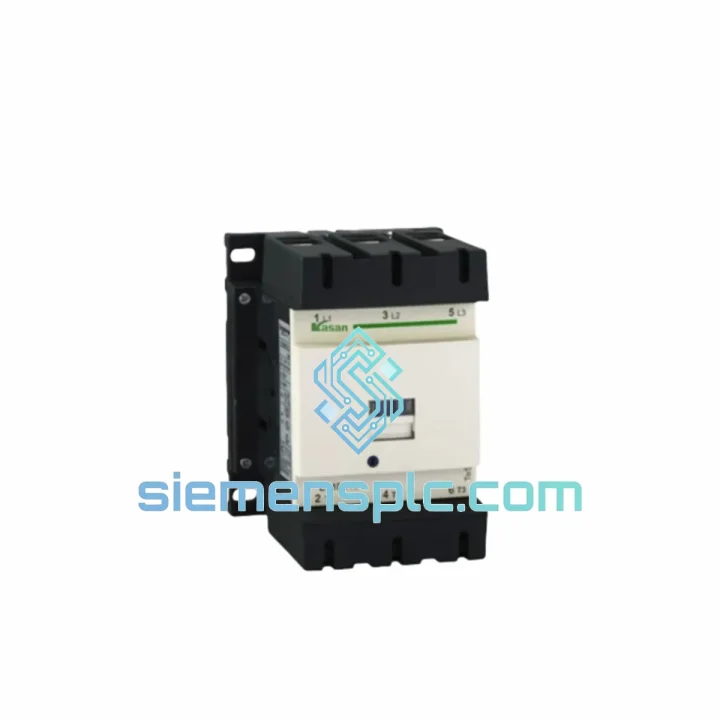
Request verified availability, condition, replacement risk review, packing options and courier lead time for LC1D115M7C.
Click Request Quote and the part number is inserted into the inquiry form automatically.
Core fields for model confirmation and RFQ routing. Detailed product narrative remains below.
A tripped or burned-out LC1D115M7C doesn’t wait for procurement cycles. When a 115A contactor fails on a running motor circuit, you’re looking at a stalled production line, a cooling tower offline, or a pump station dark — and the clock is running. We stock the Schneider Electric LC1D115M7C in Xiamen and move it the same day you confirm. No lead-time games, no substitutions, no grey-market risk.
URGENT REQUIREMENT? Contact: [email protected] | WhatsApp: +86 18359268345
| Parameter | Specification | Status |
|---|---|---|
| Part Number / SKU | LC1D115M7C | ✅ Ready to Ship |
| Brand | Schneider Electric | 100% Original |
| Series | TeSys D | — |
| Rated Current (AC-3) | 115 A | — |
| Coil Voltage | 220V AC, 50/60 Hz (M7) | — |
| Poles | 3-pole main + 1 NO / 1 NC aux | — |
| Motor Power @ 400V AC-3 | 55 kW | — |
| Motor Power @ 690V AC-3 | 90 kW | — |
| Utilization Category | AC-3, AC-4 | — |
| Compliance Standard | IEC 60947-4-1 / CE | — |
| Mounting | DIN rail or screw panel | — |
| Enclosure Rating | IP20 (open type) | — |
| Operating Temperature | −5°C to +60°C | — |
| Weight | ≈ 1.36 kg | — |
| Origin | France | — |
| Ship From | Xiamen, China | ✅ Same-Day Dispatch |
Most common failure modes on the LC1D115M7C in the field:
1. Welded main contacts (AC-4 duty abuse)
If the contactor is used for plugging or inching at full 115A load without derating, the silver-alloy contacts weld shut. Symptom: motor runs continuously even after coil de-energizes. Before fitting the replacement, verify the application duty cycle. If it’s AC-4, you need to derate — check Schneider document MKTED210045EN for the derating curve. Running a 115A contactor at AC-4 without derating will destroy the replacement in the same timeframe.
2. Coil burnout — voltage mismatch
The M7 suffix means 220V AC coil. If your control circuit is 24V DC or 110V AC and someone fitted an M7 by mistake, the coil burns within hours. Confirm control voltage before ordering. The coil suffix map: B7 = 24V AC, BD = 24V DC, M7 = 220V AC, U7 = 240V AC. Swapping coil assemblies in the field is possible on TeSys D — the coil block is a separate replaceable sub-assembly (part: LAD7B106) — but if the main body shows arc damage, replace the full unit.
3. Auxiliary contact block failure
The integrated 1 NO + 1 NC auxiliary contacts handle PLC feedback signals. If your PLC input shows the contactor as permanently open or closed regardless of coil state, the aux block has failed — not necessarily the main contactor. Before condemning the full LC1D115M7C, test continuity across A1–A2 (coil) and across the aux terminals separately. A snap-on LADN11 replacement block costs a fraction of the full contactor.
4. Replacement configuration checklist
5. Common fault codes linked to LC1D115M7C failure
The TeSys D platform was not designed for clean-room environments. The LC1D115M7C is validated for the conditions that actually exist in industrial plants: ambient temperatures up to 60°C without derating, humidity up to 95% non-condensing, and vibration resistance per IEC 60068-2-6 (10–150 Hz, 1g). The contact assembly uses a double-break design that physically separates the arc from the contact surface, extending electrical life to over 1.5 million AC-3 operations under rated conditions.
In pump stations and compressor rooms where condensation is a daily reality, the IP20 housing keeps incidental drip and dust from reaching the contact chamber during normal operation. For environments requiring higher ingress protection, the LC1D115M7C can be enclosed in a Schneider NSYPLM or equivalent IP65 enclosure without derating — the contactor’s thermal dissipation at 115A is manageable within a properly sized enclosure with passive ventilation.
Shock resistance per IEC 60068-2-27 (15g, 11ms half-sine) means the unit survives the mechanical impulses common in press rooms, stamping lines, and mobile equipment panels. The DIN rail latch mechanism maintains positive engagement under sustained vibration — a failure point on cheaper alternatives that use single-tab retention.
Our dispatch hub is in Xiamen, Fujian — one of China’s primary export ports with direct DHL Express, FedEx International Priority, and UPS Worldwide Express connections. Here’s how a typical urgent order moves:
For orders requiring formal export documentation (Form A, EUR.1, or certificate of origin), advise at time of order — we prepare these in parallel with packaging to avoid any delay. Dangerous goods classification does not apply to this product; no special carrier restrictions.
📧 Email: [email protected]
💬 WhatsApp: +86 18359268345
🌐 Web: siemensplc.com
© 2026 siemensplc.com. All rights reserved.
We check the full part number, brand, series and visible nameplate information before quotation.
Sales confirms stock path, condition option, quantity and realistic lead time for export dispatch.
DHL, FedEx, UPS or buyer courier arrangements can be reviewed with packing requirements.
Similar brand or category products for fast comparison and multi-item RFQ lists.