Schneider Electric
RFQ Ready
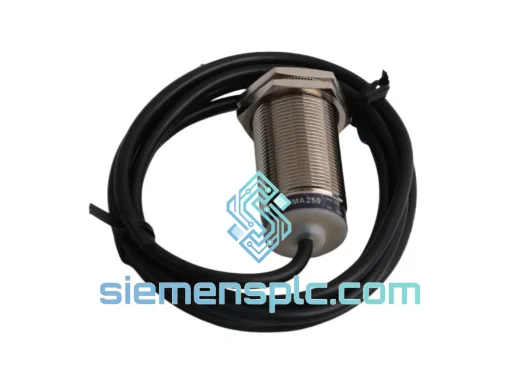
Schneider Electric XS1M30MA250 Inductive Proximity Sensor – OsiSense XS Series
Origin FR
Inductive Proximity Sensor
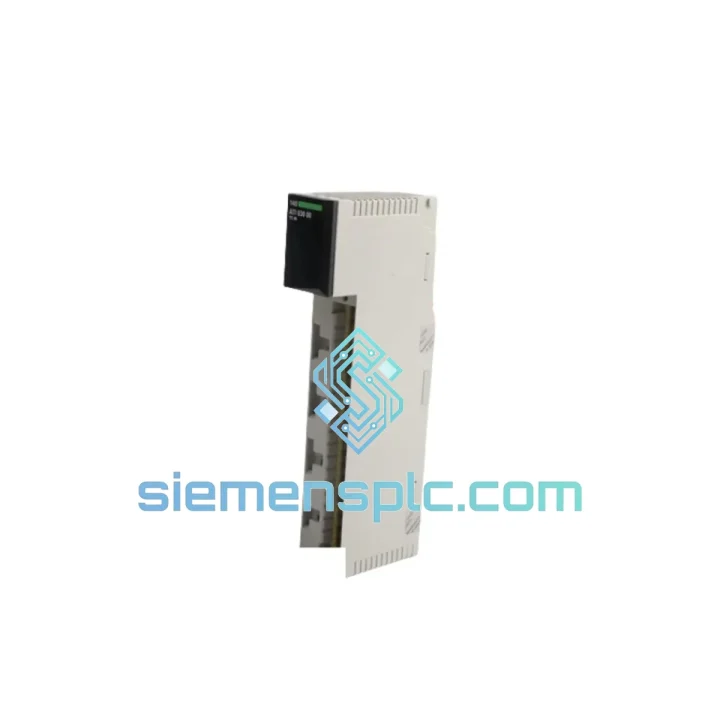
Request verified availability, condition, replacement risk review, packing options and courier lead time for SCP401.
Click Request Quote and the part number is inserted into the inquiry form automatically.
Core fields for model confirmation and RFQ routing. Detailed product narrative remains below.
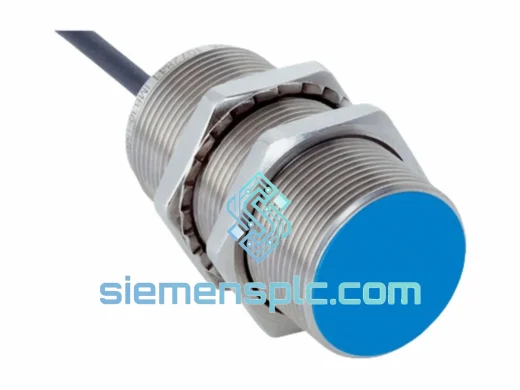
The Schneider Electric SCP401 is a cylindrical M12-format inductive proximity sensor belonging to the OsiSense XS product family. Within a discrete control loop, this sensor occupies the field-level detection layer: it converts the physical presence of a metallic target into a deterministic binary signal that feeds directly into a PLC digital input (DI) channel. Unlike mechanical limit switches, the SCP401 generates this signal with zero contact force, zero mechanical wear, and a switching repeatability that remains stable across the full rated temperature range of −25 °C to +70 °C.
In practical control architectures, the SCP401 is wired as a 3-wire PNP sourcing device. The output transistor sources current to the PLC DI terminal when a ferrous or non-ferrous metallic target enters the nominal sensing field of 4 mm (Sn, referenced to a standard 1 mm mild-steel target per IEC 60947-5-2). The PLC ladder logic reads a logic-HIGH state and executes the corresponding rung. When the target exits the field, the output de-energizes and the PLC reads logic-LOW. This deterministic on/off behavior, with a switching frequency ceiling of 800 Hz, makes the SCP401 suitable not only for presence/absence detection but also for pulse-train counting applications when paired with a high-speed counter (HSC) input module.
The sensor operates across a supply voltage window of 10–30 V DC, which means it is electrically compatible with both 12 V DC and 24 V DC control bus architectures without any intermediate voltage regulation. The output stage is rated at 200 mA continuous load current, sufficient to drive most PLC input cards directly without an interposing relay. Residual voltage drop across the output transistor is ≤ 2.5 V, which keeps the signal level well within the logic-HIGH threshold of any standard IEC 61131-2 Type 1 or Type 3 digital input.
The M12 4-pin A-coded connector interface is the de facto standard in European and Asian machine-building practice. It allows tool-free sensor replacement in under two minutes — a critical MTTR (Mean Time To Repair) advantage in high-availability production lines where unplanned downtime carries a measurable cost per minute. The nickel-plated brass housing provides both mechanical robustness and passive EMI shielding, attenuating radiated interference from adjacent variable-frequency drives (VFDs), servo amplifiers, and high-current contactors that are common in the same panel or cable tray environment.
Real-time Stock & RFQ: [email protected] | WhatsApp: +86 18359268345
| Part Number | SCP401 |
| Brand | Schneider Electric |
| Series | OsiSense XS |
| Sensor Type | Inductive Proximity Sensor |
| Housing Form Factor | Cylindrical, M12 (12 mm diameter) |
| Nominal Sensing Distance (Sn) | 4 mm (IEC 60947-5-2, mild-steel 1 mm target) |
| Assured Sensing Distance (Sa) | ≤ 3.24 mm (0–60 °C, Ue nominal) |
| Supply Voltage (Ue) | 10 – 30 V DC |
| No-Load Supply Current (Io) | ≤ 10 mA |
| Output Type | PNP, Normally Open (NO) |
| Rated Output Current (Ie) | 200 mA |
| Voltage Drop (Ud) | ≤ 2.5 V at Ie |
| Switching Frequency (f) | 800 Hz |
| Response Time | ≤ 0.625 ms |
| Short-Circuit Protection | Yes (auto-reset) |
| Reverse Polarity Protection | Yes |
| Overvoltage Protection | Yes (transient suppression) |
| IP Rating | IP67 (IEC 60529) |
| Operating Temperature | −25 °C to +70 °C |
| Storage Temperature | −40 °C to +85 °C |
| Connection Interface | M12 4-pin A-coded male connector |
| Housing Material | Nickel-plated brass |
| Active Face Material | PBT (polybutylene terephthalate) |
| Mounting Type | Non-flush (non-embeddable) |
| Weight (packaged) | ~400 g |
| Compliance Standards | IEC 60947-5-2, CE, RoHS 2 |
| Warranty | 12 months from date of dispatch |
The SCP401’s detection mechanism is built on a Colpitts-type LC oscillator whose resonant coil is embedded in the active face of the sensor. When no metallic target is present, the oscillator runs at its free-running frequency with a stable amplitude envelope. As a conductive target enters the electromagnetic field projected from the coil, eddy currents are induced in the target surface. These eddy currents extract energy from the oscillator, causing amplitude damping. An internal threshold comparator monitors the oscillator amplitude continuously; when damping exceeds the preset hysteresis band, the comparator triggers the output transistor to switch states.
The hysteresis band is factory-calibrated to approximately 10–20% of Sn. This deliberate hysteresis prevents output chatter when a target is positioned at the boundary of the sensing field — a common failure mode in vibration-rich environments such as stamping presses or conveyor drives. The result is a clean, bounce-free output transition that does not require software debounce filtering in the PLC program, reducing scan-cycle overhead.
EMC performance is addressed at the hardware level through the nickel-plated brass housing, which acts as a Faraday shield around the oscillator circuit. The housing is electrically bonded to the 0 V reference through the cable shield when a shielded cordset is used, providing a low-impedance return path for induced common-mode noise. The output stage incorporates a transient voltage suppressor (TVS) diode across the supply rails, clamping inductive load kickback from relay coils or solenoids that may share the same 24 V DC bus. The auto-reset short-circuit protection limits output current to a safe level during a wiring fault, then automatically restores normal operation once the fault is cleared — eliminating the need for manual reset or fuse replacement in the field.
The PBT active face material has a relative permittivity (εr) of approximately 3.2–3.5, which is low enough to minimize parasitic capacitive coupling between the coil and the housing, preserving oscillator Q-factor and maintaining sensing distance consistency across the rated temperature range. Thermal drift of Sn is specified at less than ±10% across −25 °C to +70 °C, which is within the IEC 60947-5-2 Class A tolerance.
Every SCP401 unit supplied through siemensplc.com is sourced from authorized Schneider Electric distribution channels or verified surplus stock with full traceability documentation. Incoming inspection covers visual examination of the housing and active face for mechanical damage, label verification against Schneider Electric’s current date-code and country-of-origin markings, hologram and laser-etched part-number authentication, and a functional switching test at 24 V DC with a calibrated steel target at Sn and 0.81×Sn (Sa boundary). Units that fail any inspection criterion are quarantined and not dispatched.
Shipments originate from our warehouse in Xiamen, China — a major logistics hub with direct access to DHL Express, FedEx International Priority, and UPS Worldwide Expedited services. Standard international transit times are 3–7 business days to Europe, 5–10 business days to North America, and 2–5 business days to Southeast Asia. Export documentation including commercial invoice, packing list, and Certificate of Conformance (CoC) is prepared for every shipment. HS Code 8536.90 applies for customs classification. All units are shipped in original Schneider Electric packaging with ESD-protective inner wrap where applicable. A 12-month warranty against manufacturing defects is provided from the date of dispatch, with advance replacement available for qualified accounts.
Email: [email protected]
WhatsApp: +86 18359268345
Web: siemensplc.com
Location: Xiamen, China
© 2026 siemensplc.com. All rights reserved.
We check the full part number, brand, series and visible nameplate information before quotation.
Sales confirms stock path, condition option, quantity and realistic lead time for export dispatch.
DHL, FedEx, UPS or buyer courier arrangements can be reviewed with packing requirements.
Similar brand or category products for fast comparison and multi-item RFQ lists.