Siemens
RFQ Ready
Siemens 6ES7467-5GJ02-0AB0 PLC Interface Module
SIMATIC S7-400
Origin DE
PLC Interface Module
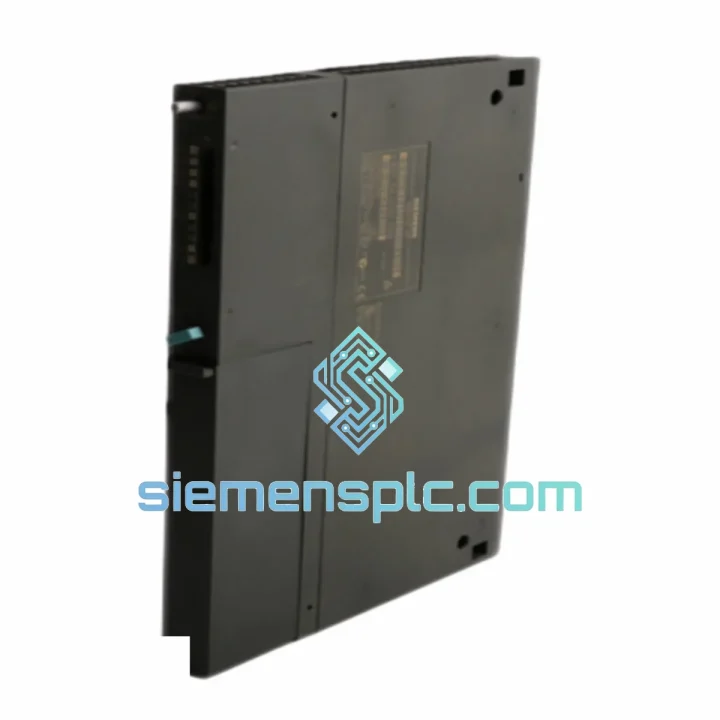
Request verified availability, condition, replacement risk review, packing options and courier lead time for 6ES7414-2XG03-0AB0.
Click Request Quote and the part number is inserted into the inquiry form automatically.
Core fields for model confirmation and RFQ routing. Detailed product narrative remains below.
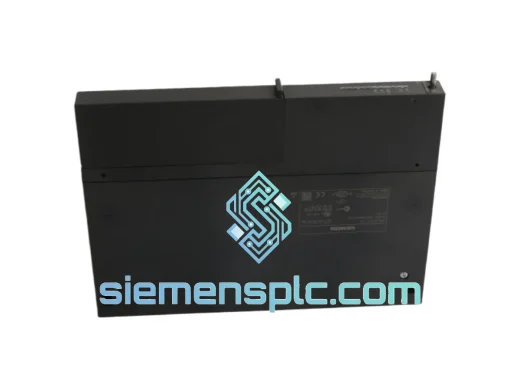
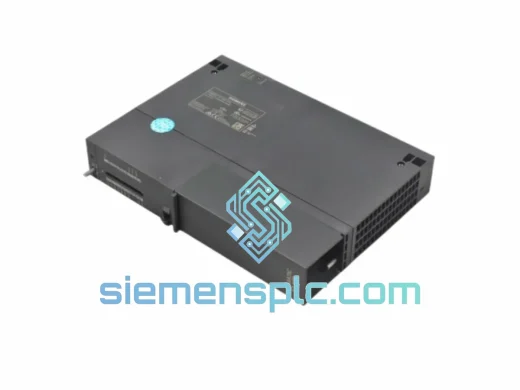
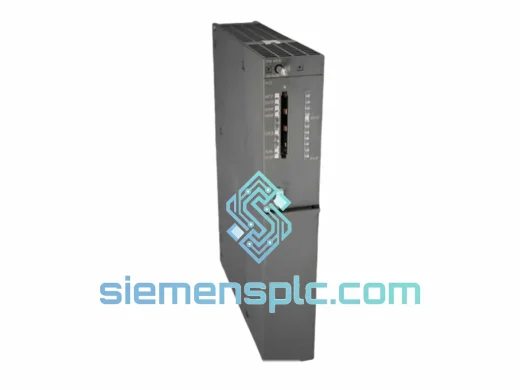
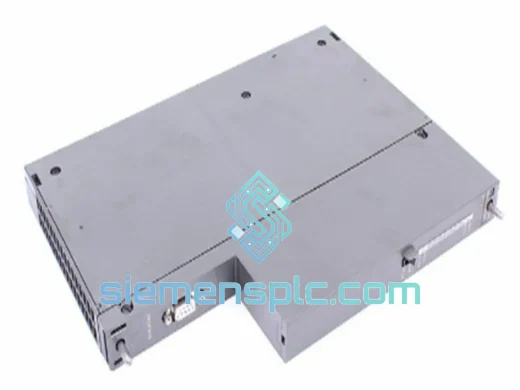
The 6ES7414-2XG03-0AB0 is a central processing unit within the Siemens SIMATIC S7-400 series, designated CPU 414-2 DP. It occupies a single slot on the S7-400 universal rack and communicates with all installed I/O and function modules via the P-bus (peripheral bus) and K-bus (communication bus) that run along the rack backplane. The P-bus operates at a fixed 10 Mbit/s parallel data width, transferring process image data between the CPU and up to 300 addressable modules across a maximum of four expansion racks connected through IM 460/461 interface modules. The K-bus handles inter-module coordination, interrupt routing, and diagnostic telegram exchange at a separate logical layer, ensuring that time-critical process interrupts are not delayed by bulk I/O data transfers.
The CPU executes user programs stored in its 4 MB integrated work memory (RAM). Binary logic operations complete in 0.1 µs per instruction; floating-point arithmetic resolves in 0.3 µs. These figures are not theoretical peaks — they reflect the deterministic worst-case cycle time under full I/O load, which is the metric that matters in closed-loop PID and motion sequencing applications. The load memory architecture separates program retention from execution: the onboard 256 KB RAM holds the active project, while a pluggable Flash Memory Card (SIMATIC S7-400 format, up to 64 MB) retains the project across power cycles without battery dependency for the program itself. A separate lithium backup battery maintains the real-time clock and retentive data areas (M, DB, T, C) during power loss.
The integrated MPI/PROFIBUS-DP port (X1) operates at selectable baud rates from 9.6 kbit/s to 12 Mbit/s. In MPI mode it supports up to 32 network nodes for programming device and HMI connections. Configured as a PROFIBUS-DP master, it manages up to 125 slave devices per segment, with a GSD-file-based configuration workflow in SIMATIC STEP 7 HW Config. The second DP interface (X2) provides an independent PROFIBUS-DP master channel, enabling physical separation of field device networks — for example, isolating drive bus traffic from sensor/actuator bus traffic — without consuming a CP 443 communication processor slot.
The firmware revision encoded in the order suffix 0AB0 corresponds to V3.0, which introduced extended diagnostic buffer depth (500 entries) and improved OB interrupt latency handling compared to earlier 0AA0 variants. Projects compiled under STEP 7 V5.4 or later targeting this firmware revision are fully portable to the module without recompilation, provided the hardware configuration matches the installed rack topology.
Real-time Stock & RFQ: [email protected] | WhatsApp: +86 18359268345
| Parameter | Value |
|---|---|
| Order Number | 6ES7414-2XG03-0AB0 |
| Product Series | SIMATIC S7-400 |
| CPU Designation | CPU 414-2 DP |
| Work Memory (RAM) | 4 MB (integrated, non-expandable) |
| Load Memory (onboard) | 256 KB RAM |
| Load Memory (external) | Flash Memory Card, up to 64 MB |
| Binary Instruction Time | 0.1 µs |
| Floating-Point Instruction Time | 0.3 µs |
| I/O Address Space | 8 KB inputs / 8 KB outputs |
| Process Image Size | Configurable, up to 8 KB per direction |
| Max. Modules (total) | 300 (across central + expansion racks) |
| Interface X1 | MPI / PROFIBUS-DP, 9.6 kbit/s – 12 Mbit/s |
| Interface X2 | PROFIBUS-DP Master, 9.6 kbit/s – 12 Mbit/s |
| MPI Node Capacity | Up to 32 nodes |
| PROFIBUS-DP Slave Capacity | Up to 125 per segment |
| Diagnostic Buffer Depth | 500 entries (firmware V3.0) |
| Integrated Functions | PID, motion control support, IEC timers/counters |
| Supply Voltage | DC 24 V via backplane bus (P-bus) |
| Operating Temperature | 0 °C to +60 °C |
| Storage Temperature | –40 °C to +70 °C |
| Relative Humidity | 10 % to 95 %, non-condensing |
| Dimensions (W × H × D) | 50 × 290 × 219 mm |
| Weight | Approx. 300 g |
| Protection Class | IP20 |
| Firmware Version | V3.0 |
| Certifications | CE, UL, cULus, ATEX Zone 2 |
| Programming Environment | SIMATIC STEP 7 V5.x; TIA Portal V13 SP1+ (migration) |
| Warranty | 12 months against manufacturing defects |
The 6ES7414-2XG03-0AB0 implements a dual-bus backplane architecture that physically separates high-speed I/O data transfer (P-bus) from inter-module communication and interrupt signaling (K-bus). This separation prevents I/O scan jitter from propagating into the interrupt response path — a design constraint that becomes critical in applications where hardware interrupts (OB40) must respond within a bounded latency window regardless of the current process image update cycle.
The two independent PROFIBUS-DP interfaces are implemented on separate ASIC channels within the CPU, not multiplexed through a shared controller. This means each DP master operates its own token-ring arbitration independently, and a bus fault or high-traffic condition on one segment does not affect the cycle time of the other. In practice, this allows engineers to assign safety-relevant field devices (e.g., emergency stop relays, position encoders) to X2 while standard I/O slaves occupy X1, maintaining deterministic scan times on the critical network even under X1 congestion.
EMC immunity is achieved through a combination of hardware shielding on the backplane connector pins, optocoupler isolation on the MPI/DP physical layer transceivers, and internal DC/DC conversion that isolates the CPU logic supply from the backplane 24 V rail. The module meets EN 61000-4-4 (electrical fast transient, 2 kV) and EN 61000-4-5 (surge, 1 kV line-to-line) immunity levels, which are the relevant thresholds for industrial cabinet environments with variable-frequency drives and contactor switching on shared power rails.
The retentive memory architecture uses a dedicated SRAM block backed by the lithium battery, separate from the work memory DRAM. This means a battery failure does not corrupt the executing program — it only affects retentive data markers and the real-time clock. The Flash Memory Card interface uses a proprietary Siemens card format with wear-leveling firmware, rated for a minimum of 100,000 write cycles, which at typical project download frequency (once per commissioning cycle) represents a service life exceeding the CPU’s operational lifespan.
Every 6ES7414-2XG03-0AB0 unit dispatched from our Xiamen, China facility is a genuine Siemens-manufactured module sourced through verified supply channels. Prior to shipment, each unit undergoes a structured inspection protocol: visual examination of the PCB, connector pins, and housing for mechanical damage; firmware version confirmation via STEP 7 online diagnostics; and a functional power-on test verifying backplane communication and DP interface initialization. Units that do not pass all three stages are quarantined and not offered for sale.
Packaging follows ESD-safe handling standards: modules are placed in conductive foam inserts within anti-static bags, sealed, and packed in double-wall corrugated cartons with corner protection. For international shipments, we use DHL Express (3–5 business days to Europe and North America), FedEx International Priority, and UPI for Southeast Asia. Sea freight consolidation is available for multi-unit project orders. All shipments include a commercial invoice with HS code 8537.10 pre-declared for customs clearance efficiency. A 12-month warranty covers manufacturing defects; DOA units are replaced within 7 business days of confirmed fault report.
Email: [email protected]
WhatsApp: +86 18359268345
Web: siemensplc.com
Location: Xiamen, China
© 2026 siemensplc.com. All rights reserved.
We check the full part number, brand, series and visible nameplate information before quotation.
Sales confirms stock path, condition option, quantity and realistic lead time for export dispatch.
DHL, FedEx, UPS or buyer courier arrangements can be reviewed with packing requirements.
Similar brand or category products for fast comparison and multi-item RFQ lists.