Siemens
RFQ Ready
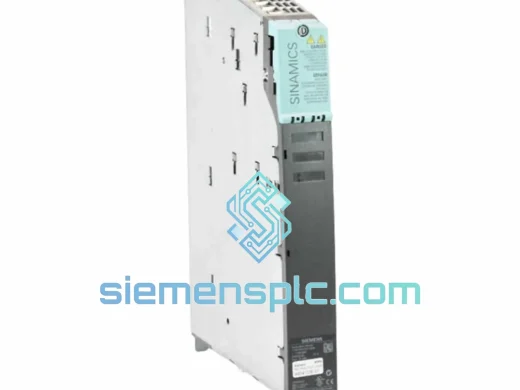
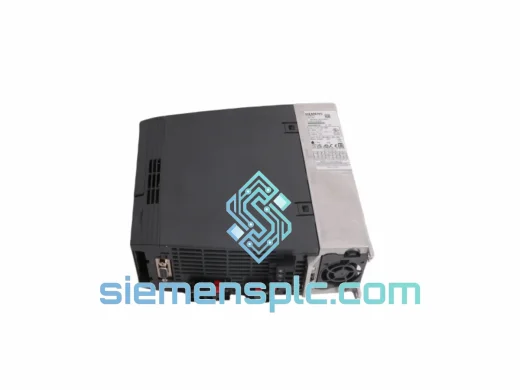
Siemens 6SL3210-1KE18-8UP1 AC Drive Power Module
SINAMICS
Origin DE
AC Drive Power Module
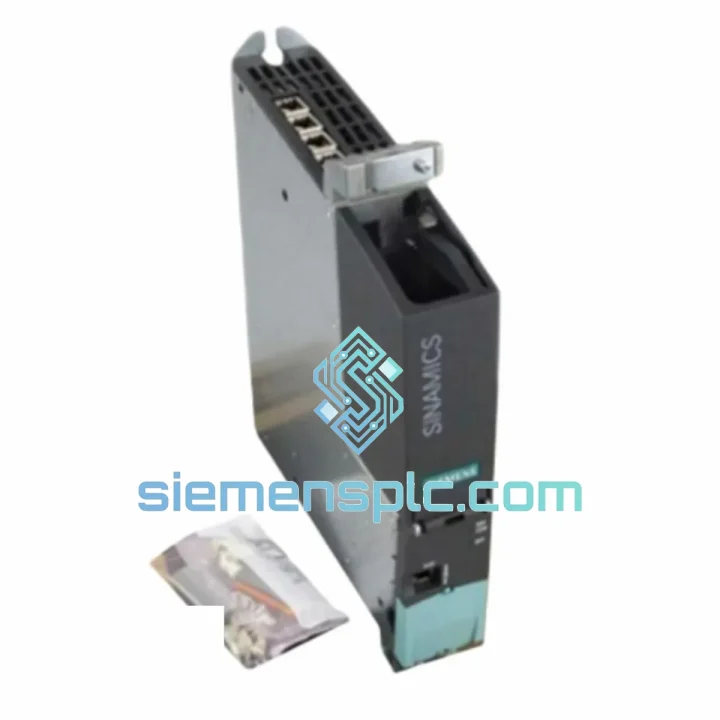
Request verified availability, condition, replacement risk review, packing options and courier lead time for 6SL3040-1MA01-0AA0.
Click Request Quote and the part number is inserted into the inquiry form automatically.
Core fields for model confirmation and RFQ routing. Detailed product narrative remains below.
The 6SL3040-1MA01-0AA0 is the CU320-2 DP variant of the SINAMICS S120 Control Unit family — a dedicated closed-loop processing node designed to coordinate current, speed, and position regulation across multiple servo or vector axes within a single booksize drive train. Unlike distributed I/O modules that relay signals to an external controller, the CU320-2 DP executes all real-time control algorithms internally, with the upstream PROFIBUS DP master (typically a SIMATIC S7-300, S7-400, or S7-1500 with CM 1542-5) responsible only for setpoint delivery and supervisory logic. This architectural separation between setpoint management and closed-loop execution is what allows the S120 system to maintain sub-millisecond control cycle consistency independent of fieldbus cycle jitter.
In a standard booksize configuration, the 6SL3040-1MA01-0AA0 mounts on the S120 system rail alongside an Active Line Module and up to six Motor Modules. All downstream power and sensor modules connect via DRIVE-CLiQ — Siemens’ isochronous serial backplane derived from 100BASE-TX Fast Ethernet physical layer. Each DRIVE-CLiQ node transmits its electronic nameplate (order number, serial number, firmware revision) on first power-up, enabling automatic topology detection and parameter assignment through STARTER or TIA Portal SCOUT without manual node addressing. This self-describing topology is a measurable reduction in commissioning time for multi-axis machines compared to systems requiring manual encoder address configuration.
The module’s PROFIBUS DP interface supports cyclic data exchange at up to 12 Mbit/s and DPV1 acyclic services for parameter read/write operations from the PLC without interrupting the cyclic control loop. When the upstream master operates in isochronous mode (equidistant bus cycle), the CU320-2 DP phase-locks its internal control cycle to the bus clock, achieving deterministic setpoint-to-output latency within one bus cycle — a prerequisite for synchronized multi-axis applications such as flying shears, rotary cutters, and electronic line shafts.
Real-time Stock & RFQ: [email protected] | WhatsApp: +86 18359268345
| Siemens Order Number | 6SL3040-1MA01-0AA0 |
| Module Designation | CU320-2 DP — Control Unit with PROFIBUS DP interface |
| Product Family | SINAMICS S120 Booksize |
| Fieldbus Interface | PROFIBUS DP, max. 12 Mbit/s; DPV0 cyclic + DPV1 acyclic services |
| DRIVE-CLiQ Ports | 4 × RJ45; max. 6 nodes per port (topology-dependent) |
| Digital Inputs | 8 × DI, 24 V DC, optically isolated, input filter delay ≤ 1 ms |
| Digital Outputs | 4 × DO, 24 V DC / 100 mA, short-circuit protected |
| Analog Inputs | 2 × AI, ±10 V / 0–20 mA selectable, 12-bit resolution |
| Analog Outputs | 2 × AO, ±10 V, 12-bit resolution |
| Supply Voltage | 24 V DC (20.4–28.8 V), max. 1.0 A (module only) |
| Current Control Cycle | 125 µs (8 kHz) standard; configurable per axis count and control mode |
| Speed Control Cycle | 250 µs (4 kHz) standard |
| Position Control Cycle | 500 µs (2 kHz) standard |
| Max. Servo Axes | 6 axes (servo vector mode, configuration-dependent) |
| CompactFlash Slot | 1 × CF card (6SL3054-series) — firmware, parameters, safety config |
| USB Interface | 1 × USB Type-A (STARTER direct service connection) |
| Operating Temperature | 0 °C to +55 °C (derating above +40 °C per IEC 60068-2-2) |
| Storage Temperature | −40 °C to +70 °C |
| Relative Humidity | 5–95 %, non-condensing (IEC 60068-2-78) |
| Protection Rating | IP20 (EN 60529) |
| Mounting | Booksize chassis; DIN rail or panel mount via S120 system rail |
| Dimensions (W × H × D) | Approx. 50 mm × 380 mm × 270 mm |
| Weight | Approx. 1.5 kg |
| Certifications | CE (LVD 2014/35/EU, EMC 2014/30/EU), UL, cUL, RoHS, REACH |
| Firmware Compatibility | SINAMICS S120 V4.x and above; TIA Portal SCOUT V15+ / STARTER V5.x |
| Warranty | 12 months from dispatch date — DOA and functional defect coverage |
DRIVE-CLiQ Isochronous Backplane and Cross-Axis Synchronization
DRIVE-CLiQ operates on a 100BASE-TX physical layer with a proprietary Siemens application protocol layered above standard Ethernet framing. The CU320-2 DP acts as the DRIVE-CLiQ master, issuing time-stamped command frames to all downstream nodes within a fixed isochronous window. Each node — Motor Module, Sensor Module Cabinet (SMC30/SMC20), or Terminal Module — responds within its allocated time slot, returning actual encoder position, motor winding temperature (KTY84 or PTC), and module fault status. The master clock on the CU320-2 DP distributes a common time base to all nodes, achieving inter-axis synchronization jitter below 1 µs. This hardware-level time coherence is the prerequisite for electronic gearing and cam-disk interpolation without dedicated hardware synchronization lines between axes.
Dual-Domain Processor Architecture
The CU320-2 DP separates real-time control execution from communication and diagnostic processing at the hardware level. The real-time domain handles current, speed, and position control loops at their respective sampling rates (125 µs / 250 µs / 500 µs) with deterministic scheduling — no operating system preemption can delay a control cycle. The communication domain manages PROFIBUS DP frame processing, DRIVE-CLiQ topology management, fault logging, and USB/CF card access. This isolation ensures that a burst of DPV1 acyclic parameter requests from the PLC, or a CF card write operation during parameter save, does not introduce latency into the active control loops — a failure mode common in single-core architectures where communication interrupts compete with control tasks.
Optical Isolation and EMC Compliance Architecture
All 8 digital inputs are galvanically isolated via optocouplers rated at 500 V AC (1-minute dielectric test). The PROFIBUS DP RS-485 interface includes onboard selectable bus termination resistors (DIP switch), eliminating the need for external termination connectors at end-of-line nodes. The module housing bonds directly to the S120 system rail ground plane through a low-impedance mechanical contact, providing a continuous EMC shield path that meets EN 61800-3 Category C2 conducted and radiated emission limits in standard industrial cabinet installations without supplementary external filters. The analog input circuitry uses differential measurement with common-mode rejection ratio (CMRR) exceeding 60 dB at 50/60 Hz, suppressing ground loop interference from long cable runs in large machine frames.
CompactFlash Parameter Architecture and MTTR Reduction
The 6SL3040-1MA01-0AA0 stores the complete drive parameter set, DRIVE-CLiQ topology map, and safety configuration on the removable CompactFlash card (6SL3054-series). On power-up, the module reads the CF card before initiating DRIVE-CLiQ topology scan, loading all axis parameters prior to node enumeration. This sequence allows a hardware replacement without a PC: remove the CF card from the failed unit, insert it into the replacement CU320-2 DP, power up — the module self-restores the full parameter set and resumes operation. Mean time to repair (MTTR) in this scenario is bounded by the physical swap time, not by the availability of a STARTER-equipped laptop or network access to a parameter backup server.
Integrated Safety Function Architecture (STO / SS1)
The 6SL3040-1MA01-0AA0 supports Basic Safety Integrated functions — Safe Torque Off (STO, SIL 2 / PLe per IEC 62061 / ISO 13849-1) and Safe Stop 1 (SS1) — via the onboard F-DI terminals, provided the connected Motor Modules carry the corresponding safety firmware. The safety logic executes in a dedicated safety processor domain with cross-channel monitoring, independent of the standard control processor. Extended safety functions (SLS — Safely Limited Speed, SDI — Safe Direction, SSM — Safe Speed Monitor) require the Safety Integrated Extended Functions license, activated via CF card parameter assignment without hardware modification.
Every 6SL3040-1MA01-0AA0 unit dispatched by siemensplc.com is sourced as genuine Siemens OEM hardware. Pre-dispatch inspection covers label integrity and serial number format conformance to Siemens AG manufacturing standards; housing condition with no evidence of rework, re-marking, or counterfeit reproduction; DRIVE-CLiQ RJ45 port pin geometry; CompactFlash slot contact condition; and connector seating on the PROFIBUS DP sub-D interface. Units that do not pass physical inspection criteria are quarantined and removed from available stock.
Our warehouse operates from Xiamen, Fujian Province, China — a primary international freight hub with direct access to Xiamen Gaoqi International Airport (XMN) and Xiamen Port. Standard export shipments are dispatched via DHL Express, FedEx International Priority, or UPS Worldwide Expedited. Typical transit times: Europe 3–5 business days, North America 4–6 business days, Southeast Asia 2–4 business days, Middle East 4–7 business days. For project-volume orders, sea freight consolidation from Xiamen Port is available with full export documentation: commercial invoice, packing list, certificate of origin, and HS Code 8537.10 classification support for customs clearance.
All units carry a 12-month warranty from the date of dispatch, covering dead-on-arrival (DOA) and functional defects under normal operating conditions. Warranty claims are processed within 5 business days of return receipt at our Xiamen facility. Replacement units are dispatched from in-stock inventory upon fault confirmation, minimizing production downtime for customers operating under scheduled maintenance windows.
Email: [email protected]
WhatsApp: +86 18359268345
Web: siemensplc.com
Location: Xiamen, China
© 2026 siemensplc.com. All rights reserved.
We check the full part number, brand, series and visible nameplate information before quotation.
Sales confirms stock path, condition option, quantity and realistic lead time for export dispatch.
DHL, FedEx, UPS or buyer courier arrangements can be reviewed with packing requirements.
Similar brand or category products for fast comparison and multi-item RFQ lists.