Siemens
In Stock OK
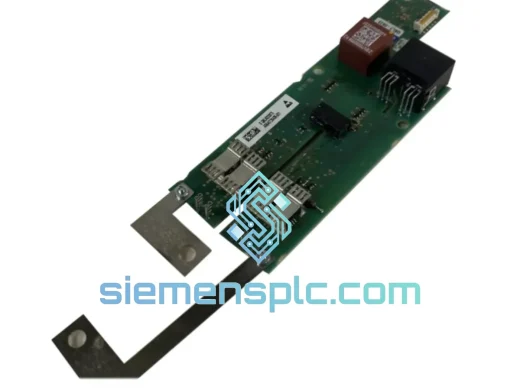
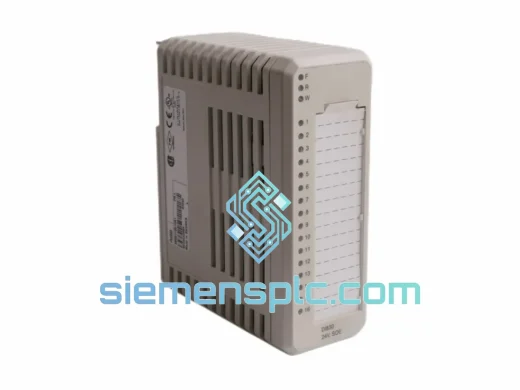
Siemens LEXI1 Digital Input Module – ET 200SP Series
Request verified availability, condition, replacement risk review, packing options and courier lead time for LEXI1.
BrandSiemens
Part NumberLEXI1
ConditionAvailability Check
Lead TimeRFQ Confirmation
DocumentsDatasheet / photos by RFQ
ShippingExport packing available
Auto-filled RFQ
LEXI1
Click Request Quote and the part number is inserted into the inquiry form automatically.
- Reply by email: [email protected]
- WhatsApp / Tel: +86 18359268345
- Mon-Sat 9:00-18:00 GMT+8
Procurement Data
Key Product Information
Core fields for model confirmation and RFQ routing. Detailed product narrative remains below.
- Brand
- Siemens
- Primary Part Number
- LEXI1
- Product Type
- Digital Input Module
- Series / Family
- ET 200SP Series
- Country of Origin
- DE
- Catalog Category
- I/O Modules
- Operating Temp.
- –40 °C to +70 °C (horizontal mounting)
- Warranty
- 12 months from date of invoice
Model confirmed for inquiry
LEXI1
Send quantity, destination and urgency. The RFQ form keeps this part number attached.
Request Quote
Product Overview
Siemens LEXI1 Digital Input Module – Precision Signal Acquisition in Distributed I/O Architecture
The Siemens LEXI1 is a 16-channel digital input module engineered for deployment within the ET 200SP distributed I/O system. Operating as a front-end signal acquisition node on the PROFINET/PROFIBUS backplane, it captures discrete 24 V DC process signals and transmits structured status data to the S7-1500 or S7-300/400 CPU via the local bus interface at a cycle time of under 1 ms per channel group. Its role in the control loop is deterministic: it eliminates signal ambiguity at the field boundary, ensuring that the PLC’s execution engine receives clean, debounced binary states without software-layer filtering overhead.
In distributed control architectures where field devices—proximity switches, pushbuttons, position sensors, and safety interlocks—are located at distances exceeding 100 m from the central cabinet, the LEXI1 provides the local intelligence to pre-process and validate input states before forwarding them across the fieldbus. This reduces bus load and improves overall system scan time predictability, a critical parameter in motion-coordinated and process-synchronized applications.
Real-time Stock & RFQ: [email protected] | WhatsApp: +86 18359268345
Technical Parameters
| Parameter | Specification |
|---|---|
| Module Type | Digital Input (DI), 16-channel |
| Input Voltage (Rated) | 24 V DC |
| Input Voltage Range | 20.4 V DC – 28.8 V DC (–15% / +20%) |
| Signal Level “1” (IEC 61131-2 Type 1) | 11 V DC – 30 V DC |
| Signal Level “0” | –3 V DC – 5 V DC |
| Input Current at Signal “1” | ≥ 2.0 mA (typ. 4.5 mA at 24 V DC) |
| Input Delay (configurable) | 0.05 ms / 0.1 ms / 0.4 ms / 1.6 ms / 3.2 ms / 12.8 ms |
| Galvanic Isolation | Yes – optocoupler per channel group (8 ch / group) |
| Isolation Voltage (channel to backplane) | 500 V AC (1 min test) |
| Backplane Bus Interface | ET 200SP local bus (proprietary high-speed serial) |
| Cycle Time (local bus) | < 1 ms (16 channels, full scan) |
| Diagnostic Functions | Wire break detection, short-circuit monitoring, supply voltage fault |
| Degree of Protection | IP20 (IEC 60529) |
| Operating Temperature | –40 °C to +70 °C (horizontal mounting) |
| Storage Temperature | –40 °C to +85 °C |
| Relative Humidity | 5% – 95% (non-condensing, IEC 60068-2-78) |
| Vibration Resistance | 5 – 150 Hz, 1 g (IEC 60068-2-6) |
| Shock Resistance | 15 g / 11 ms (IEC 60068-2-27) |
| Power Consumption (backplane bus) | ≤ 75 mA at 3.3 V DC |
| Power Consumption (load voltage) | ≤ 20 mA at 24 V DC (module electronics) |
| Dimensions (W × H × D) | 15 mm × 73 mm × 58 mm |
| Weight | approx. 50 g |
| Mounting | ET 200SP BaseUnit BU15-P16+A0+2D (or equivalent) |
| Firmware Updateable | Yes, via TIA Portal V16 and above |
| Warranty | 12 months from date of invoice |
Hardware Logical Analysis
The LEXI1’s internal architecture is built around a dual-stage signal conditioning path. At the physical layer, each input channel passes through a transient voltage suppressor (TVS) diode array rated at ±1 kV (8/20 µs waveform per IEC 61000-4-5), which clamps inductive kickback and electrostatic discharge events before they reach the optocoupler stage. The optocoupler itself operates with a current transfer ratio (CTR) selected for stable switching across the full –40 °C to +70 °C thermal envelope, avoiding the CTR degradation that affects lower-grade components at temperature extremes.
The configurable input delay filter—selectable in six discrete steps from 0.05 ms to 12.8 ms—is implemented in hardware via an RC network followed by a Schmitt trigger comparator, not in firmware. This means the debounce characteristic is deterministic and immune to CPU load variations. For high-frequency pulse inputs (e.g., encoder feedback or proximity switch outputs at 500 Hz), the 0.05 ms setting provides adequate resolution without aliasing. For mechanical contacts subject to bounce, the 3.2 ms or 12.8 ms setting eliminates false transitions without requiring software filtering routines in the PLC program.
EMC performance is achieved through a multi-layer PCB design with dedicated ground planes separating the field-side (24 V DC) and logic-side (3.3 V DC) domains. Conducted emissions are suppressed by common-mode chokes on the supply rails, and radiated immunity is validated to IEC 61000-4-3 at 10 V/m across 80 MHz – 1 GHz. The module carries CE marking and is compliant with the Machinery Directive 2006/42/EC and the EMC Directive 2014/30/EU, making it suitable for direct integration into CE-marked machine assemblies without additional shielding measures.
The local bus interface uses a proprietary Siemens high-speed serial protocol operating at 48 Mbit/s. The LEXI1 acts as a slave node on this bus, responding to cyclic polling from the ET 200SP interface module (IM 155-6 PN or equivalent) with a fixed-latency response. This architecture guarantees that input data age—the maximum time between a physical signal change and its reflection in the CPU’s process image—remains bounded and calculable, a prerequisite for IEC 61508 SIL 2 safety assessments in non-safety-rated auxiliary circuits.
System Integration Benefits
- Deterministic scan time contribution: The LEXI1’s fixed local bus response latency allows system integrators to calculate worst-case input data age with precision, enabling accurate timing analysis for coordinated multi-axis or process-synchronized control loops.
- Reduced wiring infrastructure cost: By mounting the LEXI1 at the field level within an ET 200SP station, up to 16 discrete field signals are aggregated onto a single PROFINET connection back to the control cabinet, reducing cable runs, conduit fill, and terminal block count.
- Integrated channel-level diagnostics: Wire break and short-circuit faults are detected per channel and reported as structured diagnostic data in the CPU’s diagnostic buffer, eliminating the need for external signal monitoring relays and reducing panel component count.
- TIA Portal engineering workflow: The LEXI1 is fully parameterized within TIA Portal V16+, including input delay, diagnostic enable/disable per channel, and substitute value behavior on communication fault. No external configuration tool or proprietary software is required.
- Hot-swap capability: The ET 200SP architecture supports module replacement under live bus conditions (with appropriate BaseUnit selection), reducing planned maintenance windows and enabling field replacement without system shutdown.
- Scalable station expansion: Up to 64 I/O modules can be combined in a single ET 200SP station, allowing the LEXI1 to be mixed with analog input, digital output, and technology modules on a common backplane without gateway or protocol conversion overhead.
- Consistent signal quality across temperature range: Hardware-based debounce and optocoupler selection ensure that input switching thresholds and response times remain within specification across the full –40 °C to +70 °C operating range, eliminating temperature-induced false triggers in outdoor or foundry environments.
- Firmware update path: Siemens provides firmware updates for the LEXI1 via TIA Portal, ensuring long-term compatibility with evolving CPU firmware versions and security patches without hardware replacement.
Quality Assurance & Global Logistics
Every LEXI1 unit supplied by siemensplc.com is sourced directly from Siemens AG authorized distribution channels. Each module is accompanied by original Siemens packaging, factory test documentation, and a traceable batch/date code. Prior to dispatch, our technical team performs a visual inspection and packaging integrity check to ensure the module arrives in factory condition.
Our logistics operation is based in Xiamen, China—a major international freight hub with direct air cargo connections to Frankfurt, Amsterdam, Dubai, Singapore, Los Angeles, and Tokyo. Standard international shipments are dispatched within 1–3 business days of order confirmation. Express delivery via DHL Express, FedEx International Priority, or UPS Worldwide Express is available for time-critical procurement. Typical transit times: Europe 3–5 days, Southeast Asia 2–3 days, North America 4–6 days, Middle East 3–5 days.
All export documentation—commercial invoice, packing list, certificate of origin, and HS code declaration (HS 8538.90)—is prepared in compliance with destination country import requirements. We have established experience with customs clearance procedures for industrial automation components in the EU, GCC, ASEAN, and North American markets.
The 12-month warranty covers manufacturing defects and functional failures under normal operating conditions as defined in the Siemens product datasheet. Warranty claims are processed with direct liaison to Siemens technical support, and replacement units are dispatched from Xiamen stock upon fault confirmation.
Contact Information
Email: [email protected]
WhatsApp: +86 18359268345
Web: siemensplc.com
Location: Xiamen, China
© 2026 siemensplc.com. All rights reserved.
Ready to quote
[email protected]
Send This Part Number to Sales
RFQ workflow
Quality workflow ->
Confirmation Process
01Model confirmation
We check the full part number, brand, series and visible nameplate information before quotation.
02Availability reply
Sales confirms stock path, condition option, quantity and realistic lead time for export dispatch.
03Packing & courier
DHL, FedEx, UPS or buyer courier arrangements can be reviewed with packing requirements.
Continue sourcing
Browse full catalog ->
Related Automation Parts
Similar brand or category products for fast comparison and multi-item RFQ lists.
Siemens
RFQ Ready
Siemens 6RY1803-0AA05-0AA1 Digital Output Module
SIMOREG
Origin DE
Digital Output Module