
TRICONEX
In Stock OK
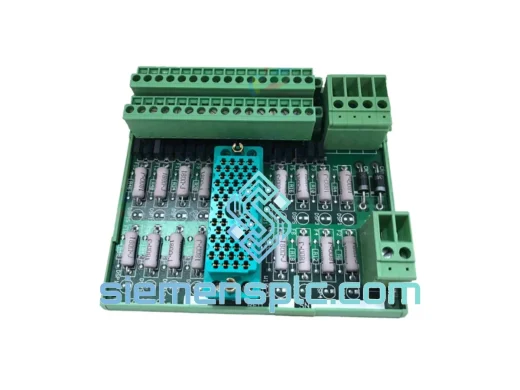
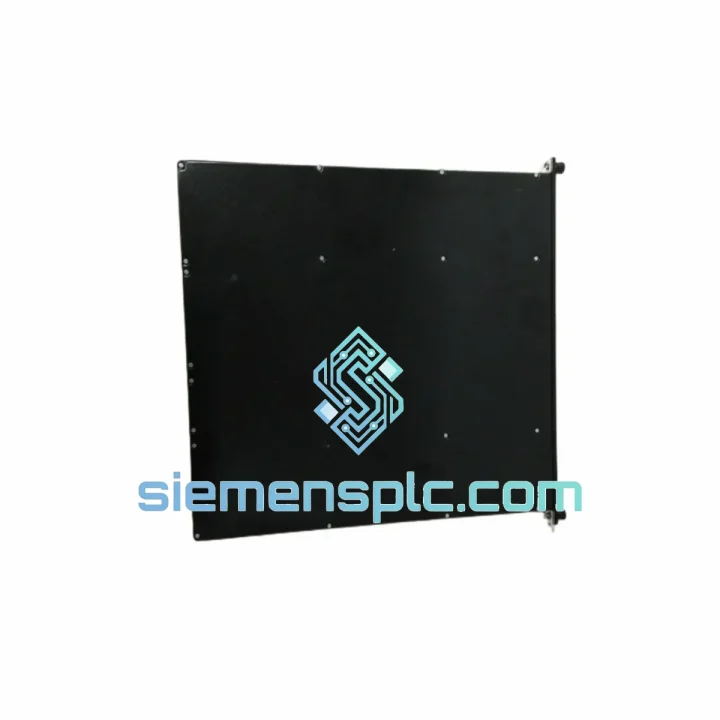
TRICONEX 3624 Supervised Digital Output Module – Tricon TMR
Request verified availability, condition, replacement risk review, packing options and courier lead time for 3624.
BrandTRICONEX
Part Number3624
ConditionAvailability Check
Lead TimeRFQ Confirmation
DocumentsDatasheet / photos by RFQ
ShippingExport packing available
Auto-filled RFQ
3624
Click Request Quote and the part number is inserted into the inquiry form automatically.
- Reply by email: [email protected]
- WhatsApp / Tel: +86 18359268345
- Mon-Sat 9:00-18:00 GMT+8
Procurement Data
Key Product Information
Core fields for model confirmation and RFQ routing. Detailed product narrative remains below.
- Brand
- TRICONEX
- Primary Part Number
- 3624
- Product Type
- Safety PLC I/O Module
- Series / Family
- Tricon
- Manufacturer
- TRICONEX (Schneider Electric)
- Country of Origin
- US
- Catalog Category
- I/O Modules
- Operating Temp.
- 0 °C to +60 °C
- Warranty
- 12 months from date of shipment
Model confirmed for inquiry
3624
Send quantity, destination and urgency. The RFQ form keeps this part number attached.
Request Quote
Product Overview
TRICONEX 3624 Supervised Digital Output Module: Fault-Tolerant DO Control in Triple Modular Redundant Safety Systems
The TRICONEX 3624 is a 32-channel Supervised Digital Output (DO) module engineered for deployment within the Triconex Tricon Triple Modular Redundant (TMR) Safety Instrumented System platform. Designed to IEC 61508 SIL 3 requirements, the 3624 delivers deterministic, fault-tolerant discrete output control for final control elements — including solenoid valves, motor starters, and relay coils — in Emergency Shutdown (ESD), Burner Management (BMS), and High Integrity Pressure Protection (HIPPS) applications across oil & gas, petrochemical, power generation, and offshore industries.
Unlike conventional digital output cards, the 3624 integrates continuous line supervision on every output channel. Each channel independently monitors field wiring for open-circuit and short-circuit faults in real time, without interrupting the output state. This diagnostic transparency is a mandatory architectural requirement for SIL 2 and SIL 3 safety loops under IEC 61511 and ANSI/ISA-84.00.01, where undetected dangerous failures must be bounded within defined proof-test intervals. The 3624 satisfies this requirement through hardware-level supervision logic embedded in each output driver stage, not through software polling — a distinction that directly affects the module’s Diagnostic Coverage (DC) metric and its contribution to the overall Safety Integrity Level of the safety function.
Within the Tricon TMR architecture, three independent processing legs — Leg A, Leg B, and Leg C — each drive a corresponding output voter circuit. The 3624’s output stage implements a 2-out-of-3 (2oo3) voting mechanism at the hardware level: the field output energizes only when at least two of the three legs agree on the commanded state. This voting logic is executed in dedicated output voter ASICs on the module board, operating independently of the main CPU backplane communication cycle. The result is a module that maintains output integrity even during single-leg failures, CPU communication faults, or backplane noise events — without requiring any intervention from the application program or the TriStation 1131 project logic.
The 3624 interfaces with the Tricon chassis via the proprietary Tricon backplane bus, which operates at a fixed, deterministic scan rate. Module-to-CPU communication latency is bounded and does not vary with application program complexity or I/O load — a property critical for time-critical safety functions with defined maximum process safety time (PST) requirements. The module draws its operating power entirely from the backplane; no external field power supply is required for the logic circuitry, reducing wiring complexity and eliminating a potential single point of failure in the power distribution architecture.
Field-side optical isolation separates the 24 VDC output driver circuits from the module’s internal logic domain. This galvanic barrier attenuates common-mode transients, ground loop currents, and conducted EMI originating from inductive field loads — solenoid valves in particular generate significant back-EMF during de-energization. The 3624’s output drivers include integrated transient suppression, clamping the back-EMF spike to within the driver’s rated voltage window and preventing latch-up or damage to the optical isolation stage. This design allows the module to drive inductive loads directly without external flyback diodes in most standard wiring configurations.
Real-time Stock & RFQ: [email protected] | WhatsApp: +86 18359268345
Technical Parameters
| Parameter | Specification |
|---|---|
| Part Number | 3624 |
| Manufacturer | TRICONEX (Schneider Electric) |
| Module Type | Supervised Digital Output (DO) |
| Platform | Triconex Tricon TMR (3000-series chassis) |
| Output Channels | 32 supervised discrete output points |
| Output Voltage | 24 VDC nominal |
| Output Current | 0.5 A per channel (maximum) |
| Output Type | Sourcing (high-side switch) |
| Line Supervision | Open-circuit and short-circuit detection, per channel, continuous |
| Voting Architecture | 2-out-of-3 (2oo3) hardware voter |
| Safety Integrity Level | SIL 3 capable (IEC 61508) |
| Field-Side Isolation | Optical isolation, logic-to-field galvanic barrier |
| Backplane Interface | Tricon proprietary backplane bus |
| Power Supply | Backplane-powered; no external logic supply required |
| Operating Temperature | 0 °C to +60 °C |
| Storage Temperature | -40 °C to +85 °C |
| Relative Humidity | 5% to 95% RH, non-condensing |
| Module Weight | Approx. 2,750 g |
| Certifications | TÜV, IEC 61508, FM, CE |
| Compatible Software | TriStation 1131 v3.x and above |
| Warranty | 12 months from date of shipment |
Hardware Logical Analysis
The 3624’s hardware architecture reflects the design philosophy of safety-critical output modules: every failure mode that could cause a spurious trip or a failure to trip must be detectable within the module’s own diagnostic cycle, without relying on the application program or external test equipment.
The 2oo3 output voter is implemented in discrete logic on the module PCB, not in firmware. This means the voter’s behavior is fixed at manufacturing time and cannot be altered by software updates, configuration changes, or communication faults. The voter compares the commanded output state from each of the three TMR legs using a majority-gate circuit. If one leg commands a different state from the other two — due to a leg failure, a backplane communication error, or a CPU fault — the voter drives the output according to the majority decision and simultaneously asserts a diagnostic fault flag visible to the TriStation 1131 application and the Tricon system diagnostics interface.
EMC performance is addressed at multiple layers. The module PCB uses a multi-layer stackup with dedicated ground planes separating the digital logic layer from the output driver layer. Decoupling capacitors are placed at each output driver stage to suppress high-frequency switching transients generated by the 24 VDC drivers. The module’s front panel connector uses a shielded backshell interface, and the chassis slot provides additional shielding continuity through the Tricon chassis ground bus. These measures collectively achieve compliance with IEC 61000-4 series immunity requirements, including EFT/burst (IEC 61000-4-4) and surge (IEC 61000-4-5) at levels appropriate for industrial process environments.
The line supervision circuit on each channel operates by injecting a low-level test current into the field wiring loop during the output’s de-energized state. The return current is monitored by a comparator circuit; a missing return current indicates an open-circuit fault, while an excessive return current indicates a short-circuit condition. The supervision current level is set below the minimum pickup current of standard solenoid valves and relay coils, ensuring that the supervision function does not inadvertently actuate field devices. This hardware-level supervision eliminates the need for external line monitoring relays, reducing panel wiring complexity and component count.
System Integration Benefits
- Deterministic output response time: The 3624’s output voter operates asynchronously from the CPU scan cycle. Output state changes propagate to the field within a fixed hardware propagation delay, independent of application program scan time or backplane communication load — a property that directly supports compliance with process safety time (PST) budgets in SIL 3 safety functions.
- Zero-configuration hot swap: The 3624 supports online module replacement within a powered Tricon chassis without requiring a system shutdown or TriStation project download. The replacement module initializes its output state from the backplane voter logic within one scan cycle, eliminating process interruption during maintenance activities.
- Integrated diagnostic transparency: All 32 channel supervision states, voter disagreement flags, and module health status are reported to the TriStation 1131 application via standard system variables. This data is available for display on operator HMI screens, historian logging, and safety management system (SMS) integration without additional hardware or software configuration.
- Reduced proof-test interval burden: The continuous hardware-level line supervision on each channel satisfies the partial stroke test (PST) diagnostic requirement for output wiring integrity, reducing the frequency of full proof tests required to maintain the SIL 3 claim. This directly reduces planned maintenance downtime and associated production loss.
- Consistent SIL claim maintenance: Using the original TRICONEX 3624 preserves the existing TÜV certification and functional safety assessment (FSA) documentation for the safety function. Substituting an alternative module requires re-validation of the safety function’s PFD calculation and may require a new FSA — a significant engineering and regulatory cost.
- Backplane power architecture simplification: Because the 3624 draws all logic power from the Tricon backplane, the field power distribution design is limited to the 24 VDC output supply rail. This eliminates a separate logic power supply, its associated wiring, and its failure modes from the system’s fault tree analysis.
- Inductive load compatibility without external components: The integrated transient suppression on each output driver allows direct connection of solenoid valves and relay coils without external flyback diodes or RC snubbers in standard wiring configurations. This reduces panel component count and eliminates a class of field wiring errors that can compromise output driver longevity.
- Scalable I/O expansion within existing chassis: The 3624 occupies a standard Tricon I/O slot and can be added to an existing chassis without modifying the TriStation project structure, provided slot assignments are pre-allocated in the project configuration. This supports phased plant expansion without system downtime or re-validation of existing safety functions.
Quality Assurance & Global Logistics
Every TRICONEX 3624 module supplied through siemensplc.com is sourced as genuine OEM hardware. Units are inspected against TRICONEX manufacturing standards prior to dispatch: visual examination of PCB, connector pins, and module label; serial number verification against manufacturer records where available; and functional continuity checks on the output driver and supervision circuits. Anti-counterfeit verification includes OEM label inspection, holographic marking review, and packaging integrity assessment. Traceability documentation is provided with each shipment on request.
Logistics operations are based in Xiamen, China — a major international trade hub with direct access to DHL, FedEx, UPS, and TNT express networks. Standard international express delivery to Europe, the Middle East, Southeast Asia, and the Americas is achieved within 3–7 business days from order confirmation. Air freight consolidation and sea freight options are available for bulk orders. Export documentation — including commercial invoice, packing list, certificate of origin, and ECCN classification review — is prepared for each shipment to ensure smooth customs clearance in destination countries. All modules are packed in anti-static ESD bags and foam-lined cartons rated for international air freight handling.
Contact Information
Email: [email protected]
WhatsApp: +86 18359268345
Web: siemensplc.com
Location: Xiamen, China
© 2026 siemensplc.com. All rights reserved.
Ready to quote
[email protected]
Send This Part Number to Sales
RFQ workflow
Quality workflow ->
Confirmation Process
01Model confirmation
We check the full part number, brand, series and visible nameplate information before quotation.
02Availability reply
Sales confirms stock path, condition option, quantity and realistic lead time for export dispatch.
03Packing & courier
DHL, FedEx, UPS or buyer courier arrangements can be reviewed with packing requirements.
Continue sourcing
Browse full catalog ->
Related Automation Parts
Similar brand or category products for fast comparison and multi-item RFQ lists.
TRICONEX
RFQ Ready
TRICONEX 9563-810 Safety Termination Panel
Tricon
Origin US
Safety System Termination Panel
TRICONEX
RFQ Ready
TRICONEX 7400210-010 Digital Input Module – Tricon TMR
Tricon
Origin US
Digital Input Module
TRICONEX
RFQ Ready
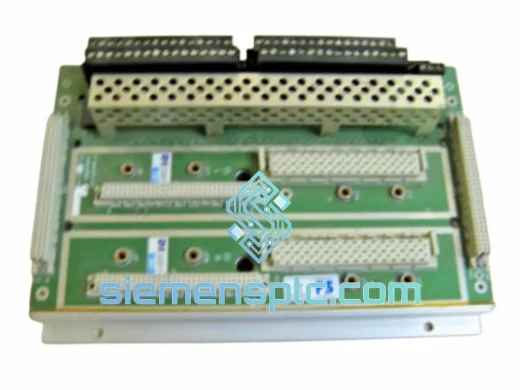
TRICONEX 7400208B-020 Safety I/O Baseplate – Tricon TMR Series
TRICON
Origin US
Safety I/O Baseplate