
TRICONEX
In Stock OK
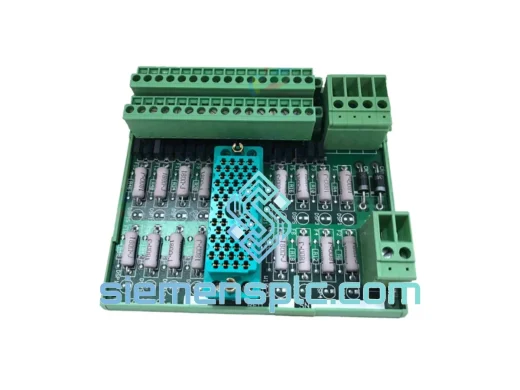
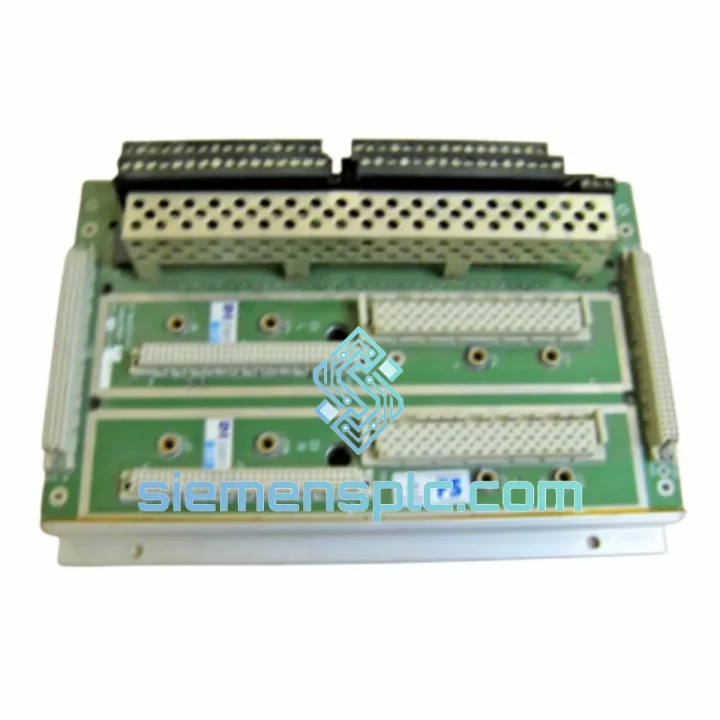
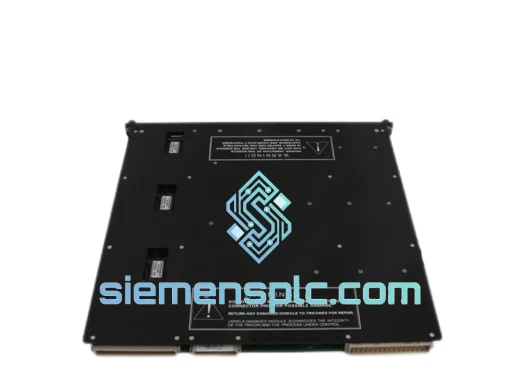
TRICONEX 7400208B-020 Safety I/O Baseplate – Tricon TMR Series
Request verified availability, condition, replacement risk review, packing options and courier lead time for 7400208B-020.
BrandTRICONEX
Part Number7400208B-020
ConditionAvailability Check
Lead TimeRFQ Confirmation
DocumentsDatasheet / photos by RFQ
ShippingExport packing available
Auto-filled RFQ
7400208B-020
Click Request Quote and the part number is inserted into the inquiry form automatically.
- Reply by email: [email protected]
- WhatsApp / Tel: +86 18359268345
- Mon-Sat 9:00-18:00 GMT+8
Procurement Data
Key Product Information
Core fields for model confirmation and RFQ routing. Detailed product narrative remains below.
- Brand
- TRICONEX
- Primary Part Number
- 7400208B-020
- Product Type
- Safety I/O Baseplate
- Series / Family
- TRICON
- Manufacturer
- TRICONEX (Schneider Electric)
- Country of Origin
- US
- Catalog Category
- I/O Modules
- Operating Temp.
- 0 °C to +60 °C
- Warranty
- 12 months from date of shipment
Model confirmed for inquiry
7400208B-020
Send quantity, destination and urgency. The RFQ form keeps this part number attached.
Request Quote
Product Overview
TRICONEX 7400208B-020 Digital Input Baseplate — Structural Backbone of Tricon TMR Discrete Safety Loops
The TRICONEX 7400208B-020 is a dedicated Digital Input (DI) Baseplate engineered for deployment within Schneider Electric’s Tricon Triple Modular Redundant (TMR) Safety Instrumented System platform. Its function is not passive: this baseplate forms the physical and electrical substrate through which three independent I/O module legs interface with the Tricon main chassis backplane, enabling the 2-out-of-3 (2oo3) voting logic that defines TMR fault tolerance. In process safety architectures operating under IEC 61508 SIL 2 and SIL 3 mandates, the integrity of this baseplate directly determines the reliability of the entire discrete input acquisition chain — from field sensor to safety logic solver.
Unlike generic mounting hardware, the 7400208B-020 incorporates hardwired signal routing paths that maintain deterministic propagation latency across all three TMR legs simultaneously. This design eliminates the timing skew that would otherwise compromise the 2oo3 voting arbitration, particularly in high-speed ESD and BMS applications where response times are contractually bounded by functional safety specifications.
📧 Real-time Stock & RFQ: [email protected] | WhatsApp: +86 18359268345
Technical Parameters
| Part Number | 7400208B-020 |
| Manufacturer | TRICONEX (Schneider Electric) |
| Module Classification | Digital Input Baseplate |
| Compatible Platform | Tricon TMR Safety System v9.x / v10.x |
| Redundancy Architecture | Triple Modular Redundant (TMR) — 2oo3 voting |
| Backplane Interface | Tricon proprietary high-speed chassis bus |
| Mounting Method | Chassis-integrated, DIN-rail enclosure compatible |
| Operating Temperature | 0 °C to +60 °C |
| Storage Temperature | −40 °C to +85 °C |
| Relative Humidity | 5% to 95% non-condensing |
| Weight | 800 g |
| Safety Integrity Level | SIL 2 / SIL 3 (system-level, per IEC 61508) |
| Applicable Standards | IEC 61508, IEC 61511, ATEX/IECEx (via barriers) |
| Warranty | 12 months from date of shipment |
Hardware Logical Analysis
The 7400208B-020 baseplate’s internal architecture reflects the core design philosophy of the Tricon platform: no single hardware failure shall propagate to a system-level unsafe state. Several hardware-level mechanisms enforce this principle:
Tri-leg Signal Isolation: Each of the three I/O module slots on the baseplate is electrically isolated from the others at the backplane connector level. This prevents a fault on one leg — whether a short circuit, ground fault, or module-level failure — from coupling into the adjacent legs. The isolation barrier is implemented through discrete optocoupler arrays on the signal entry paths, providing galvanic separation rated to withstand transient voltages consistent with IEC 61000-4-5 surge immunity requirements.
EMC Shielding Architecture: The baseplate’s PCB stack-up incorporates dedicated ground planes between signal layers, reducing radiated emissions and improving susceptibility margins in environments with high-frequency switching noise from variable frequency drives (VFDs) and power converters. This is particularly relevant in petrochemical facilities where motor control centers and SIS cabinets share common cable trays.
Backplane Bus Arbitration: The 7400208B-020 interfaces with the Tricon chassis backplane through a controlled impedance connector that maintains signal integrity at the bus clock frequencies used by the Tricon communication module (TCM). The connector pinout is keyed to prevent mis-seating, and the backplane traces are length-matched to ensure simultaneous data valid windows across all three TMR legs — a prerequisite for correct 2oo3 voting arbitration.
Hot-Swap Mechanical Design: The baseplate’s module retention mechanism allows individual DI modules to be extracted and reinserted under live system conditions without interrupting the remaining two legs. The connector design uses a staged make-before-break sequence: ground contacts engage first, followed by power, then signal — preventing transient voltage spikes on the backplane during module insertion.
Thermal Management: Convection channels are integrated into the baseplate housing geometry to direct airflow across the module connectors and PCB surface. This passive thermal design maintains junction temperatures within rated limits at the maximum ambient of 60 °C without requiring forced-air cooling at the baseplate level.
System Integration Benefits
- Deterministic 2oo3 Voting Latency: Hardwired signal routing across all three legs ensures that the TMR voter receives simultaneous input samples, eliminating inter-leg timing skew that could cause spurious trips or missed fault detection in high-speed safety loops.
- Online Module Replacement Without Process Interruption: The hot-swap architecture allows maintenance teams to replace a degraded DI module during normal operation, maintaining SIL coverage on the remaining two legs while the third is serviced — directly reducing planned and unplanned downtime.
- Fault Transparency to the Safety Logic Solver: The baseplate’s diagnostic interface reports individual leg status to the Tricon CPU, enabling the safety logic solver to distinguish between a field wiring fault, a module failure, and a genuine process event — improving alarm rationalization and reducing nuisance trips.
- Reduced Field Wiring Termination Errors: Integrated field termination architecture consolidates all discrete input wiring to a single termination point per baseplate, reducing the number of individual wire terminations by up to 60% compared to distributed terminal block arrangements.
- Long-Term Platform Compatibility: The 7400208B-020 is backward-compatible across Tricon v9.x and v10.x chassis generations, protecting capital investment in existing SIS infrastructure and simplifying spare parts management across multi-site plant portfolios.
- Compliance with Functional Safety Lifecycle Requirements: The baseplate’s documented failure mode data supports the quantitative reliability calculations required by IEC 61511 for SIL verification, including PFD (Probability of Failure on Demand) and PFH (Probability of Failure per Hour) assessments.
- Hazardous Area Compatibility: When paired with certified Zener barriers or galvanic isolators, the 7400208B-020 supports field device connections from ATEX Zone 1 and Zone 2 classified areas, enabling a single baseplate type to serve both safe-area and hazardous-area input loops.
- Simplified Commissioning Verification: The baseplate’s structured connector layout maps directly to the Tricon I/O assignment tables in Tristation 1131, allowing commissioning engineers to perform point-to-point loop checks against a predictable physical reference — reducing commissioning time and documentation errors.
Quality Assurance & Global Logistics
Every TRICONEX 7400208B-020 unit dispatched from our Xiamen facility undergoes a structured pre-shipment verification protocol. Physical inspection covers connector pin integrity, PCB surface condition, label authenticity cross-referenced against Schneider Electric OEM documentation, and housing dimensional checks for signs of rework or counterfeit manufacture. Where applicable, functional bench testing is performed using a Tricon chassis test rig to verify backplane communication and module recognition prior to packaging.
Units are packed in anti-static shielding bags with desiccant packs and humidity indicator cards, then secured in double-wall corrugated cartons with foam-in-place cushioning rated for the shock and vibration profiles of international air freight. Export documentation — including commercial invoice, packing list, and Certificate of Origin — is prepared for all shipments to facilitate customs clearance in the EU, North America, Southeast Asia, and the Middle East.
Logistics partners include DHL Express, FedEx International Priority, and SF Express International, with typical transit times of 3–7 business days to major industrial hubs. For project-critical requirements, same-day dispatch is available for orders confirmed before 14:00 CST.
Contact Information
📧 Email: [email protected]
📱 WhatsApp: +86 18359268345
🌐 Web: siemensplc.com
📍 Location: Xiamen, China
© 2026 siemensplc.com. All rights reserved.
Ready to quote
[email protected]
Send This Part Number to Sales
RFQ workflow
Quality workflow ->
Confirmation Process
01Model confirmation
We check the full part number, brand, series and visible nameplate information before quotation.
02Availability reply
Sales confirms stock path, condition option, quantity and realistic lead time for export dispatch.
03Packing & courier
DHL, FedEx, UPS or buyer courier arrangements can be reviewed with packing requirements.
Continue sourcing
Browse full catalog ->
Related Automation Parts
Similar brand or category products for fast comparison and multi-item RFQ lists.
TRICONEX
RFQ Ready
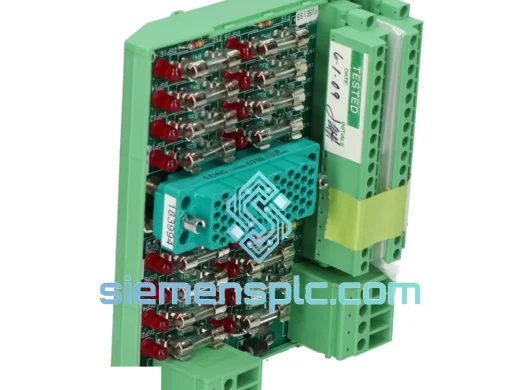
TRICONEX 9563-810 Safety Termination Panel
Tricon
Origin US
Safety System Termination Panel
TRICONEX
RFQ Ready
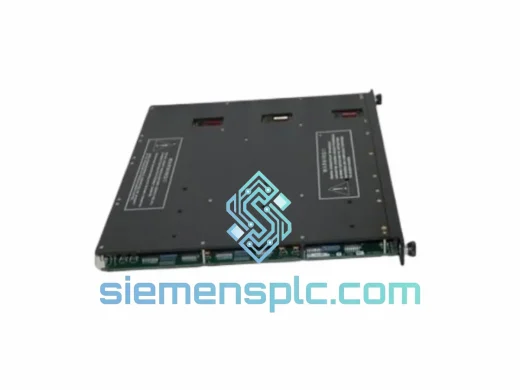
TRICONEX 7400210-010 Digital Input Module – Tricon TMR
Tricon
Origin US
Digital Input Module
TRICONEX
RFQ Ready
Triconex 3805E Analog Output Module – Tricon TMR
Tricon
Origin US
Analog Output Module