Product Overview
Triconex 9761-210 — Every Minute of TMR Degradation Is a Liability. Ship Today.
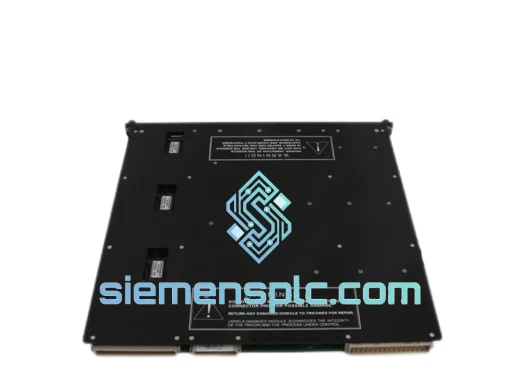
A single-leg fault on your Tricon safety system does not trip the process — but it strips away the redundancy your SIL 3 loop depends on. You are now running 2oo2 logic in a 2oo3 architecture. One more failure and you are looking at a spurious trip or, worse, a demand on a degraded safety function. The Triconex 9761-210 is the 16-channel, 4–20 mA analog current input module that restores your TMR architecture to full voting integrity. We stock verified units in Xiamen and execute same-day dispatch on confirmed purchase orders. No OEM queue. No broker guesswork. A tested module at your site in 24–96 hours depending on destination.
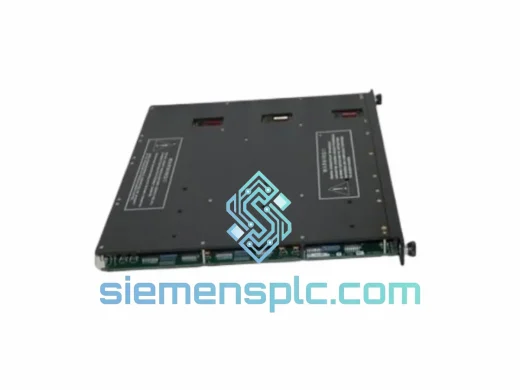
The 9761-210 slots directly into the Tricon 7400-series main chassis. It handles the full signal conditioning chain — loop power, A/D conversion at 12-bit resolution, optical isolation per channel, and real-time self-diagnostics reported back to the Tricon MP. When the module is healthy, you see nothing. When it is not, TriStation 1131 tells you exactly which leg and which channel have deviated. That diagnostic transparency is what makes the replacement decision straightforward — and what makes having a spare on the shelf non-negotiable.
URGENT REQUIREMENT? Contact: [email protected] | WhatsApp: +86 18359268345
Quick Technical Datasheet
| Parameter |
Specification |
Status |
| Part Number |
9761-210 |
✅ Ready to Ship |
| Manufacturer |
Triconex (Schneider Electric) |
— |
| Platform |
Tricon Triple Modular Redundant (TMR) |
— |
| Module Function |
Analog Current Input |
— |
| Input Signal Range |
4–20 mA (0–20 mA configurable) |
— |
| Channel Count |
16 logical channels (3 × 16 physical legs) |
— |
| ADC Resolution |
12-bit |
— |
| Accuracy |
±0.1% of full scale |
— |
| Channel Isolation |
Optical — channel-to-channel and channel-to-backplane |
— |
| Safety Integrity Level |
SIL 3 per IEC 61508 / IEC 61511 |
— |
| Voting Architecture |
2-out-of-3 (2oo3) TMR |
— |
| Chassis Compatibility |
Tricon 7400-series Main Chassis |
— |
| Operating Temperature |
0°C to +60°C |
— |
| Certifications |
TÜV SIL 3, FM, CE, ATEX Zone 2 |
— |
| Module Weight |
~340 g |
— |
| Dispatch Lead Time |
Same business day (PO before 14:00 CST) |
✅ In Stock — Xiamen |
| Warranty |
12 months, DOA swap within 30 days |
— |
Troubleshooting & Replacement Tips
Ten years of field calls on Tricon systems produce a short list of failure patterns for the 9761-210. Work through these before you pull the module — misdiagnosis wastes time you do not have.
Fault Codes and What They Actually Mean:
-
LEG_FAULT on one leg, channels reading normally on the other two: Classic single-leg hardware degradation. The 2oo3 voter is still functioning correctly. This is the textbook replacement scenario — the module on the faulted leg is the target. Confirm by checking the LED on the physical module: solid amber means internal self-test failure, not a field wiring issue.
-
OPEN_CIRCUIT on a specific channel, single leg: Before condemning the 9761-210, walk to the FTA terminal block and verify loop continuity. A failed 250 Ω burden resistor on the FTA mimics a module input fault in TriStation. Swap the resistor first — it is a five-minute fix versus a module replacement.
-
ALL_LEGS_FAULT on the same channel number: The fault is upstream of the module. All three legs are seeing the same bad signal, which means the field transmitter, its 24 VDC supply, or the loop wiring is the culprit. Do not replace the 9761-210 — it is working correctly.
-
Intermittent AI_FAULT clearing on power cycle: Thermal stress on the backplane connector. Reseat the module and inspect the gold-plated connector fingers for oxidation or mechanical damage. If the fault returns within 48 hours, replace the module — connector degradation is progressive.
-
Module passes self-test but channel accuracy drifts >0.5% over time: ADC reference drift, typically seen in modules with >8 years of service in high-ambient enclosures. Calibration is not field-adjustable on the 9761-210 — replacement is the correct action.
Hot-Swap Replacement — Step by Step:
- Open TriStation 1131 and confirm the two healthy legs are in NORMAL state and voting correctly. If two legs are already degraded, do not proceed with a hot-swap — coordinate a controlled shutdown with the control room.
- Log the action in your Management of Change (MOC) system. Even a hot-swap on a TMR system is a maintenance event that requires documentation for SIS audit purposes.
- Notify the board operator. The process will remain in safe state, but the operator needs to know a maintenance action is in progress on the SIS.
- Loosen the quarter-turn locking screw on the module faceplate and extract the 9761-210 straight out of the chassis slot. The backplane connector is keyed — extraction requires no lateral force. If you feel resistance, stop and check for a bent connector pin.
- Before inserting the replacement unit, verify the firmware revision label on the module matches your Tricon MP firmware compatibility matrix. A firmware mismatch will cause the module to fail its insertion self-test and report a persistent fault — you will have replaced one fault with another. If in doubt, contact your SIS engineer before insertion.
- Slide the replacement 9761-210 into the slot until the locking tab engages. The module LED will sequence amber → flashing green → solid green as it completes its self-test. This takes 15–30 seconds under normal conditions.
- In TriStation, confirm the replaced leg returns to NORMAL status. Verify all 16 channels are reading within ±0.2% of the corresponding values on the other two legs under steady-state process conditions.
- Record the replaced module’s serial number, firmware revision, and test result in your CMMS. Retain the removed module for failure analysis if required by your SIS management system.
Configuration Notes Specific to the 9761-210:
- No DIP switches, no rotary address selectors. Slot position in the Tricon chassis determines the I/O address automatically. The Tricon MP reads physical slot assignments at initialization — no manual addressing is required or possible.
- If the replacement module is going into a slot that previously held a different I/O type, a TriStation hardware configuration download is required before the slot will be recognized correctly. Coordinate this with your SIS engineer — a configuration download on a live Tricon system requires a specific procedure to avoid disrupting the running application.
- Channel engineering units and scaling (4 mA = 0.0%, 20 mA = 100.0%) are defined entirely within the TriStation application program. There is no hardware calibration step on the module itself after replacement. What you see in TriStation is what the module delivers.
Reliability in Harsh Conditions
The 9761-210 was not designed for a climate-controlled server room. It was designed for the inside of a junction box on an offshore platform, a compressor station in a desert, and a chemical reactor building where ambient temperatures swing 30°C between day and night shifts.
-
Mechanical Vibration: Qualified to IEC 60068-2-6 sinusoidal vibration profiles. The backplane connector uses a positive-retention locking mechanism that maintains electrical contact integrity under sustained mechanical vibration — the kind generated by large reciprocating compressors running 24/7 in adjacent bays. Offshore installations on floating production units are a standard deployment environment.
-
Thermal Load: Rated for continuous operation from 0°C to +60°C. The module’s internal power regulation handles the thermal dissipation of 16 active 4–20 mA loops without derating. In practice, the leading cause of premature failure in tropical and Middle Eastern installations is inadequate chassis cooling airflow — not the module itself. Verify your enclosure ventilation meets Triconex installation guidelines before blaming the hardware.
-
Humidity and Corrosive Atmospheres: The PCB carries a conformal coating that provides protection against humidity ingress in non-condensing environments. For coastal and offshore installations where salt-laden air is a daily reality, the enclosure IP rating is the critical variable — IEC 60529 IP54 minimum is the accepted baseline. The module is not rated for direct condensation exposure.
-
Electromagnetic Interference: Per-channel optical isolation provides inherent immunity to ground loops and common-mode noise. In plants where variable frequency drives, large induction motors, and high-voltage switchgear share cable trays with instrumentation wiring, this isolation is not a feature — it is a requirement. The 9761-210 meets IEC 61000-4 series EMC immunity standards.
Global Express Logistics
Our dispatch location is Xiamen, Fujian — a primary international trade port with direct air freight connections to hub airports across Europe, the Middle East, Southeast Asia, and the Americas. When your plant is in a degraded safety state, the logistics execution timeline is the critical path. Here is how we manage it:
-
Same-Day Dispatch: Purchase orders confirmed before 14:00 CST ship the same business day. Orders confirmed after the cut-off ship first thing the following morning. We do not batch urgent orders — each confirmed PO triggers an immediate pick-and-pack sequence.
-
Primary Carriers: DHL Express Worldwide and FedEx International Priority for all urgent shipments. Both carriers provide real-time door-to-door tracking and in-country customs clearance support. We select the carrier based on destination transit time at the moment of booking.
-
Typical Transit Times: Southeast Asia 1–2 business days | Middle East 2–3 days | Europe 3–4 days | North America 3–5 days | Australia 2–3 days. Times reflect standard express service under normal customs clearance conditions.
-
Export Documentation Package: Every shipment includes a commercial invoice, packing list, certificate of origin, and HS code declaration (HS 8537.10). If your import compliance team requires a specific customs value declaration format, end-user certificate, or material safety data sheet, notify us at order placement — we prepare these before dispatch, not after.
-
Customs Compliance: All exports are processed through Xiamen Customs with full legal declaration at actual transaction value. We do not under-declare or misclassify. Your import compliance record is protected.
-
Critical Shutdown Freight: For plant-down situations where standard express transit times are not acceptable, we can arrange hand-carry courier service to destinations outside the standard express network. Contact us via WhatsApp for a same-day logistics consultation — response time is under 30 minutes during business hours.
Contact Information
📧 Email: [email protected]
📱 WhatsApp: +86 18359268345
🌐 Web: siemensplc.com
© 2026 siemensplc.com. All rights reserved.