
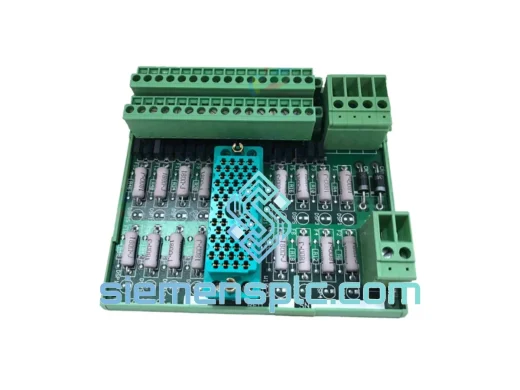
TRICONEX
In Stock OK
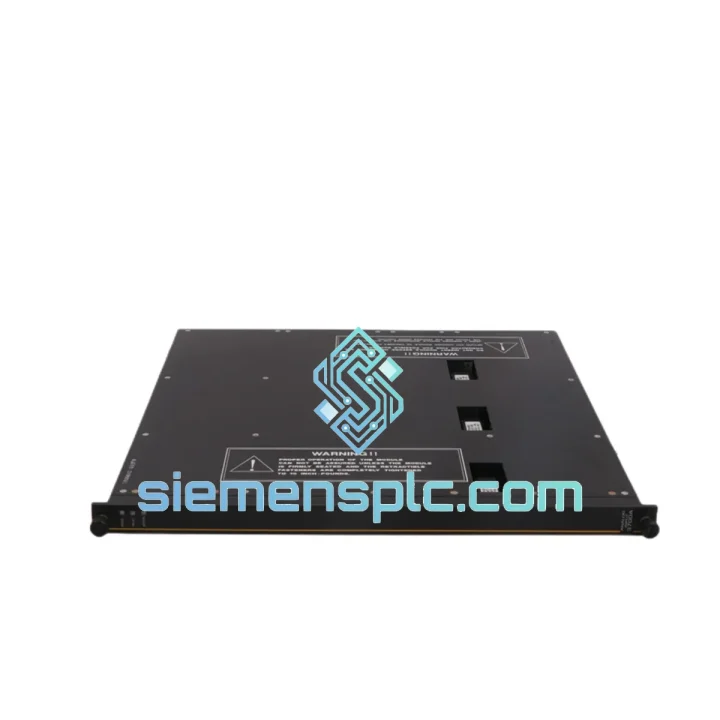
TRICONEX 3700 Analog Input Module – Tricon TMR
Request verified availability, condition, replacement risk review, packing options and courier lead time for 3700.
BrandTRICONEX
Part Number3700
ConditionAvailability Check
Lead TimeRFQ Confirmation
DocumentsDatasheet / photos by RFQ
ShippingExport packing available
Auto-filled RFQ
3700
Click Request Quote and the part number is inserted into the inquiry form automatically.
- Reply by email: [email protected]
- WhatsApp / Tel: +86 18359268345
- Mon-Sat 9:00-18:00 GMT+8
Procurement Data
Key Product Information
Core fields for model confirmation and RFQ routing. Detailed product narrative remains below.
- Brand
- TRICONEX
- Primary Part Number
- 3700
- Product Type
- Analog Input Module
- Series / Family
- Tricon
- Manufacturer
- TRICONEX (Schneider Electric)
- Country of Origin
- US
- Catalog Category
- I/O Modules
- Operating Temp.
- 0°C to +60°C
Model confirmed for inquiry
3700
Send quantity, destination and urgency. The RFQ form keeps this part number attached.
Request Quote
Product Overview
TRICONEX 3700 Analog Input Module: Signal Acquisition Architecture in Triple Modular Redundant Safety Loops
The TRICONEX 3700 is a dedicated analog input module engineered for deployment within the Tricon Triple Modular Redundant (TMR) safety platform. Its primary function is the acquisition, conditioning, and digitization of field-level analog signals — typically 4–20 mA current loops or 1–5 V DC voltage inputs — and the delivery of those values across the Tricon backplane to all three independent processing legs simultaneously. In a TMR architecture, this parallel signal distribution is not incidental; it is the structural basis upon which the system’s fault-tolerant voting logic operates. Without a module capable of presenting identical, time-coherent data to all three legs, the 2-out-of-3 (2oo3) voter cannot function with integrity. The 3700 is designed precisely to fulfill that requirement.
Each input channel on the 3700 passes through an independent signal conditioning stage before analog-to-digital conversion. The conditioning circuitry handles input ranging, open-wire detection, and over-range clamping. The ADC resolution and sampling rate are matched to the deterministic scan cycle of the Tricon main processor, ensuring that no channel introduces latency asymmetry between legs — a condition that would degrade voter confidence and potentially trigger spurious safe-state transitions. The module’s internal architecture enforces channel-to-channel electrical isolation, preventing ground loop currents from one field instrument from corrupting adjacent channel readings.
In process safety applications — emergency shutdown systems (ESD), fire and gas detection (F&G), high-integrity pressure protection systems (HIPPS) — the analog input layer is the first point of contact between the physical process and the safety logic. Measurement error or channel failure at this layer propagates directly into the safety function. The 3700 addresses this by providing per-channel diagnostics that are continuously reported to the Tricon main processor, enabling the system to detect and annunciate faults without interrupting the ongoing safety function. This is the operational definition of fault tolerance: continued correct output in the presence of a detected internal fault.
Real-time Stock & RFQ: [email protected] | WhatsApp: +86 18359268345
Technical Parameters
| Parameter | Specification |
|---|---|
| Part Number | 3700 |
| Manufacturer | TRICONEX (Schneider Electric) |
| Module Classification | Analog Input Module |
| Platform | Tricon TMR Safety System |
| Input Signal Types | 4–20 mA (current loop), 1–5 V DC (voltage) |
| Input Channel Count | 16 channels per module |
| ADC Resolution | 12-bit minimum effective resolution |
| Open-Wire Detection | Per-channel, hardware-level |
| Channel Isolation | Optical isolation, channel-to-channel and channel-to-backplane |
| Backplane Interface | Tricon proprietary TMR backplane bus |
| Operating Temperature | 0°C to +60°C |
| Storage Temperature | -40°C to +85°C |
| Relative Humidity | 5% to 95% non-condensing |
| Power Consumption | Supplied via Tricon chassis backplane (no external supply required) |
| Safety Integrity Level | SIL 3 capable per IEC 61508 |
| Certifications | CE, UL, IEC 61508 SIL 3, ISO 9001 (OEM facility) |
| Hot-Swap Support | Yes — online replacement without system shutdown |
| Module Weight | Approx. 500 g |
| Country of Origin | USA (OEM manufactured) |
| Warranty (siemensplc.com) | 12 months from date of shipment |
Hardware Logical Analysis
Optical Isolation Architecture: Each input channel on the 3700 employs opto-coupler isolation between the field wiring and the module’s internal signal processing circuitry. This galvanic barrier serves two distinct engineering purposes. First, it prevents common-mode voltage transients — generated by switching loads, motor drives, or ground potential differences across large plant areas — from coupling into the ADC input stage. Second, it eliminates the possibility of a field-side fault (short to ground, insulation breakdown) propagating into the backplane bus and affecting other modules in the chassis. In high-EMC environments such as offshore platforms or petrochemical plants with variable-frequency drives operating in proximity, this isolation is not a design luxury; it is a prerequisite for stable analog measurement.
TMR Backplane Signal Distribution: The Tricon backplane is not a conventional shared bus. It is a triplicated physical structure in which each of the three processing legs (Leg A, Leg B, Leg C) has its own dedicated data path. The 3700 presents digitized channel data simultaneously to all three legs within the same scan cycle. This synchronous distribution ensures that the 2oo3 voter in the main processor receives temporally consistent data from all three legs. Any leg that receives a value outside the voter’s configured tolerance window is flagged as discrepant, and the voter continues to operate on the two agreeing legs. The 3700’s backplane interface logic is designed to maintain this synchrony even under backplane noise conditions, using differential signaling and error-detection encoding on the data frames.
EMC Design and Shielding: The module’s PCB layout follows IEC 61000-series EMC design practices. High-frequency analog signal traces are routed with controlled impedance and guarded by ground planes on adjacent PCB layers. The module housing provides RF shielding continuity with the Tricon chassis ground structure. Input filter networks at each channel terminal suppress conducted interference in the frequency range most commonly generated by industrial switching equipment (10 kHz to 30 MHz), without introducing phase delay that would affect the accuracy of slow-moving process variables such as temperature or pressure.
Continuous Self-Diagnostics: The 3700 executes internal diagnostic routines on each scan cycle. These include reference voltage checks against internal precision references, ADC linearity verification using known test signals injected at the converter input, and open-wire detection by monitoring the current loop for below-threshold current values. Diagnostic results are encoded into the module status word transmitted to the main processor, where they are evaluated by the Tricon executive software and reported to the operator workstation via the TriStation programming environment. This diagnostic transparency allows maintenance personnel to identify a degrading channel before it reaches a failure state.
System Integration Benefits
- Deterministic scan-cycle alignment: The 3700’s ADC sampling is synchronized to the Tricon main processor’s scan clock, eliminating inter-leg data skew that would otherwise introduce artificial discrepancies in the voter comparison window.
- Non-interruptive hot-swap replacement: The module can be physically removed and replaced while the Tricon chassis remains energized and the safety function remains active. The replacement module initializes and re-synchronizes with the running legs without requiring a system restart or safe-state transition.
- Per-channel diagnostic granularity: Fault reporting is at the individual channel level, not at the module level. This allows a single degraded channel to be identified and isolated in the control system’s fault log without ambiguity, reducing mean time to repair (MTTR) in maintenance operations.
- Voter transparency via TriStation: The TriStation 1131 programming environment provides real-time visibility into the per-leg values for each input channel, enabling engineers to observe leg-to-leg agreement margins during commissioning and to detect gradual sensor drift before it triggers a voter discrepancy alarm.
- SIL 3 architectural contribution: The 3700’s TMR input architecture contributes to the overall system’s ability to achieve SIL 3 safety integrity levels as defined in IEC 61508. The module’s hardware fault tolerance (HFT) of 2 — meaning it can sustain two simultaneous hardware faults and still deliver a correct output — is a direct result of the triplicated signal path design.
- Compatibility with Tricon chassis revisions: The 3700 is compatible across multiple Tricon chassis generations, providing a stable hardware platform for long-lifecycle process safety installations where system upgrades are constrained by regulatory approval timelines.
- Reduced spurious trip probability: By providing three independent, isolated signal paths to the voter, the 3700 reduces the probability of a spurious safe-state trip caused by a single-channel measurement anomaly. The voter requires two legs to agree on an out-of-range condition before initiating a safety action, filtering single-point noise events.
- Standardized field wiring interface: The module’s terminal block accepts standard 4–20 mA two-wire and four-wire transmitter configurations without requiring external signal converters or isolators in most installations, reducing panel wiring complexity and potential failure points in the field junction box.
Quality Assurance & Global Logistics
Every TRICONEX 3700 unit supplied by siemensplc.com is sourced through verified industrial procurement channels and subjected to a structured pre-shipment inspection protocol. Physical inspection covers label authenticity, connector pin condition, PCB surface integrity, and housing markings consistent with genuine TRICONEX manufacturing standards. Units exhibiting any indicator of non-OEM origin — including inconsistent label fonts, substandard connector plastics, or anomalous PCB silkscreen — are rejected at intake and not offered for sale.
Functional verification is performed on applicable units using Tricon-compatible test infrastructure. This includes backplane communication handshake confirmation, channel response verification across the input range, and diagnostic status word validation. A 12-month warranty from the date of shipment covers functional failure under normal operating conditions. Units confirmed as defective on arrival (DOA) within 14 days of receipt are eligible for full replacement, with return logistics coordinated by siemensplc.com.
Logistics operations are based in Xiamen, China, with access to DHL Express, FedEx International Priority, and UPS Worldwide services. In-stock units are dispatched within 1–3 business days of order confirmation. Shipments include a commercial invoice, packing list, and certificate of origin as standard documentation. Export compliance screening is applied to all international orders. Bulk order pricing is available for quantities of 5 units or more; contact the sales team for a formal quotation within 24 hours.
Contact Information
Email: [email protected]
WhatsApp: +86 18359268345
Web: siemensplc.com
Location: Xiamen, China
© 2026 siemensplc.com. All rights reserved.
Ready to quote
[email protected]
Send This Part Number to Sales
RFQ workflow
Quality workflow ->
Confirmation Process
01Model confirmation
We check the full part number, brand, series and visible nameplate information before quotation.
02Availability reply
Sales confirms stock path, condition option, quantity and realistic lead time for export dispatch.
03Packing & courier
DHL, FedEx, UPS or buyer courier arrangements can be reviewed with packing requirements.
Continue sourcing
Browse full catalog ->
Related Automation Parts
Similar brand or category products for fast comparison and multi-item RFQ lists.
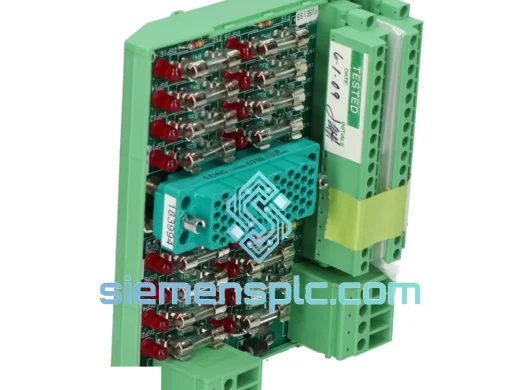
TRICONEX
RFQ Ready
TRICONEX 9563-810 Safety Termination Panel
Tricon
Origin US
Safety System Termination Panel
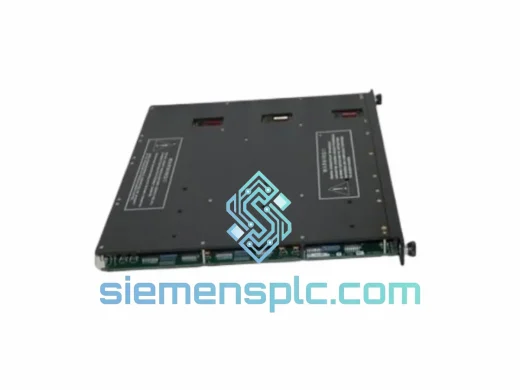
TRICONEX
RFQ Ready
TRICONEX 7400210-010 Digital Input Module – Tricon TMR
Tricon
Origin US
Digital Input Module
TRICONEX
RFQ Ready
TRICONEX 7400208B-020 Safety I/O Baseplate – Tricon TMR Series
TRICON
Origin US
Safety I/O Baseplate