
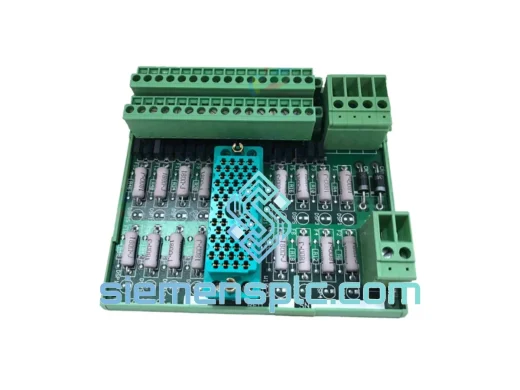
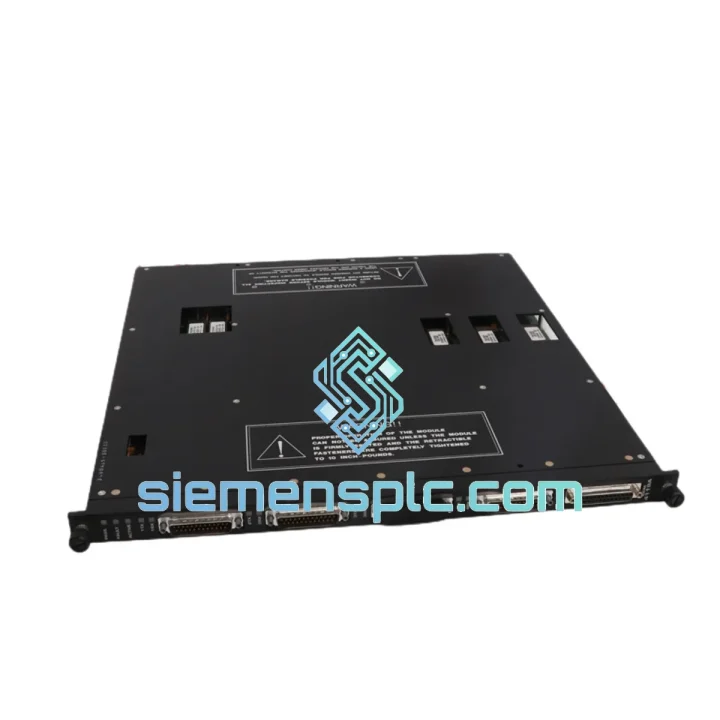
TRICONEX
In Stock OK
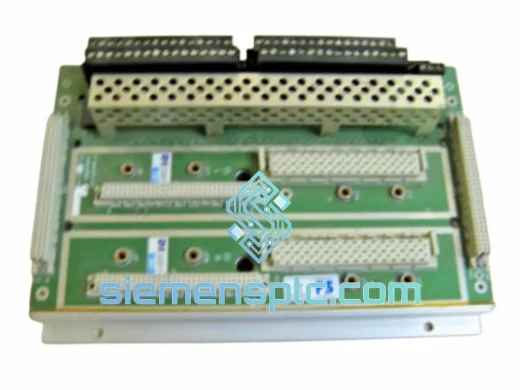
TRICONEX 4107 Safety PLC Module – Tricon Series
Request verified availability, condition, replacement risk review, packing options and courier lead time for 4107.
BrandTRICONEX
Part Number4107
ConditionAvailability Check
Lead TimeRFQ Confirmation
DocumentsDatasheet / photos by RFQ
ShippingExport packing available
Auto-filled RFQ
4107
Click Request Quote and the part number is inserted into the inquiry form automatically.
- Reply by email: [email protected]
- WhatsApp / Tel: +86 18359268345
- Mon-Sat 9:00-18:00 GMT+8
Procurement Data
Key Product Information
Core fields for model confirmation and RFQ routing. Detailed product narrative remains below.
- Brand
- TRICONEX
- Primary Part Number
- 4107
- Product Type
- Safety PLC Module
- Series / Family
- Tricon
- Manufacturer
- Schneider Electric (TRICONEX brand)
- Country of Origin
- US
- Catalog Category
- I/O Modules
- Operating Temp.
- 0 °C to +60 °C
- Warranty
- 12 months from confirmed shipment date
Model confirmed for inquiry
4107
Send quantity, destination and urgency. The RFQ form keeps this part number attached.
Request Quote
Product Overview
TRICONEX 4107 Enhanced Intelligent Module: Field-Boundary Signal Validation in Tricon Triple Modular Redundant Safety Controllers
The TRICONEX 4107 Enhanced Intelligent Module occupies a structurally critical position in the Schneider Electric Tricon TMR safety controller architecture. Unlike conventional I/O cards that function as passive signal conduits between field devices and a central CPU, the 4107 performs autonomous signal conditioning, per-channel analog-to-digital conversion, and continuous hardware self-diagnostics at the field boundary — before any process variable data is committed to the Tribus backplane bus. This local processing model is not an optional feature; it is a mandatory architectural requirement of the Tricon TMR voting mechanism. The three independent processor legs of the Tricon main chassis can produce a statistically valid majority vote only when each leg receives field data of independently verified integrity. The 4107 is the hardware layer that enforces that integrity at the point of field connection.
In a deployed safety instrumented function, the 4107 interfaces directly with field transmitters, discrete switches, or actuator feedback circuits. Its analog front-end applies hardware linearization and range-limit validation to each channel. Digitized channel values are placed on the Tribus backplane at intervals synchronized to the Tricon CPU scan cycle, delivering identical data frames to all three processor legs simultaneously. This coherent data delivery is the precondition for correct TMR majority voting. Any channel anomaly — field device degradation, wiring discontinuity, or internal module hardware fault — is classified by the 4107’s dedicated diagnostic processor and written to the backplane status register within the same scan cycle in which the condition is detected. The Tricon CPU reads this register each scan and can initiate a maintenance alarm, a safe state demand, or a diagnostic log entry without waiting for the fault to propagate to a process variable deviation.
The enhanced-generation designation reflects documented improvements over earlier Tricon I/O module revisions: tighter per-channel isolation voltage ratings, extended ambient temperature operating margins, higher diagnostic coverage ratios against the IEC 61508-2 hardware fault tolerance model, and improved immunity to conducted and radiated electromagnetic interference per the IEC 61000 industrial EMC series. Each of these characteristics has a direct numerical effect on the probability of failure on demand calculations that underpin IEC 61508 SIL 3 safety case documentation. Process facilities operating Tricon systems in hydrocarbon separation, LNG liquefaction, ethylene cracking, or nuclear auxiliary control applications depend on the 4107’s verified diagnostic architecture to maintain the hardware fault tolerance margins required by their functional safety management systems.
The module supports online hot-swap replacement without interrupting the running safety application. Upon reinsertion into a live Tricon chassis, the 4107 completes backplane synchronization within one controller scan cycle, restoring full three-leg TMR redundancy without a controller restart, a safe state transition, or a process shutdown. In continuous-process industries, this capability eliminates the production loss associated with planned maintenance windows for I/O module replacement.
Real-time Stock & RFQ: [email protected] | WhatsApp: +86 18359268345
Technical Parameters
| Parameter | Specification |
|---|---|
| Part Number | TRICONEX 4107 |
| Manufacturer | Schneider Electric (TRICONEX brand) |
| Product Series | Tricon Safety System — Enhanced Generation I/O |
| Module Function | Enhanced Intelligent Field Interface Module |
| Architecture | Triple Modular Redundant (TMR) — Tricon main and expansion chassis |
| Backplane Bus | Tribus high-speed synchronous backplane, deterministic data delivery |
| Safety Integrity Level | SIL 1 / SIL 2 / SIL 3 per IEC 61508 Ed. 2 |
| Applicable Standards | IEC 61508, IEC 61511, IEC 61513 |
| Channel Isolation Method | Per-channel galvanic isolation via high-speed optocoupler arrays |
| Surge Immunity | IEC 61000-4-5 Level 3 (2 kV line-to-earth, 1 kV line-to-line) |
| EFT/Burst Immunity | IEC 61000-4-4 industrial class |
| Operating Temperature | 0 °C to +60 °C |
| Storage Temperature | −40 °C to +85 °C |
| Relative Humidity | 5% to 95% RH, non-condensing |
| Power Source | Backplane-sourced; refer to Tricon chassis power budget documentation |
| Hot-Swap Support | Yes — online extraction and reinsertion, one-scan-cycle resynchronization |
| Diagnostic Coverage | High DC per IEC 61508-2 hardware fault tolerance requirements |
| Backplane Data Integrity | CRC verification on all Tribus data frames |
| EMC Classification | IEC 61000 series — Class A industrial environment |
| Approximate Weight | 500 g |
| Country of Origin | United States |
| Warranty | 12 months from confirmed shipment date |
Hardware Logical Analysis
Per-Channel Optocoupler Isolation with Transient Suppression: Each signal channel routes through a dedicated optocoupler stage rated to withstand common-mode voltage transients at IEC 61000-4-5 Level 3 — 2 kV line-to-earth and 1 kV line-to-line. In field installations where I/O wiring shares cable trays with medium-voltage power conductors or variable-frequency drive output cables, ground potential differences and inductively coupled transients are a persistent source of false channel readings. The 4107’s per-channel isolation barrier prevents these transients from reaching the signal conditioning circuitry. Optocoupler response speed is selected to pass the signal bandwidth required for the on-board A/D conversion rate without introducing phase distortion that would degrade process variable accuracy at the Tricon CPU.
Tribus Backplane CRC Frame Verification: All data frames transmitted by the 4107 onto the Tribus backplane carry a cyclic redundancy check computed at the module level. Each of the three Tricon processor legs independently verifies the CRC of received I/O data before admitting it to the TMR voting algorithm. A CRC mismatch — caused by backplane noise corruption or a module transmitter anomaly — causes the receiving leg to flag the data frame as invalid rather than passing a corrupted value into the majority vote. This is architecturally distinct from conventional PLC backplane designs, where data integrity between I/O module and CPU is assumed rather than independently verified at the receiving processor.
Dedicated Diagnostic Microprocessor on Independent Data Path: The 4107 contains a secondary microprocessor dedicated exclusively to continuous self-test execution. This processor operates on a data path independent of the signal conditioning chain, running reference voltage verification, A/D converter linearity checks, channel cross-comparison, and optocoupler drive current monitoring at intervals calibrated to meet the diagnostic test interval requirements for the target SIL. Fault classification results are written to the module’s backplane status register each scan cycle. This architecture ensures that a developing hardware fault is detected and reported before it can produce an undetected dangerous failure — directly reducing the PFDavg contribution of the I/O module over the proof test interval.
Passive Thermal Management via Copper Pour Planes: High-dissipation components — voltage regulators, optocoupler driver stages, and the diagnostic microprocessor — are positioned in thermally isolated PCB zones with copper pour planes functioning as conductive heat spreaders to the module’s aluminum faceplate. This passive approach eliminates the long-term reliability risk associated with active cooling components. In safety system applications where module replacement intervals may span 10 to 20 years of continuous operation, the absence of fan bearings, heat pipe joints, or thermal interface compounds subject to dry-out is a quantifiable contributor to the module’s MTBF under sustained operating conditions.
Multi-Layer PCB Stackup with Dedicated Ground Planes: The 4107’s PCB employs a multi-layer stackup with dedicated ground planes separating the analog signal conditioning layers from the digital processing layers. This layer separation reduces capacitive coupling between high-impedance analog input traces and the switching noise generated by the diagnostic processor’s clock circuitry. The module’s metal housing provides supplementary shielding against radiated emissions from adjacent chassis slots, maintaining signal integrity on low-level analog channels in densely populated Tricon chassis configurations.
System Integration Benefits
- Preserved CPU Scan Cycle Determinism: Local execution of signal conditioning and channel diagnostics on the 4107 prevents I/O processing overhead from accumulating in the Tricon CPU’s safety task. The CPU receives pre-validated, pre-linearized channel data each scan, maintaining the fixed scan cycle time that SIL loop response time calculations are based on — regardless of the number of active I/O channels in the chassis.
- Channel-Resolution Fault Reporting in TriStation 1131: Fault codes generated by the 4107’s diagnostic processor are surfaced at individual channel granularity in TriStation 1131 diagnostic displays. Maintenance engineers identify the specific failed channel, its fault classification, and the time of first detection without physical access to the module or interruption of the running safety application — reducing MTTR in live plant environments where cabinet access requires a permit-to-work.
- Online Module Replacement Without Safe State Demand: The 4107’s hot-swap architecture allows extraction and reinsertion while the Tricon system remains in the run state. The replacement module completes backplane synchronization within one scan cycle, restoring full three-leg TMR redundancy without a process shutdown, a safe state demand, or a controller restart sequence.
- Documented DC Values for IEC 61508-2 Hardware Fault Tolerance Calculations: The module’s diagnostic architecture provides published diagnostic coverage values that can be entered directly into IEC 61508-2 hardware fault tolerance calculations. This reduces the safety case documentation burden for facilities undergoing PSSR, HAZOP revalidation, or functional safety audit under IEC 61511 Clause 11.
- Channel-Level Fault Isolation Preventing Nuisance Shutdowns: A single degraded field transmitter or open-circuit wiring fault does not trigger a system-wide safe state demand. The 4107 flags the affected channel as faulted while all remaining channels continue normal operation, preserving process availability and allowing the maintenance team to address the field fault on a planned basis.
- Backward Mechanical and Electrical Compatibility with Installed Tricon Chassis: The 4107 is dimensionally and electrically compatible with standard Tricon main chassis and expansion chassis backplane connectors. No chassis modification, firmware upgrade, or I/O map reconfiguration is required in the majority of installed base replacement scenarios, reducing engineering effort and validation testing scope.
- Simplified Spare Parts Inventory Management: A single 4107 module can serve as a spare for multiple I/O slot positions within a Tricon chassis where I/O type assignments are compatible. This interchangeability reduces the number of distinct spare part numbers a plant maintenance team must stock to achieve a target spare parts availability level for the safety system.
- Supply Chain Traceability Supporting IEC 62443 and IEC 61511 Procurement Requirements: Modules supplied through siemensplc.com carry documented sourcing traceability to authorized distribution or verified surplus channels, supporting the counterfeit prevention requirements of IEC 62443-2-4 and the procurement quality requirements of IEC 61511 Clause 11.2 for safety instrumented system components.
Quality Assurance & Global Logistics
Every TRICONEX 4107 unit dispatched from siemensplc.com passes a structured pre-shipment inspection before packaging. The inspection sequence covers: visual examination of the PCB surface, connector pins, and module labeling for physical damage, solder joint anomalies, or evidence of prior rework; firmware revision verification against the manufacturer’s part marking and revision history; and continuity checks on all I/O connector positions using calibrated test equipment. Units that do not pass all inspection criteria are quarantined and withheld from inventory.
ESD-safe packaging is applied as standard: each module is sealed in a static-dissipative moisture barrier bag with desiccant, placed in a foam-lined rigid carton, and labeled with handling instructions consistent with IPC/JEDEC J-STD-033 moisture sensitivity requirements. This packaging specification ensures the module arrives in field-ready condition after air freight transit of any duration.
Logistics operations are based in Xiamen, China, with direct access to international express freight networks including DHL Express, FedEx International Priority, and UPS Worldwide Express. For urgent plant maintenance requirements, same-day dispatch is available for confirmed in-stock units when orders are placed before 14:00 CST. Indicative transit times: Southeast Asia 2–4 business days; Europe 4–6 business days; North America 3–5 business days via express courier. Sea freight consolidation is available for bulk procurement orders. Full export documentation — commercial invoice, packing list, certificate of origin, and material safety data sheet where applicable — is prepared for all international shipments to support customs clearance at the destination port. All modules carry a 12-month warranty from the confirmed shipment date, with warranty claims acknowledged within one business day.
Contact Information
Email: [email protected]
WhatsApp: +86 18359268345
Web: siemensplc.com
Location: Xiamen, China
© 2026 siemensplc.com. All rights reserved.
Ready to quote
[email protected]
Send This Part Number to Sales
RFQ workflow
Quality workflow ->
Confirmation Process
01Model confirmation
We check the full part number, brand, series and visible nameplate information before quotation.
02Availability reply
Sales confirms stock path, condition option, quantity and realistic lead time for export dispatch.
03Packing & courier
DHL, FedEx, UPS or buyer courier arrangements can be reviewed with packing requirements.
Continue sourcing
Browse full catalog ->
Related Automation Parts
Similar brand or category products for fast comparison and multi-item RFQ lists.
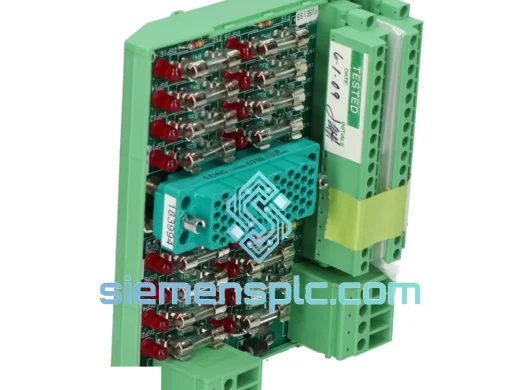
TRICONEX
RFQ Ready
TRICONEX 9563-810 Safety Termination Panel
Tricon
Origin US
Safety System Termination Panel
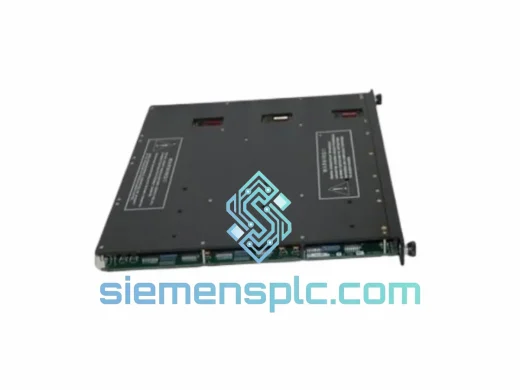
TRICONEX
RFQ Ready
TRICONEX 7400210-010 Digital Input Module – Tricon TMR
Tricon
Origin US
Digital Input Module
TRICONEX
RFQ Ready
TRICONEX 7400208B-020 Safety I/O Baseplate – Tricon TMR Series
TRICON
Origin US
Safety I/O Baseplate