
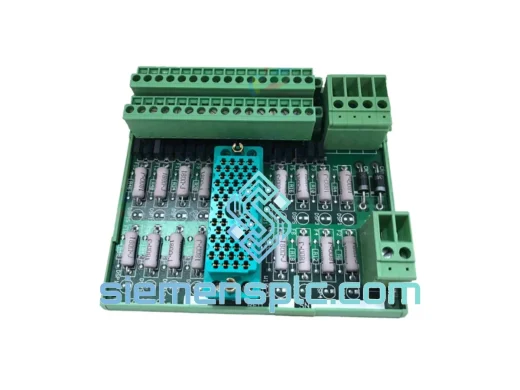
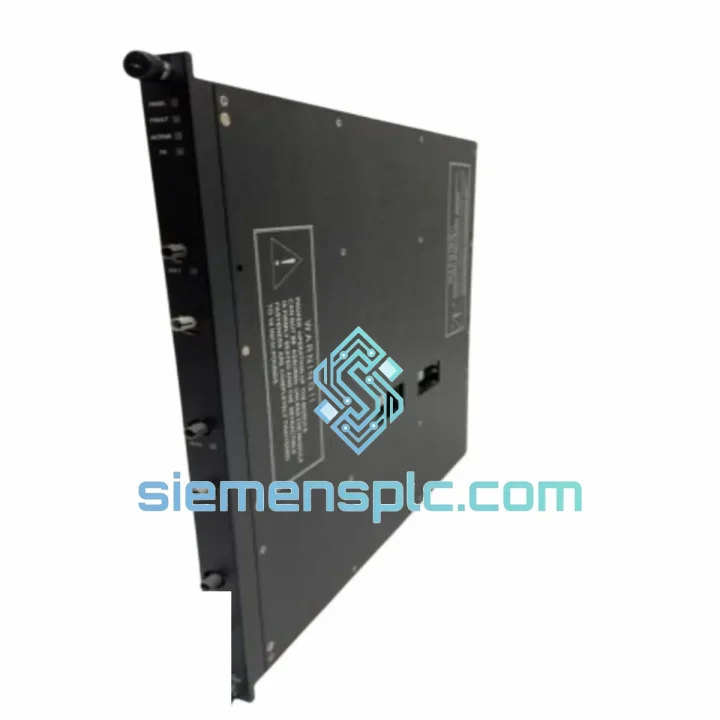
TRICONEX
In Stock OK
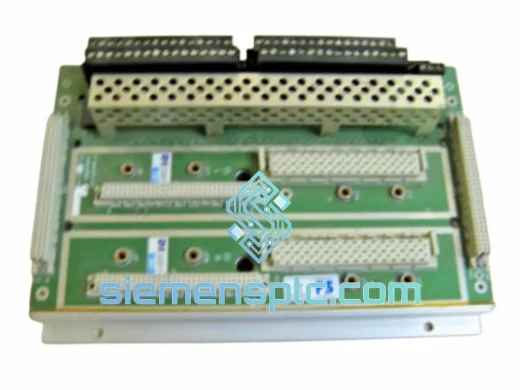
TRICONEX 4200 Remote Extender Module – TRICON TMR Series
Request verified availability, condition, replacement risk review, packing options and courier lead time for 4200.
BrandTRICONEX
Part Number4200
ConditionAvailability Check
Lead TimeRFQ Confirmation
DocumentsDatasheet / photos by RFQ
ShippingExport packing available
Auto-filled RFQ
4200
Click Request Quote and the part number is inserted into the inquiry form automatically.
- Reply by email: [email protected]
- WhatsApp / Tel: +86 18359268345
- Mon-Sat 9:00-18:00 GMT+8
Procurement Data
Key Product Information
Core fields for model confirmation and RFQ routing. Detailed product narrative remains below.
- Brand
- TRICONEX
- Primary Part Number
- 4200
- Product Type
- Remote Extender Module
- Series / Family
- TRICON
- Manufacturer
- TRICONEX (Schneider Electric)
- Country of Origin
- US
- Catalog Category
- I/O Modules
- Operating Temp.
- 0°C to 60°C (32°F to 140°F)
- Warranty
- 12 months from date of shipment
- Compliance
- CE, FM, TÜV Rheinland (per TRICON platform certification)
Model confirmed for inquiry
4200
Send quantity, destination and urgency. The RFQ form keeps this part number attached.
Request Quote
Product Overview
TRICONEX 4200 Fiber Optic Primary Remote Extender Module: Backbone Connectivity in TMR Safety Architectures
Within a TRICON Triple Modular Redundant (TMR) safety system, the physical separation between the main chassis and remote I/O racks introduces a fundamental engineering challenge: how to maintain deterministic, fault-tolerant communication across distances that exceed copper-based backplane limits — in environments saturated with electromagnetic interference from variable-frequency drives, high-voltage switchgear, and heavy motor loads. The TRICONEX 4200 Primary Fiber Optic Remote Extender Module is the hardware answer to that challenge. It forms the primary communication leg of the fiber optic link between the TRICON main chassis and a remote expansion chassis, preserving the TMR voting architecture across the physical gap and ensuring that the safety instrumented system (SIS) retains full diagnostic visibility and fault-tolerant execution regardless of installation distance or electrical noise floor.
The 4200 is not a passive repeater. It is an active module that participates in the TRICON backplane protocol, managing the synchronization of all three TMR legs across the fiber link. Its counterpart — the Secondary Remote Extender (typically the 4201) — resides in the remote chassis and completes the point-to-point fiber segment. Together, they extend the TRICON backplane as if the remote rack were physically adjacent to the main chassis, with no degradation in scan-cycle determinism or fault-detection coverage.
Real-time Stock & RFQ: [email protected] | WhatsApp: +86 18359268345
Technical Parameters
| Part Number | 4200 |
| Manufacturer | TRICONEX (Schneider Electric) |
| Module Classification | Primary Fiber Optic Remote Extender Module |
| Platform | TRICON Triple Modular Redundant (TMR) Safety System |
| Communication Medium | Fiber Optic — Primary Channel |
| Fiber Type | Multi-mode fiber optic cable (ST connectors, per TRICONEX cable spec) |
| Maximum Extension Distance | Up to 1 km (application-dependent; consult TRICONEX system manual) |
| Chassis Slot | Dedicated Remote Extender slot in TRICON main chassis |
| Power Source | Supplied via TRICON chassis backplane (no external PSU required) |
| Operating Temperature | 0°C to 60°C (32°F to 140°F) |
| Relative Humidity | 5% to 95% non-condensing |
| Form Factor | Single-slot rack-mount module |
| Weight | Approx. 800 g |
| Safety Certification | IEC 61508 SIL 3 (as part of TRICON platform) |
| Compliance | CE, FM, TÜV Rheinland (per TRICON platform certification) |
| Warranty | 12 months from date of shipment |
| Lead Time | In-stock: 3–5 business days. Sourced: 2–4 weeks. Confirm availability via RFQ. |
Hardware Logical Analysis
The 4200’s design reflects a specific set of engineering constraints imposed by the TRICON TMR architecture. Understanding these constraints explains why the module behaves the way it does under fault conditions and why its fiber optic implementation is superior to copper alternatives in process plant environments.
Optical Isolation and EMC Immunity: The transition from electrical to optical signaling at the 4200’s transmitter stage provides galvanic isolation between the main chassis and the remote rack. In a refinery or offshore platform, ground potential differences between physically separated equipment rooms can reach several volts — enough to corrupt differential copper signals or damage interface circuitry. The fiber link eliminates this path entirely. The optical transmitter converts the TRICON backplane electrical signal to modulated light; the receiver at the 4201 end converts it back. No common-mode voltage, no ground loop, no conducted EMI can traverse the fiber segment. This is not a software-level mitigation — it is a physical property of the medium.
TMR Leg Synchronization Across the Fiber Link: The TRICON architecture runs three independent processing legs (Leg A, Leg B, Leg C) that execute the same safety application in lockstep and compare outputs through a 2-out-of-3 (2oo3) voter. When a remote chassis is added, all three legs must extend across the fiber link with their synchronization preserved. The 4200 manages this by maintaining separate logical channels for each TMR leg within the fiber protocol frame. A fault on one leg’s optical path is detected and reported without affecting the other two legs, allowing the system to continue operating in a degraded but safe 2oo2 mode while the fault is diagnosed and corrected — without a process shutdown.
Active Fault Detection and Diagnostic Reporting: The 4200 continuously monitors its own optical transmitter power, receiver signal strength, and frame synchronization status. Any degradation — whether from fiber bend loss, connector contamination, or transmitter aging — is flagged as a diagnostic alarm in the TriStation 1131 engineering workstation before it reaches a threshold that would cause a communication fault. This predictive diagnostic capability is a direct contributor to the high diagnostic coverage (DC) figures that allow the TRICON platform to achieve SIL 3 certification under IEC 61508.
Hot-Swap Architecture: The 4200 supports online replacement within the TRICON hot-swap framework. When a module is removed from the main chassis, the remaining two TMR legs maintain system operation. The replacement module re-synchronizes to the running system without requiring a safety application download or process interruption. This behavior is governed by the TRICON backplane arbitration logic, which the 4200 participates in as an active node rather than a passive bridge.
System Integration Benefits
- Deterministic Scan-Cycle Preservation: The fiber link introduces a fixed, bounded latency that the TRICON executive accounts for in its scan-cycle timing. Remote I/O data arrives within the same deterministic window as local I/O, ensuring that safety function response times remain within the SIL 3 design basis.
- Physical Separation Without Architectural Compromise: Process plants often require I/O marshalling panels to be located close to field devices, hundreds of meters from the main control room. The 4200 enables this physical separation without splitting the TMR architecture into independent subsystems — the remote rack remains a fully integrated part of the single TRICON safety system.
- Elimination of Copper-Based Noise Paths: In environments with large motor starters, VFDs, and high-current bus bars, copper communication cables act as antennas. Replacing copper with fiber removes the conducted and radiated EMI coupling path between the main chassis and remote I/O, reducing nuisance diagnostic alarms and improving system availability.
- Scalable Remote I/O Expansion: Multiple remote extender pairs can be deployed within a single TRICON system (subject to chassis slot availability and system configuration limits), allowing the safety system footprint to scale with plant expansion without replacing the main processor or safety application.
- Transparent Diagnostic Visibility: All remote I/O module status, channel-level diagnostics, and communication health data from the remote chassis are presented in TriStation 1131 with the same granularity as local I/O. Maintenance engineers do not need separate tools or interfaces to interrogate remote rack health.
- Reduced Cable Infrastructure Cost: A single fiber pair replaces the multiple copper conductors that would otherwise be required to carry parallel I/O signals over long distances. For installations exceeding 50 meters, the total installed cost of fiber — including conduit, termination, and cable — is typically lower than equivalent copper infrastructure.
- Compatibility with Existing TRICON Chassis: The 4200 installs into the standard TRICON main chassis without hardware modification. No firmware upgrade is required for the main processor modules in most system revisions. This makes it a viable option for brownfield expansions where the existing safety system must remain certified and in service.
- Support for Geographically Distributed Safety Functions: In large process units — such as a multi-train LNG facility or a pipeline compressor station — safety functions may be physically distributed across a site. The 4200 enables a single TRICON system to serve multiple local equipment areas via remote I/O, reducing the number of independent SIS controllers and simplifying the functional safety management structure.
Quality Assurance & Global Logistics
Every TRICONEX 4200 unit supplied through siemensplc.com undergoes a structured verification process before dispatch. Visual inspection confirms label authenticity, connector integrity, and PCB condition. Functional verification checks power-on behavior and optical port activity. Units are packed in anti-static ESD shielding bags with foam-lined outer cartons rated for international air freight handling.
Shipments originate from Xiamen, China — a designated national port city with direct air cargo connections to major hubs in Europe (Frankfurt, Amsterdam), the Middle East (Dubai), Southeast Asia (Singapore, Kuala Lumpur), and North America (Los Angeles, Chicago). Xiamen Customs operates a streamlined export declaration process for industrial electronic components under HS Code 8537, with typical customs clearance completed within 24 hours of cargo acceptance. This logistics infrastructure allows siemensplc.com to offer DHL Express, FedEx International Priority, and UPS Worldwide Expedited services with transit times of 3–7 business days to most destinations.
For bulk orders or project-based procurement, sea freight consolidation via Xiamen Yuanhai Container Terminal is available, with weekly sailings to Rotterdam, Houston, and Singapore. All export documentation — commercial invoice, packing list, certificate of origin, and HS Code declaration — is prepared in-house and provided with each shipment. Multi-currency payment is supported: USD, EUR, CNY, and HKD via T/T bank transfer, with PayPal available for qualified accounts.
A 12-month warranty covers hardware defects under normal operating conditions. Warranty claims are processed within 5 business days of receipt of the returned unit, with replacement or credit issued upon verification.
Contact Information
📧 Email: [email protected]
💬 WhatsApp: +86 18359268345
🌐 Web: siemensplc.com
📍 Location: Xiamen, China
© 2026 siemensplc.com. All rights reserved.
Ready to quote
[email protected]
Send This Part Number to Sales
RFQ workflow
Quality workflow ->
Confirmation Process
01Model confirmation
We check the full part number, brand, series and visible nameplate information before quotation.
02Availability reply
Sales confirms stock path, condition option, quantity and realistic lead time for export dispatch.
03Packing & courier
DHL, FedEx, UPS or buyer courier arrangements can be reviewed with packing requirements.
Continue sourcing
Browse full catalog ->
Related Automation Parts
Similar brand or category products for fast comparison and multi-item RFQ lists.
TRICONEX
RFQ Ready
TRICONEX 9563-810 Safety Termination Panel
Tricon
Origin US
Safety System Termination Panel
TRICONEX
RFQ Ready
TRICONEX 7400210-010 Digital Input Module – Tricon TMR
Tricon
Origin US
Digital Input Module
TRICONEX
RFQ Ready
TRICONEX 7400208B-020 Safety I/O Baseplate – Tricon TMR Series
TRICON
Origin US
Safety I/O Baseplate