
TRICONEX
In Stock OK
TRICONEX 4210 Analog Input Module – Tricon TMR
Request verified availability, condition, replacement risk review, packing options and courier lead time for 4210.
BrandTRICONEX
Part Number4210
ConditionAvailability Check
Lead TimeRFQ Confirmation
DocumentsDatasheet / photos by RFQ
ShippingExport packing available
Auto-filled RFQ
4210
Click Request Quote and the part number is inserted into the inquiry form automatically.
- Reply by email: [email protected]
- WhatsApp / Tel: +86 18359268345
- Mon-Sat 9:00-18:00 GMT+8
Procurement Data
Key Product Information
Core fields for model confirmation and RFQ routing. Detailed product narrative remains below.
- Brand
- TRICONEX
- Primary Part Number
- 4210
- Product Type
- Analog Input Module
- Series / Family
- Tricon
- Manufacturer
- TRICONEX (Schneider Electric)
- Country of Origin
- US
- Catalog Category
- I/O Modules
- Operating Temp.
- 0°C to +60°C
- Warranty
- 12 months from shipment date against manufacturing defects and functional failure
Model confirmed for inquiry
4210
Send quantity, destination and urgency. The RFQ form keeps this part number attached.
Request Quote
Product Overview
TRICONEX 4210 Analog Input Module: Signal Acquisition Architecture in Triple Modular Redundant Safety Loops
The TRICONEX 4210 is a 16-channel analog input module engineered for deployment within the Tricon Triple Modular Redundant (TMR) safety controller platform. Its primary function is the acquisition, conditioning, and digitization of field-level process signals — 4–20 mA current loops and voltage-mode transmitters — and the delivery of those values across three independent backplane legs to the Tricon Main Processor for 2-out-of-3 (2oo3) voting arbitration. In a Safety Instrumented System (SIS), the analog input module is the first point of failure in the measurement chain. The 4210 is designed so that a single-channel fault, a single-leg ADC failure, or a field wiring anomaly does not propagate to a spurious trip or an undetected dangerous failure. That design discipline is what makes it a load-bearing component in SIL 2 and SIL 3 certified safety instrumented functions.
This module is deployed across emergency shutdown (ESD) systems, high-integrity pressure protection systems (HIPPS), burner management systems (BMS), and compressor protection systems in oil and gas, petrochemical, LNG, power generation, and chemical processing facilities. Its continued relevance in installed-base maintenance — despite the platform’s maturity — reflects the long operational lifecycles typical of safety-critical infrastructure, where replacement of a certified SIS is a multi-year capital project, not a routine upgrade.
Real-time Stock & RFQ: [email protected] | WhatsApp: +86 18359268345
Technical Parameters
| Parameter | Specification |
|---|---|
| Part Number | 4210 |
| Manufacturer | TRICONEX (Schneider Electric) |
| Module Classification | Analog Input Module (AI) |
| Compatible Platform | Tricon TMR Safety System — v9.x / v10.x chassis |
| Input Channel Count | 16 channels (single-ended) / 8 channels (differential, configurable) |
| Input Signal Types | 4–20 mA, 1–5 V DC, 0–5 V DC, 0–10 V DC (per-channel software selection) |
| ADC Resolution | 12-bit |
| Measurement Accuracy | ±0.1% of full scale at 25°C |
| Input Impedance (Current Mode) | 250 Ω (precision shunt) |
| Input Impedance (Voltage Mode) | >1 MΩ |
| Common Mode Rejection Ratio | >80 dB at 50/60 Hz |
| Channel Isolation | Optical isolation, channel-to-channel and channel-to-backplane; 500 V RMS |
| Open-Wire Detection | Per-channel, hardware-level; fault reported to Tricon MP diagnostic register |
| Power Consumption | ≤4.5 W from 5 VDC chassis backplane rail |
| Operating Temperature | 0°C to +60°C |
| Storage Temperature | −40°C to +85°C |
| Relative Humidity | 5% to 95%, non-condensing |
| Vibration Compliance | IEC 60068-2-6 |
| EMC Compliance | IEC 61000-4 series; CE marked |
| Functional Safety Certification | IEC 61508 SIL 3 (system-level); FM; CSA; ATEX Zone 2 |
| Hot-Swap Support | Yes — online replacement without chassis power-down |
| Chassis Slot Compatibility | Any standard I/O slot, Tricon v9 (9-slot, 15-slot) and v10 chassis |
| Backplane Bus Interface | Tricon TMR backplane — three independent data paths to MP legs A, B, C |
| Field Connector | 50-pin; mates with Tricon terminal panel (3000-4210 or equivalent) |
| Weight (module only) | Approx. 0.45 kg |
| Warranty | 12 months from shipment date against manufacturing defects and functional failure |
Hardware Logical Analysis
Three-Leg Independent Sampling Architecture
The 4210’s defining hardware characteristic is that each of its 16 input channels is sampled by three physically separate analog conditioning circuits — one per TMR leg (Leg A, Leg B, Leg C). Each leg contains its own precision shunt resistor (for current-mode inputs), instrumentation amplifier, anti-aliasing filter, and 12-bit successive-approximation ADC. The three digitized values for each channel are transmitted independently across the TMR backplane to the corresponding leg of the Tricon Main Processor. The MP’s 2oo3 voter then compares all three values; if one leg’s reading deviates beyond a configurable tolerance band, the MP flags a diagnostic alarm and continues operating on the two agreeing legs. This architecture means a single ADC failure — whether from component aging, thermal stress, or transient overvoltage — does not produce a false trip or an undetected dangerous state. It produces a diagnosed fault with continued safe operation.
Optical Isolation and EMC Design
Each channel’s field-side circuitry is galvanically isolated from the backplane-side logic using high-speed optocouplers rated at 500 V RMS. This isolation barrier serves two functions: it prevents ground-loop currents — common in large process plants where field instruments and control cabinets share different ground reference potentials — from corrupting the ADC input, and it protects the backplane logic from field-side transient overvoltages caused by lightning coupling, motor switching, or welding operations in the vicinity of field cables. The on-board EMC filtering includes common-mode chokes and ceramic bypass capacitors at the field connector, attenuating conducted interference before it reaches the analog conditioning stage. The result is a measured CMRR exceeding 80 dB at 50/60 Hz, which is the dominant interference frequency in industrial power environments.
Open-Wire Detection Circuit
For 4–20 mA current-loop inputs, the 4210 implements a hardware-level open-wire detection circuit. When a field transmitter cable is severed or a terminal connection fails, the loop current drops to zero. The detection circuit identifies this condition — distinguishable from a valid 4 mA live-zero signal — and asserts a per-channel fault bit in the module’s diagnostic status register. This register is polled by the Tricon MP on every scan cycle and surfaced to the TriStation 1131 application as a channel-level diagnostic variable. The plant operator receives an annunciated fault before the process variable reads as a spurious low value, preventing a nuisance trip caused by a wiring failure rather than a genuine process excursion.
Per-Channel Input Mode Configuration
Input signal type — current (4–20 mA) or voltage (1–5 V, 0–5 V, 0–10 V) — is configured per channel via TriStation 1131 software, not via physical jumpers or DIP switches. This eliminates the risk of misconfiguration during module replacement (a common source of commissioning errors in jumper-configured I/O) and allows the configuration to be stored in the TriStation project file, which is version-controlled and auditable under the plant’s Management of Change (MOC) procedure.
System Integration Benefits
- Deterministic scan-cycle integration: The 4210 delivers digitized channel data to the Tricon MP within a fixed, bounded time window on every scan cycle. There is no variable-latency DMA arbitration or interrupt-driven data transfer. The MP’s 2oo3 voter operates on data sets that are temporally aligned across all three legs, which is a prerequisite for accurate fault discrimination in fast-changing process variables.
- Diagnostic transparency to the application layer: Every channel-level fault — open wire, out-of-range signal, leg disagreement, ADC saturation — is surfaced as a typed diagnostic variable in the TriStation 1131 application. The safety engineer can write logic that responds to specific fault conditions rather than treating all analog faults as a single undifferentiated alarm, enabling more precise cause-and-effect matrix design.
- Hot-swap without scan-cycle interruption: The Tricon backplane continues 2oo3 voting on the two remaining legs during the brief window of module removal and reinsertion. The replaced module re-enters the voting cycle automatically after the MP validates its self-test results. No application download or system restart is required, which is critical for continuous-process facilities where a planned shutdown carries a defined production cost per hour.
- Software-defined channel configuration eliminates field reconfiguration errors: Because input mode is stored in the TriStation project rather than on the module hardware, a replacement 4210 installed in the same chassis slot inherits the correct configuration on the next MP download. Maintenance technicians do not need to verify jumper positions or DIP switch states — a significant reduction in human-factor error risk during emergency replacement under time pressure.
- Compatibility with HART pass-through: On systems where the Tricon EICM (Enhanced Intelligent Communication Module) is installed, the 4210’s 4–20 mA channels support superimposed HART communication. This allows field device diagnostics — transmitter self-test results, sensor degradation indicators, calibration status — to be retrieved from the control room without breaking the safety loop, supporting predictive maintenance programs without compromising SIS integrity.
- Consistent channel density reduces rack footprint: At 16 channels per single chassis slot, the 4210 provides the highest analog input density available in the Tricon I/O family. For large-scale process units with 200+ analog safety loops, this density directly reduces the number of chassis required, the volume of backplane cabling, and the physical cabinet space allocated to the SIS — all of which have measurable capital cost implications.
- Firmware-transparent replacement across hardware revisions: The 4210 maintains backward compatibility with Tricon MP firmware v9.6 and above. A replacement unit of a later hardware revision installs into the same slot and is recognized by the MP without a firmware update, provided the TriStation project file is at a compatible revision level. This simplifies spare-parts management for plants maintaining multiple Tricon systems at different firmware baselines.
- Supports SIL verification calculations: The 4210’s published PFD (Probability of Failure on Demand) and diagnostic coverage data — available in the Triconex Safety Manual — are in the format required by IEC 61511 SIL verification calculations. Functional safety engineers can incorporate the module’s failure rate data directly into LOPA (Layer of Protection Analysis) and SIL verification worksheets without requiring additional testing or data derivation.
Quality Assurance & Global Logistics
Sourcing and Authenticity
Stock is sourced from decommissioned plant upgrades, authorized distributor overstock, and documented long-term storage facilities. Every unit undergoes a structured incoming inspection: visual and label authentication against TRICONEX hardware revision records, firmware version verification, functional bench test in a compatible Tricon chassis with channel-level diagnostic review via TriStation 1131, and ESD-compliant repackaging with inspection documentation. Units that do not pass all four stages are not listed for sale. Documentation available upon request includes Certificate of Conformance, functional test log, hardware revision label photograph, and export compliance records.
Packaging Standard
Each module is packed in an anti-static ESD bag, placed in a foam-lined inner carton, and shipped in a double-wall corrugated outer box with shock-absorbing inserts. Fragile and electronics handling labels are applied to all faces. Packaging meets IEC 60068-2-32 drop-test standards for electronic module shipment.
Global Express Logistics from Xiamen, China
Shipments originate from our Xiamen warehouse. In-stock units are dispatched within 2 business days of order confirmation. Standard export documentation — commercial invoice, packing list, Certificate of Origin, and Certificate of Conformance — is included with every shipment. Carrier options include DHL Express (3–5 business days to most destinations), FedEx International Priority, and air freight with declared value insurance for high-value orders. Bulk orders can be accommodated via sea freight with full container or LCL consolidation. We serve customers in mainland China, Southeast Asia, the Middle East, Europe, and North America. Customs classification and HS code documentation are provided as standard to facilitate smooth import clearance.
Warranty Terms
All units carry a 12-month warranty from the shipment date against manufacturing defects and functional failure under normal operating conditions. Warranty claims require return of the defective unit with original documentation. Replacement or full refund is processed within 5 business days of receipt and verification of the returned unit.
Contact Information
Email: [email protected]
WhatsApp: +86 18359268345
Web: siemensplc.com
Location: Xiamen, China
© 2026 siemensplc.com. All rights reserved.
Ready to quote
[email protected]
Send This Part Number to Sales
RFQ workflow
Quality workflow ->
Confirmation Process
01Model confirmation
We check the full part number, brand, series and visible nameplate information before quotation.
02Availability reply
Sales confirms stock path, condition option, quantity and realistic lead time for export dispatch.
03Packing & courier
DHL, FedEx, UPS or buyer courier arrangements can be reviewed with packing requirements.
Continue sourcing
Browse full catalog ->
Related Automation Parts
Similar brand or category products for fast comparison and multi-item RFQ lists.
TRICONEX
RFQ Ready
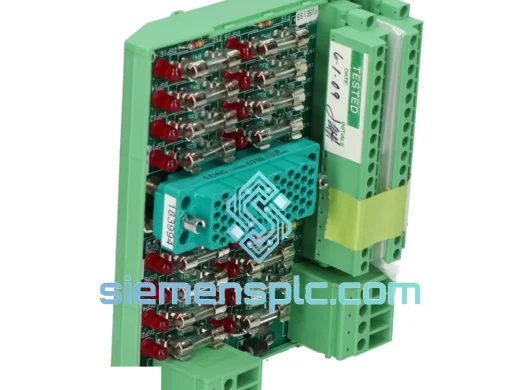
TRICONEX 9563-810 Safety Termination Panel
Tricon
Origin US
Safety System Termination Panel
TRICONEX
RFQ Ready
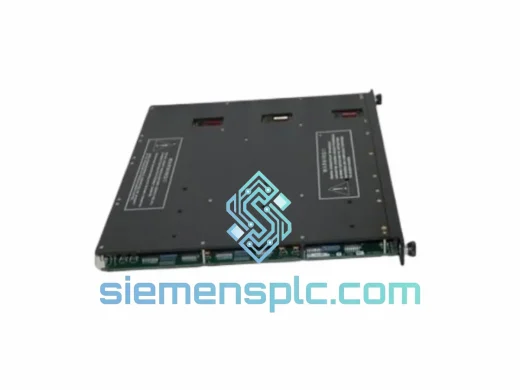
TRICONEX 7400210-010 Digital Input Module – Tricon TMR
Tricon
Origin US
Digital Input Module
TRICONEX
RFQ Ready
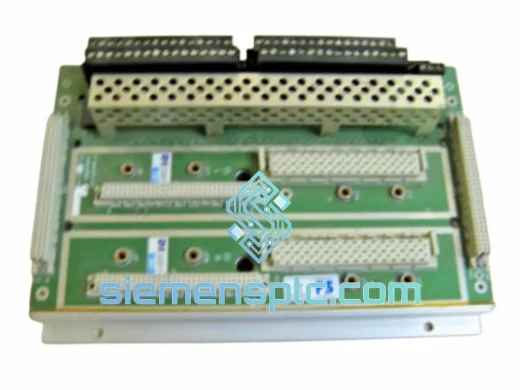
TRICONEX 7400208B-020 Safety I/O Baseplate – Tricon TMR Series
TRICON
Origin US
Safety I/O Baseplate