
TRICONEX
In Stock OK
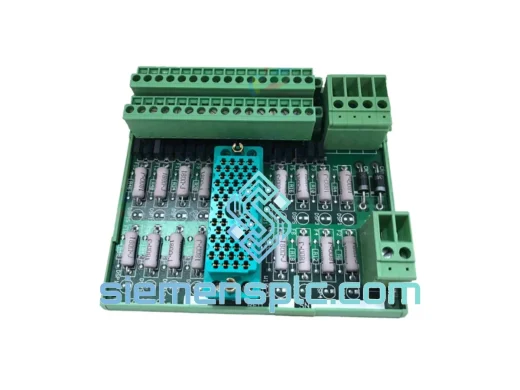
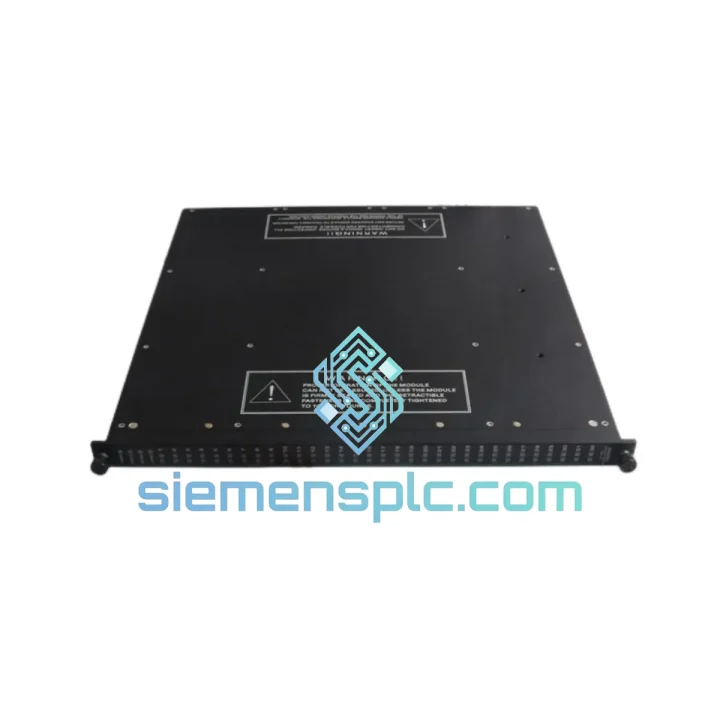
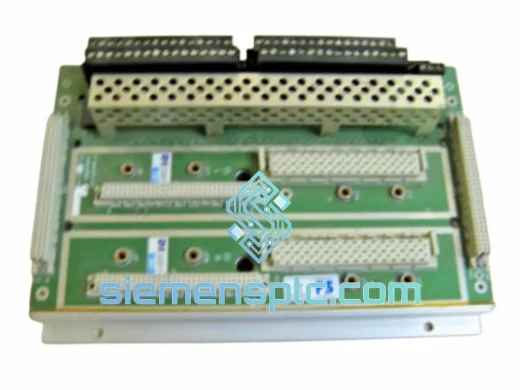
TRICONEX 9760-210 Safety Termination Panel – Tricon TMR
Request verified availability, condition, replacement risk review, packing options and courier lead time for 9760-210.
BrandTRICONEX
Part Number9760-210
ConditionAvailability Check
Lead TimeRFQ Confirmation
DocumentsDatasheet / photos by RFQ
ShippingExport packing available
Auto-filled RFQ
9760-210
Click Request Quote and the part number is inserted into the inquiry form automatically.
- Reply by email: [email protected]
- WhatsApp / Tel: +86 18359268345
- Mon-Sat 9:00-18:00 GMT+8
Procurement Data
Key Product Information
Core fields for model confirmation and RFQ routing. Detailed product narrative remains below.
- Brand
- TRICONEX
- Primary Part Number
- 9760-210
- Product Type
- Safety Termination Panel
- Series / Family
- Tricon
- Manufacturer
- TRICONEX (Schneider Electric Safety Systems)
- Country of Origin
- US
- Catalog Category
- I/O Modules
- Operating Temp.
- 0 °C to +60 °C
- Warranty
- 12 months from shipment date
Model confirmed for inquiry
9760-210
Send quantity, destination and urgency. The RFQ form keeps this part number attached.
Request Quote
Product Overview
TRICONEX 9760-210: Structured Field-Wiring Boundary for Tricon TMR Discrete Input Circuits
The TRICONEX 9760-210 is a dedicated Digital Input Termination Panel engineered to serve as the physical and electrical demarcation point between field-side discrete signal conductors and the three independent input legs of a Tricon Triple Modular Redundant (TMR) safety controller. In any SIL 3 safety instrumented function (SIF), the quality of the field-wiring interface is not incidental — it is a load-bearing element of the overall fault-tolerance architecture. The 9760-210 defines where field conductors terminate, how signals are distributed across the TMR channel matrix, and where the creepage and clearance boundaries required by IEC 60664-1 are physically enforced.
This panel mates directly with Triconex digital input modules installed in Tricon v9, v10, and v11 chassis configurations. Its screw-clamp terminal array provides a deterministic, labeled wiring interface that maps each field conductor to a specific position in the module’s three-leg input structure. In process safety applications — ESD systems, fire and gas detection loops, turbine trip circuits — the 9760-210 is a traceable hardware component within the functional safety assessment boundary and must be documented by part number and revision in the safety case file.
Real-time Stock & RFQ: [email protected] | WhatsApp: +86 18359268345
Technical Parameters
| Parameter | Specification |
|---|---|
| Part Number | 9760-210 |
| Manufacturer | TRICONEX (Schneider Electric Safety Systems) |
| Panel Classification | Digital Input Termination Panel (DI) |
| Compatible Platform | Tricon TMR Chassis — v9, v10, v11 series |
| TMR Architecture | Triple Modular Redundant, 3-leg independent channel routing |
| Safety Integrity Level | SIL 3 (IEC 61508 / IEC 61511 compliant system boundary) |
| Field Signal Type | Discrete dry-contact or 24 VDC sourcing/sinking inputs |
| Terminal Interface | Screw-clamp terminal blocks, field-side conductor termination |
| Module Connector | Dedicated direct connector, revision-controlled mating interface |
| Operating Temperature | 0 °C to +60 °C |
| Storage Temperature | −40 °C to +85 °C |
| Relative Humidity | 5% to 95%, non-condensing |
| Vibration Standard | IEC 60068-2-6 (sinusoidal sweep), IEC 60068-2-64 (broadband random) |
| Mounting Configuration | Panel-mount, Tricon marshalling enclosure |
| Unit Weight | Approx. 2,320 g |
| Country of Origin | USA (TRICONEX manufacturing) |
| Warranty | 12 months from shipment date |
| Availability | In Stock — Ready for immediate dispatch from Xiamen, China |
Hardware Logical Analysis
Three-leg signal distribution at the termination boundary: The 9760-210’s internal conductor matrix performs a function that is architecturally critical but often underappreciated: it takes a single field signal — one contact closure, one 24 VDC assertion — and routes it simultaneously to three electrically independent terminal positions on the module connector. These three positions feed Leg A, Leg B, and Leg C of the mating Tricon DI module. Each leg processes the signal through its own optocoupler isolation stage, its own analog-to-digital conversion path, and its own dedicated microprocessor. The TMR voter compares the three resulting digital states and outputs the 2-of-3 majority result. For this architecture to deliver its certified fault tolerance, the three signal paths must remain electrically independent from the field terminal block through to the optocoupler input — the 9760-210’s PCB trace geometry and terminal block spacing are designed to maintain this independence under the voltage and current conditions present in industrial field wiring environments.
Creepage and clearance enforcement: Field-side wiring in process plant environments carries voltage potentials that differ from the Tricon backplane reference by amounts that vary with grounding topology, cable routing, and proximity to power equipment. The 9760-210’s PCB layout maintains the creepage distances specified by IEC 60664-1 for the applicable overvoltage category and pollution degree. This is not a passive design choice — it is a quantified electrical safety requirement that prevents surface tracking between conductors at different potentials under the humidity and contamination conditions present in marshalling cabinet environments over a 20-year service life.
EMC boundary behavior: The termination panel sits at the interface between the uncontrolled electromagnetic environment of the field cable tray and the controlled environment of the Tricon chassis. Inductive transients from solenoid valve coils, ground loop currents from geographically separated field instruments, and conducted interference from variable frequency drives in adjacent panels all arrive at the 9760-210 terminal blocks before reaching the DI module’s optocoupler isolation stage. The panel’s terminal block layout, combined with Triconex’s field wiring guidelines for shielded cable termination and shield grounding, defines the first line of EMC attenuation in the signal chain. Compliance with these guidelines is part of the system-level EMC validation documented in the Tricon installation manual.
Revision control and connector compatibility: Triconex has maintained revision control over the 9760-210 and its associated DI modules across the Tricon product lifecycle. Connector pin assignments, mechanical keying, and signal conditioning characteristics are revision-specific. Installing a mismatched revision combination can produce connector mechanical interference, incorrect channel mapping, or TriStation diagnostic faults that require engineering investigation to resolve. Before ordering a replacement panel, verify the revision suffix of the installed unit and the mating module from the system’s as-built documentation or the physical label on the existing hardware.
System Integration Benefits
- Unambiguous field-to-channel mapping: Each terminal position on the 9760-210 corresponds to a defined input channel on the DI module. This eliminates the wiring interpretation errors that occur when generic terminal blocks are used with hand-annotated wiring schedules, reducing loop commissioning errors in multi-technician installation teams.
- TMR channel independence at the field boundary: The panel’s internal routing maintains electrical separation between the three TMR legs from the terminal block through to the module connector, preserving the independence assumption that underpins the SIL 3 probability of failure on demand (PFD) calculation for the safety instrumented function.
- Accelerated loop verification: Standardized terminal labeling aligned with Triconex documentation allows loop check technicians to verify field wiring continuity and polarity against published reference drawings without custom site-specific wiring diagrams for each panel position.
- Fault isolation granularity: When TriStation reports a channel-level diagnostic fault on a DI module, the structured terminal layout of the 9760-210 allows maintenance engineers to trace the fault to a specific terminal position, field conductor, or connector pin — reducing mean time to repair (MTTR) compared to systems with unstructured field wiring arrangements.
- Online module replacement support: The termination panel retains field-side wiring connections while the DI module is extracted from the Tricon chassis. This physical separation supports online module replacement procedures without requiring full loop isolation in all maintenance scenarios, reducing planned maintenance downtime.
- Functional safety documentation traceability: The 9760-210 part number and revision are traceable hardware items within the Tricon system’s functional safety assessment. Using the original Triconex part number maintains the hardware configuration baseline documented in the FAT, SAT, and periodic proof test records required by IEC 61511 Clause 16.
- Management of change avoidance: Substituting a non-OEM termination panel in a SIL 3 system triggers a formal management of change (MOC) process that requires engineering justification, safety review, and potentially a revised functional safety assessment. Maintaining OEM part numbers eliminates this administrative and engineering burden.
- Long-cycle spare parts availability: Tricon TMR systems have operational lifespans of 20 to 30 years in oil and gas, petrochemical, and power generation facilities. Securing OEM termination panels from verified supply channels ensures that hardware replacements during scheduled turnarounds use parts with known electrical characteristics, avoiding the performance uncertainty associated with non-OEM alternatives.
Quality Assurance & Global Logistics
Verified OEM sourcing: Each TRICONEX 9760-210 unit we supply is procured through verified industrial distribution channels with documented supply chain traceability. Upon receipt, units undergo physical inspection covering connector pin condition, terminal block mechanical function, PCB substrate integrity, housing completeness, and label legibility. Units with evidence of field service wear beyond acceptable limits, connector damage, or missing hardware are rejected and not offered for sale. Serialized inspection records are available for safety-critical procurement requiring full material traceability documentation.
12-month warranty coverage: All units are warranted for 12 months from the date of shipment against manufacturing defects and functional failure under normal operating conditions as defined in the Triconex installation manual. Warranty claims are supported by our technical engineering team with direct knowledge of Tricon system architecture.
ESD-compliant packaging: Units are individually packaged in anti-static ESD shielding bags, placed in foam-lined corrugated cartons dimensioned to prevent mechanical stress on connectors and terminal blocks during international transit. Packaging meets ISTA 2A transit test standards for industrial electronic equipment.
Express logistics from Xiamen, China: Our Xiamen facility provides direct access to Xiamen Gaoqi International Airport (XMN) and Xiamen Port, primary export nodes for industrial equipment shipments to global destinations. Operational dispatch parameters:
- Orders confirmed before 14:00 CST: same-day pick, pack, and carrier handoff
- Carrier network: DHL Express, FedEx International Priority, UPS Worldwide Express
- Export documentation: commercial invoice, packing list, certificate of origin — issued same day
- Transit benchmarks: Southeast Asia 1–2 days | Middle East 2–3 days | Europe 3–5 days | North America 4–6 days
- AWB tracking number delivered within 2 hours of carrier pickup
- HS code classification and customs value declaration managed by our logistics team
- Emergency courier dispatch available for critical plant shutdown scenarios — contact via WhatsApp for immediate coordination
Contact Information
📧 Email: [email protected]
📱 WhatsApp: +86 18359268345
🌐 Web: siemensplc.com
📍 Location: Xiamen, China
© 2026. All rights reserved.
Ready to quote
[email protected]
Send This Part Number to Sales
RFQ workflow
Quality workflow ->
Confirmation Process
01Model confirmation
We check the full part number, brand, series and visible nameplate information before quotation.
02Availability reply
Sales confirms stock path, condition option, quantity and realistic lead time for export dispatch.
03Packing & courier
DHL, FedEx, UPS or buyer courier arrangements can be reviewed with packing requirements.
Continue sourcing
Browse full catalog ->
Related Automation Parts
Similar brand or category products for fast comparison and multi-item RFQ lists.
TRICONEX
RFQ Ready
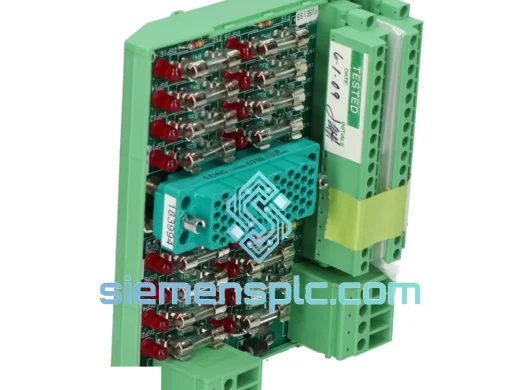
TRICONEX 9563-810 Safety Termination Panel
Tricon
Origin US
Safety System Termination Panel
TRICONEX
RFQ Ready
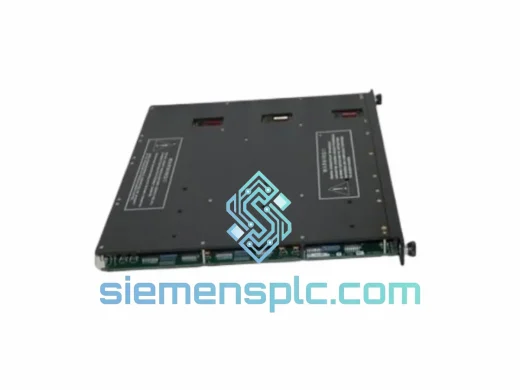
TRICONEX 7400210-010 Digital Input Module – Tricon TMR
Tricon
Origin US
Digital Input Module
TRICONEX
RFQ Ready
TRICONEX 7400208B-020 Safety I/O Baseplate – Tricon TMR Series
TRICON
Origin US
Safety I/O Baseplate