Vibro-Meter
RFQ Ready
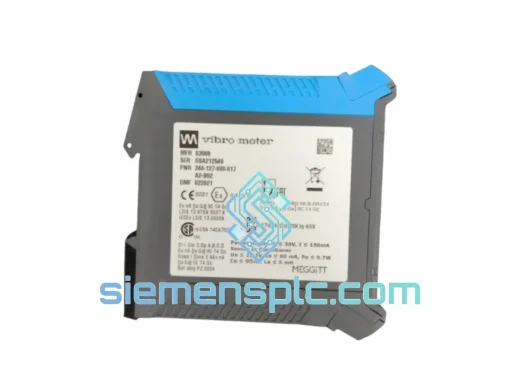
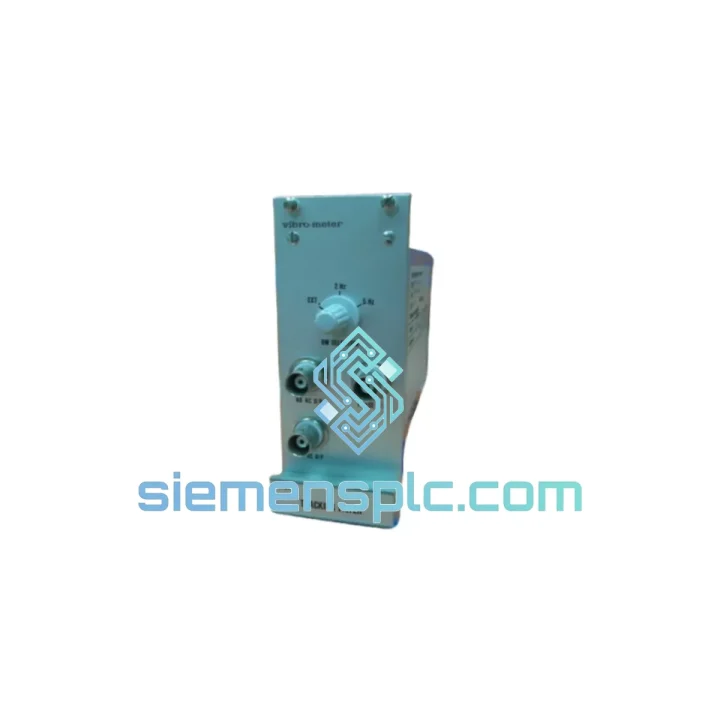
VIBRO-METER 244-127-000-017 A2-B02 Galvanic Isolation Module
VM Series
Origin Switzerland
Galvanic Isolation Module
Request verified availability, condition, replacement risk review, packing options and courier lead time for VIBRO-METER.
Click Request Quote and the part number is inserted into the inquiry form automatically.
Core fields for model confirmation and RFQ routing. Detailed product narrative remains below.
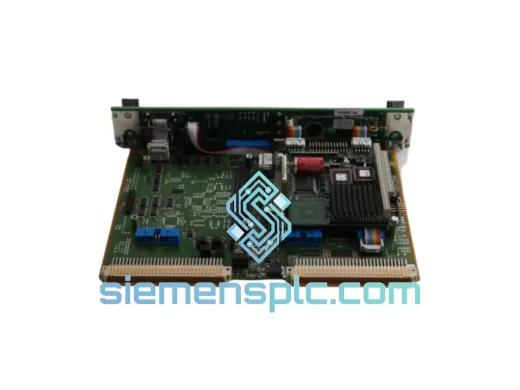
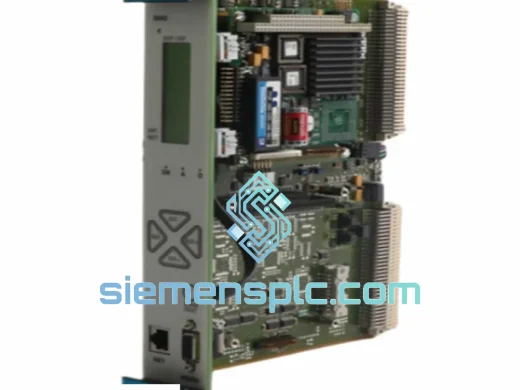
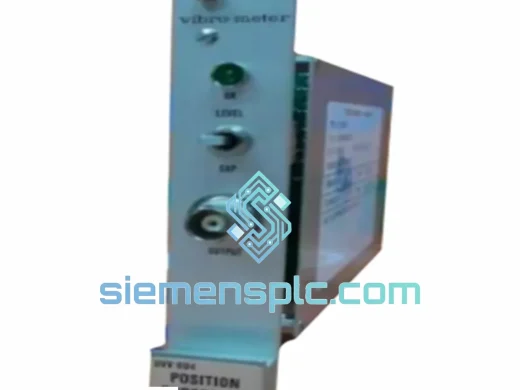
The VIBRO-METER UVV696 is a dedicated vibration signal processing module within the VM Series rack-based machinery protection platform, manufactured by Meggitt SA (Switzerland). It occupies a single slot in the VM Series 19-inch rack chassis and performs analog signal conditioning, amplitude demodulation, and threshold comparison for vibration transducer inputs — converting raw sensor voltages into calibrated engineering-unit outputs and discrete relay trip signals. In rotating machinery protection architectures, the UVV696 sits between the transducer front-end and the plant DCS or safety PLC, providing the deterministic signal path that API 670-compliant systems require.
The module accepts inputs from velocity transducers (seismic pickups), accelerometers, and eddy-current proximity probe drivers. Internal signal paths are galvanically isolated from the rack backplane, preventing ground-loop interference from propagating into the measurement chain — a critical design requirement in high-voltage plant environments where common-mode noise on sensor cables can exceed several volts. The UVV696 outputs a buffered, scaled analog signal (typically 4–20 mA or 0–10 V, configuration-dependent) alongside programmable relay contacts for alarm and danger thresholds.
Real-time Stock & RFQ: [email protected] | WhatsApp: +86 18359268345
| Parameter | Specification |
|---|---|
| Part Number | UVV696 |
| Brand / Manufacturer | VIBRO-METER (Meggitt SA, Switzerland) |
| Series | VM Series Rack-Mount Machinery Protection |
| Module Function | Vibration Signal Processor – amplitude demodulation, threshold relay |
| Transducer Input Types | Velocity (seismic), Accelerometer, Eddy-current proximity probe driver output |
| Input Impedance | High-impedance differential input; galvanically isolated from backplane |
| Analog Output | 4–20 mA / 0–10 V (configuration-dependent); proportional to vibration amplitude |
| Relay Outputs | Programmable ALERT and DANGER relay contacts (normally energized, fail-safe de-energize) |
| Frequency Response | Selectable bandpass filters per VM Series specification (typically 2 Hz – 1 kHz) |
| Measurement Parameter | Overall vibration level (RMS or peak); configurable per channel |
| Power Supply | Supplied via VM Series rack backplane (typically ±15 VDC, 24 VDC logic) |
| Operating Temperature | 0 °C to +55 °C (storage: −25 °C to +70 °C) |
| Humidity | 5% to 95% RH, non-condensing |
| Mounting Format | Single-slot VM Series rack module; 19-inch chassis compatible |
| Approx. Weight | 300 g |
| Standards Compliance | Designed for use in API 670 and IEC 61511 (SIL) machinery protection systems |
| Origin | Switzerland (Meggitt SA) |
| Warranty | 12 months from date of shipment (siemensplc.com standard warranty) |
The UVV696’s internal architecture is structured around three functional stages: input conditioning, demodulation/filtering, and output drive.
Input Stage – Differential Isolation and Anti-Aliasing: The front-end employs a differential instrumentation amplifier topology with galvanic isolation between the sensor input terminals and the module’s internal signal ground. This isolation barrier — implemented via transformer coupling or optocoupler-based techniques depending on revision — provides a common-mode rejection ratio (CMRR) sufficient to suppress plant-floor EMI in environments where cable runs may pass through motor control centers or high-voltage switchgear. An anti-aliasing low-pass filter at the input stage limits the bandwidth entering the demodulation chain, preventing high-frequency noise from folding into the measurement band.
Demodulation and Bandpass Filtering: The core signal processing applies selectable bandpass filtering to isolate the vibration frequency range of interest. For machinery protection applications, this typically spans 2 Hz to 1 kHz, covering the fundamental running speed harmonics of most rotating equipment from slow-speed reciprocating compressors to high-speed turbines. The demodulator extracts the amplitude envelope — either RMS or peak, selectable — which is the primary measurement parameter for API 670 overall vibration monitoring. This approach is computationally deterministic: the analog signal path has a fixed, predictable group delay, which is essential for trip response time compliance.
Threshold Comparator and Relay Logic: Two independent threshold comparators monitor the demodulated amplitude signal against programmable ALERT and DANGER setpoints. The relay outputs are configured in a normally energized (fail-safe) topology: loss of power or module failure causes the relay to de-energize, which the downstream safety PLC or trip system interprets as a danger condition. This design philosophy aligns with IEC 61511 requirements for safety instrumented systems, where the failure mode of a protection device must default to the safe state.
EMC Design: The module’s PCB layout incorporates ground plane partitioning to separate analog signal ground from digital logic ground, minimizing switching noise coupling into the measurement chain. Shielded enclosure construction and filtered backplane connectors further attenuate conducted and radiated interference, enabling the UVV696 to operate within the EMC immunity levels specified for industrial environments (IEC 61000-4 series).
Every VIBRO-METER UVV696 unit supplied by siemensplc.com is a genuine Meggitt SA product. Units are sourced through verified industrial surplus and authorized distribution channels. Prior to dispatch, each module undergoes a structured inspection protocol: visual examination of housing, connector pins, and label authenticity; cross-reference of hardware revision markings against known VIBRO-METER production records; and where test equipment is available, a powered functional check of analog output and relay operation.
Packaging follows anti-static and mechanical protection standards appropriate for precision electronic modules: ESD-safe inner wrap, foam-cushioned outer carton, and moisture-barrier sealing for sea freight shipments. Each shipment includes a packing list, commercial invoice, and certificate of origin. Export compliance documentation — including HS code classification and end-user declarations where required — is prepared by our logistics team in Xiamen, China.
From our Xiamen warehouse, express air freight (DHL, FedEx, UPS) delivers to most destinations in Asia within 2–4 business days, Europe in 3–5 business days, and the Americas in 4–6 business days. Sea freight consolidation is available for bulk MRO orders. Dedicated account management is provided for repeat B2B customers and long-term supply agreements.
Email: [email protected]
WhatsApp: +86 18359268345
Web: siemensplc.com
Location: Xiamen, China
© 2026 siemensplc.com. All rights reserved.
We check the full part number, brand, series and visible nameplate information before quotation.
Sales confirms stock path, condition option, quantity and realistic lead time for export dispatch.
DHL, FedEx, UPS or buyer courier arrangements can be reviewed with packing requirements.
Similar brand or category products for fast comparison and multi-item RFQ lists.