WAGO
In Stock OK
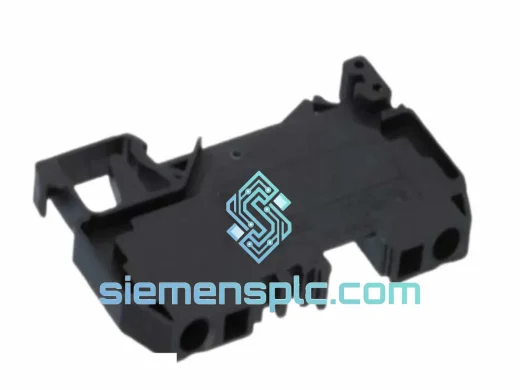
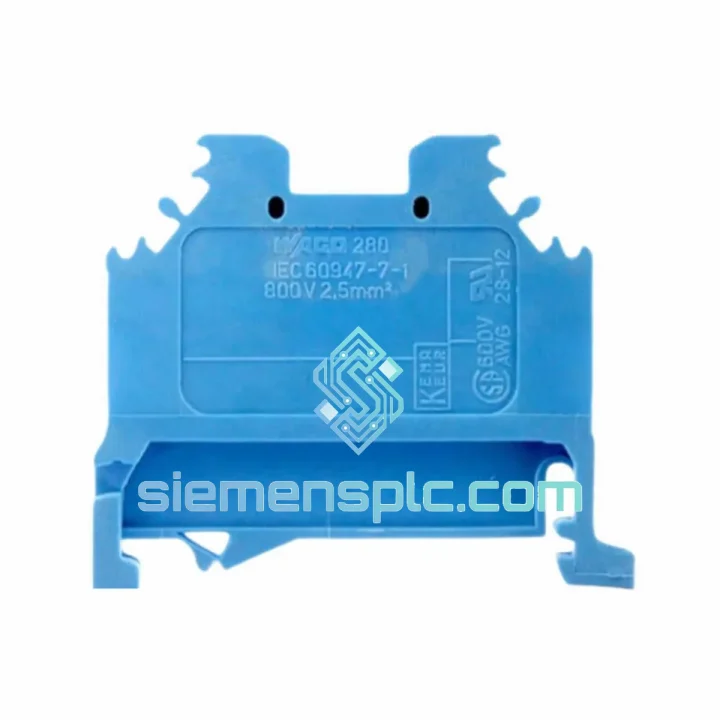
WAGO 280-104 Through Terminal Block
Request verified availability, condition, replacement risk review, packing options and courier lead time for 280-104.
BrandWAGO
Part Number280-104
ConditionAvailability Check
Lead TimeRFQ Confirmation
DocumentsDatasheet / photos by RFQ
ShippingExport packing available
Auto-filled RFQ
280-104
Click Request Quote and the part number is inserted into the inquiry form automatically.
- Reply by email: [email protected]
- WhatsApp / Tel: +86 18359268345
- Mon-Sat 9:00-18:00 GMT+8
Procurement Data
Key Product Information
Core fields for model confirmation and RFQ routing. Detailed product narrative remains below.
- Brand
- WAGO
- Primary Part Number
- 280-104
- Product Type
- Terminal Block
- Product Family
- Other series
- Country of Origin
- DE
- Catalog Category
- Industrial Automation Spares
- Operating Temp.
- −60 °C to +130 °C
Model confirmed for inquiry
280-104
Send quantity, destination and urgency. The RFQ form keeps this part number attached.
Request Quote
Product Overview
WAGO 280-104 — Stop the Line Bleeding: Get Your Terminal Strip Back Online in Hours, Not Days
A failed terminal block in a marshalling cabinet doesn’t just trip a breaker — it can freeze an entire production cell, halt a batch process, or kill a conveyor line mid-shift. Every hour of unplanned downtime on a modern manufacturing floor costs anywhere from $5,000 to $50,000 depending on the sector. The WAGO 280-104 is a standard-pitch, push-in through terminal block — small part, catastrophic consequence when it fails or goes missing during a panel rebuild. We stock it. We ship it today. That’s the only thing that matters right now.
At siemensplc.com, we maintain physical inventory of the WAGO 280-104 in Xiamen, China, with DHL Express and FedEx International Priority dispatch available same business day for orders confirmed before 15:00 CST. No lead time games. No “check back in 6–8 weeks.” If you’re reading this during a breakdown, send the RFQ now.
URGENT REQUIREMENT? Contact: [email protected] | WhatsApp: +86 18359268345
Quick Technical Datasheet
| Parameter | Specification | Status |
|---|---|---|
| Part Number | 280-104 | ✅ Ready to Ship |
| Brand | WAGO | 100% Original |
| Series | TOPJOB S (280 Series) | — |
| Terminal Type | Through / Feed-through | — |
| Connection Technology | Push-in CAGE CLAMP® (tool-free) | — |
| Conductor Range | 0.08 – 4 mm² (AWG 28–12) | — |
| Rated Current | 32 A | — |
| Rated Voltage | 800 V AC/DC | — |
| Impulse Withstand Voltage | 8 kV | — |
| Pitch / Width | 6 mm | — |
| Mounting | DIN 35 rail (EN 60715) | — |
| Housing Material | Polyamide PA 66, UL 94 V-0 | — |
| Contact Material | Copper alloy, tin-plated | — |
| Operating Temperature | −60 °C to +130 °C | — |
| Protection Degree | IP 20 | — |
| Approvals | UL, CSA, VDE, ATEX, GL, DNV | — |
| Standards | IEC 60947-7-1, EN 60947-7-1 | — |
| Color | Grey (RAL 7035) | — |
| Country of Origin | Germany | — |
| Dispatch Location | Xiamen, China | ✅ Same-Day Available |
Troubleshooting & Replacement Tips
Ten years of field work tells you that terminal block failures are almost never random. Here’s what actually causes 280-104 failures and what to check before you swap the part:
1. Intermittent Signal Loss on Analog Loops (4–20 mA)
The most common complaint. Root cause is almost always a loose fine-stranded conductor that was inserted without a ferrule. The CAGE CLAMP® spring can’t grip Class 5/6 wire below 0.5 mm² reliably without an end sleeve. Pull the conductor, crimp a DIN 46228-4 ferrule, re-insert. If the signal stabilizes, you’ve found it. If not, check the copper bus bar inside the housing for corrosion — in high-humidity environments, tin-plated contacts can develop oxide layers that spike contact resistance above 50 mΩ, enough to throw off a precision loop.
2. Thermal Tripping on 32 A Circuits
The 280-104 is rated 32 A, but that’s at 40 °C ambient with standard spacing. In a packed cabinet running at 55–60 °C ambient, derate to roughly 24–26 A continuous. If you’re seeing nuisance trips or discoloration on the housing near the contact zone, the terminal is being run above its thermal capacity for the actual installation environment. Replace and either derate the circuit or add forced ventilation to the enclosure.
3. Replacement Procedure — Step by Step
- Step 1 — Isolate: De-energize the circuit. Verify with a CAT III multimeter. Do not rely on upstream breaker position alone — verify at the terminal.
- Step 2 — Document: Photograph the terminal strip before touching anything. Label every conductor with clip-on markers if they aren’t already labeled. You will thank yourself during re-termination.
- Step 3 — Release conductors: Insert a 3.5 mm flat-blade screwdriver into the orange actuator slot on the 280-104. Press down to open the CAGE CLAMP® and withdraw the conductor. Repeat for both ports.
- Step 4 — Remove from rail: Slide the terminal block laterally off the DIN 35 rail. If it’s locked between end brackets (280-300), loosen the bracket first.
- Step 5 — Inspect conductors: Check conductor ends for nicking, oxidation, or strand damage. Cut back 8–10 mm and re-strip if in doubt. Crimp ferrules on fine-stranded wire.
- Step 6 — Install new 280-104: Snap onto DIN rail. Verify it seats fully — you’ll hear a click. Re-insert conductors into the correct ports (field side / panel side). No torque required — push until the conductor bottoms out and release the actuator.
- Step 7 — Verify: Use a test probe in the top test slot to confirm continuity before re-energizing. Check both ports independently.
4. Jumper Compatibility Note
If you’re replacing a terminal that was part of a jumpered group (using 280-400 series comb jumpers), check jumper pin condition before re-use. Bent or corroded jumper pins are a common source of intermittent faults after a terminal swap. Replace the jumper set if there’s any doubt — they’re cheap insurance.
5. Marking & Identification After Replacement
The 280-104 accepts 280-500 series marker carriers. If the original markers were destroyed during removal, print new ones before closing the cabinet. An unmarked terminal strip is a future maintenance nightmare — especially in multi-technician environments.
Reliability in Harsh Conditions
The 280-104 wasn’t designed for a clean office environment. WAGO engineered the TOPJOB S series to survive the conditions that actually exist on plant floors — and the test data backs it up.
Vibration: The CAGE CLAMP® spring-force connection applies constant radial pressure to the conductor independent of mechanical vibration. Unlike screw terminals that rely on thread friction (which degrades under cyclic loading), the spring force is self-compensating. WAGO validates this to IEC 60068-2-6 sinusoidal vibration profiles — 10–500 Hz, up to 5g acceleration. In practice, this means the 280-104 maintains gas-tight contact on compressor skids, pump control panels, and mobile equipment where screw terminals routinely loosen within 6–12 months.
Temperature Cycling: The −60 °C to +130 °C operating range isn’t marketing copy — it reflects the polyamide PA 66 housing’s actual glass transition temperature and the copper alloy contact’s thermal expansion coefficient. In outdoor enclosures in northern climates, where cabinet temperatures swing from −40 °C in winter to +70 °C in summer (with solar loading on the enclosure), the 280-104 maintains dimensional stability and contact force without housing distortion or contact relaxation.
Humidity & Condensation: IP 20 protection covers the terminal against solid particle ingress, but the real protection against moisture comes from the tin-plated copper contact’s corrosion resistance and the gas-tight CAGE CLAMP® connection that prevents moisture ingress at the conductor interface. DNV and GL marine approvals confirm suitability for salt-air environments — the same conditions that destroy unprotected screw terminals within 18 months on offshore platforms.
Chemical Resistance: The PA 66 housing resists common industrial chemicals including mineral oils, hydraulic fluids, and dilute acids at operating temperatures. In food processing and pharmaceutical environments where cleaning agents (caustic soda, isopropanol) are routinely used, the housing maintains structural integrity without crazing or embrittlement.
Global Express Logistics
Our warehouse is located in Xiamen, Fujian Province — one of China’s primary export hubs with direct access to Xiamen Gaoqi International Airport (XMN), a major DHL and FedEx gateway for international freight.
Standard Dispatch Process:
- Order confirmed before 15:00 CST: Same-day dispatch. Tracking number issued by 18:00 CST.
- Order confirmed after 15:00 CST: Next business day dispatch. No exceptions for weekends — contact us for emergency weekend dispatch arrangements.
- DHL Express Worldwide: Transit time 1–3 business days to Europe, North America, Southeast Asia, Middle East. Door-to-door with customs clearance included.
- FedEx International Priority: Alternative carrier for destinations where FedEx has stronger network coverage (e.g., remote US locations, Latin America).
- Documentation: Commercial invoice, packing list, and Certificate of Conformance (CoC) included with every shipment. HS code pre-declared for smooth customs clearance.
- Emergency Freight: For quantities exceeding standard courier limits or time-critical large orders, we coordinate air freight consolidation through our freight forwarder network. Contact us for a dedicated freight quote.
We’ve shipped WAGO terminal blocks to plant maintenance teams in Germany, Australia, Saudi Arabia, Vietnam, and Brazil — all with zero customs holds when documentation is complete. If your procurement team needs a proforma invoice before payment, we issue it within 30 minutes of RFQ receipt.
Contact Information
Email: [email protected]
WhatsApp: +86 18359268345
Web: siemensplc.com
© 2026 siemensplc.com. All rights reserved.
Ready to quote
[email protected]
Send This Part Number to Sales
RFQ workflow
Quality workflow ->
Confirmation Process
01Model confirmation
We check the full part number, brand, series and visible nameplate information before quotation.
02Availability reply
Sales confirms stock path, condition option, quantity and realistic lead time for export dispatch.
03Packing & courier
DHL, FedEx, UPS or buyer courier arrangements can be reviewed with packing requirements.
Continue sourcing
Browse full catalog ->
Related Automation Parts
Similar brand or category products for fast comparison and multi-item RFQ lists.