
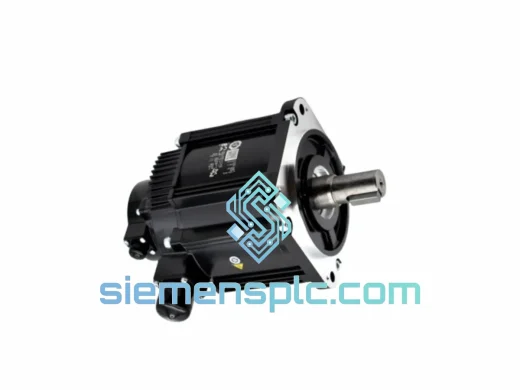
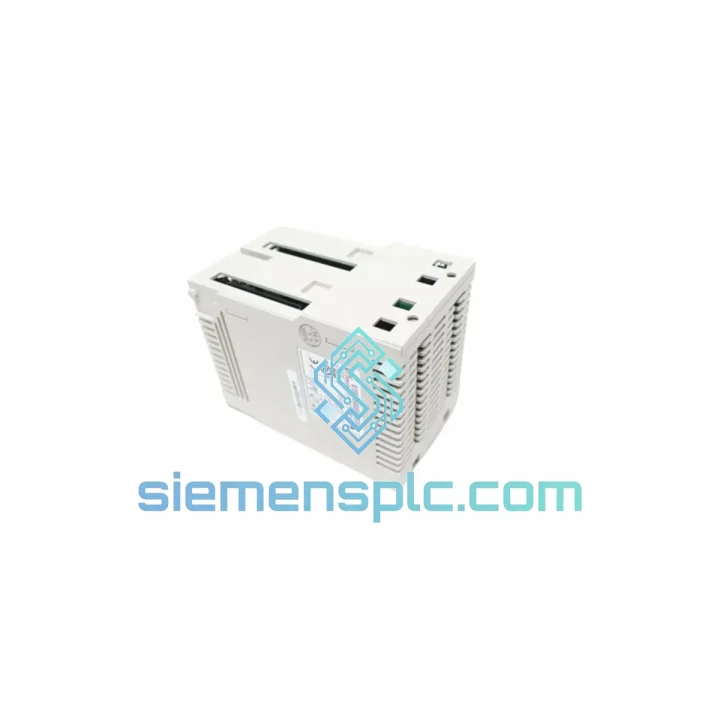
Yaskawa
In Stock OK
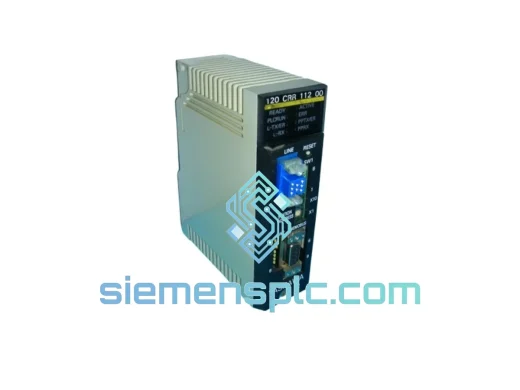
YASKAWA JAMSC-120MMB20230 Motion Control Module – Sigma-II Series
Request verified availability, condition, replacement risk review, packing options and courier lead time for JAMSC-120MMB20230.
BrandYaskawa
Part NumberJAMSC-120MMB20230
ConditionAvailability Check
Lead TimeRFQ Confirmation
DocumentsDatasheet / photos by RFQ
ShippingExport packing available
Auto-filled RFQ
JAMSC-120MMB20230
Click Request Quote and the part number is inserted into the inquiry form automatically.
- Reply by email: [email protected]
- WhatsApp / Tel: +86 18359268345
- Mon-Sat 9:00-18:00 GMT+8
Procurement Data
Key Product Information
Core fields for model confirmation and RFQ routing. Detailed product narrative remains below.
- Brand
- Yaskawa
- Primary Part Number
- JAMSC-120MMB20230
- Product Type
- Motion Control Module
- Product Family
- Other series
- Manufacturer
- YASKAWA Electric Corporation
- Country of Origin
- JP
- Catalog Category
- I/O Modules
- Warranty
- 12 months from date of shipment
- Compliance
- CE, RoHS-compatible
Model confirmed for inquiry
JAMSC-120MMB20230
Send quantity, destination and urgency. The RFQ form keeps this part number attached.
Request Quote
Product Overview
YASKAWA JAMSC-120MMB20230 Sigma-II Pulse Output Controller Module — Precision Pulse Command Interface for Multi-Axis Servo Systems
The YASKAWA JAMSC-120MMB20230 is a dedicated controller pulse output module designed for integration within the YASKAWA Sigma-II motion control architecture. Its primary function is to translate high-level trajectory commands from the MP-series machine controller into deterministic, high-frequency pulse trains that drive Sigma-II series servo amplifiers. The module operates as a bridge between the controller’s internal motion planning engine and the physical servo loop, handling pulse generation, direction logic, and command synchronization across multiple axes simultaneously.
In a closed-loop servo system, the quality of the pulse output signal directly determines positioning repeatability and dynamic response. The JAMSC-120MMB20230 generates PULS/DIR or CW/CCW differential pulse signals with edge timing accuracy at the sub-microsecond level, ensuring that servo amplifiers receive commands free of jitter-induced velocity ripple. This is particularly critical in applications where multiple axes must maintain tight phase relationships — such as gantry systems, electronic cam profiles, or coordinated pick-and-place sequences.
The module mounts directly onto the JAMSC-120 controller backplane, communicating with the CPU module via the internal high-speed bus. This backplane architecture eliminates the latency and protocol overhead associated with external fieldbus connections, allowing the motion controller to update pulse output parameters within a single scan cycle. The result is a command-to-output latency that supports servo update rates consistent with Sigma-II amplifier requirements, maintaining loop stability even at high acceleration profiles.
From a hardware standpoint, the JAMSC-120MMB20230 incorporates optocoupler-based signal isolation on all pulse output channels. This galvanic barrier separates the controller’s logic ground from the servo drive’s power ground, suppressing common-mode noise that would otherwise corrupt pulse edges in electrically noisy cabinet environments. The isolation barrier is rated to withstand transient voltages typical of industrial motor drive installations, providing a measurable margin against ground loop interference and conducted EMI from adjacent VFDs or servo amplifiers.
The module’s output driver stage uses line-driver ICs capable of sourcing differential signals into standard RS-422 receiver inputs on Sigma-II amplifiers. Differential signaling provides inherent common-mode rejection, allowing cable runs of several meters between the controller cabinet and distributed servo drives without signal degradation. This is a practical advantage in machine tool installations where the controller rack and servo drives occupy separate enclosures.
Axis count and pulse frequency specifications are matched to the JAMSC-120 controller family’s motion planning capacity. The module supports the full range of electronic gear ratio settings available in the Sigma-II amplifier, meaning that pulse resolution can be scaled at the drive level without requiring changes to the controller’s command pulse rate. This flexibility simplifies commissioning when retrofitting existing machines with different encoder resolutions or lead screw pitches.
The JAMSC-120MMB20230 is manufactured under YASKAWA’s ISO 9001-certified production process at facilities in Japan. Component selection, PCB fabrication tolerances, and functional test coverage are governed by YASKAWA’s internal quality standards for motion control hardware. Each unit undergoes electrical characterization before leaving the factory, with test data traceable to the serial number.
Real-time Stock & RFQ: [email protected] | WhatsApp: +86 18359268345
Technical Parameters
| Parameter | Specification |
|---|---|
| Part Number / SKU | JAMSC-120MMB20230 |
| Manufacturer | YASKAWA Electric Corporation |
| Series | Sigma-II / JAMSC-120 Controller Family |
| Module Function | Controller Pulse Output Module |
| Output Signal Type | Differential PULS/DIR or CW/CCW (RS-422 compatible) |
| Isolation Method | Optocoupler galvanic isolation per output channel |
| Compatible Controllers | YASKAWA MP940, MP2000 series (JAMSC-120 backplane) |
| Compatible Servo Amplifiers | Sigma-II series: SGDH, SGDS |
| Backplane Interface | JAMSC-120 internal high-speed bus |
| Country of Origin | Japan |
| Weight | 4,460 g (approx.) |
| Compliance | CE, RoHS-compatible |
| Quality Standard | ISO 9001 (YASKAWA manufacturing) |
| Warranty | 12 months from date of shipment |
| Condition | Genuine new / surplus new (specify at inquiry) |
Hardware Logical Analysis
The JAMSC-120MMB20230’s hardware design addresses three principal engineering challenges in pulse-based servo interfacing: signal integrity, timing determinism, and electrical isolation.
Optocoupler Isolation Architecture: Each pulse output channel passes through a dedicated optocoupler stage. The LED drive current is regulated to maintain consistent forward voltage across the operating temperature range, preventing pulse width distortion caused by LED characteristic drift. The phototransistor output feeds a Schmitt-trigger buffer before reaching the line driver, ensuring clean edge transitions regardless of ambient temperature variation within the rated operating range.
Differential Line Driver Stage: The RS-422-compatible line driver provides a differential voltage swing that exceeds the minimum input threshold of Sigma-II amplifier receivers by a defined margin. This margin accounts for cable attenuation and common-mode noise pickup over the specified maximum cable length. The driver’s output impedance is matched to standard 120 Ω twisted-pair cable, minimizing reflections at the amplifier input that would otherwise appear as spurious pulse edges at high command frequencies.
EMC Design Measures: The PCB layout separates the logic power plane from the isolated output plane with a physical gap and guard trace, reducing capacitive coupling across the isolation barrier. Decoupling capacitors are placed at the power entry point of each driver IC, suppressing high-frequency switching transients generated by the line driver’s output stage. The module’s metal housing provides a Faraday shield against radiated EMI from adjacent power electronics in the control cabinet.
Backplane Bus Timing: The module’s register interface to the JAMSC-120 backplane bus is synchronized to the controller’s scan clock. Pulse output parameters — including target frequency, direction, and enable state — are latched at the start of each motion scan cycle, ensuring that all axes update simultaneously. This synchronous update mechanism prevents inter-axis timing skew that would otherwise accumulate over multiple scan cycles in multi-axis coordinated motion profiles.
System Integration Benefits
- Deterministic scan-cycle synchronization: All axis pulse parameters update simultaneously at the backplane bus clock edge, eliminating inter-axis command skew in coordinated motion sequences.
- Galvanic isolation per channel: Optocoupler barriers prevent ground loop currents from corrupting pulse edges, maintaining signal integrity in cabinets with mixed servo and VFD installations.
- RS-422 differential output: Common-mode noise rejection allows reliable pulse transmission over extended cable runs between distributed servo drives and the controller rack.
- Electronic gear ratio compatibility: Full support for Sigma-II amplifier gear ratio settings enables pulse resolution adjustment at the drive level without controller reconfiguration.
- Backplane-native latency: Internal bus communication eliminates fieldbus protocol overhead, delivering command-to-output latency consistent with Sigma-II servo loop update requirements.
- Diagnostic transparency: Module status registers accessible via the MP-series programming environment provide real-time visibility into output enable states, fault flags, and pulse count accumulators for commissioning and fault diagnosis.
- Thermal stability: Regulated LED drive current in the optocoupler stage maintains consistent pulse width accuracy across the rated industrial operating temperature range, reducing position error accumulation in thermally variable environments.
- Compact backplane form factor: Single-slot installation within the JAMSC-120 rack minimizes cabinet space consumption while maintaining full multi-axis output capability, supporting high-density machine designs.
Quality Assurance & Global Logistics
Every JAMSC-120MMB20230 unit supplied through siemensplc.com is sourced as genuine YASKAWA hardware manufactured under ISO 9001-certified production controls at YASKAWA’s Japanese facilities. No relabeling, remanufacturing, or third-party modification is performed. Units are inspected for label integrity, housing condition, connector pin alignment, and firmware revision markings against YASKAWA factory references prior to dispatch.
Shipments originate from Xiamen, China, with access to major international air freight gateways. Standard export documentation — commercial invoice, packing list, and certificate of conformance — is prepared for each order. DHL Express and FedEx International Priority services are available for time-critical requirements, with typical transit times of 3–5 business days to most destinations in Asia-Pacific, Europe, the Middle East, and the Americas. Sea freight consolidation is available for bulk orders. All units are packed in anti-static bags with foam-lined outer cartons rated for international air and sea transit conditions. A 12-month warranty covers manufacturing defects from the date of shipment.
Contact Information
📧 Email: [email protected]
📱 WhatsApp: +86 18359268345
🌐 Web: siemensplc.com
📍 Location: Xiamen, China
© 2026 siemensplc.com. All rights reserved.
Ready to quote
[email protected]
Send This Part Number to Sales
RFQ workflow
Quality workflow ->
Confirmation Process
01Model confirmation
We check the full part number, brand, series and visible nameplate information before quotation.
02Availability reply
Sales confirms stock path, condition option, quantity and realistic lead time for export dispatch.
03Packing & courier
DHL, FedEx, UPS or buyer courier arrangements can be reviewed with packing requirements.
Continue sourcing
Browse full catalog ->
Related Automation Parts
Similar brand or category products for fast comparison and multi-item RFQ lists.
Yaskawa
RFQ Ready
YASKAWA 73600-D0031 Digital Output Module – CP-9200SH Series
Module CP-9200SH DCS Series
Origin JP
Digital Output Module
Yaskawa
RFQ Ready
YASKAWA JAMSC-120CRR11200 Remote I/O Module
JAMSC Series
Origin JP
Remote I/O Module