Yokogawa
RFQ Ready
Yokogawa SAI143-H63/PRP S3 DCS Analog Input Module
CENTUM VP
Origin JP
DCS Analog Input Module
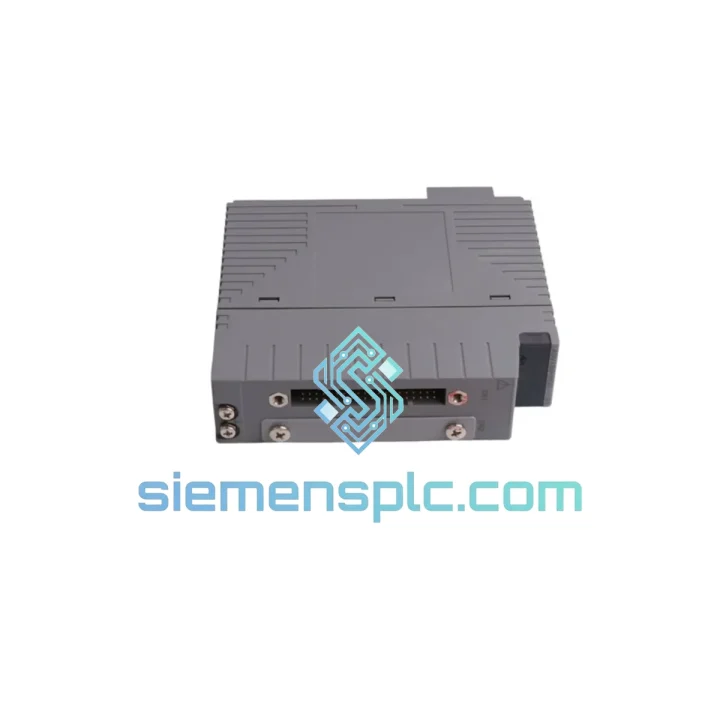
Request verified availability, condition, replacement risk review, packing options and courier lead time for ADV159-P00.
Click Request Quote and the part number is inserted into the inquiry form automatically.
Core fields for model confirmation and RFQ routing. Detailed product narrative remains below.
Your CENTUM VP or CS3000 station just threw a DI module fault. The field is dark, operators are on the phone, and the clock is running. The YOKOGAWA ADV159-P00 32-channel Digital Input Module is the exact card you need — and we have it on the shelf in Xiamen, ready to clear customs and land on your bench within 48–72 hours via DHL Express or FedEx Priority.
We don’t deal in promises. We deal in tracking numbers.
URGENT REQUIREMENT? Contact: [email protected] | WhatsApp: +86 18359268345
| Part Number | ADV159-P00 ✅ Ready to Ship |
| Manufacturer | YOKOGAWA Electric Corporation |
| Module Type | 32-Channel Digital Input (DI) |
| Compatible Platform | CENTUM CS3000 / CENTUM VP (ST3 FCS) |
| Input Signal | Dry contact / 24 VDC wet contact |
| Isolation | Optical isolation, field-to-system |
| Bus Interface | Internal ESB / V-net backplane |
| Power | Backplane-powered — no external supply |
| Terminal Type | Screw terminal (-P00 suffix) |
| Operating Temp | 0 °C to 55 °C |
| Humidity | 5% to 95% RH, non-condensing |
| Weight | Approx. 320 g |
| Certifications | CE, UL |
| Origin | Japan |
| Stock Status | ✅ In Stock — Ships within 24 hrs of order confirmation |
Fifteen years of field calls on CENTUM systems teach you the same lessons over and over. Here’s what actually matters when you’re swapping an ADV159-P00 under pressure:
Common Fault Signatures Before Full Failure
Step-by-Step Hot-Swap Procedure (Non-Redundant Configuration)
Firmware & Hardware Revision Notes
The ADV159-P00 has gone through multiple hardware revisions (suffix codes on the label). Revision mismatches between the module and your CENTUM VP software build can cause the FCS to reject the card. Always check the revision label on your failed unit and request a matching revision when ordering. We stock multiple revisions — specify when you contact us.
Terminal Block Wiring Reminder
The -P00 suffix means screw terminal. If your failed card was a -P10 (MIL connector), the field wiring harness will not mate with the -P00 replacement. Confirm your suffix before ordering. We stock both.
Process plants are not server rooms. The ADV159-P00 is built to survive the environment your control room actually lives in — not the one in the brochure.
YOKOGAWA subjects CENTUM I/O modules to IEC 60068-series environmental stress testing: sinusoidal vibration across 10–150 Hz at 9.8 m/s², random vibration profiles simulating pump and compressor skid installations, and thermal cycling between –20 °C and +70 °C to stress solder joints and connector interfaces. The optical isolation barrier is rated to withstand 1500 VAC for one minute — protecting your FCS backplane from field-side transients that would destroy lesser hardware.
In high-humidity coastal and offshore environments, the conformal coating on the ADV159-P00 PCB provides protection against condensation and salt-laden air. We’ve seen these cards pulled from offshore platform control rooms after 12 years of continuous service, cleaned, tested, and returned to service — that’s the build quality you’re working with.
For installations in areas with significant EMI (near VFDs, large motors, or MCC rooms), ensure your I/O nest is properly grounded per YOKOGAWA installation guidelines. The module’s optical isolation handles normal industrial EMI, but a floating nest ground will defeat it.
Our warehouse is in Xiamen, Fujian — one of China’s primary export hubs with direct daily freight connections to DHL, FedEx, and UPS international gateways. Here’s what the timeline actually looks like:
For genuine plant emergencies — unplanned shutdowns, safety system faults — call or WhatsApp us directly. We have handled Saturday-night emergency dispatches for refineries and power stations. We understand what downtime costs.
Email: [email protected]
WhatsApp: +86 18359268345
Web: siemensplc.com
© 2026. All rights reserved.
We check the full part number, brand, series and visible nameplate information before quotation.
Sales confirms stock path, condition option, quantity and realistic lead time for export dispatch.
DHL, FedEx, UPS or buyer courier arrangements can be reviewed with packing requirements.
Similar brand or category products for fast comparison and multi-item RFQ lists.