Yokogawa
RFQ Ready
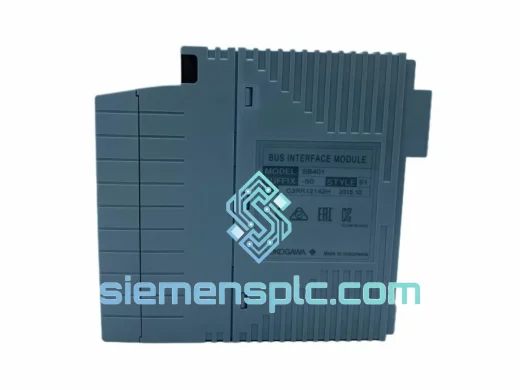
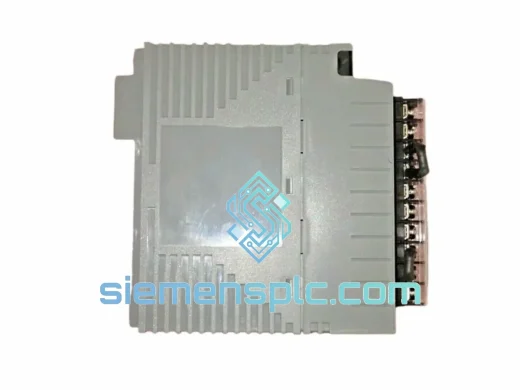
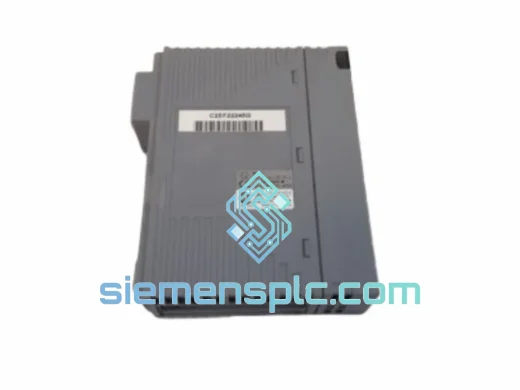
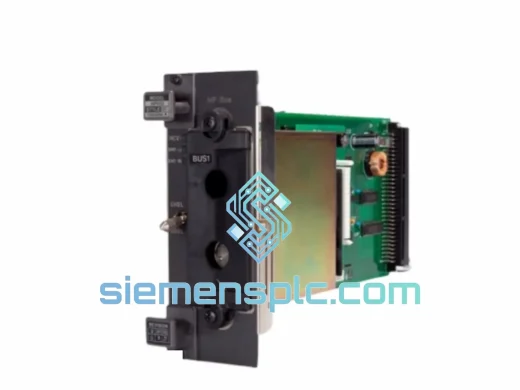
YOKOGAWA AIP562 S1 DCS Communication Module – CENTUM V-Net
CENTUM
Origin JP
DCS Communication Module
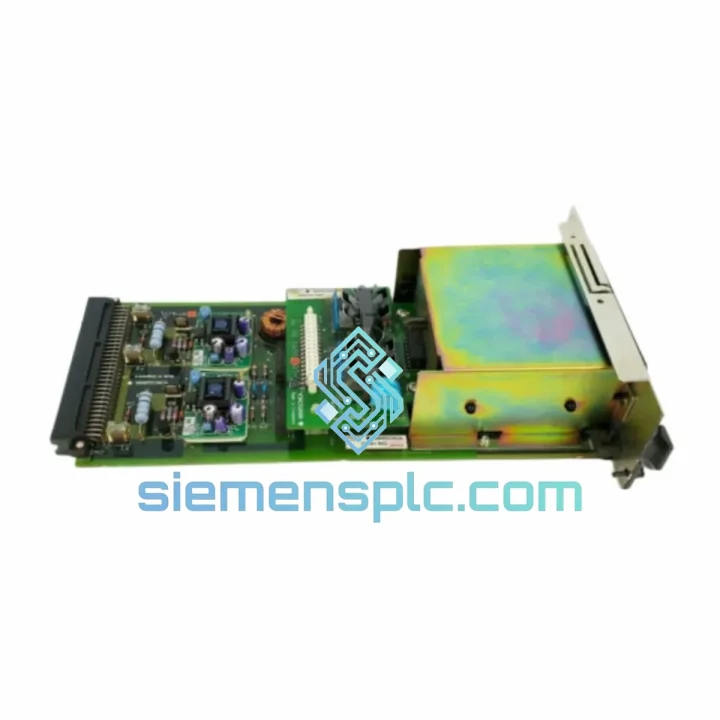
Request verified availability, condition, replacement risk review, packing options and courier lead time for AIP502 S1.
Click Request Quote and the part number is inserted into the inquiry form automatically.
Core fields for model confirmation and RFQ routing. Detailed product narrative remains below.
The YOKOGAWA AIP502 S1 is a V-Net coupler module engineered for segment-level interconnection within YOKOGAWA’s CENTUM distributed control system (DCS) platform. Its primary function is to electrically and logically couple two V-Net bus segments, extending the physical reach of the control network while preserving the deterministic timing characteristics that CENTUM’s real-time control loops depend on. In large-scale process plants — refineries, ethylene crackers, power generation units — the V-Net backbone carries time-critical control data between Field Control Stations (FCS), Human Interface Stations (HIS), and Engineering Workstations (EWS). The AIP502 S1 sits at the junction of these segments, ensuring signal integrity and bus arbitration continuity across the full network span.
Unlike generic network bridges, the AIP502 S1 is purpose-built for YOKOGAWA’s proprietary V-Net protocol, which operates on a token-passing, deterministic bus architecture. This means the coupler does not introduce variable latency or protocol translation overhead — it maintains the sub-millisecond cycle consistency that closed-loop PID and cascade control strategies require. For process engineers specifying spare parts or system expansions, the AIP502 S1 is a non-negotiable component wherever V-Net segment extension is required in CENTUM CS 3000 or CENTUM VP installations.
Real-time Stock & RFQ: [email protected] | WhatsApp: +86 18359268345
| Parameter | Specification |
|---|---|
| Part Number | AIP502 S1 |
| Manufacturer | YOKOGAWA Electric Corporation |
| Module Function | V-Net Bus Segment Coupler |
| Compatible Platform | CENTUM CS 3000 / CENTUM VP |
| Network Protocol | V-Net (YOKOGAWA proprietary token-bus, coaxial/optical) |
| Segment Coupling | Bidirectional, transparent bus extension |
| Mounting Interface | CENTUM standard DCS rack backplane |
| Power Supply | Supplied via DCS backplane bus (refer to YOKOGAWA hardware manual for exact draw) |
| Operating Temperature | 0°C to +55°C (control room / DCS cabinet installation) |
| Storage Temperature | -20°C to +60°C |
| Relative Humidity | 5% to 95% RH, non-condensing |
| Unit Weight | Approx. 600 g |
| Country of Origin | Japan |
| Warranty | 12 months against manufacturing defects |
The AIP502 S1 operates within YOKOGAWA’s V-Net token-bus architecture, where bus access rights are passed sequentially among nodes using a deterministic token-passing mechanism. The coupler’s core function is to regenerate and forward the token frame across the segment boundary without disrupting the token rotation cycle. This is architecturally distinct from a passive repeater: the AIP502 S1 actively reconstructs the signal waveform, compensating for coaxial cable attenuation and impedance discontinuities that accumulate over long segment runs in large plant installations.
From an EMC standpoint, the module’s backplane-mounted design inherits YOKOGAWA’s cabinet-level shielding strategy. The DCS rack enclosure provides a Faraday cage effect, and the backplane bus uses differential signaling with controlled impedance traces, reducing susceptibility to common-mode noise from variable-frequency drives (VFDs), high-voltage switchgear, and welding equipment operating in adjacent plant areas. Ground isolation between the two coupled V-Net segments is maintained through the module’s internal coupling circuitry, preventing ground loop currents from propagating across segment boundaries — a failure mode that can corrupt bus arbitration in installations where segment cable runs traverse different electrical ground planes.
The module’s firmware logic monitors bus activity on both coupled segments. If one segment experiences a bus fault — such as a cable break or node failure causing token loss — the AIP502 S1 isolates the faulted segment from the healthy one, preventing fault propagation. This fault containment behavior is critical in redundant CENTUM architectures where a single segment fault must not cascade into a full-network communication failure. The isolation response time is governed by the V-Net token timeout parameter configured in the CENTUM engineering environment, typically set between 50 ms and 200 ms depending on the number of nodes and required response speed.
Every YOKOGAWA AIP502 S1 unit supplied by siemensplc.com is sourced as genuine OEM hardware. YOKOGAWA Electric Corporation manufactures its DCS hardware under ISO 9001-certified quality management processes at its Japanese production facilities. Each module undergoes factory acceptance testing (FAT) covering electrical continuity, bus communication integrity, and environmental stress screening before leaving the production line.
At siemensplc.com, incoming units are inspected against YOKOGAWA’s OEM labeling standards, part number markings, and physical condition criteria before being accepted into inventory. Units showing evidence of counterfeit labeling, physical damage, or non-original firmware are rejected. Anti-static ESD packaging with foam cushioning is used for all shipments, with export-grade outer cartons rated for international air and sea freight handling.
Logistics operations are based in Xiamen, China, a major international trade hub with direct access to DHL Express, FedEx International Priority, and consolidated sea freight services. Standard air freight transit times to major industrial hubs: Europe 3–5 business days, North America 4–6 business days, Southeast Asia 2–3 business days, Middle East 3–5 business days. Expedited same-day dispatch is available for orders confirmed before 14:00 CST. All shipments include full tracking, commercial invoice, packing list, and certificate of origin documentation for customs clearance.
A 12-month warranty covers manufacturing defects. Warranty claims are processed with replacement dispatch within 5 business days of confirmed fault verification. Technical support for installation, compatibility verification, and CENTUM system integration questions is provided directly by our engineering team at no additional charge.
Email: [email protected]
WhatsApp: +86 18359268345
Web: siemensplc.com
Location: Xiamen, China
© 2026 siemensplc.com. All rights reserved.
We check the full part number, brand, series and visible nameplate information before quotation.
Sales confirms stock path, condition option, quantity and realistic lead time for export dispatch.
DHL, FedEx, UPS or buyer courier arrangements can be reviewed with packing requirements.
Similar brand or category products for fast comparison and multi-item RFQ lists.