Yokogawa
RFQ Ready
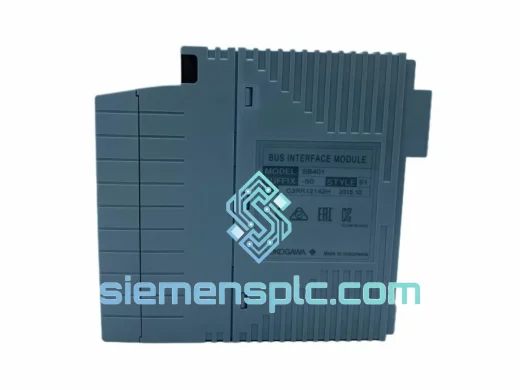
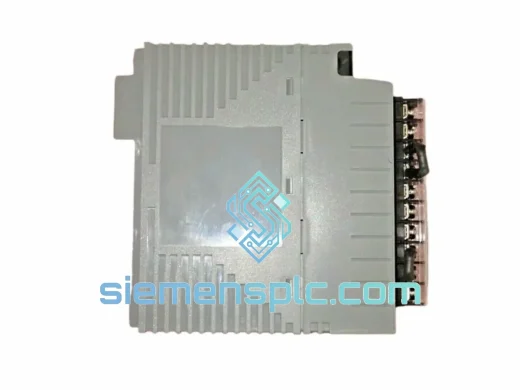
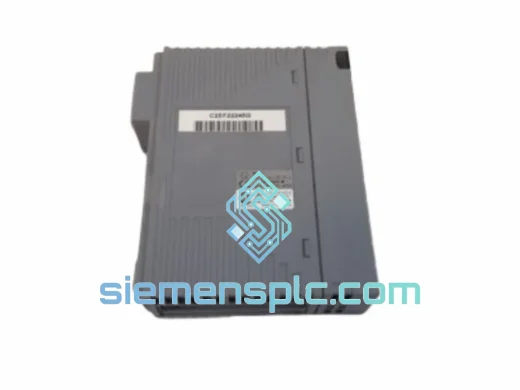
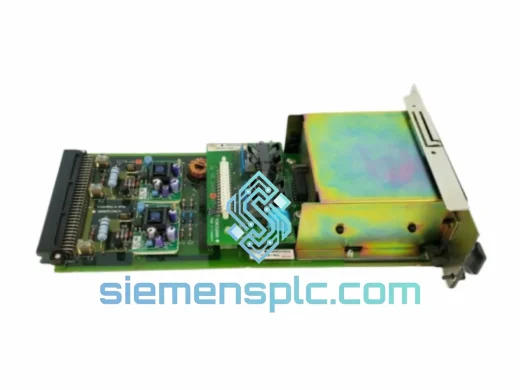
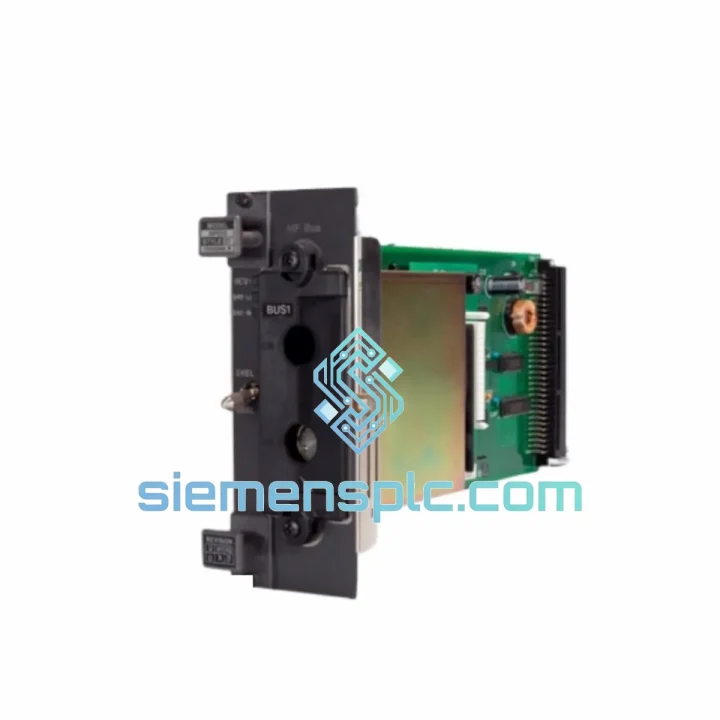
YOKOGAWA AIP502 S1 V-Net Coupler Module – CENTUM DCS
CENTUM
Origin JP
V-Net Coupler Module
Request verified availability, condition, replacement risk review, packing options and courier lead time for AIP562 S1.
Click Request Quote and the part number is inserted into the inquiry form automatically.
Core fields for model confirmation and RFQ routing. Detailed product narrative remains below.
The YOKOGAWA AIP562 S1 is a V-Net Coupler Module engineered for deployment within YOKOGAWA’s CENTUM Distributed Control System family, including CENTUM CS, CENTUM CS 3000, and CENTUM VP platforms. Its primary function is to serve as a physical and logical interface node on the V-net control bus — the proprietary token-passing coaxial network that forms the deterministic communication backbone of YOKOGAWA’s process automation architecture.
In a CENTUM DCS topology, the V-net bus interconnects Field Control Stations (FCS), Batch Control Stations (BCS), Human Interface Stations (HIS), and Engineering Workstations (EWS). The AIP562 S1 occupies the coupler slot within the station chassis and manages the electrical coupling between the station’s internal backplane bus and the external V-net coaxial segment. Without a correctly specified coupler module, the station cannot participate in the V-net token ring, effectively isolating it from the control network.
The S1 hardware revision designates a specific generation of the AIP562 coupler, with defined electrical characteristics and firmware compatibility windows. Procurement teams and system engineers must match the hardware suffix to the installed base to avoid interoperability issues in mixed-revision V-net segments. This module is a long-lifecycle component in brownfield DCS maintenance, spare-parts management, and system expansion projects across oil and gas, petrochemical, power generation, and pharmaceutical process industries.
Real-time Stock & RFQ: [email protected] | WhatsApp: +86 18359268345
| Parameter | Specification |
|---|---|
| Manufacturer | YOKOGAWA Electric Corporation |
| Part Number | AIP562 S1 |
| Module Classification | V-Net Coupler Module |
| Compatible DCS Platform | CENTUM CS / CENTUM CS 3000 / CENTUM VP |
| Network Protocol | V-net (YOKOGAWA proprietary token-passing bus) |
| Bus Topology | Coaxial token ring, up to 16 nodes per segment |
| Maximum Segment Length | 500 m per coaxial segment (per IM 33S01B30-01EN) |
| Power Source | Station backplane (no external power required) |
| Mounting Interface | Dedicated YOKOGAWA station chassis slot |
| Operating Temperature | 0°C to +55°C |
| Storage Temperature | −25°C to +70°C |
| Relative Humidity | 5% to 95% RH, non-condensing |
| Approximate Weight | 600 g |
| Certifications | CE, UL (verify against current datasheet revision) |
| Country of Origin | Japan |
| Warranty | 12 months from date of shipment |
The AIP562 S1 implements a passive-active hybrid coupling architecture. On the physical layer, the module presents a high-impedance tap to the V-net coaxial segment, minimizing reflective signal distortion across the bus. The internal coupling transformer provides galvanic isolation between the coaxial medium and the station’s internal logic circuitry — a design choice that directly addresses ground loop interference in industrial environments where multiple earthing points exist across large plant footprints.
The token-passing arbitration logic embedded in the AIP562 S1 operates at the data link layer. Each station on the V-net segment holds the token for a bounded time window before passing it to the next node in the ring sequence. This deterministic scheduling eliminates collision-based latency, which is a fundamental requirement for closed-loop process control where scan cycle jitter must remain below defined thresholds. The AIP562 S1’s internal arbitration circuitry monitors token rotation health and can assert a bus fault signal to the FCS processor if token loss is detected beyond the configured timeout, enabling the control station to initiate a safe-state transition.
From an EMC design perspective, the module’s shielded housing and filtered backplane connector reduce conducted and radiated emissions in compliance with IEC 61000-4 series immunity requirements. The coupler’s differential signal path rejects common-mode noise injected onto the coaxial shield — a practical advantage in environments with variable-frequency drives, high-current motor starters, and other electromagnetic noise sources operating in proximity to the DCS cabinet.
The S1 revision incorporates a hardware watchdog circuit that independently monitors the module’s internal logic power rail. If the rail deviates beyond ±5% of nominal, the watchdog asserts a module-fault output to the station backplane, allowing the FCS to log a diagnostic event and alert the operator station without requiring a manual inspection cycle. This self-monitoring capability reduces mean time to detect (MTTD) for hardware degradation events in continuous-process environments where unplanned shutdowns carry significant economic consequences.
Every YOKOGAWA AIP562 S1 unit dispatched from our Xiamen, China facility undergoes a structured pre-shipment inspection protocol. Units are verified against the original YOKOGAWA part number and hardware revision marking, inspected for physical integrity of the backplane connector, coaxial port, and housing, and tested for power-on self-test (POST) completion where test fixtures permit. New factory-sealed units are shipped in original YOKOGAWA anti-static packaging with intact tamper-evident seals.
All export documentation — including commercial invoice, packing list, and certificate of origin — is prepared in compliance with Chinese customs regulations and the import requirements of the destination country. HS code classification is applied per the current WCO tariff schedule for programmable logic controllers and DCS communication modules. For regulated industries requiring full material traceability, serialized units with manufacturing batch records are available upon request at the time of order placement.
Logistics routing from Xiamen is optimized for transit time and cost based on order urgency. Standard air freight to major industrial hubs in Europe, the Middle East, Southeast Asia, and the Americas typically achieves 3–7 business day door-to-door transit. Express courier options (DHL, FedEx, UPS) are available for critical-path procurement requirements. Sea freight consolidation is offered for bulk orders where lead time permits. All shipments are insured against transit damage and loss, with tracking information provided at the time of dispatch.
A 12-month warranty is provided from the date of shipment. Warranty coverage includes hardware defects attributable to manufacturing or material failure under normal operating conditions as defined in YOKOGAWA’s published environmental specifications. Warranty claims are processed through our Xiamen technical team, with replacement units dispatched upon fault confirmation. Extended warranty and on-site support arrangements are available for large-volume procurement contracts.
Email: [email protected]
WhatsApp: +86 18359268345
Web: siemensplc.com
Location: Xiamen, China
© 2026
We check the full part number, brand, series and visible nameplate information before quotation.
Sales confirms stock path, condition option, quantity and realistic lead time for export dispatch.
DHL, FedEx, UPS or buyer courier arrangements can be reviewed with packing requirements.
Similar brand or category products for fast comparison and multi-item RFQ lists.