Yokogawa
RFQ Ready
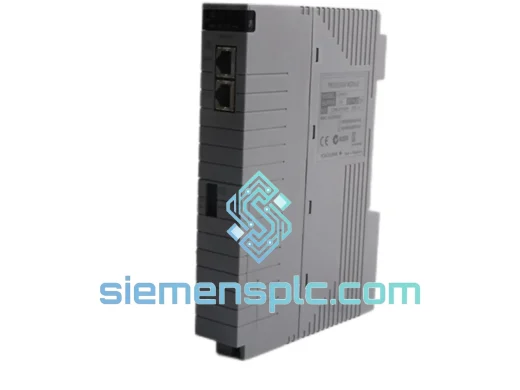
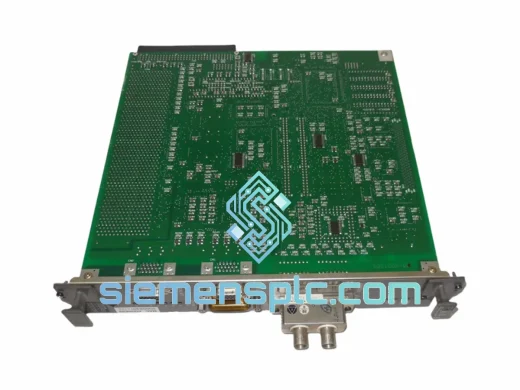
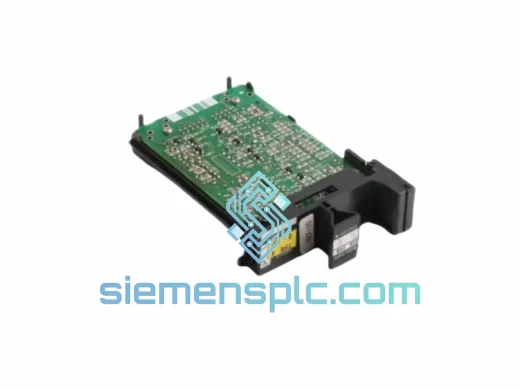
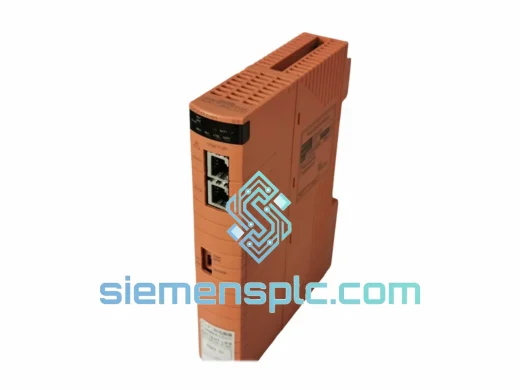
Yokogawa S2CP471-01 S1 DCS Processor Module
CENTUM CS3000
Origin JP
DCS Processor Module
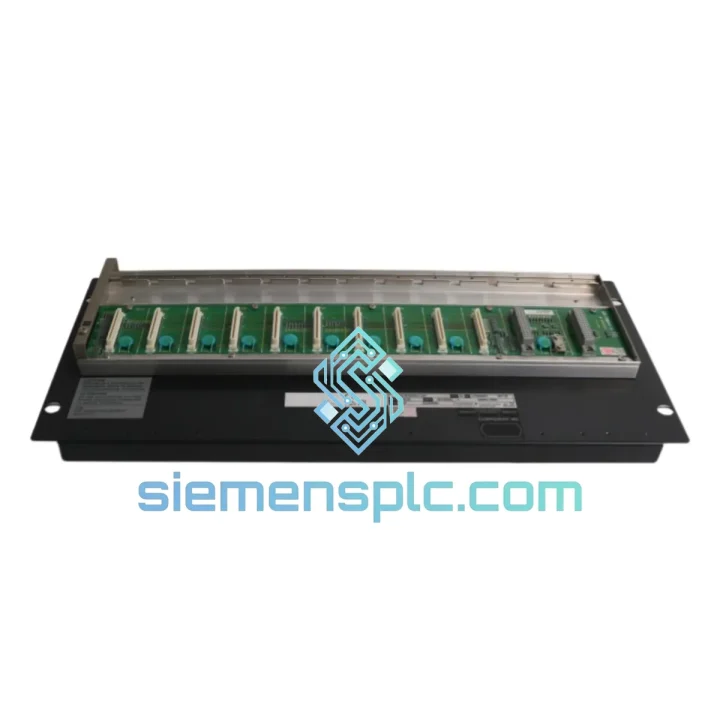
Request verified availability, condition, replacement risk review, packing options and courier lead time for ANB10D-427/CU2T.
Click Request Quote and the part number is inserted into the inquiry form automatically.
Core fields for model confirmation and RFQ routing. Detailed product narrative remains below.
The Yokogawa ANB10D-427/CU2T is a dual-redundant Extended Serial Backplane (ESB) Bus Node Unit engineered for deployment within Yokogawa CENTUM CS3000 and CENTUM VP Distributed Control Systems. Its primary function is to establish and maintain deterministic, high-speed serial communication between Field Control Stations (FCS) and remote I/O units distributed across the process plant. The suffix /CU2T designates a specific hardware revision with a defined connector configuration, and the prefix D confirms dual-redundant node operation — a mandatory requirement in safety-critical and high-availability process loops.
In a CENTUM architecture, the ESB bus operates as the internal backbone connecting the FCS processor card to multiple I/O nest units within the same field control station enclosure. Unlike the V-net or Vnet/IP plant-wide network, the ESB bus is a short-distance, high-throughput backplane-level bus. The ANB10D-427/CU2T acts as the node interface card that arbitrates bus access, manages slot addressing, and ensures that scan cycle data from all connected I/O modules is delivered to the FCS CPU within the deterministic window — typically within a 100 ms to 1,000 ms control period depending on system configuration.
Real-time Stock & RFQ: [email protected] | WhatsApp: +86 18359268345
| Parameter | Specification |
|---|---|
| Part Number | ANB10D-427/CU2T |
| Manufacturer | Yokogawa Electric Corporation |
| Series | CENTUM CS3000 / CENTUM VP |
| Module Function | Dual-Redundant ESB Bus Node Unit |
| Bus Architecture | ESB (Extended Serial Backplane) – proprietary Yokogawa protocol |
| Redundancy Mode | Dual (D-suffix): active/standby arbitration with automatic switchover |
| Connector Suffix | /CU2T – specific backplane connector and hardware revision |
| Power Supply | Supplied via backplane bus (24 VDC system bus rail) |
| Typical Power Consumption | ≤ 5 W (module only, backplane-powered) |
| Operating Temperature | 0 °C to +55 °C |
| Storage Temperature | −25 °C to +70 °C |
| Relative Humidity | 5% to 95% RH, non-condensing |
| Vibration Resistance | IEC 60068-2-6 compliant (10–150 Hz, 1 G) |
| EMC Compliance | CE Mark; IEC 61000-4 series (ESD, EFT, surge, conducted RF) |
| Approvals | CE, UL (refer to Yokogawa GS sheet for full listing) |
| Module Weight | Approx. 2,480 g (module with housing) |
| Mounting | Backplane slot insertion – CENTUM FCS nest unit |
| Compatible Platforms | CENTUM CS3000 R3/R4; CENTUM VP R5/R6 (suffix verification required) |
| Warranty | 12 months from date of shipment |
The ANB10D-427/CU2T implements a dual-bus arbitration architecture where two physically independent ESB bus paths — primary and secondary — are monitored simultaneously by the node unit’s onboard arbitration logic. Under normal operation, the primary path carries all I/O scan traffic. The arbitration circuit continuously evaluates bus integrity via frame-level CRC checking and timeout detection. When a primary bus fault is detected — whether from a broken backplane trace, a failed driver IC, or a corrupted frame sequence — the switchover to the secondary bus path is executed in hardware, without FCS CPU intervention, within a single bus scan cycle. This hardware-level failover eliminates the latency penalty that would occur if switchover were managed at the firmware or application layer.
The /CU2T connector configuration uses a defined pin-out that supports both signal integrity and mechanical keying, preventing incorrect module insertion into incompatible nest slots. The CU2T variant includes a transient voltage suppression (TVS) diode array on the backplane interface lines, providing protection against electrostatic discharge events up to ±2 kV contact discharge per IEC 61000-4-2. This is particularly relevant in environments where maintenance personnel may handle modules without full ESD precautions.
EMC performance is achieved through a combination of board-level shielding, differential signal transmission on the ESB bus lines, and common-mode choke filtering at the backplane connector. The differential signaling scheme provides inherent rejection of common-mode noise — a critical design requirement in process plant environments where variable-frequency drives, high-current motor starters, and inductive switching loads generate broadband electromagnetic interference across the 150 kHz to 30 MHz range. The module’s ground plane topology is designed to minimize ground loop impedance between the module chassis and the FCS enclosure frame, reducing susceptibility to conducted interference per IEC 61000-4-6.
Slot addressing is managed via hardware DIP switch or jumper configuration on the module, with the address decoded by the FCS CPU during system initialization. Each ANB10D-427/CU2T node is assigned a unique slot address within the ESB bus segment, allowing the FCS to poll I/O data from each nest in a deterministic round-robin sequence. The polling interval is synchronized to the FCS control period, ensuring that all I/O data presented to the control application is time-coherent within a single scan cycle.
Every ANB10D-427/CU2T unit supplied by siemensplc.com is sourced through verified industrial distribution channels with full traceability to Yokogawa Electric Corporation’s manufacturing records. Prior to dispatch, each module undergoes a structured pre-shipment inspection protocol: visual examination of the PCB and connector surfaces for mechanical damage, label and date code verification against Yokogawa’s part numbering conventions, and a power-on functional check where test equipment permits. Units are packaged in anti-static shielding bags with humidity indicator cards, placed in foam-lined cartons rated for international air freight handling per ISTA 2A standards.
Shipments originate from our warehouse in Xiamen, China — a major logistics hub with direct access to Xiamen Gaoqi International Airport and Xiamen Port, supporting both air express (DHL, FedEx, UPS) and sea freight consolidation. In-stock units are dispatched within 3–5 business days of order confirmation. Export documentation — including commercial invoice, packing list, and certificate of origin — is prepared in compliance with the destination country’s import requirements. Incoterms options include EXW, FOB Xiamen, CIF, and DDP depending on the buyer’s preference. All shipments are covered by cargo insurance for the declared value of the goods.
A 12-month warranty is provided from the date of shipment. Warranty claims are processed through direct communication with our technical team, who will assess the fault, arrange return logistics, and dispatch a replacement unit upon confirmation of a manufacturing defect. Warranty does not cover damage resulting from incorrect installation, overvoltage events beyond the module’s rated protection levels, or unauthorized modification of the hardware.
Email: [email protected]
WhatsApp: +86 18359268345
Web: siemensplc.com
Location: Xiamen, China
© 2026 siemensplc.com. All rights reserved.
We check the full part number, brand, series and visible nameplate information before quotation.
Sales confirms stock path, condition option, quantity and realistic lead time for export dispatch.
DHL, FedEx, UPS or buyer courier arrangements can be reviewed with packing requirements.
Similar brand or category products for fast comparison and multi-item RFQ lists.