Yokogawa
In Stock OK
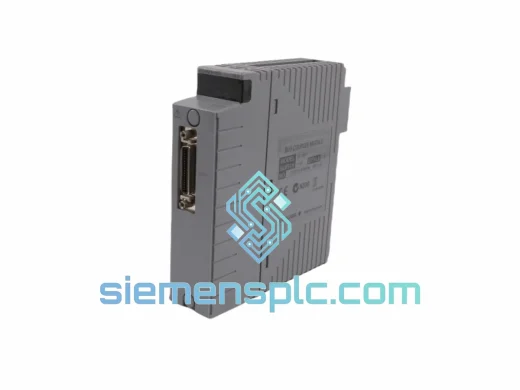
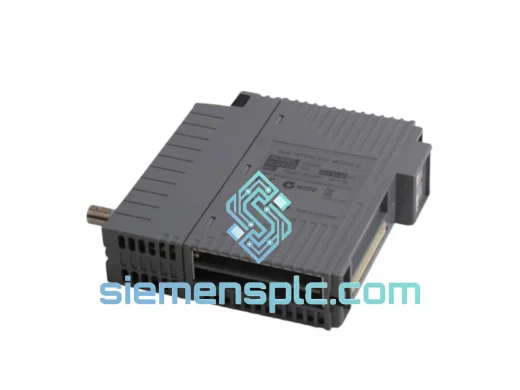
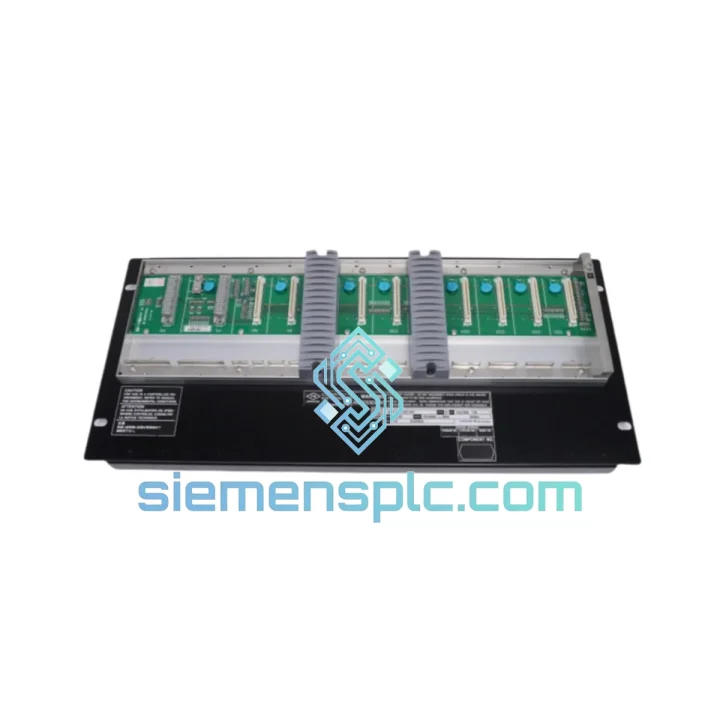
Yokogawa ANB10D-427 S2 DCS Bus Node Unit – CENTUM VP CS 3000
Request verified availability, condition, replacement risk review, packing options and courier lead time for ANB10D-427.
BrandYokogawa
Part NumberANB10D-427
ConditionAvailability Check
Lead TimeRFQ Confirmation
DocumentsDatasheet / photos by RFQ
ShippingExport packing available
Auto-filled RFQ
ANB10D-427
Click Request Quote and the part number is inserted into the inquiry form automatically.
- Reply by email: [email protected]
- WhatsApp / Tel: +86 18359268345
- Mon-Sat 9:00-18:00 GMT+8
Procurement Data
Key Product Information
Core fields for model confirmation and RFQ routing. Detailed product narrative remains below.
- Brand
- Yokogawa
- Primary Part Number
- ANB10D-427
- Product Type
- DCS Bus Node Unit
- Series / Family
- CENTUM VP
- Manufacturer
- Yokogawa Electric Corporation
- Country of Origin
- JP
- Catalog Category
- DCS & Safety Modules
- Operating Temp.
- 0 °C to +55 °C
- Warranty
- 12 months from confirmed shipment date
Model confirmed for inquiry
ANB10D-427
Send quantity, destination and urgency. The RFQ form keeps this part number attached.
Request Quote
Product Overview
Yokogawa ANB10D-427 S2 — ESB Highway Node Unit: Backplane Token-Bus Arbitration for CENTUM FCS Nest Architecture
The ANB10D-427 S2 is a hardware-revision S2 Extended Serial Backplane (ESB) Bus Node Unit produced by Yokogawa Electric Corporation. It occupies a dedicated slot within a Field Control Station (FCS) nest inside CENTUM CS 1000, CENTUM CS 3000, and CENTUM VP (R4 through R6) distributed control system cabinets. The module’s sole architectural responsibility is to serve as the physical and logical interface between the FCS processor card and the I/O modules seated in the same nest, using Yokogawa’s proprietary token-passing ESB highway protocol to deliver a bounded, repeatable scan cycle to every I/O channel in that nest segment.
In a CENTUM FCS cabinet, each nest requires exactly one ANB10D unit. The FCS processor initiates a token-passing sequence across the ESB highway at the start of every control execution cycle; each ANB10D-427 S2 holds its assigned node address — set via on-board DIP switches — and responds within a fixed arbitration window, forwarding I/O data upstream to the processor and writing output setpoints downstream to the I/O modules. If the ANB10D unit is absent, mismatched in revision, or fails mid-operation, the FCS marks the entire nest as communication-failed and drives all associated output channels to their configured fail-safe states. This makes the ANB10D-427 S2 a continuity-critical component: its correct specification and physical condition directly determine whether the control loops served by that nest remain in automatic or fall to manual/safe-state operation.
The S2 hardware revision supersedes the original S1 production run. Yokogawa issued the S2 revision to address a latent arbitration-window defect in S1 units that manifested as spurious ESB timeout alarms under sustained high-nest-count loading — specifically when six or more nests were active on a single ESB segment. The S2 revision extends the internal bus arbitration window and introduces a hardware-level retry counter that must exhaust three consecutive failed arbitration attempts before escalating to a timeout fault condition. Plants that have not yet migrated all nests to S2 units should treat mixed S1/S2 ESB segments as a known diagnostic risk factor.
Real-time Stock & RFQ: [email protected] | WhatsApp: +86 18359268345
Technical Parameters
| Manufacturer | Yokogawa Electric Corporation |
| Full Part Number | ANB10D-427 S2 |
| Hardware Revision | S2 |
| Module Classification | ESB Highway Bus Node Unit — FCS nest backplane interface |
| Bus Protocol | ESB (Extended Serial Backplane), Yokogawa proprietary token-passing, half-duplex differential serial |
| ESB Segment Node Capacity | Up to 8 node units per ESB highway segment |
| Node Address Configuration | Hardware DIP switch, 3-bit binary encoding, set prior to nest insertion |
| Arbitration Window (S2) | Extended vs. S1; hardware retry counter: 3 consecutive failures before timeout escalation |
| Watchdog Timer Period | ≤ 1.6 s (independent of ESB controller ASIC) |
| ESB Signal Impedance | 100 Ω differential (controlled-impedance PCB trace routing) |
| Backplane Connector | Gold-plated multi-point contact, rated ≥ 500 insertion cycles |
| Power Supply | Nest backplane bus (no external PSU required) |
| Typical Power Consumption | ≤ 5 W |
| Galvanic Isolation | On-board DC-DC isolation stage; ESB signal ground isolated from nest power bus ground |
| Operating Temperature | 0 °C to +55 °C |
| Storage Temperature | −20 °C to +60 °C |
| Relative Humidity | 5 % to 95 % RH, non-condensing |
| Mounting | Nest-slot card insertion, CENTUM FCS cabinet (DIN-rail nest) |
| Approximate Weight | 300 g |
| Certifications | CE, UL (system-level, inherited from CENTUM platform certification) |
| RoHS Compliance | Yes |
| Compatible Platforms | CENTUM CS 1000, CENTUM CS 3000, CENTUM VP R4 / R5 / R6 |
| Country of Origin | Japan |
| Warranty | 12 months from confirmed shipment date |
Hardware Logical Analysis
The ANB10D-427 S2 implements the ESB highway protocol at the physical and data-link layers of the CENTUM FCS backplane stack. The ESB highway is a half-duplex, differential serial bus operating at a fixed baud rate defined by the CENTUM platform generation. Token ownership rotates among all ANB10D units on the segment in a fixed round-robin sequence; each unit holds the token for exactly one arbitration window, during which it transfers the I/O data block for its nest to the FCS processor and receives the corresponding output setpoint block. The fixed rotation period means that the worst-case latency for any single nest’s I/O data to reach the FCS processor is fully deterministic and calculable from the number of active nodes on the segment — a property that is architecturally incompatible with Ethernet-based or CSMA/CD bus topologies used in lower-tier fieldbus systems.
The PCB layout of the ANB10D-427 S2 routes the ESB differential pair as a matched-length, controlled-impedance trace pair at 100 Ω differential. Ground-plane stitching vias are placed at regular intervals along the signal routing path to suppress common-mode noise coupling from adjacent switching power supply transients within the FCS cabinet. The on-board DC-DC isolation stage provides galvanic separation between the ESB signal ground reference and the nest power bus ground, attenuating ground-loop interference that arises in large process plant installations where multiple earthing points exist across physically separated cabinet rows or process buildings. This isolation stage is passive in normal operation and does not introduce measurable propagation delay on the ESB signal path.
The independent watchdog timer circuit operates from a dedicated oscillator that is electrically separate from the main ESB controller ASIC clock domain. If the ASIC enters an undefined state — caused by a transient voltage spike, ESD event, or firmware exception — the watchdog asserts a hardware reset signal within 1.6 seconds, forcing the ASIC through its power-on initialization sequence and restoring normal token-passing participation. This self-recovery event is logged in the CENTUM system event journal as a module reset entry with a timestamp and node address, providing full traceability for maintenance engineers performing root-cause analysis. The watchdog reset does not require FCS processor intervention and does not interrupt the ESB token rotation on other nodes during the 1.6-second recovery window — the FCS processor treats the affected nest as temporarily absent and resumes polling it automatically once the ANB10D re-asserts its node address on the bus.
The S2 revision’s extended arbitration window and three-attempt retry counter are implemented in gate-array logic within the ESB controller ASIC, not in firmware. This means the behavior is not subject to firmware version dependencies and cannot be inadvertently altered by CENTUM software updates. Plants performing CENTUM VP R-revision upgrades do not need to re-qualify the ANB10D-427 S2 hardware behavior as part of the software change management process.
System Integration Benefits
- Bounded worst-case I/O scan latency: The token-passing ESB protocol produces a mathematically deterministic worst-case scan period for each nest, allowing control engineers to verify that FCS execution cycle times (typically 100 ms to 1 s) are met without bus-contention jitter — a requirement for regulatory compliance in SIL-rated loops.
- Uniform S2 revision deployment eliminates mixed-revision diagnostic ambiguity: Replacing all S1 units with S2 units on an ESB segment removes the asymmetric timeout threshold condition that makes it difficult to distinguish genuine I/O module faults from bus arbitration anomalies during alarm analysis.
- Native CENTUM Builder enumeration without manual override: The ANB10D-427 S2 is recognized by CENTUM Builder’s hardware configuration database without requiring manual module-type entries, reducing commissioning time and eliminating the risk of configuration database mismatches that can cause FCS download failures.
- Galvanic isolation suppresses ground-loop data corruption: The on-board isolation stage prevents ground-loop currents — common in multi-building process plant installations — from corrupting ESB data frames, reducing the incidence of spurious I/O communication alarms that are difficult to distinguish from genuine field device faults.
- Sub-2-second autonomous watchdog recovery: The independent watchdog timer restores bus participation within 1.6 seconds of an ASIC fault without requiring operator intervention or FCS restart, limiting the duration of any single-nest I/O outage to a defined, short interval.
- Full diagnostic event traceability: Every module state transition — watchdog reset, ESB timeout, power-on self-test result, and node address assertion — is reported to the CENTUM system event journal with node address and timestamp, supporting structured maintenance planning and audit trail requirements.
- Hot-swap mechanical compatibility: The gold-plated multi-point backplane connector supports controlled insertion and extraction under nest power in CENTUM configurations that permit hot-swap maintenance, allowing module replacement during planned maintenance windows without a full FCS shutdown.
- Long-term sparing for post-OEM-support installations: CENTUM CS 3000 and VP R4–R5 installations operating beyond Yokogawa’s standard OEM hardware support lifecycle require exact-revision spare modules to avoid nest re-engineering. The ANB10D-427 S2 fulfills this requirement without triggering a CENTUM hardware configuration change that would require re-validation of the affected FCS.
- Gate-array logic implementation ensures software-update independence: The S2 arbitration and retry logic is implemented in hardware, not firmware, so CENTUM platform software upgrades do not alter bus behavior and no re-qualification of the module is required after a CENTUM R-revision upgrade.
Quality Assurance & Global Logistics
All ANB10D-427 S2 units supplied through siemensplc.com are genuine Yokogawa OEM hardware, sourced either as new-surplus stock from authorized distribution channels or as professionally inspected units from decommissioned CENTUM installations with documented service history. Each unit undergoes a structured pre-shipment inspection before dispatch: physical connector pin integrity is verified under magnification, PCB surface condition is assessed for corrosion or mechanical damage, DIP switch operability across all bit positions is confirmed, and ESB communication function is verified using a CENTUM-compatible test bench that exercises the token-passing arbitration sequence. Units that do not pass all inspection criteria are quarantined and removed from available inventory.
Shipments originate from Xiamen, China, with access to DHL Express, FedEx International Priority, and UPS Worldwide Expedited. In-stock units are dispatched within 1–3 business days of order confirmation. Each module is sealed in an anti-static ESD bag with desiccant, placed in a foam-lined inner carton, and double-boxed for international air freight. Export documentation — commercial invoice, packing list, and certificate of origin — is prepared to support customs clearance in the destination country. A 12-month functional warranty covers all supplied units from the confirmed shipment date, with direct technical support available via email and WhatsApp for installation and commissioning queries.
Contact Information
Email: [email protected]
WhatsApp: +86 18359268345
Web: siemensplc.com
Location: Xiamen, China
© 2026 siemensplc.com. All rights reserved.
Ready to quote
[email protected]
Send This Part Number to Sales
RFQ workflow
Quality workflow ->
Confirmation Process
01Model confirmation
We check the full part number, brand, series and visible nameplate information before quotation.
02Availability reply
Sales confirms stock path, condition option, quantity and realistic lead time for export dispatch.
03Packing & courier
DHL, FedEx, UPS or buyer courier arrangements can be reviewed with packing requirements.
Continue sourcing
Browse full catalog ->
Related Automation Parts
Similar brand or category products for fast comparison and multi-item RFQ lists.