Yokogawa
RFQ Ready
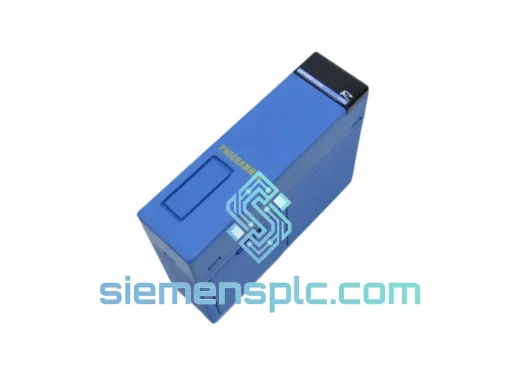
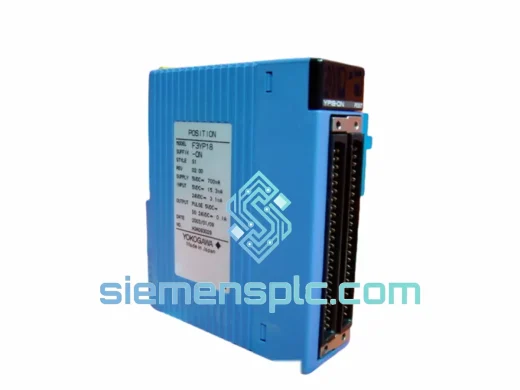
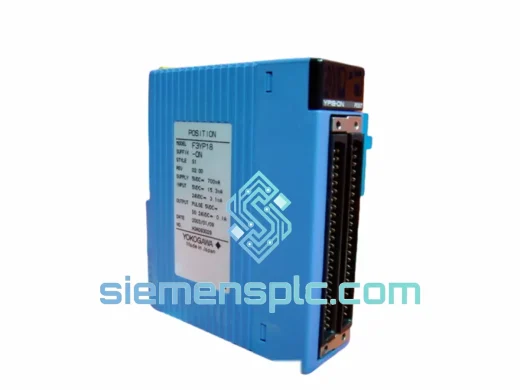
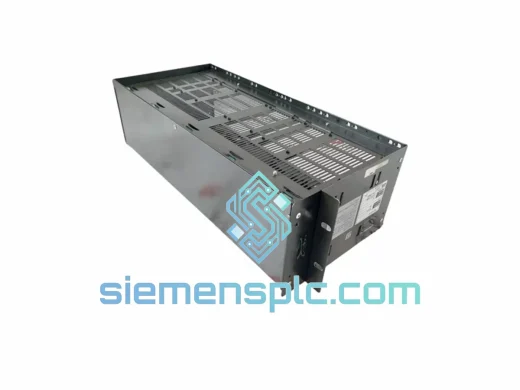
YOKOGAWA YNT511D PLC Communication Module
FA-M3
Origin JP
PLC Communication Module
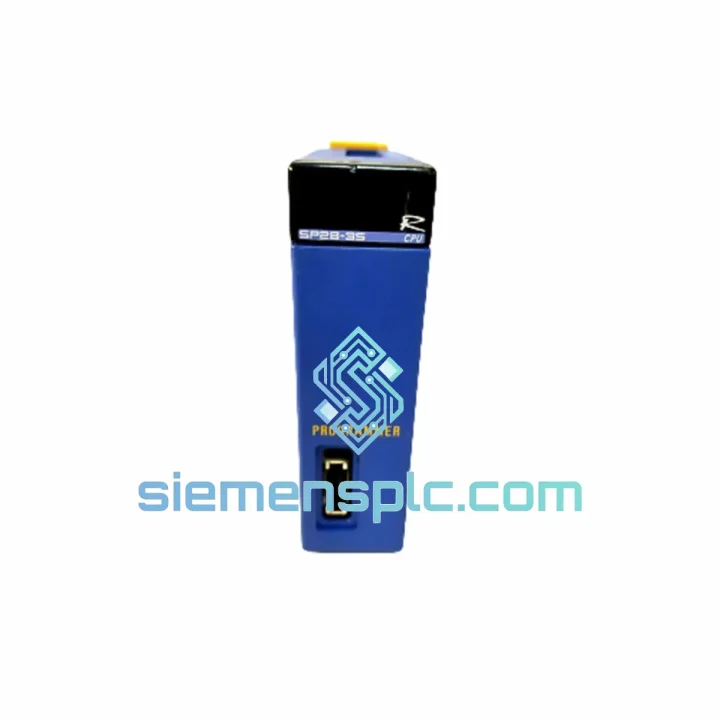
Request verified availability, condition, replacement risk review, packing options and courier lead time for F3RZ81-OF.
Click Request Quote and the part number is inserted into the inquiry form automatically.
Core fields for model confirmation and RFQ routing. Detailed product narrative remains below.
The YOKOGAWA F3RZ81-OF is a dedicated optical fiber communication module engineered for the FA-M3 Range-free Multi-controller platform. Within a distributed control architecture, this module occupies a standard slot on the FA-M3 base unit and establishes a deterministic, noise-immune data path between controller nodes or between a controller and remote I/O stations. Unlike copper-based RS-485 or Ethernet links, the F3RZ81-OF transmits data over optical fiber, eliminating ground-loop interference and galvanic coupling — two failure modes that account for a disproportionate share of field communication faults in heavy-industry environments such as steel mills, chemical reactors, and offshore platforms.
The module integrates directly into the FA-M3 backplane bus, sharing the same high-speed internal bus that connects CPU modules (F3SP series) to I/O and specialty modules. This architecture means the F3RZ81-OF does not introduce an additional protocol translation layer; data frames are passed natively between the backplane and the optical transceiver, preserving cycle-time determinism. For process engineers designing control loops with tight scan-time budgets — typically 1 ms to 10 ms for fast analog loops — this native integration is a measurable advantage over gateway-based communication solutions.
The optical interface supports both ST-type and SC-type fiber connectors depending on the cable plant already installed at the site, reducing retrofit costs in brownfield projects. Multimode fiber at 850 nm wavelength is the standard operating medium, with a link budget sufficient for inter-cabinet distances common in large process plants. The transceiver circuitry includes automatic optical power monitoring, which the FA-M3 CPU can read as a diagnostic register, enabling predictive maintenance alerts before a fiber link degrades to the point of causing communication errors.
From a hardware protection standpoint, the F3RZ81-OF front panel and internal PCB conform to YOKOGAWA’s standard FA-M3 EMC design rules: the module housing is die-cast aluminum with continuous conductive gaskets at all seams, providing shielding effectiveness consistent with IEC 61000-4-3 radiated immunity requirements at 10 V/m. The optical isolation inherent to fiber transmission adds a further layer of protection — transient voltages induced by nearby high-power switching equipment, motor drives, or lightning events on cable shields cannot propagate back into the controller backplane through the communication port.
Real-time Stock & RFQ: [email protected] | WhatsApp: +86 18359268345
| Parameter | Specification |
|---|---|
| Part Number / SKU | F3RZ81-OF |
| Brand | YOKOGAWA Electric Corporation |
| Series | FA-M3 Range-free Multi-controller |
| Module Category | Optical Fiber Communication Module |
| Optical Wavelength | 850 nm (multimode) |
| Fiber Connector Type | ST / SC (site-dependent) |
| Transmission Medium | 50/125 µm or 62.5/125 µm multimode optical fiber |
| Backplane Bus Interface | FA-M3 high-speed internal bus (native slot integration) |
| Supply Voltage (from backplane) | 5 VDC (backplane-supplied) |
| Power Consumption | ≤ 2.5 W (typical operating) |
| Operating Temperature | 0 °C to +55 °C |
| Storage Temperature | −25 °C to +70 °C |
| Relative Humidity | 10 % to 90 % RH (non-condensing) |
| Vibration Resistance | IEC 60068-2-6 (10–150 Hz, 9.8 m/s²) |
| Shock Resistance | IEC 60068-2-27 (147 m/s², 11 ms) |
| EMC Immunity | IEC 61000-4-3 (10 V/m radiated), IEC 61000-4-4 (EFT/Burst) |
| Optical Isolation | Full galvanic isolation via fiber medium |
| Mounting | FA-M3 base unit slot (standard module form factor) |
| Weight | Approx. 2,140 g (module + packaging) |
| Country of Origin | Japan |
| Warranty | 12 months against manufacturing defects |
| Compliance | CE, RoHS (verify current datasheet for destination market) |
The F3RZ81-OF’s internal architecture separates three functional domains: the backplane interface logic, the protocol framing engine, and the optical transceiver front-end. This separation is deliberate — it allows each domain to be independently clocked and buffered, preventing jitter on the optical link from propagating as timing uncertainty into the backplane bus cycle.
The backplane interface logic uses a dual-port SRAM buffer between the FA-M3 internal bus and the framing engine. During each CPU scan cycle, the CPU writes outbound data to one half of the SRAM while the framing engine reads from the other half — a classic ping-pong buffer scheme that decouples the CPU scan clock from the optical link’s bit clock. This design ensures that even if the optical link experiences a brief retransmission event, the CPU scan cycle is not stalled, preserving real-time determinism at the controller level.
The protocol framing engine encodes data using a Manchester or 8B/10B line code (depending on firmware revision), which embeds clock information within the data stream. This eliminates the need for a separate clock line over the fiber, simplifying the cable plant and removing a potential single point of failure. The framing engine also appends CRC-16 or CRC-32 checksums to each frame; the receiving end validates the checksum before forwarding data to its local backplane, so corrupted frames are detected and flagged as communication errors rather than silently passed as valid data.
The optical transceiver front-end includes an automatic gain control (AGC) circuit on the receive path. As fiber connectors age and accumulate contamination, insertion loss increases gradually. The AGC circuit compensates for up to approximately 3 dB of additional loss before the link margin is exhausted, extending the maintenance interval between fiber connector cleaning cycles. The transmit side uses a laser diode driver with temperature compensation, maintaining consistent optical output power across the 0 °C to +55 °C operating range — a relevant consideration for modules installed in outdoor junction boxes or non-climate-controlled equipment rooms.
EMC design on the PCB follows YOKOGAWA’s standard FA-M3 layout rules: power planes are fully poured and stitched to the chassis ground at multiple points, high-frequency signal traces are length-matched and routed away from power supply switching nodes, and all I/O signals crossing the board boundary pass through common-mode chokes. The die-cast aluminum housing provides a Faraday enclosure with no apertures larger than λ/20 at the highest frequency of concern, consistent with the module’s IEC 61000-4-3 immunity rating.
Every YOKOGAWA F3RZ81-OF unit supplied by siemensplc.com is sourced through verified channels and carries full manufacturer traceability. Units are inspected upon receipt: label integrity, date codes, connector condition, and housing markings are cross-referenced against YOKOGAWA’s published product identification standards. Functional verification — including optical loopback testing and backplane communication handshake — is performed where test fixtures are available prior to dispatch.
Packaging follows anti-static and shock-absorption protocols: modules are placed in conductive foam-lined anti-static bags, sealed with tamper-evident tape, and packed in double-wall corrugated cartons with void fill rated for air freight handling. Each shipment includes a commercial invoice, packing list, and certificate of origin issued from Xiamen, China.
Logistics are managed from our Xiamen operations center, with direct access to Xiamen Gaoqi International Airport (XMN) and Xiamen Port for both air and sea freight. Standard air freight via DHL, FedEx, or UPS reaches most destinations in Asia within 2–4 business days, Europe and North America within 4–7 business days. For time-critical plant shutdowns, same-day dispatch is available for in-stock units when orders are confirmed before 14:00 CST. Sea freight consolidation is available for bulk orders requiring cost optimization over speed.
A 12-month warranty against manufacturing defects is provided on all genuine OEM units. Warranty claims are processed with a target response time of one business day; replacement units are dispatched from Xiamen stock where available, minimizing plant downtime.
Email: [email protected]
WhatsApp: +86 18359268345
Web: siemensplc.com
Location: Xiamen, China
© 2026 siemensplc.com. All rights reserved.
We check the full part number, brand, series and visible nameplate information before quotation.
Sales confirms stock path, condition option, quantity and realistic lead time for export dispatch.
DHL, FedEx, UPS or buyer courier arrangements can be reviewed with packing requirements.
Similar brand or category products for fast comparison and multi-item RFQ lists.