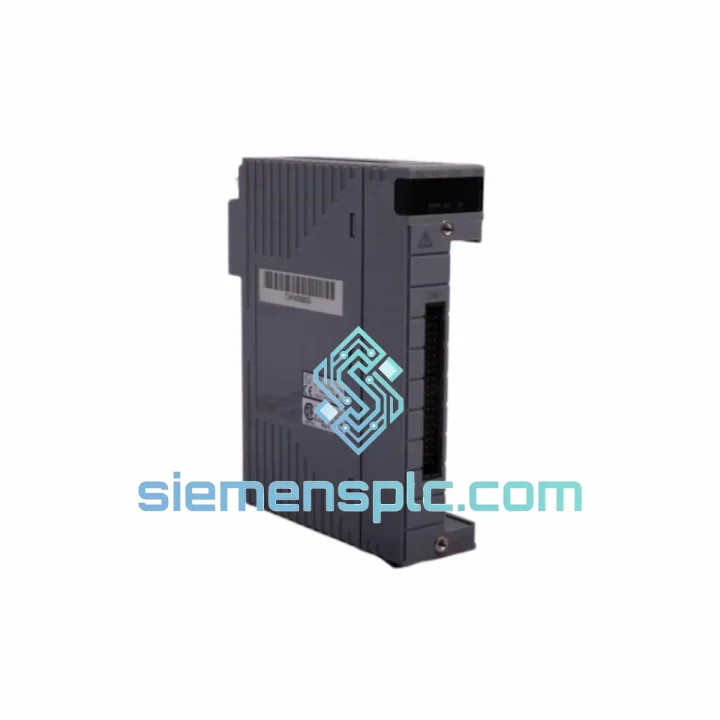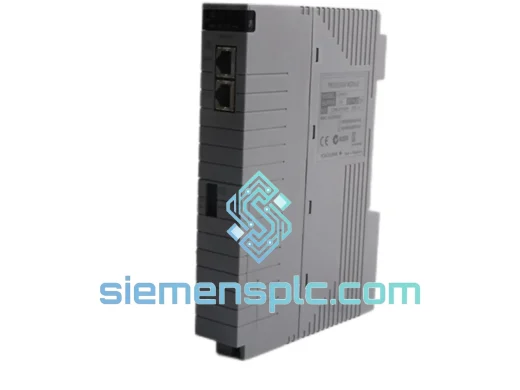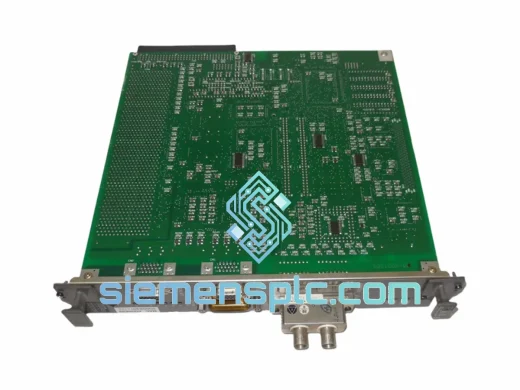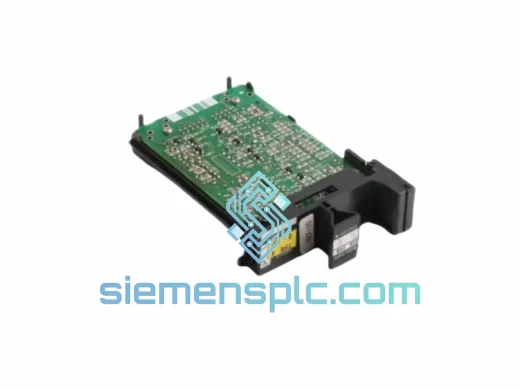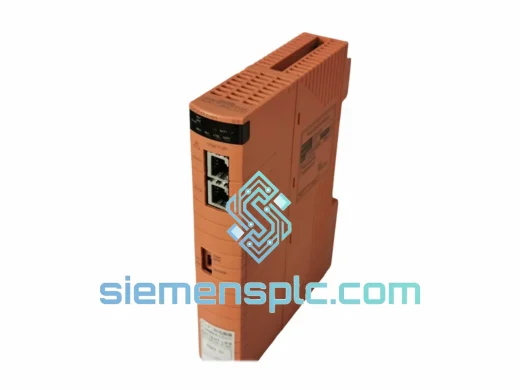
YOKOGAWA SEC402-51 S1 DCS Bus Coupler
Request verified availability, condition, replacement risk review, packing options and courier lead time for SEC402-51.
Click Request Quote and the part number is inserted into the inquiry form automatically.
- Reply by email: [email protected]
- WhatsApp / Tel: +86 18359268345
- Mon-Sat 9:00-18:00 GMT+8
Key Product Information
Core fields for model confirmation and RFQ routing. Detailed product narrative remains below.
- Brand
- Yokogawa
- Primary Part Number
- SEC402-51
- Product Type
- DCS Bus Coupler
- Series / Family
- CENTUM CS3000
- Manufacturer
- YOKOGAWA Electric Corporation
- Country of Origin
- JP
- Catalog Category
- DCS & Safety Modules
SEC402-51 S1 Down? Every Idle Minute Costs You — We Ship Before Your Next Shift Change
A failed ESB bus coupler doesn’t just take one I/O card offline. It severs the entire Extended Serial Backplane segment — every field signal on that node goes BAD simultaneously, SIL loops drop into bypass, and your operators are flying blind. The YOKOGAWA SEC402-51 S1 is the exact card that restores that segment. We have verified units on the shelf in Xiamen right now. Order before 14:00 CST and it leaves today via DHL Express or FedEx Priority — no middlemen, no grey-market sourcing, no waiting on a distributor’s back-order queue.
Production losses from an unplanned DCS outage routinely exceed the cost of this module within the first hour. The math is simple. The only variable is how fast you can get the replacement in hand.
⚡ URGENT REQUIREMENT? Contact: [email protected] | WhatsApp: +86 18359268345
Quick Technical Datasheet
| Parameter | Specification | Availability |
|---|---|---|
| Part Number | SEC402-51 S1 | ✅ Ready to Ship |
| Manufacturer | YOKOGAWA Electric Corporation | — |
| Module Function | ESB (Extended Serial Backplane) Bus Coupler | — |
| Target Platform | CENTUM CS / CENTUM CS3000 R2 / R3 | — |
| Bus Interface | Proprietary YOKOGAWA ESB backplane protocol | — |
| Slot Requirement | Dedicated ESB coupler slot — fixed position, non-relocatable | — |
| Power Source | Backplane bus powered — no external PSU wiring | — |
| Operating Temp | 0 °C to +55 °C continuous | — |
| Storage Temp | −25 °C to +70 °C | — |
| Relative Humidity | 5 % to 95 % RH, non-condensing | — |
| Node Addressing | Automatic via FCS backplane — no DIP switch required | — |
| Firmware Compatibility | CENTUM CS3000 R2.03 and above (S1 suffix) | — |
| Certifications | CE, UL listed | — |
| Country of Origin | Japan | — |
| Unit Weight | Approx. 340 g | — |
| Dispatch Lead Time | Same business day (orders before 14:00 CST) | ✅ In Stock |
Troubleshooting & Replacement Tips
How to confirm the SEC402-51 S1 is the failed component — not the FCS, not the field wiring:
- CENTUM CS3000 System View shows a single FCS node with a red X or greyed-out status while all adjacent nodes remain green — this is the coupler’s signature failure pattern. A failed FCS CPU would take the entire station down, not just one ESB segment.
- HIS alarm log shows a burst of “ESB communication error” or “Node disconnected” alarms originating from one node address, all within the same 1–2 second window. Gradual, scattered alarms across multiple nodes point elsewhere.
- All I/O quality on the affected node reads BAD simultaneously — not a mix of BAD and UNCERTAIN. Mixed quality usually indicates field wiring or transmitter faults, not a coupler failure.
- The ESB segment LED on the coupler itself is off or blinking amber when it should be steady green. Confirm with a torch — don’t rely on the HIS alone.
- Intermittent dropouts that worsen during afternoon peak temperatures: electrolytic capacitor degradation on the coupler board. The module will fail permanently within weeks. Replace proactively.
Replacement procedure — field-tested sequence for CENTUM CS3000:
- Check redundancy before touching anything. If the FCS runs in dual-redundant configuration, verify the standby unit has assumed control cleanly. System View must show the standby node in CTRL status — not STBY with a fault flag. Do not proceed until this is confirmed.
- Suppress ESB alarms at the HIS. Inhibit the affected node’s communication alarms to prevent an alarm flood during extraction. Log the inhibit in your Management of Change record — auditors will ask.
- Verify hot-swap capability for your rack revision. Most CS3000 rack variants support live coupler extraction, but not all. Check the rack’s engineering documentation or the YOKOGAWA hardware manual for your specific revision before pulling a live card. If uncertain, coordinate a controlled FCS shutdown with operations.
- Extract the failed module. Release the front-panel locking lever fully, then slide the card straight out along the backplane guides. Do not rock or twist — the ESB backplane connector is a high-density interface and bent pins will damage the replacement unit on insertion.
- Inspect the backplane connector before inserting the replacement. Use a flashlight. Look for bent pins, oxidation, or debris. A contaminated connector will destroy a new module within minutes of power-up. Clean with IPA and a non-conductive brush if needed; allow to dry completely.
- Insert the SEC402-51 S1 replacement. Align carefully with the backplane guides, seat with firm even pressure until the locking lever engages with an audible click. The module performs automatic self-addressing via the FCS firmware — there are no DIP switches, rotary selectors, or jumpers to configure on this model.
- Firmware version validation — do not skip this step. The S1 hardware revision is validated against CENTUM CS3000 R2.03 and later. If your system runs firmware earlier than R2.03, the FCS will reject the module and generate a persistent hardware fault alarm. Confirm your firmware version in the CS3000 System Builder before insertion. If a firmware update is required, plan it as a separate maintenance window.
- Monitor LED status for 90 seconds post-insertion. Steady green = normal operation restored. Amber blinking = initializing, allow up to 60 seconds. Persistent red beyond 90 seconds = hardware fault or firmware rejection. Extract, re-seat once, and observe again before escalating to YOKOGAWA technical support.
- Lift alarm inhibits and validate I/O quality. Confirm all I/O points on the recovered node return to GOOD quality in HIS trend displays. Run a minimum 15-minute observation window under normal process load before signing off and closing the work order.
- Engineering database cross-check. If the system has been reconfigured since original commissioning, verify the FCS engineering database still maps the correct slot assignment to this node. A slot-database mismatch will leave the node appearing online but with all I/O in UNCERTAIN quality — a subtle fault that can persist undetected through a shift handover.
Reliability in Harsh Conditions
The SEC402-51 S1 was not engineered for a temperature-controlled server room. YOKOGAWA built it for the environments where DCS systems actually live — refineries, chemical plants, offshore platforms, and pulp mills where the cabinet ambient can swing 20°C between day and night shifts, where VFDs and motor starters saturate the electrical environment with interference, and where a module that fails in year three is a module that was never fit for purpose.
Vibration tolerance: PCB construction uses conformal coating combined with through-hole component anchoring at mechanical stress points, validated to IEC 60068-2-6 sinusoidal vibration profiles. In compressor stations and rotating equipment environments where structural vibration is continuous and broadband, this construction approach prevents the solder joint fatigue that eventually kills surface-mount-only designs. The SEC402-51 S1 does not develop intermittent faults from vibration-induced micro-cracking.
Thermal design margin: Rated for continuous operation from 0 °C to 55 °C without derating. Onboard electrolytic capacitors are specified at 105 °C, providing substantial thermal headroom above the module’s rated operating ceiling. In poorly ventilated enclosures where cabinet temperatures regularly approach the upper operating limit, this headroom is the difference between a module that lasts a decade and one that fails in year four from capacitor dry-out.
Humidity and corrosion resistance: Conformal coating on the PCB provides protection against humidity ingress up to 95 % RH non-condensing. In coastal petrochemical facilities, tropical climates, and any installation where cabinet door seals degrade over time, this coating prevents the dendritic corrosion and leakage current failures that are the leading cause of premature DCS module retirement in humid environments.
EMI immunity: The ESB bus coupler operates in cabinets that share physical space with high-current motor starters, variable frequency drives, and RF-emitting equipment. YOKOGAWA’s shielded backplane connector design and onboard EMI filtering maintain communication signal integrity under these conditions. The module does not require additional shielding or physical separation from noise sources within the cabinet.
ESD protection: All interface pins carry electrostatic discharge protection — essential during module handling in low-humidity environments, particularly in winter months in continental climates where technicians routinely carry several kilovolts of static charge. Handle with standard ESD precautions regardless; the protection is a last line of defense, not a substitute for procedure.
Global Express Logistics
Our dispatch hub is in Xiamen, Fujian Province — one of China’s primary export gateways, with direct daily freight connections to DHL Express, FedEx International Priority, and UPS Worldwide Express. We do not use postal consolidation services or economy freight for industrial automation components. Every shipment moves on a named express carrier with full tracking, declared value insurance, and proper commercial documentation.
Order-to-delivery timeline:
- Order confirmed before 14:00 CST: Same-day dispatch. The module is pulled from shelf, visually inspected, photographed for your records, packed in anti-static ESD foam within a double-wall export carton, and handed to the carrier the same afternoon.
- DHL Express Worldwide: Xiamen to major industrial hubs across Europe, the Middle East, and Southeast Asia typically 2–4 business days. North America 3–5 business days depending on customs clearance speed at the destination port of entry.
- FedEx International Priority: Comparable transit times with particularly strong coverage across the Americas, Australia, and New Zealand. Preferred carrier for shipments to remote industrial sites with established FedEx delivery routes.
- Tracking within 2 hours of dispatch: You receive the AWB number and a direct carrier tracking link by email and WhatsApp. No follow-up required on your end.
- Customs documentation package: Commercial invoice, packing list, and HS code declaration are prepared to the standard required by the destination country’s customs authority. We have shipped industrial automation components to over 60 countries and understand the documentation specifics that prevent clearance holds — particularly for shipments to the EU, GCC countries, and India where documentation errors are the primary cause of delays.
- Production-critical emergency freight: For genuine line-down situations where standard express timelines are insufficient, contact us directly via WhatsApp. We can arrange next-flight-out courier options for select destinations when the production loss cost justifies the premium freight rate.
Contact Information
📧 Email: [email protected]
💬 WhatsApp: +86 18359268345
🌐 Web: siemensplc.com
© 2026. All rights reserved.
Send This Part Number to Sales
Confirmation Process
We check the full part number, brand, series and visible nameplate information before quotation.
Sales confirms stock path, condition option, quantity and realistic lead time for export dispatch.
DHL, FedEx, UPS or buyer courier arrangements can be reviewed with packing requirements.