Yokogawa
In Stock OK
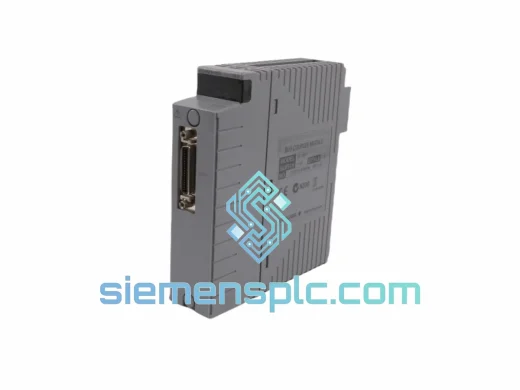
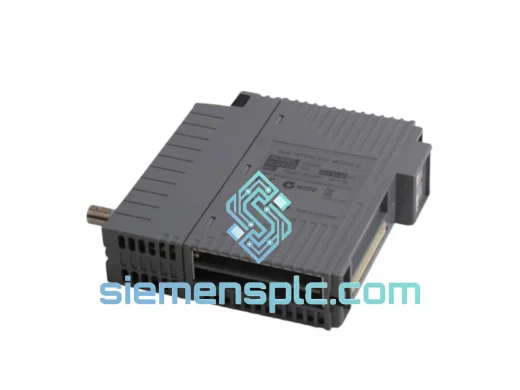
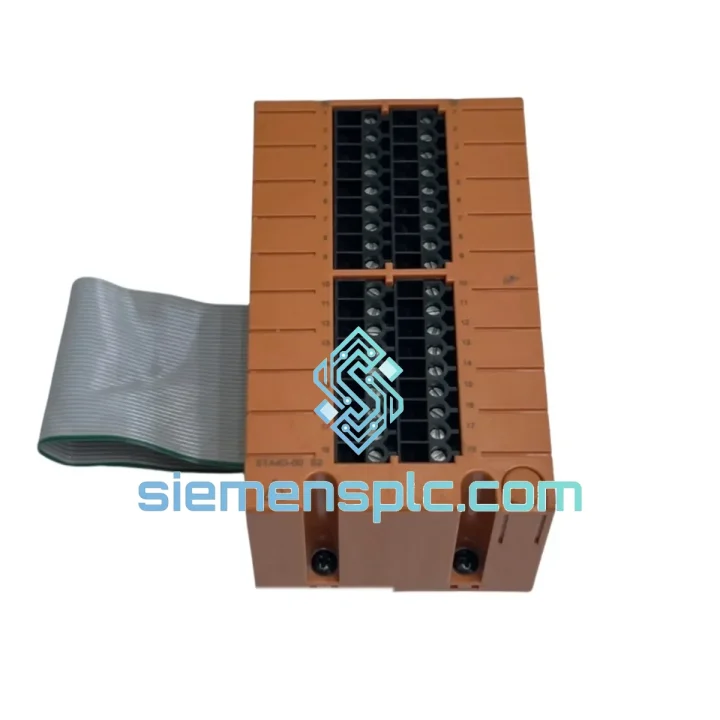
Yokogawa STA4D-00-S2 Terminal Block
Request verified availability, condition, replacement risk review, packing options and courier lead time for STA4D-00-S2.
BrandYokogawa
Part NumberSTA4D-00-S2
ConditionAvailability Check
Lead TimeRFQ Confirmation
DocumentsDatasheet / photos by RFQ
ShippingExport packing available
Auto-filled RFQ
STA4D-00-S2
Click Request Quote and the part number is inserted into the inquiry form automatically.
- Reply by email: [email protected]
- WhatsApp / Tel: +86 18359268345
- Mon-Sat 9:00-18:00 GMT+8
Procurement Data
Key Product Information
Core fields for model confirmation and RFQ routing. Detailed product narrative remains below.
- Brand
- Yokogawa
- Primary Part Number
- STA4D-00-S2
- Product Type
- Terminal Block
- Series / Family
- CENTUM VP
- Manufacturer
- Yokogawa Electric Corporation
- Country of Origin
- JP
- Catalog Category
- DCS & Safety Modules
- Compliance
- Yokogawa OEM spec; CE / RoHS aligned
Model confirmed for inquiry
STA4D-00-S2
Send quantity, destination and urgency. The RFQ form keeps this part number attached.
Request Quote
Product Overview
Yokogawa STA4D-00-S2 – Stop the Clock on Your Downtime
Every minute a marshalling cabinet sits open with a failed terminal block, your process loop is dead and your production losses are compounding. The STA4D-00-S2 is a pressure clamp terminal block purpose-built for Yokogawa CENTUM VP and CS 3000 DCS field wiring architectures. We stock it in Xiamen, we ship it today, and it lands on your bench — not in a warehouse queue. If you are reading this at 2 AM during an emergency shutdown, you are in the right place.
URGENT REQUIREMENT? Contact: [email protected] | WhatsApp: +86 18359268345
Quick Technical Datasheet
| Part Number | STA4D-00-S2 |
| Manufacturer | Yokogawa Electric Corporation |
| Compatible Platform | CENTUM VP / CS 3000 DCS |
| Component Type | Pressure Clamp Terminal Block |
| Connection Method | Spring-cage pressure clamp, tool-free |
| Conductor Range | AWG 22–14 / 0.34–2.5 mm² |
| Mounting | DIN rail / marshalling cabinet panel |
| Housing Material | High-grade thermoplastic, tin-plated copper contacts |
| Country of Origin | Japan |
| Compliance | Yokogawa OEM spec; CE / RoHS aligned |
| Stock Status | ✔ Ready to Ship – Xiamen Warehouse |
| Lead Time | Same-day dispatch for orders confirmed before 15:00 CST |
Troubleshooting & Replacement Tips
Swapping a STA4D-00-S2 sounds straightforward until you are standing in front of a live marshalling cabinet with 40 loops terminated on the same rail. Here is what actually matters on-site:
1. Loop isolation before you touch anything. The STA4D series does not have a built-in disconnect lever on every variant. Before pulling the failed block, confirm whether your marshalling schedule uses a separate isolating terminal upstream. If not, you will need to open the field junction box and disconnect the cable at source. Skipping this step on a 4–20 mA loop with a live transmitter will drive your DCS input to fault state and may trigger a spurious alarm or interlock.
2. Suffix matters — do not assume S2 = S1. The suffix on STA4D-00-S2 encodes a specific configuration (contact arrangement, jumper provision, or color designation depending on the cabinet drawing revision). Cross-reference your Yokogawa marshalling schedule or I/O list before ordering. Mixing suffix variants on the same rail is physically possible but can create labeling and loop-tracing headaches during the next turnaround.
3. Spring-cage re-termination torque. Pressure clamp terminals do not require a torque wrench, but they do require the correct screwdriver blade width to actuate the clamp cage without cracking the housing. Use a 3.0 mm flat-blade. Insert the conductor fully — the clamp should grip the conductor, not the insulation. A partial insertion is the single most common cause of intermittent signal faults on these blocks post-replacement.
4. Common fault codes after terminal block failure on CENTUM VP:
- ALM-1001 / IOP (Input Open): Field loop open circuit. First suspect: loose or corroded terminal clamp. Check contact resistance with a milliohm meter before condemning the transmitter.
- ALM-1003 / HH or LL alarm with no process change: Intermittent contact causing signal spikes. Re-terminate and apply a light pull-test (5 N) to each conductor.
- ALM-2201 / Communication error on FIO bus: Rarely caused by terminal blocks directly, but a shorted terminal from a wiring error during replacement can pull down the field bus segment. Isolate the suspect loop first.
5. Post-replacement loop check. After re-termination, perform a 4 mA / 20 mA injection test at the field end before closing the cabinet. Confirm the DCS engineering station shows the correct PV value at both ends of the range. Document the replacement in your maintenance log with the date, technician ID, and new block serial/batch number.
Reliability in Harsh Conditions
Marshalling cabinets in oil and gas, petrochemical, and power generation plants are not climate-controlled offices. The STA4D-00-S2 is built to operate where conditions are genuinely hostile.
Vibration: The spring-cage clamping mechanism maintains consistent contact force regardless of mechanical vibration from nearby rotating equipment — compressors, pumps, turbines. Unlike screw-type terminals that loosen over time under cyclic vibration, the spring-cage design applies a constant, self-compensating grip. This is not a marketing claim; it is the reason Yokogawa specified this connection technology for process plant marshalling in the first place.
Temperature cycling: Industrial marshalling cabinets can see ambient swings from sub-zero during winter shutdowns to 60°C+ in summer when cabinet cooling fails. The thermoplastic housing of the STA4D-00-S2 is rated for continuous duty across this range without dimensional creep that would compromise contact integrity.
Humidity and condensation: Coastal and offshore installations deal with persistent high humidity. The tin-plated copper contacts resist oxidation under these conditions far better than bare copper alternatives. If your cabinet has a history of condensation ingress, inspect the contact surface during replacement — a light oxide film is acceptable, but pitting or green corrosion indicates the cabinet seal needs attention before the new block goes in.
Chemical atmosphere: Refineries and chemical plants expose field cabinets to H₂S, SO₂, and chlorine traces. Yokogawa’s material selection for the STA4D series accounts for this. No additional conformal coating is required for standard process plant environments, though offshore or highly corrosive zones may warrant additional cabinet pressurization.
Global Express Logistics
Our dispatch hub is in Xiamen, China — one of the most connected export ports on the Pacific Rim. When your plant is down, the last thing you need is a parts supplier who ships by sea freight on a weekly consolidation. We do not operate that way.
Standard express routing: DHL Express and FedEx International Priority are our default carriers for urgent orders. Transit times from Xiamen to major industrial hubs: Southeast Asia 1–2 days, Middle East 2–3 days, Europe 3–4 days, North America 3–5 days. These are door-to-door times, not port-to-port.
Order cutoff: Orders confirmed with payment before 15:00 CST are packed and handed to the carrier the same business day. You receive a tracking number within 2 hours of dispatch.
Export documentation: Commercial invoice, packing list, and certificate of origin are prepared as standard. For projects requiring a material test report, certificate of conformance, or country-specific import documentation, advise us at the time of order and we will prepare accordingly. We have shipped to refineries, power stations, and offshore platforms across 60+ countries — customs paperwork is not a bottleneck on our end.
Emergency freight: For genuine plant-down situations, contact us directly on WhatsApp. We can arrange next-flight-out courier options for critical single-unit shipments where standard express is not fast enough.
Contact Information
Email: [email protected]
WhatsApp: +86 18359268345
Web: siemensplc.com
© 2026 siemensplc.com. All rights reserved.
Ready to quote
[email protected]
Send This Part Number to Sales
RFQ workflow
Quality workflow ->
Confirmation Process
01Model confirmation
We check the full part number, brand, series and visible nameplate information before quotation.
02Availability reply
Sales confirms stock path, condition option, quantity and realistic lead time for export dispatch.
03Packing & courier
DHL, FedEx, UPS or buyer courier arrangements can be reviewed with packing requirements.
Continue sourcing
Browse full catalog ->
Related Automation Parts
Similar brand or category products for fast comparison and multi-item RFQ lists.