ABB
RFQ Ready
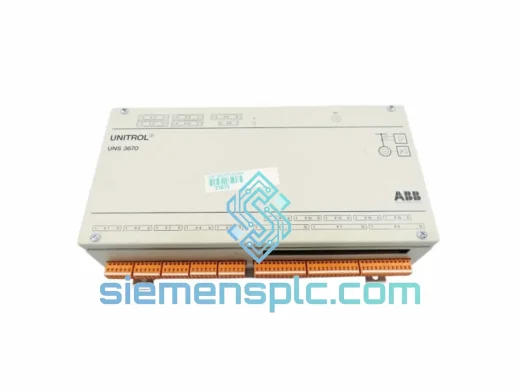
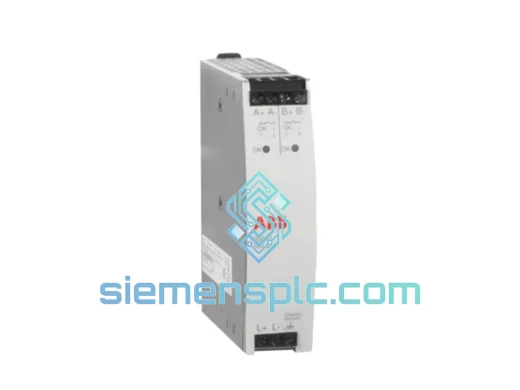
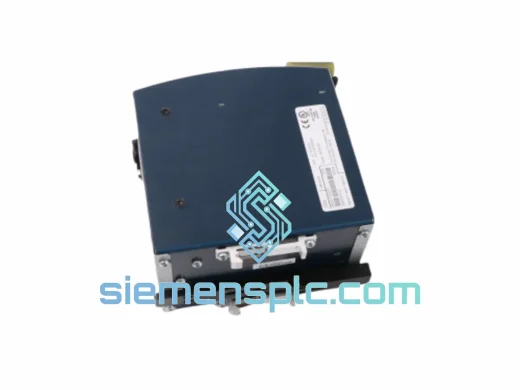
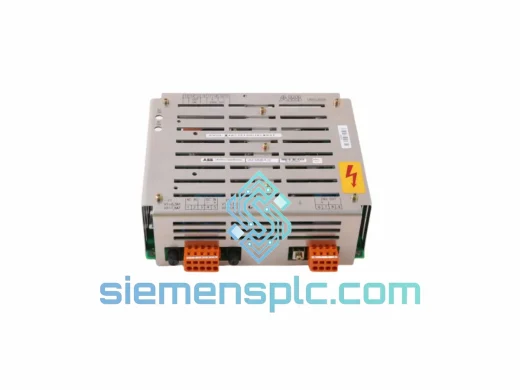
ABB UNS0868B-P V2 3BHE013940R0002 Excitation Power Supply
UNITROL
Origin SE
Excitation Power Supply Board
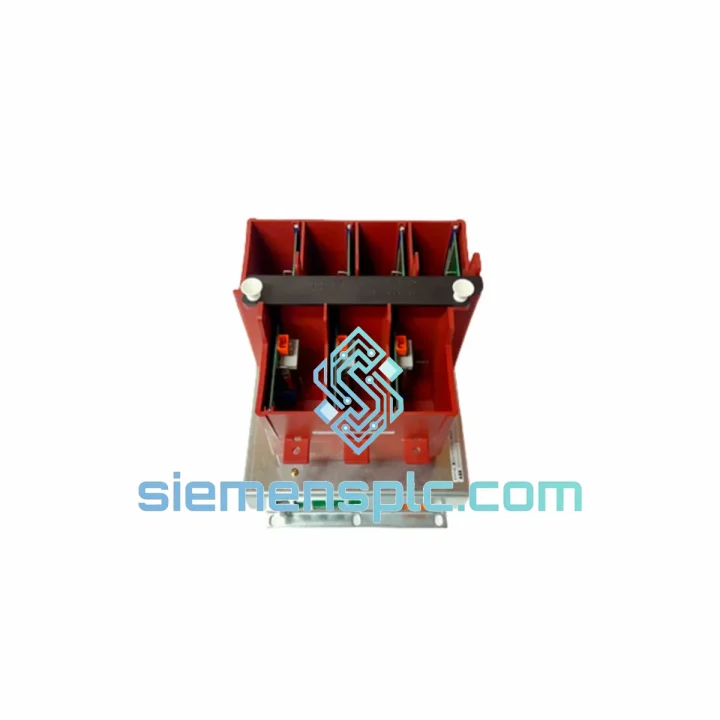
Request verified availability, condition, replacement risk review, packing options and courier lead time for KUC711AE101-3BHB004661R0101.
Click Request Quote and the part number is inserted into the inquiry form automatically.
Core fields for model confirmation and RFQ routing. Detailed product narrative remains below.
The ABB KUC711AE101 (cross-reference: 3BHB004661R0101) is a rack-mounted, switched-mode DC power supply module engineered specifically for the UNITROL series of automatic voltage regulators (AVR) and generator excitation controllers. Its function within the control loop is non-negotiable: it provides the stable, isolated DC voltage rails upon which every downstream signal-processing card depends. The AVR processor, firing pulse generator, field current measurement circuit, and protection relay interface all draw from the rails this module produces. Voltage deviation on any of these rails — whether from input transients, load steps, or thermal drift — introduces a direct error into the excitation reference chain, manifesting as terminal voltage instability at the generator output.
ABB designed the KUC711AE101 to operate without interruption in the electrical environment characteristic of large synchronous machine installations: auxiliary bus voltages that sag during motor-starting events, conducted EMI generated by six-pulse thyristor bridges switching at 50/60 Hz, ambient temperatures that climb to 55 °C inside enclosed switchgear rooms, and humidity levels that approach saturation in coastal and tropical plant sites. The module addresses each of these stressors through deliberate hardware architecture choices rather than conservative derating alone.
Field deployment records span hydroelectric generating stations, combined-cycle gas turbine plants, large synchronous motor drives in mining and cement production, and marine propulsion systems where the UNITROL platform manages shaft generator excitation. In all of these contexts, the KUC711AE101 occupies a position of systemic criticality: its failure mode is not graceful degradation but immediate loss of AVR function, making mean time between failures (MTBF) and incoming inspection discipline the two most consequential procurement variables.
Real-time Stock & RFQ: [email protected] | WhatsApp: +86 18359268345
| Parameter | Specification |
|---|---|
| Manufacturer | ABB Ltd., Baden, Switzerland |
| Part Number | KUC711AE101 |
| ABB Catalog Reference | 3BHB004661R0101 |
| Product Family | UNITROL Excitation & AVR Control |
| Module Classification | Regulated Switched-Mode DC Power Supply |
| AC Input Voltage Range | 85 V AC – 264 V AC (universal, single-phase) |
| AC Input Frequency | 47 Hz – 63 Hz |
| DC Output Rail 1 | +24 V DC ± 1 %, 3 A continuous (72 W) |
| DC Output Rail 2 | +15 V DC ± 2 %, 500 mA |
| DC Output Rail 3 | −15 V DC ± 2 %, 500 mA |
| Output Ripple & Noise | < 50 mV pk-pk, measured at 20 MHz BW |
| Conversion Efficiency | ≥ 85 % at full load, 230 V AC input |
| Load Transient Response | Output returns to ±1 % regulation within 1 ms for 50 % load step |
| Input–Output Isolation | 3,000 V AC / 1 min (reinforced per IEC 61010-1 Cat. II) |
| Input–Ground Isolation | 1,500 V AC |
| Overvoltage Protection | Crowbar circuit, trip at 110 % of Vnom, response < 10 µs |
| Overcurrent Protection | Cycle-by-cycle peak current limiting; hiccup restart after 500 ms |
| Power-Good Signal | Open-collector output, asserts within 20 ms of rail stabilization |
| Operating Temperature | −10 °C to +55 °C |
| Storage Temperature | −40 °C to +70 °C |
| Relative Humidity | 5 % – 95 % RH, non-condensing (IEC 60068-2-78) |
| Altitude (no derating) | Up to 2,000 m ASL |
| EMC Standards | EN 61000-4-2 (ESD Level 3), EN 61000-4-4 (EFT Level 3), EN 61000-4-5 (Surge Level 3) |
| Conducted Emissions | EN 55011 Class A |
| Safety Certification | IEC 61010-1, CE Declaration of Conformity |
| Backplane Connector | Gold-plated edge connector, rated ≥ 500 mating cycles |
| Module Weight | 450 g |
| Country of Origin | Switzerland |
| Warranty | 12 months from confirmed shipment date |
Switching Topology and Frequency Selection: The KUC711AE101 is built on a flyback-derived SMPS topology with a fixed switching frequency in the 100–200 kHz band. Operating at this frequency reduces the required transformer core cross-section by approximately an order of magnitude compared to a 50 Hz line-frequency design, enabling the compact PCB footprint that fits the UNITROL rack pitch. The primary-side PWM controller continuously monitors the output voltage via an optocoupler feedback path and adjusts duty cycle on a cycle-by-cycle basis. This closed-loop architecture maintains output regulation across the full 85–264 V AC input window — a range that encompasses both 110 V North American auxiliary bus standards and 220/240 V IEC-standard plant auxiliary systems, without any hardware jumper or tap-changer reconfiguration.
Three-Rail Galvanic Isolation Architecture: The module implements independent galvanic isolation between three domains: the AC input, the +24 V DC logic rail, and the ±15 V DC analog rails. The analog rails supply the operational amplifier networks in the AVR processor cards — circuits where any common-mode noise injection or ground loop current would corrupt the voltage error signal and introduce a steady-state offset into the terminal voltage regulation loop. The 3,000 V AC isolation barrier between input and output exceeds the IEC 61010-1 reinforced insulation requirement for Overvoltage Category II environments, providing margin against transient overvoltages on the auxiliary bus that would otherwise couple through a lower-rated isolation barrier.
Two-Stage EMC Input Filter: The AC input stage incorporates a cascaded common-mode and differential-mode LC filter. X-capacitors bridging line-to-neutral suppress differential-mode conducted emissions generated by the switching transistor’s voltage transitions. Y-capacitors from line and neutral to chassis ground attenuate common-mode noise. A ferrite bead array on each DC output rail provides a third attenuation stage, targeting the 100–200 kHz switching frequency harmonics before they reach the downstream processor cards. This three-stage filter chain is characterized to meet EN 55011 Class A conducted emission limits even when the module is installed in the same cabinet as a six-pulse thyristor bridge generating high dV/dt transients at 300–600 Hz harmonic intervals.
Overvoltage Crowbar and Overcurrent Hiccup Protection: The +24 V output rail is protected by a dedicated SCR-based crowbar circuit with a trip threshold fixed at 110 % of nominal (26.4 V). When the output voltage exceeds this threshold — a condition that can arise from a feedback optocoupler failure or a shorted feedback resistor — the crowbar fires within 10 µs, clamping the rail to near-zero volts and triggering a latched shutdown. This protects the downstream processor cards from sustained overvoltage, which would otherwise destroy CMOS logic ICs within milliseconds. Overcurrent protection uses a cycle-by-cycle peak current limiting scheme: the primary switch is turned off immediately when the sensed peak inductor current exceeds the programmed limit, preventing transformer core saturation. After a 500 ms hiccup interval, the controller attempts a soft-start restart, allowing automatic recovery from transient overload conditions without requiring manual intervention at the panel.
Thermal Conduction Path and MTBF Basis: High-dissipation components — the main switching transistor, output rectifier diodes, and input rectifier bridge — are mounted on a copper pour connected to the module’s aluminum baseplate. The baseplate interfaces directly with the UNITROL rack’s forced-air cooling channel, conducting heat away from the PCB without relying on component-level heatsinks that would increase module height. At full rated load in a 55 °C ambient, the switching transistor junction temperature remains below 110 °C, providing a 40 °C margin against the 150 °C absolute maximum rating. This thermal margin is the primary driver of the module’s 100,000-hour MTBF figure, calculated per MIL-HDBK-217F at ground benign conditions.
All KUC711AE101 units dispatched from siemensplc.com are sourced through verified ABB-authorized distribution channels and subjected to a structured incoming inspection protocol before any unit is allocated to a customer order.
Incoming Inspection Protocol: Each module undergoes visual and mechanical inspection against ABB’s published physical reference standards — PCB surface condition, connector contact integrity, housing markings, and label authenticity. Units exhibiting any indication of rework, re-marking, or counterfeit construction are rejected and quarantined. Electrical functional testing measures output voltages on all three rails under no-load and full-load conditions, verifies ripple and noise against the 50 mV pk-pk specification using a 20 MHz bandwidth oscilloscope, and confirms power-good signal timing. Test results are logged against each unit’s serial number and retained for a minimum of five years.
Packaging and ESD Protection: Tested units are sealed in anti-static bags, placed in foam-lined corrugated cartons rated for IATA air freight handling, and labeled with part number, serial number, test date, and inspector identification. Traceability documentation — certificate of conformance (CoC) and test report — is available upon request for each shipped unit.
Logistics from Xiamen, China: Dispatch occurs within 1–3 business days of order confirmation. International shipment options include DHL Express (3–5 business days to most destinations), FedEx International Priority, UPS Worldwide Express, and sea freight consolidation for project-quantity orders. Export documentation — commercial invoice, packing list, and certificate of origin — is prepared in compliance with destination country customs requirements. The applicable HS Code for this product is 8537.10 in most jurisdictions. Emergency same-day dispatch is available for confirmed stock items when order confirmation is received before 14:00 CST.
Email: [email protected]
WhatsApp: +86 18359268345
Web: siemensplc.com
Location: Xiamen, China
© 2026 siemensplc.com. All rights reserved.
We check the full part number, brand, series and visible nameplate information before quotation.
Sales confirms stock path, condition option, quantity and realistic lead time for export dispatch.
DHL, FedEx, UPS or buyer courier arrangements can be reviewed with packing requirements.
Similar brand or category products for fast comparison and multi-item RFQ lists.