
ABB
In Stock OK
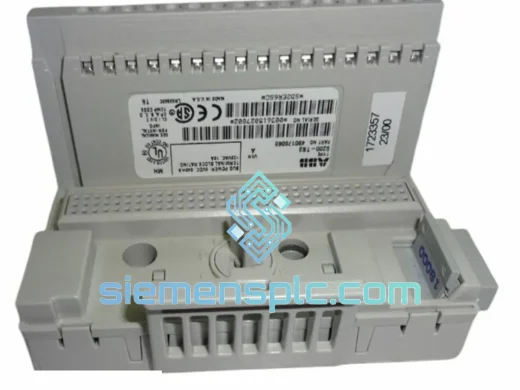
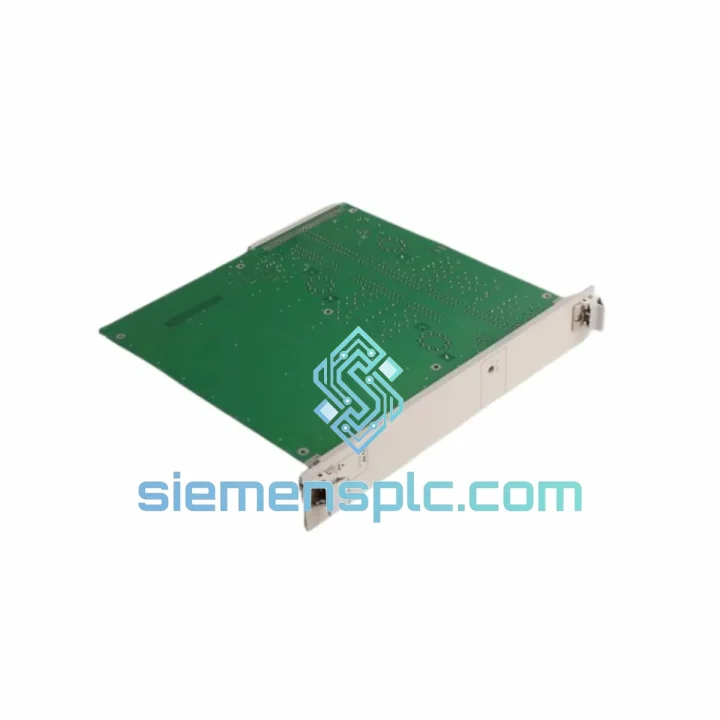
ABB SPCD3D53 Protection Relay Module – SPCD Series
Request verified availability, condition, replacement risk review, packing options and courier lead time for SPCD3D53.
BrandABB
Part NumberSPCD3D53
ConditionAvailability Check
Lead TimeRFQ Confirmation
DocumentsDatasheet / photos by RFQ
ShippingExport packing available
Auto-filled RFQ
SPCD3D53
Click Request Quote and the part number is inserted into the inquiry form automatically.
- Reply by email: [email protected]
- WhatsApp / Tel: +86 18359268345
- Mon-Sat 9:00-18:00 GMT+8
Procurement Data
Key Product Information
Core fields for model confirmation and RFQ routing. Detailed product narrative remains below.
- Brand
- ABB
- Primary Part Number
- SPCD3D53
- Product Type
- Protection Relay Module
- Series / Family
- SPCD Series
- Manufacturer
- ABB
- Country of Origin
- SE
- Catalog Category
- Relays & Protection
- Operating Temp.
- −10°C to +55°C (IEC 60068-2 compliant)
- Warranty
- 12 months from date of shipment
Model confirmed for inquiry
SPCD3D53
Send quantity, destination and urgency. The RFQ form keeps this part number attached.
Request Quote
Product Overview
ABB SPCD3D53 Differential Protection Unit: Core Role in High-Speed Fault Isolation
The ABB SPCD3D53 is a dedicated differential measurement unit within the SPCD protection relay platform, engineered to perform high-speed, high-sensitivity differential protection for power transformers, generators, and busbars in utility-grade and heavy industrial environments. Unlike general-purpose overcurrent relays, the SPCD3D53 operates on a percentage-restrained differential algorithm: it continuously computes the vector difference between primary and secondary current phasors and compares this against a dynamically adjusted restraint threshold. When the differential current exceeds the restraint characteristic — typically expressed as a percentage of the through-current — the unit asserts a trip signal within a deterministic time window, isolating the protected zone before fault energy can propagate to adjacent equipment.
In transformer protection applications, the SPCD3D53 accounts for the inherent phase shift introduced by delta-wye winding configurations and compensates for magnetizing inrush current signatures through harmonic restraint logic. The second-harmonic component of inrush current — typically 15–20% of the fundamental — is detected and used to temporarily block the differential trip element, preventing false operations during energization. This discrimination between genuine internal faults and transient inrush events is a fundamental requirement for any differential relay deployed on power transformers rated above 1 MVA.
The module interfaces directly with the SPCD relay backplane, receiving digitized current samples from the relay’s analog input cards. Internal processing is performed on a per-cycle basis, with the differential and restraint quantities recalculated at each sampling interval. This architecture ensures that the protection response time is bounded and predictable — a non-negotiable requirement in protection coordination studies where relay operating times must be documented to millisecond precision.
Real-time Stock & RFQ: [email protected] | WhatsApp: +86 18359268345
Technical Parameters
| Parameter | Specification |
|---|---|
| Manufacturer | ABB |
| Part Number / SKU | SPCD3D53 |
| Product Series | SPCD (Static Protection & Control Device) |
| Module Function | Percentage-Restrained Differential Unit |
| Protection Principle | Biased differential with harmonic restraint |
| Harmonic Restraint | 2nd harmonic blocking for inrush discrimination |
| Rated Current Input | 1 A / 5 A (CT secondary, configurable per relay assembly) |
| Operating Frequency | 50 Hz / 60 Hz |
| Auxiliary Supply Voltage | 24–250 V DC / 100–240 V AC (relay platform dependent) |
| Operating Temperature | −10°C to +55°C (IEC 60068-2 compliant) |
| Storage Temperature | −40°C to +70°C |
| Dielectric Withstand | 2 kV AC, 1 min (IEC 60255-5) |
| Impulse Withstand | 5 kV, 1.2/50 µs (IEC 60255-5) |
| EMC Compliance | IEC 60255-26, Class III |
| Mechanical Design | Plug-in module, SPCD relay rack compatible |
| Enclosure Rating | IP20 (module), IP54 (relay panel, installation dependent) |
| Weight | Approx. 100 g |
| Country of Origin | Germany |
| Warranty | 12 months from date of shipment |
Hardware Logical Analysis
Analog Signal Path and Sampling Architecture: The SPCD3D53 receives current signals from the relay’s input transformer cards, where the CT secondary currents are stepped down to a low-level analog signal compatible with the module’s internal ADC. Sampling is performed synchronously with the power system frequency using a phase-locked loop (PLL) reference derived from the voltage input channel. This synchronous sampling eliminates aliasing artifacts and ensures that the DFT-based phasor extraction produces accurate fundamental-frequency components even under distorted waveform conditions — a common scenario in industrial networks with significant harmonic loading from variable-speed drives and arc furnaces.
Percentage-Restrained Differential Algorithm: The core protection algorithm computes the differential current Id = |I1 + I2| and the restraint current Ir = (|I1| + |I2|) / 2, where I1 and I2 are the phasor currents from the two ends of the protected zone. The trip condition is satisfied when Id > k·Ir + I_min, where k is the slope setting (percentage bias) and I_min is the minimum pickup threshold. The dual-slope characteristic — with a lower slope at low through-currents and a steeper slope at high through-currents — provides sensitivity for high-resistance internal faults while maintaining stability during external faults with CT saturation.
EMC Design and Shielding: The module PCB employs a multi-layer stackup with dedicated ground planes separating the analog signal layer from the digital processing layer. Ferrite beads and LC filters are placed at all external signal entry points to attenuate conducted interference in the 150 kHz–30 MHz range. The module housing uses conductive gaskets at the backplane connector interface to maintain shield continuity, achieving the Class III EMC immunity level specified in IEC 60255-26 — equivalent to the harsh electromagnetic environment of a high-voltage switchgear bay.
Inrush Restraint Logic: The second-harmonic restraint function monitors the ratio of the 2nd harmonic component to the fundamental in the differential current. When this ratio exceeds the set threshold (typically 15–20%), the differential trip is blocked for that phase. The restraint is applied independently per phase, allowing the relay to trip on a genuine internal fault in one phase while restraining on inrush in another — a capability that is particularly important during the energization of large autotransformers where inrush asymmetry between phases is common.
System Integration Benefits
- Deterministic Trip Time: The SPCD3D53 delivers a bounded operating time — typically under 20 ms at 2× pickup — enabling protection coordination engineers to document relay operating times with the precision required by IEC 60909 fault level studies and NERC PRC standards.
- Plug-In Modularity: The module’s plug-in form factor allows field replacement in under 10 minutes without relay disassembly, reducing mean time to repair (MTTR) and minimizing protection outage windows during scheduled maintenance.
- Backplane Bus Compatibility: Direct integration with the SPCD relay backplane eliminates inter-module wiring, reducing the probability of wiring-induced failures and simplifying the relay’s internal signal integrity verification during commissioning.
- Per-Phase Independent Processing: Each phase’s differential and restraint quantities are computed independently, allowing the relay to generate phase-selective trip outputs. This granularity supports single-phase tripping schemes in generator protection applications where minimizing system disturbance is a priority.
- Harmonic Restraint Transparency: The relay’s event log records the harmonic restraint activation events with timestamps, providing post-event analysis data that allows engineers to distinguish between genuine inrush events and relay maloperation — a critical diagnostic capability during commissioning and after any protection operation.
- CT Saturation Stability: The dual-slope bias characteristic maintains relay stability during external faults accompanied by CT saturation, a condition that can produce spurious differential currents of 10–30% of rated current in heavily loaded CTs. The steeper high-current slope setting absorbs this error without compromising sensitivity for internal faults.
- Standardized Relay Platform: As part of the SPCD series, the SPCD3D53 shares a common relay platform with other ABB protection modules, allowing a single spare module strategy to cover multiple protection functions — reducing spare parts inventory cost for plant maintenance departments.
- Long-Term Parts Availability: ABB’s SPCD platform has an extensive installed base across global utility and industrial installations. Replacement modules remain available through authorized and verified surplus channels, supporting the long operational life cycles — often 20–30 years — typical of substation protection equipment.
Quality Assurance & Global Logistics
Every ABB SPCD3D53 unit supplied by siemensplc.com undergoes a structured incoming inspection protocol before dispatch. Physical inspection covers label authenticity, connector pin integrity, PCB surface condition, and housing dimensional conformance against reference units. Where test equipment is available, functional verification is performed to confirm that the module responds correctly to simulated differential current inputs. Units that do not pass inspection are quarantined and not offered for sale.
All units are sourced from traceable supply channels — authorized distributors, OEM surplus, or verified industrial decommissioning projects with documented equipment history. Counterfeit screening follows a multi-point authentication process that includes marking verification, material analysis of connector contacts, and cross-referencing of date codes against known production records.
Logistics operations are managed from Xiamen, China — a major international port city with direct air freight connections to Frankfurt, Amsterdam, Dubai, Singapore, Los Angeles, and Chicago. Standard export documentation includes commercial invoice, packing list, and certificate of origin. For regulated destinations, additional documentation such as end-user certificates or export license declarations can be prepared upon request. Typical dispatch time after order confirmation is 1–3 business days for in-stock units. Air freight transit times range from 3–5 business days to Europe and North America, and 2–4 business days to Southeast Asia and the Middle East. All shipments are tracked end-to-end, with tracking numbers provided at the time of dispatch.
A 12-month warranty applies from the date of shipment. Warranty coverage addresses manufacturing defects and functional failures under normal operating conditions. Field-damaged units or units showing evidence of incorrect installation are assessed case-by-case. Warranty claims are processed with a target response time of 5 business days from receipt of the returned unit.
Contact Information
Email: [email protected]
WhatsApp: +86 18359268345
Web: siemensplc.com
Location: Xiamen, China
© 2026 siemensplc.com. All rights reserved.
Ready to quote
[email protected]
Send This Part Number to Sales
RFQ workflow
Quality workflow ->
Confirmation Process
01Model confirmation
We check the full part number, brand, series and visible nameplate information before quotation.
02Availability reply
Sales confirms stock path, condition option, quantity and realistic lead time for export dispatch.
03Packing & courier
DHL, FedEx, UPS or buyer courier arrangements can be reviewed with packing requirements.
Continue sourcing
Browse full catalog ->
Related Automation Parts
Similar brand or category products for fast comparison and multi-item RFQ lists.
ABB
RFQ Ready
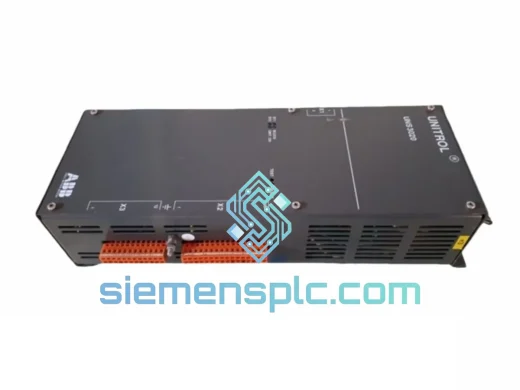
ABB UNS3020A-Z HIEE205010R0001 Ground Fault Relay
UNITROL
Origin SE
Ground Fault Relay
ABB
RFQ Ready
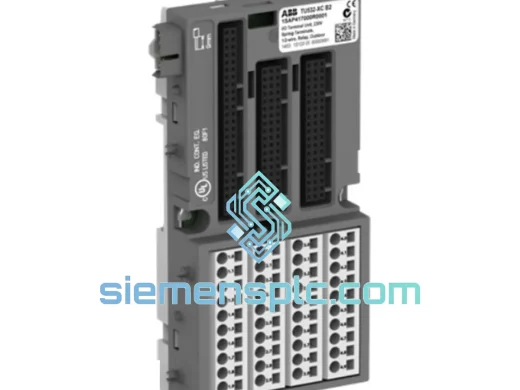
ABB TU532-XC 1SAP417000R0001 Relay Terminal Unit – AC500 XC Series
AC500
Origin SE
Relay Terminal Unit
ABB
RFQ Ready
ABB TPM810 Turbine Protection Module
Symphony Plus
Origin SE
Turbine Protection Module