
ABB
In Stock OK
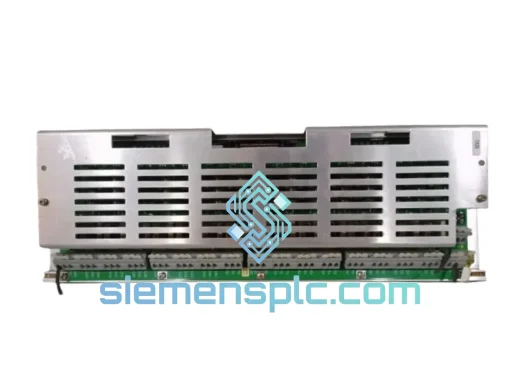
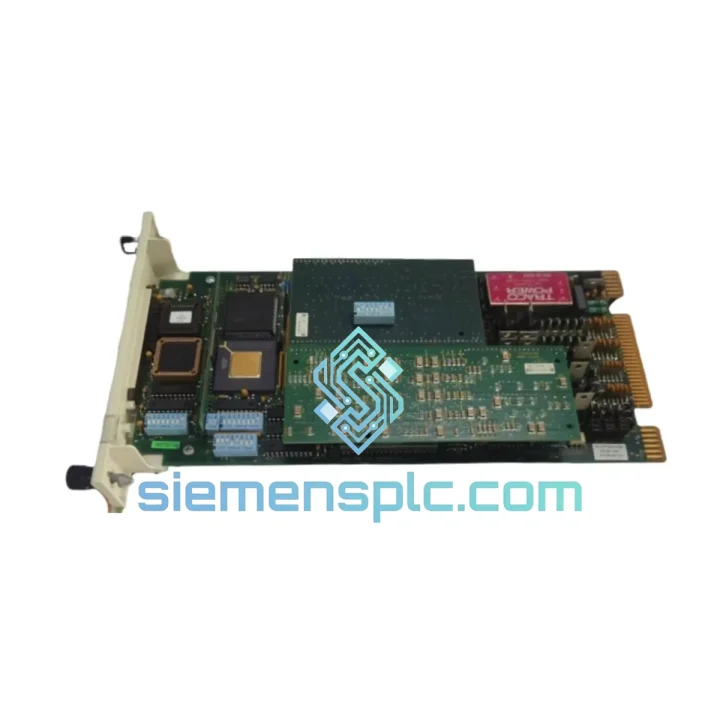
ABB SPHSS03 HSS03 Hydraulic Servo Controller – Advant S100
Request verified availability, condition, replacement risk review, packing options and courier lead time for SPHSS03-HSS03.
BrandABB
Part NumberSPHSS03-HSS03
ConditionAvailability Check
Lead TimeRFQ Confirmation
DocumentsDatasheet / photos by RFQ
ShippingExport packing available
Auto-filled RFQ
SPHSS03-HSS03
Click Request Quote and the part number is inserted into the inquiry form automatically.
- Reply by email: [email protected]
- WhatsApp / Tel: +86 18359268345
- Mon-Sat 9:00-18:00 GMT+8
Procurement Data
Key Product Information
Core fields for model confirmation and RFQ routing. Detailed product narrative remains below.
- Brand
- ABB
- Primary Part Number
- SPHSS03-HSS03
- Product Type
- Hydraulic Servo Controller
- Series / Family
- Advant
- Manufacturer
- ABB (Asea Brown Boveri)
- Country of Origin
- SE
- Catalog Category
- I/O Modules
- Operating Temp.
- 0 °C to +55 °C ambient
- Warranty
- 12 months from date of dispatch
Model confirmed for inquiry
SPHSS03-HSS03
Send quantity, destination and urgency. The RFQ form keeps this part number attached.
Request Quote
Product Overview
ABB SPHSS03 HSS03 – On-Module DSP Servo Axis Controller for Advant S100 Hydraulic Drive Systems
The SPHSS03 (field alias: HSS03) is a single-slot servo axis control module engineered for the ABB Advant S100 I/O backplane. Its primary function is to execute a complete closed-loop position, velocity, or force control algorithm entirely within the module’s on-board digital signal processor, without delegating real-time computation to the host Advant CPU. This architectural separation is not a convenience feature — it is a structural requirement for hydraulic servo applications where actuator response times are measured in milliseconds and PLC scan jitter cannot be permitted to propagate into the control loop.
Hydraulic servo systems present a control challenge that standard analog output modules cannot address: the relationship between valve spool displacement and actuator velocity is non-linear, pressure-dependent, and sensitive to fluid temperature. The SPHSS03 addresses this by embedding a PID-plus-feedforward algorithm with configurable gain scheduling, allowing the control law to adapt across the operating envelope without requiring host CPU intervention. The result is a module that behaves as a self-contained servo drive — accepting setpoint commands from the Advant CPU over the S100 bus and returning position, error, and status data — while maintaining loop closure at a fixed internal cycle time.
Installed applications include hydraulic gap control on hot-strip rolling mill work-roll chocks (positional repeatability ±5 µm under dynamic strip tension), servo-hydraulic injection and clamping axes on large-tonnage molding machines (cycle rates above 200 strokes/hour), and electrohydraulic governor actuators on steam turbines where response latency above 20 ms triggers protective relay action. These operating environments define the electrical and thermal design margins of the module.
Real-time Stock & RFQ: [email protected] | WhatsApp: +86 18359268345
Technical Parameters
| Part Number | SPHSS03 / HSS03 |
| Manufacturer | ABB (Asea Brown Boveri) |
| Product Series | Advant Controller – S100 I/O Bus |
| Module Function | Single-axis closed-loop hydraulic servo control (position / velocity / force) |
| Valve Command Output | ±10 V DC differential analog; 16-bit DAC resolution; short-circuit protected |
| Digital Feedback Input | SSI absolute encoder – Gray code or Binary; RS-422 differential; programmable clock frequency |
| Analog Feedback Input | 0–10 V DC or ±10 V DC (LVDT, potentiometer, pressure transducer) |
| Control Loop Execution | On-board DSP; fixed internal cycle time; independent of host CPU scan period |
| Host Interface | ABB S100 I/O backplane bus; dual-port RAM setpoint/status exchange |
| Supply Voltage | 24 V DC via S100 rack backplane (±15 % tolerance) |
| Power Consumption | ≤ 8 W (typical operating) |
| Operating Temperature | 0 °C to +55 °C ambient |
| Storage Temperature | −25 °C to +70 °C |
| Relative Humidity | 5 % to 95 %, non-condensing |
| EMC Immunity | IEC 61000-4-2 (ESD Level 3), IEC 61000-4-4 (EFT/Burst Level 3), IEC 61000-4-5 (Surge Level 2) |
| Form Factor | Single-slot S100 rack module |
| Module Weight | approx. 800 g |
| Country of Origin | Germany |
| Warranty | 12 months from date of dispatch |
Hardware Logical Analysis
The SPHSS03 implements a two-plane architecture that physically separates the servo computation domain from the PLC communication domain. The host Advant CPU writes target position, velocity limit, and PID gain parameters into a dual-port RAM buffer accessible from the S100 backplane. The on-board DSP reads this buffer asynchronously and executes the control algorithm at its own fixed clock rate. Write conflicts are resolved by a hardware semaphore, not by software polling, eliminating the possibility of a torn read corrupting the gain set mid-cycle.
The 16-bit DAC on the valve command output stage drives a precision op-amp buffer with a slew rate selected to handle the capacitive load of servo valve cable runs up to 50 m at ≤ 50 pF/m without bandwidth degradation. The output stage includes hardware short-circuit protection implemented with a current-limiting circuit ahead of the output terminal — not a firmware overcurrent flag — so a wiring fault does not require a module power cycle to clear.
The SSI feedback interface uses RS-422 differential signaling with a programmable clock frequency, providing compatibility with absolute encoders from Heidenhain, Balluff, Sick, and Pepperl+Fuchs without external signal conditioning hardware. The analog feedback path includes a hardware anti-aliasing filter ahead of the ADC, with a cutoff frequency set below the Nyquist limit of the DSP control loop. This prevents high-frequency electrical noise on LVDT or potentiometer cables from aliasing into the position signal and generating spurious velocity commands.
PCB-level EMC design isolates the analog signal ground plane from the digital ground plane through a single-point star connection at the power entry. This topology suppresses common-mode noise coupling between the ±10 V valve command circuit and the 3.3 V DSP logic, a coupling path that becomes significant in cabinets where variable-frequency drives or large contactors share the same enclosure. Transient suppression diodes on all I/O terminals clamp EFT bursts to levels compliant with IEC 61000-4-4 Level 3, measured at the terminal, not at the module power supply input.
The watchdog subsystem monitors two independent conditions: DSP execution loop completion within the expected time window, and S100 bus communication activity within a configurable timeout. Loss of either condition triggers a safe-state output transition. The safe-state valve command is selectable per parameter: drive to 0 V (valve centered), hold last valid output, or drive to a user-defined voltage corresponding to a mechanically safe actuator position. This parameterization is stored in non-volatile memory on the module and does not require host CPU participation to execute — the safe state activates even if the CPU has faulted.
System Integration Benefits
- Scan-independent loop closure: The DSP executes the servo algorithm at a fixed internal rate regardless of Advant CPU scan load, eliminating the positional jitter that results from variable PLC cycle times in high-throughput process programs.
- CPU bandwidth recovery: Offloading axis computation to the SPHSS03 returns CPU cycles to process logic, HMI communication, and network tasks — measurable in multi-axis systems where each additional servo axis would otherwise consume a proportional share of CPU scan time.
- Dual-mode feedback without rewiring: SSI digital encoder and analog transducer inputs are simultaneously available on the same module, allowing the integrator to select the feedback source by parameter rather than by hardware change — a practical advantage when retrofitting machines with mixed transducer populations.
- Universal valve command compatibility: The ±10 V DC output is the accepted command standard for proportional and servo valves from Bosch Rexroth, Moog, Parker Hannifin, and Atos, eliminating valve-brand lock-in and simplifying spare valve sourcing.
- Parameterized fail-safe behavior: Three configurable watchdog output modes allow the system integrator to define the fail-safe actuator position at the engineering level, supporting functional safety assessments without hardware modification or additional relay logic.
- Diagnostic transparency to host CPU: Loop position error magnitude, feedback signal validity, output saturation status, and watchdog state are mapped to S100 bus status words readable by the Advant CPU, enabling the PLC program to implement alarm escalation, adaptive gain switching, or operator notification without additional I/O hardware.
- Zero-gateway integration into Advant systems: The SPHSS03 occupies a standard S100 slot and is configured through the existing ABB engineering tool chain (Master, Advant Builder). No protocol gateway, signal converter, or external power supply is required — integration complexity is equivalent to adding a standard analog I/O card.
- Non-volatile parameter retention: Gain sets, feedback configuration, and safe-state parameters are stored in on-module non-volatile memory. A module swap does not require re-parameterization from the engineering station if the replacement unit is pre-loaded — reducing planned maintenance downtime.
- Multi-axis rack sharing: Multiple SPHSS03 modules can occupy the same S100 rack, sharing the 24 V DC backplane supply and bus arbitration logic, with each axis independently parameterized. There is no inter-axis signal coupling at the hardware level — axis isolation is structural, not software-enforced.
- Verified spare availability for legacy systems: The SPHSS03 remains in active service across steel, pulp and paper, and power generation installations. Sourcing from a specialist supplier with documented stock eliminates the procurement lead time associated with OEM end-of-life or allocation constraints.
Quality Assurance & Global Logistics
Each SPHSS03 unit shipped from our Xiamen, China facility undergoes a structured pre-dispatch verification sequence. Physical inspection covers PCB surface condition, connector pin geometry and plating integrity, housing label authenticity markers, and the absence of rework indicators inconsistent with factory production standards. Functional verification confirms S100 backplane enumeration, DSP initialization sequence completion, and analog output calibration against a traceable DC voltage reference. Firmware revision is recorded and cross-referenced against the customer’s Advant controller version where specified in the purchase order.
Packaging follows air-freight handling standards: the module is sealed in an IEC 61340-5-1 compliant anti-static shielding bag, placed in a foam-lined corrugated carton with a minimum 50 mm cushion on all faces, and sealed with tamper-evident tape. Each shipment includes a packing list, commercial invoice, and certificate of origin. IEC 17025-traceable calibration records and third-party pre-shipment inspection are available on request prior to dispatch.
Transit times from Xiamen via express freight: Europe 3–5 business days (DHL Express / FedEx International Priority); North America 4–6 business days (UPS Worldwide Express / DHL); Southeast Asia 1–3 business days (DHL / SF Express). All shipments are insured at declared value. Export documentation includes HS code classification and ECCN assessment where required by the destination country’s import authority.
The 12-month warranty covers defects in materials and workmanship under operating conditions defined in the ABB SPHSS03 product specification. Warranty claims are acknowledged within 2 business days of receipt of the defective unit at our Xiamen facility, with repair or replacement dispatched under the same logistics framework described above.
Contact Information
Email: [email protected]
WhatsApp: +86 18359268345
Web: siemensplc.com
Location: Xiamen, China
© 2026 siemensplc.com. All rights reserved.
Ready to quote
[email protected]
Send This Part Number to Sales
RFQ workflow
Quality workflow ->
Confirmation Process
01Model confirmation
We check the full part number, brand, series and visible nameplate information before quotation.
02Availability reply
Sales confirms stock path, condition option, quantity and realistic lead time for export dispatch.
03Packing & courier
DHL, FedEx, UPS or buyer courier arrangements can be reviewed with packing requirements.
Continue sourcing
Browse full catalog ->
Related Automation Parts
Similar brand or category products for fast comparison and multi-item RFQ lists.
ABB
RFQ Ready
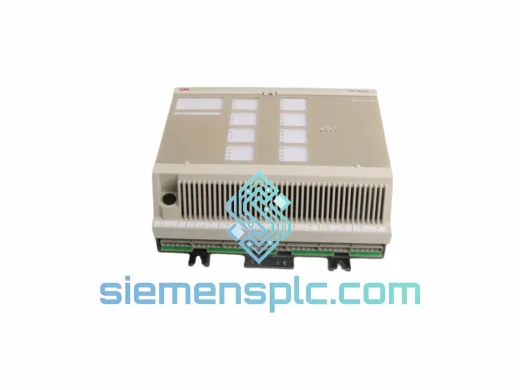
ABB DSAX452 Analog I/O Module – Advant Controller 450 Series
Advant
Origin SE
Analog I/O Module
ABB
RFQ Ready
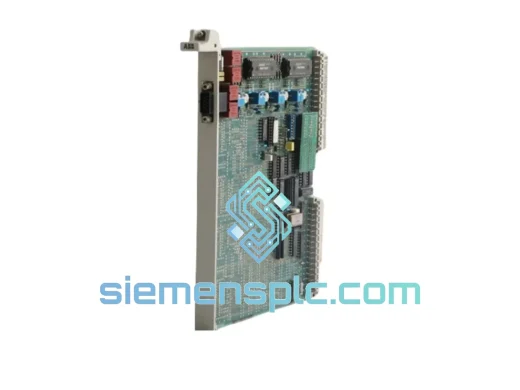
ABB GJR5143200R0001 35EK91 Analog Output Module – AC31 Advant Series
Advant
Origin SE
Analog Output Module

ABB
RFQ Ready
ABB 07DI92 GJR5252400R4101 Digital Input Module
Advant
Origin SE
PLC Digital Input Module