Schneider Electric
RFQ Ready
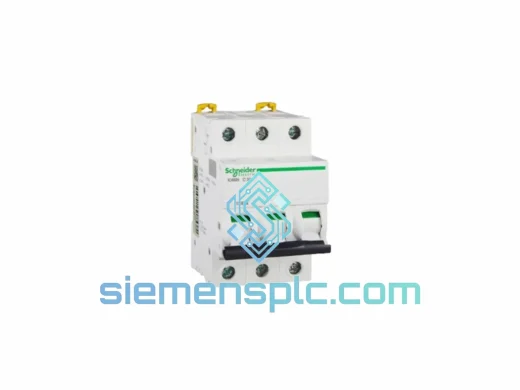
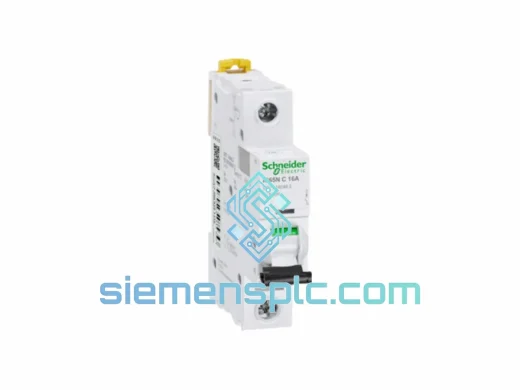
Schneider Electric iC65N-3P-C32A Miniature Circuit Breaker – Acti9
2A C-Curve MCB Acti9 Series
Origin FR
Miniature Circuit Breaker
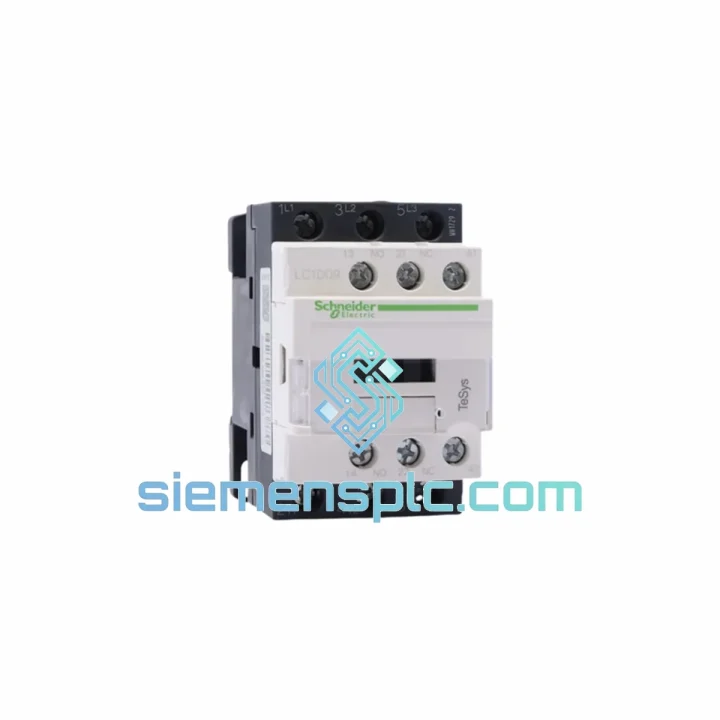
Request verified availability, condition, replacement risk review, packing options and courier lead time for LC1D65M7C.
Click Request Quote and the part number is inserted into the inquiry form automatically.
Core fields for model confirmation and RFQ routing. Detailed product narrative remains below.
The line is down. Your LC1D65M7C has failed — welded contacts, burned coil, or a chattering magnet that finally gave out at the worst possible moment. Every hour offline is money leaving the building. You do not need a lead-time quote. You need the part.
We hold physical stock of the Schneider Electric LC1D65M7C at our Xiamen facility. Confirmed orders before 14:00 CST ship the same business day via DHL Express or FedEx International Priority. No substitutes. No grey-market units. 100% original Schneider Electric TeSys D series with full traceability.
This page is written for the engineer making the call — not the procurement manager filling a spreadsheet. Scroll down for the datasheet, the failure analysis, and the replacement checklist. Then contact us and let’s get your line moving again.
URGENT REQUIREMENT? Contact: [email protected] | WhatsApp: +86 18359268345
| Parameter | Specification | Notes |
|---|---|---|
| Part Number | LC1D65M7C | ✅ Ready to Ship |
| Brand | Schneider Electric | 100% Original |
| Series | TeSys D | IEC Frame |
| Pole Configuration | 3-Pole (3P) | Main contacts only |
| Rated Current AC-3 | 65 A | Derate above 40°C |
| Motor Power @ 400V AC | 30 kW | AC-3 duty |
| Motor Power @ 230V AC | 18.5 kW | AC-3 duty |
| Coil Voltage | 220V AC / 50–60 Hz | Suffix M7 — confirm before ordering |
| Integrated Aux Contacts | 1 NO + 1 NC | Expandable via LADN blocks |
| Utilization Category | AC-3 / AC-4 | AC-4 derated to ~32A |
| Mounting | 35mm DIN Rail or screw | — |
| Enclosure Rating | IP20 | Install inside sealed panel in wet areas |
| Mechanical Endurance | 10,000,000 operations | — |
| Electrical Endurance AC-3 | 1,000,000 operations | — |
| Coil Insulation Class | F (155°C) | — |
| Operating Temperature | -5°C to +60°C | Derate above 40°C |
| Standards | IEC/EN 60947-4-1, UL 508, CSA C22.2 | — |
| Weight | 1.47 kg | — |
| Country of Origin | China (Schneider facility) | — |
| Dispatch Point | Xiamen, China | ✅ In Stock |
Ten years of field work teaches you that the LC1D65M7C fails in four predictable ways. Identify which one you have before you pull the unit — it changes what you check on the replacement.
Failure Mode 1 — Welded Main Contacts
Symptom: motor runs continuously, stop command ignored, main contacts read closed with coil de-energized. Root cause: repeated AC-4 inching at currents above the derated limit (~32A), or a single high-fault-current event that fused the silver-alloy contacts. Action: replace the contactor. If inching duty is a regular part of the process, upsize to LC1D80M7C and add a dedicated inching contactor in the circuit. Do not attempt to file welded contacts — the contact geometry is precision-formed and filing destroys the arc-quenching profile.
Failure Mode 2 — Coil Burnout
Symptom: contactor fails to pull in, coil resistance reads open or shorted. Nominal coil resistance for the M7 (220V AC) variant is approximately 1,100–1,300 Ω at 20°C. Measure across A1/A2 with the unit de-energized. Anything outside that band: the coil is gone. Root cause is almost always sustained undervoltage (coil supply below 176V AC) or ambient temperature exceeding 60°C in a poorly ventilated enclosure. Fix the supply voltage or improve panel ventilation before installing the replacement — otherwise the new coil burns within weeks.
Failure Mode 3 — Chattering / Audible Humming
Symptom: rapid mechanical noise from the contactor, visible vibration of the enclosure door. Root cause: broken shading ring on the magnet core, or coil supply voltage fluctuating below the drop-out threshold. A chattering contactor will destroy its own contacts within hours. Do not run it. Isolate the circuit, replace the unit, and measure coil supply voltage under load before re-energizing. If voltage is marginal, add a control transformer with tighter regulation.
Failure Mode 4 — Auxiliary Contact Dropout
Symptom: PLC loses feedback signal (motor run confirmation), but the motor itself continues to operate. The integrated 1 NO + 1 NC auxiliary block wears faster than the main poles in high-cycle applications. Check auxiliary contact continuity with a multimeter before condemning the whole contactor — in many cases the main poles are fine and only the aux block needs replacement. LADN11 add-on blocks clip directly onto the LC1D65M7C frame and can be swapped in under five minutes without disturbing the main wiring.
Replacement Checklist — Field-Verified Steps:
The TeSys D platform was engineered for industrial environments where contactors actually fail — not for climate-controlled test labs. The LC1D65M7C carries the following verified environmental ratings.
Vibration resistance is qualified to IEC 60068-2-6: 2–13.2 Hz at 1mm displacement amplitude, 13.2–100 Hz at 0.7g acceleration. In practice, this means the LC1D65M7C holds up on compressor skids, ship engine rooms, and mining conveyor panels where vibration is continuous and severe. The silver-alloy main contacts are sintered — not electroplated — so they do not delaminate under thermal cycling or mechanical shock the way plated contacts do.
Thermal performance: operating range is -5°C to +60°C ambient. Above 40°C, derate the continuous current — approximately 57A at 50°C, 50A at 60°C. The coil insulation is Class F (155°C rated), providing substantial margin even in poorly ventilated enclosures. In foundry or tropical outdoor installations where ambient regularly exceeds 45°C, factor the derating into your panel design before specifying this frame size.
Humidity tolerance is tested to IEC 60068-2-30: 95% relative humidity, non-condensing. The IP20 rating means the LC1D65M7C is not splash-proof — it must be installed inside a sealed enclosure in wet or washdown environments. The magnet core receives corrosion treatment at the factory; the coil bobbin is sealed at the winding level against moisture ingress.
Shock resistance: 15g, 11ms half-sine pulse per IEC 60068-2-27. This rating matters in mobile equipment, installations adjacent to heavy presses, and any application where mechanical shock is a routine operating condition rather than an exceptional event.
Our dispatch point is Xiamen, China — a tier-1 international logistics hub with direct DHL Express and FedEx International Priority gateway operations. No relay through Shanghai. No extra transit day added by inland consolidation.
Direct line to our technical sales team. No ticketing system. No automated queue. A person who knows the product answers.
📧 Email: [email protected]
📱 WhatsApp: +86 18359268345
🌐 Web: siemensplc.com
© 2026 siemensplc.com. All rights reserved.
We check the full part number, brand, series and visible nameplate information before quotation.
Sales confirms stock path, condition option, quantity and realistic lead time for export dispatch.
DHL, FedEx, UPS or buyer courier arrangements can be reviewed with packing requirements.
Similar brand or category products for fast comparison and multi-item RFQ lists.