Schneider Electric
RFQ Ready
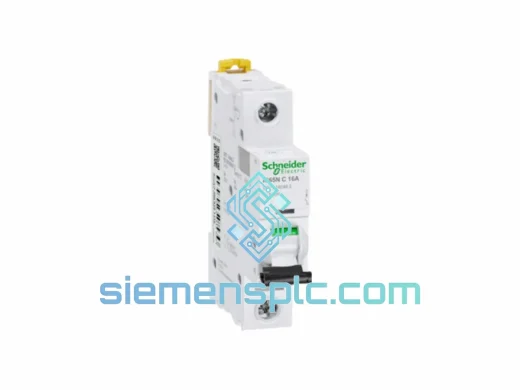
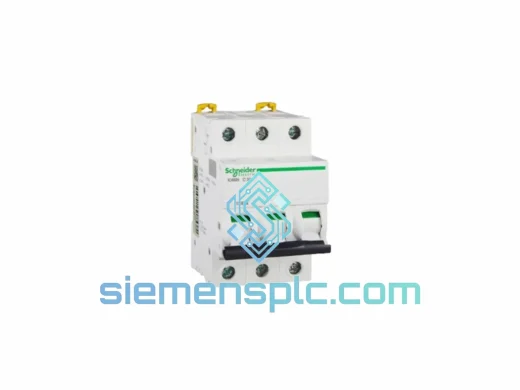
Schneider Electric iC65N-3P-C32A Miniature Circuit Breaker – Acti9
2A C-Curve MCB Acti9 Series
Origin FR
Miniature Circuit Breaker
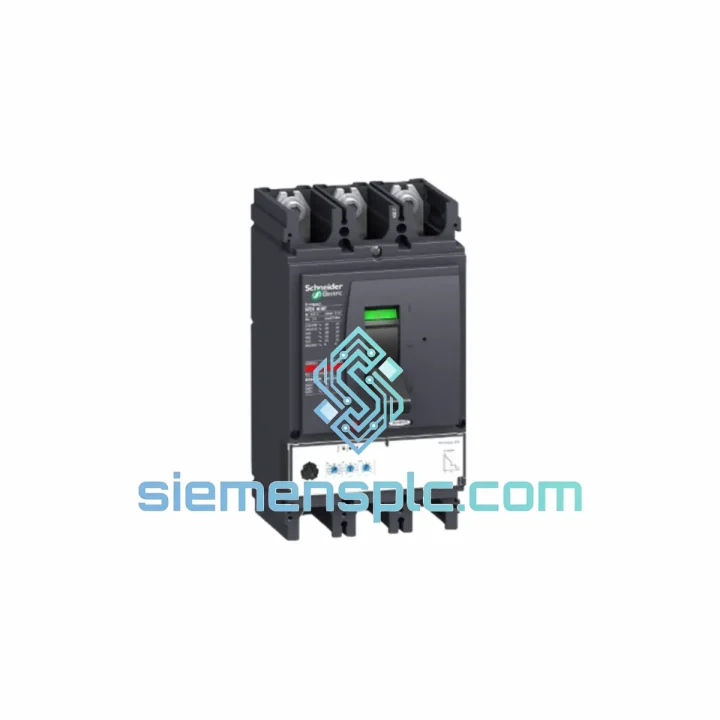
Request verified availability, condition, replacement risk review, packing options and courier lead time for NSX400N.
Click Request Quote and the part number is inserted into the inquiry form automatically.
Core fields for model confirmation and RFQ routing. Detailed product narrative remains below.
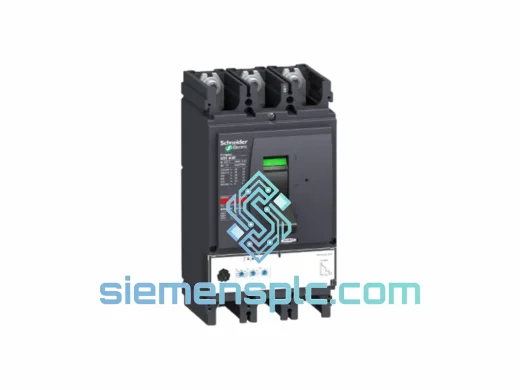
The NSX400N occupies a structurally critical position in low-voltage power distribution hierarchies. As a 400 A frame fixed moulded case circuit breaker (MCCB) within Schneider Electric’s ComPact NSX platform, it functions as the primary overcurrent and short-circuit protection device at the incomer or feeder level of main distribution boards (MDBs), motor control centers (MCCs), and sub-distribution panels operating at up to 690 V AC. Its 50 kA breaking capacity at 415 V AC — classified as the “N” (Normal) breaking performance tier within the NSX range — positions it for the majority of industrial and commercial distribution applications where prospective short-circuit current (PSCC) at the point of installation falls within 25–50 kA.
In a control loop context, the NSX400N is not a passive component. Its thermal-magnetic trip unit (TM-D) continuously monitors line current across all three phases, executing two distinct protection functions: an inverse-time overload response via bimetallic element deflection, and an instantaneous electromagnetic short-circuit release. The interaction between these two mechanisms determines the let-through energy (I²t) delivered to downstream equipment during fault conditions — a parameter that directly governs the thermal and mechanical stress on cables, busbars, and connected loads. Proper selection and coordination of the NSX400N within a discrimination study is therefore a prerequisite for any compliant LV distribution design.
Real-time Stock & RFQ: [email protected] | WhatsApp: +86 18359268345
| SKU / Part Number | NSX400N |
| Brand | Schneider Electric |
| Series | ComPact NSX |
| Frame Rating (In) | 400 A |
| Rated Operational Voltage (Ue) | 690 V AC / 500 V DC |
| Rated Insulation Voltage (Ui) | 750 V |
| Rated Impulse Withstand Voltage (Uimp) | 8 kV |
| Ultimate Breaking Capacity (Icu @ 415 V AC) | 50 kA |
| Service Breaking Capacity (Ics) | 100% Icu (50 kA) |
| Poles | 3P / 4P (specify at order) |
| Mounting Type | Fixed (non-withdrawable) |
| Trip Unit | TM-D (Thermal-Magnetic); Micrologic electronic units field-retrofittable |
| Overload Setting Range (Ir) | 0.7 × In to 1 × In (TM-D) |
| Short-Circuit Setting (Im) | Fixed at 5–10 × In (TM-D, model-dependent) |
| Degree of Protection | IP40 (front face, panel-mounted) |
| Operating Temperature | −25 °C to +70 °C |
| Mechanical Endurance | 25,000 operating cycles |
| Electrical Endurance | 10,000 cycles at rated current |
| Compliance Standards | IEC 60947-2, EN 60947-2, CE marked |
| Weight (approx.) | 1.13 kg (3P fixed frame) |
| Country of Origin | China (CN) |
| Warranty | 12 months from date of shipment |
| Lead Time | In-stock units: 1–3 business days dispatch. Non-stock configurations: 7–15 business days subject to availability confirmation. |
Thermal-Magnetic Trip Mechanism — Dual-Element Architecture: The TM-D trip unit in the NSX400N employs a two-stage detection architecture. The thermal element — a calibrated bimetallic strip — responds to sustained overcurrents above the Ir threshold. Current-induced Joule heating causes differential thermal expansion between the two bonded metals, producing a mechanical deflection that actuates the trip latch after a time delay inversely proportional to the overcurrent magnitude. This characteristic is intentionally slow at low overcurrents (e.g., 1.05 × In may not trip within 2 hours) and progressively faster as current increases, enabling coordination with upstream devices without nuisance tripping on motor inrush or transformer magnetizing currents.
Electromagnetic Short-Circuit Release — Instantaneous Response: The magnetic element operates on a fundamentally different physical principle. A solenoid coil, carrying line current, generates a magnetic field proportional to current magnitude. When fault current exceeds the Im threshold (typically 5–10 × In depending on the specific TM-D variant), the resulting magnetic force overcomes the spring-loaded armature and directly actuates the trip mechanism within 10–20 milliseconds. This response time is fast enough to limit arc energy and prevent thermal damage to downstream cable insulation and connected equipment.
EMC Design Considerations: The NSX400N’s moulded case construction uses glass-fibre reinforced thermoplastic housing with high dielectric strength, providing inherent shielding against conducted and radiated electromagnetic interference. The arc chute assembly — a stack of metallic de-ionizing plates — rapidly extinguishes the arc during interruption, limiting the duration of the high-frequency transient generated at the moment of fault clearance. This arc quenching speed directly reduces the electromagnetic disturbance injected into the distribution network, a consideration relevant in facilities with sensitive instrumentation or variable-frequency drives sharing the same LV bus.
Contact System and Arc Energy Management: The main contacts in the NSX400N are silver-alloy compositions selected for low contact resistance and resistance to arc erosion. During a fault interruption event, the electromagnetic repulsion force between the current-carrying contacts (the “blow-open” effect) accelerates contact separation, reducing the arcing time and the associated I²t let-through energy. The arc is then driven into the arc chute by the magnetic field generated by the fault current itself, where it is divided, cooled, and extinguished. This self-reinforcing mechanism means that higher fault currents produce faster arc extinction — a counterintuitive but mechanically sound design characteristic.
Accessory Integration Architecture: The NSX400N frame incorporates dedicated accessory slots on the front face and within the case that accept auxiliary contact blocks (OF), fault signal contacts (SD/SDE), shunt trip coils (MX), and undervoltage releases (MN) without requiring frame disassembly. The MX coil, when energized by a PLC digital output or SCADA relay, mechanically actuates the trip latch via a separate solenoid path independent of the main current-sensing elements — enabling remote tripping without passing control signals through the power circuit. This isolation between the control signal path and the power circuit is a fundamental safety architecture requirement in IEC 60947-2 compliant designs.
Every NSX400N unit dispatched from siemensplc.com is sourced through verified supply channels and subjected to a structured pre-shipment inspection protocol. Visual inspection confirms label authenticity — including Schneider Electric’s holographic security markings and QR-code traceability — packaging integrity, and physical condition of the moulded case, terminals, and operating mechanism. Serial number records are cross-referenced against batch documentation to confirm product lineage.
Export documentation — commercial invoice, packing list, certificate of origin (Xiamen Customs), and product datasheet — is prepared as standard for all international shipments. For projects requiring third-party inspection (SGS, Bureau Veritas, Intertek), coordination can be arranged prior to dispatch. Payment is accepted in USD, EUR, HKD, and CNY via T/T bank transfer, with L/C available for qualified orders above threshold value.
Logistics operations are based in Xiamen, Fujian Province — a designated free trade zone and one of China’s primary international cargo hubs. Xiamen Gaoqi International Airport handles direct cargo connections to major freight hubs in Europe (Frankfurt, Amsterdam), the Middle East (Dubai), Southeast Asia (Singapore, Kuala Lumpur), and North America (Los Angeles). Xiamen Port provides sea freight access for LCL and FCL container shipments to all major global ports. Standard international courier dispatch (DHL Express, FedEx International Priority, UPS Worldwide) is available for urgent single-unit or small-quantity orders, with transit times of 3–7 business days to most destinations. Sea freight consolidation is available for volume orders requiring cost-optimized logistics.
All products carry a 12-month warranty from the date of shipment, covering manufacturing defects under normal operating conditions. Warranty claims are processed with full documentation support, and replacement units are dispatched upon claim verification.
Email: [email protected]
WhatsApp: +86 18359268345
Web: siemensplc.com
Location: Xiamen, Fujian, China
© 2026 siemensplc.com. All rights reserved.
We check the full part number, brand, series and visible nameplate information before quotation.
Sales confirms stock path, condition option, quantity and realistic lead time for export dispatch.
DHL, FedEx, UPS or buyer courier arrangements can be reviewed with packing requirements.
Similar brand or category products for fast comparison and multi-item RFQ lists.