Allen-Bradley
RFQ Ready
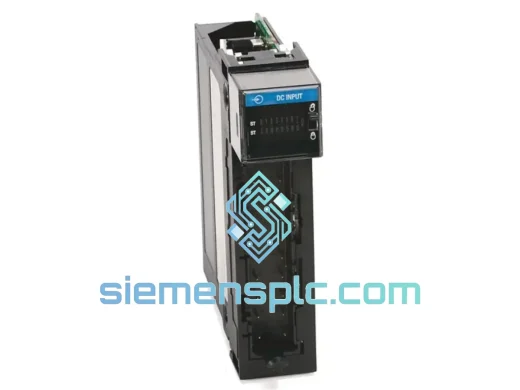
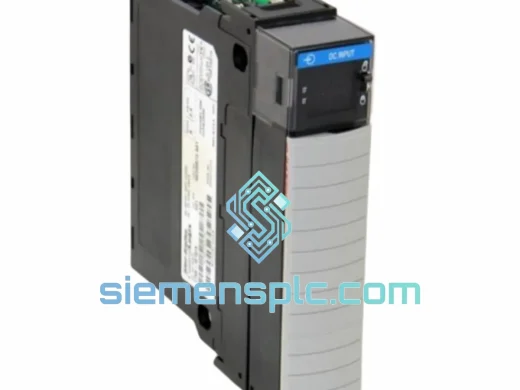
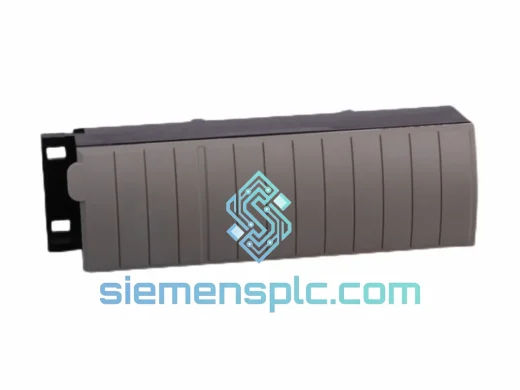
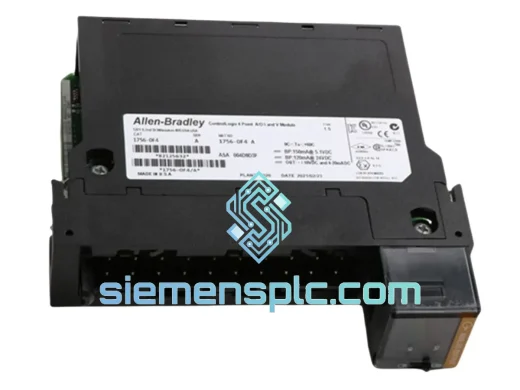
Allen-Bradley 1756-OF4 PLC Analog Output Module
ControlLogix
Origin US
PLC Analog Output Module
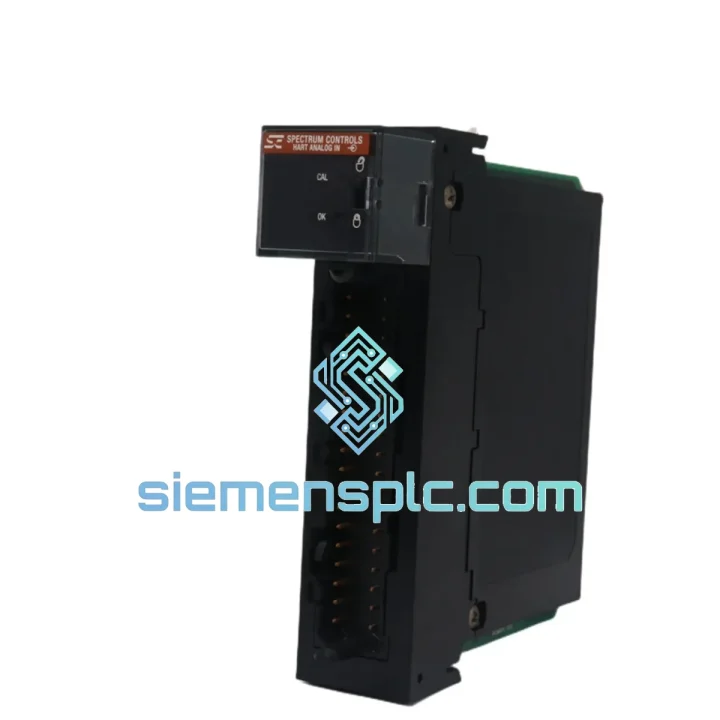
Request verified availability, condition, replacement risk review, packing options and courier lead time for 1756SC-IF8H.
Click Request Quote and the part number is inserted into the inquiry form automatically.
Core fields for model confirmation and RFQ routing. Detailed product narrative remains below.
You’re reading this because something stopped. A ControlLogix rack threw a module fault, your SCADA is showing eight dead analog channels, and the process engineer is already on the phone. The 1756SC-IF8H is not a commodity card — it’s a SIL-capable, per-channel-isolated analog front-end that sits at the heart of safety-critical loops in refineries, power plants, and pharmaceutical batch reactors. When it fails, you don’t have the luxury of a three-week lead time from a regional distributor.
We stock the Allen-Bradley 1756SC-IF8H in Xiamen, China, with same-day DHL Express dispatch on orders confirmed before 15:00 CST. Transit to Singapore: 48 hours. To Rotterdam or Houston: 72–96 hours. We’ve done this hundreds of times. Here’s everything you need to get your loop back online.
URGENT REQUIREMENT? Contact: [email protected] | WhatsApp: +86 18359268345
| Parameter | Specification |
|---|---|
| Part Number | 1756SC-IF8H |
| Brand / Series | Allen-Bradley / ControlLogix 1756 |
| Input Channels | 8 × independently configurable |
| Signal Ranges | 4–20 mA | 0–5 V | 1–5 V | ±10 V |
| Resolution | 16-bit per channel (dedicated ADC, no multiplexing) |
| Accuracy | ±0.1% full scale @ 25 °C |
| Open-Wire Detection | Hardware-based, per channel, configurable fault action |
| Channel Isolation | Channel-to-channel + channel-to-backplane |
| Backplane Draw | 250 mA @ 5 VDC | 3 mA @ 24 VDC |
| Operating Temp | 0 °C to +60 °C |
| Certifications | IEC 61508 / IEC 61511 (SIL-capable), UL, CE, ATEX Zone 2 |
| Form Factor | Single-slot 1756 ControlLogix chassis |
| Compatible Controllers | 1756-L71 through L85E (firmware V20.x and later) |
| Stock Status | ✅ Ready to Ship — Xiamen Warehouse |
Most common failure modes I see in the field:
1. Partial channel failure (channels 1–4 dead, 5–8 alive). This is almost always a failed input protection circuit on the affected channels — usually caused by a field wiring short that exceeded the module’s 30 VDC continuous input protection rating. Before you swap the module, disconnect all field wiring and megger each channel terminal to chassis ground. If you find a shorted transmitter cable, fix it first. Dropping a new 1756SC-IF8H onto a shorted loop will kill the replacement within minutes.
2. All channels reading 0 mA / 0 V with no fault bits set. Check the backplane power supply first — a 1756-PA75 or 1756-PB75 that’s sagging under load will cause the module to lose backplane communication without throwing a hard fault. Measure 5 VDC at the chassis backplane connector. If it’s below 4.85 V, the PSU is the culprit, not the analog module.
3. Open-wire fault on a 2-wire transmitter loop. Verify that 24 VDC loop power is present at the field terminal block. The 1756SC-IF8H does not supply loop power internally — external 24 VDC is mandatory for 2-wire (loop-powered) transmitters. A missing or blown loop power fuse is the #1 cause of spurious open-wire faults on this module.
Replacement procedure (field-tested, 20-minute swap):
Local:4:I.Ch0Fault) — all should be 0.Firmware note: The 1756SC-IF8H does not have user-settable DIP switches or rotary address selectors. Slot addressing is handled automatically by the ControlLogix backplane — the module self-identifies its slot position on power-up. No physical configuration is required beyond seating the module and reconnecting the RTB.
The 1756SC-IF8H was designed for environments where “industrial grade” is not a marketing phrase — it’s a contractual requirement. The module is rated to IEC 60068-2-6 for sinusoidal vibration (10–500 Hz, 2 g) and IEC 60068-2-27 for mechanical shock (15 g, 11 ms half-sine). In practice, this means it survives the vibration profile of a compressor skid, the thermal cycling of an outdoor substation panel in a continental climate, and the humidity swings of a coastal petrochemical facility.
Per-channel isolation is not just a spec-sheet feature — it’s what prevents a single field wiring fault from taking down all eight channels simultaneously. In a refinery where eight channels might be monitoring eight different pressure transmitters on eight different process units, that isolation boundary is the difference between a single-loop upset and a plant-wide shutdown.
The module’s operating temperature ceiling of 60 °C is achievable in a properly ventilated 1756 chassis with a functioning 1756-PA75 power supply. In high-ambient installations (e.g., desert environments, engine rooms), verify chassis airflow is unobstructed and the power supply fan is operational before attributing analog drift to the module itself.
Units shipped from our Xiamen warehouse are stored in climate-controlled conditions (18–25 °C, 40–60% RH) in original anti-static ESD packaging. Each unit undergoes a functional power-on test in a live 1756 chassis before dispatch — we verify backplane communication and all 8 channel status words before the module is boxed for shipment.
Our dispatch hub is in Xiamen, Fujian Province — one of China’s primary export ports with direct DHL Express and FedEx International Priority service to 220+ countries. Here’s the actual process from your order confirmation to the module in your hands:
Day 0 (Order Confirmed Before 15:00 CST): Module pulled from climate-controlled stock, functional test completed, packed in foam-lined carton with ESD bag, commercial invoice and packing list prepared. DHL/FedEx pickup same evening.
Day 1: Shipment departs Xiamen Gaoqi International Airport on the first available freight flight. Tracking number sent to your email within 2 hours of pickup scan.
Estimated Transit Times (DHL Express / FedEx International Priority):
Export documentation includes commercial invoice, packing list, certificate of origin (Form F for ASEAN, EUR.1 for EU where applicable), and a functional test report. For customers requiring a certificate of conformance or calibration record, these are prepared and included at no additional charge — just specify at the time of order.
We do not use consolidation freight or economy postal services for automation components. Every shipment goes express, tracked, with full insurance coverage. If a shipment is delayed by customs, we work with the freight forwarder directly to resolve it — you don’t chase paperwork, we do.
📧 Email: [email protected]
📱 WhatsApp: +86 18359268345
🌐 Web: siemensplc.com
© 2026 siemensplc.com. All rights reserved.
We check the full part number, brand, series and visible nameplate information before quotation.
Sales confirms stock path, condition option, quantity and realistic lead time for export dispatch.
DHL, FedEx, UPS or buyer courier arrangements can be reviewed with packing requirements.
Similar brand or category products for fast comparison and multi-item RFQ lists.