Allen-Bradley
RFQ Ready
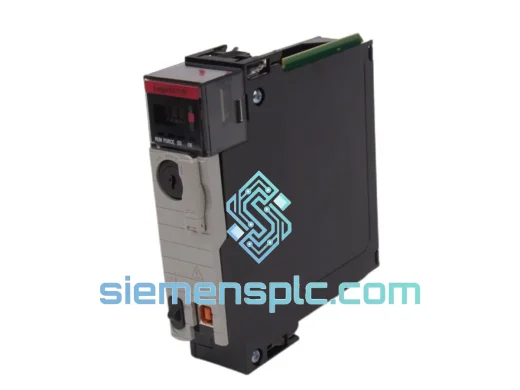
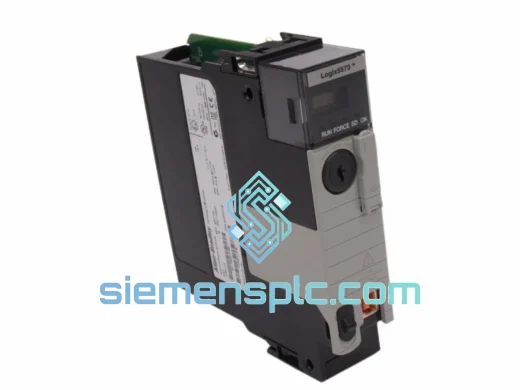
Allen-Bradley 1756-L73 PLC Processor Module – ControlLogix Logix5573
ControlLogix
Origin US
PLC Processor Module
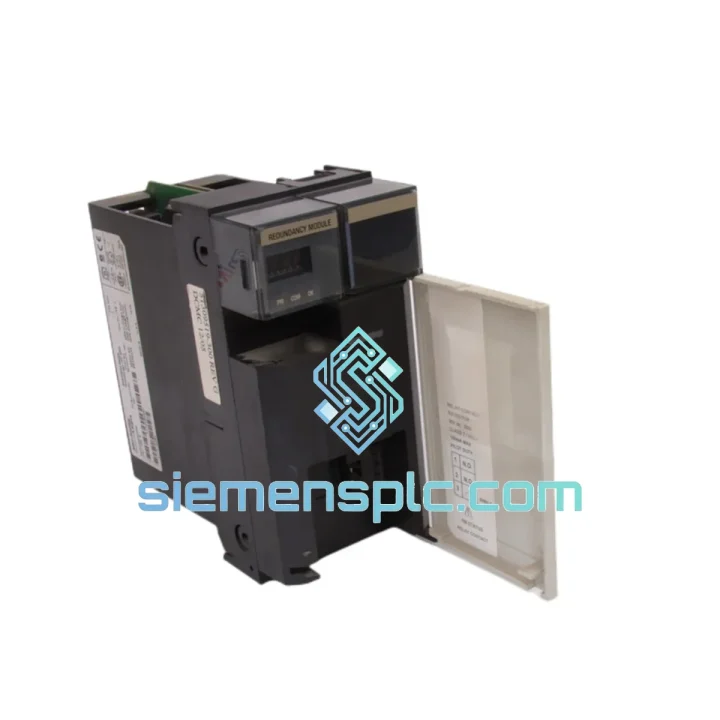
Request verified availability, condition, replacement risk review, packing options and courier lead time for 1757-SRM.
Click Request Quote and the part number is inserted into the inquiry form automatically.
Core fields for model confirmation and RFQ routing. Detailed product narrative remains below.
The 1757-SRM occupies a structurally non-negotiable position in any ControlLogix redundancy pair. Its sole function — and the reason it cannot be substituted by software configuration alone — is to maintain a deterministic, low-latency synchronization channel between the primary and secondary chassis. Without this module seated in both chassis, the ControlLogix redundancy firmware has no physical medium over which to execute crossload operations, arbitrate switchover authority, or propagate I/O state. The 1757-SRM is therefore not an optional enhancement; it is the physical substrate on which the entire redundancy contract is enforced.
In a correctly configured ControlLogix Enhanced Redundancy System (CLXE), the 1757-SRM manages three concurrent data streams: controller memory crossload (program data, tag values, and I/O state), chassis health telemetry (power supply status, module insertion events, backplane fault codes), and switchover arbitration signaling (primary/secondary role negotiation and bumpless transfer initiation). All three streams traverse the dedicated fiber-optic RMCT link, physically isolated from the EtherNet/IP network. This separation is architecturally deliberate — it prevents network congestion, broadcast storms, or EtherNet/IP latency spikes from interfering with the redundancy synchronization cycle.
The module’s internal arbitration logic continuously evaluates the health delta between the two chassis. When the primary chassis reports a fault condition — whether a controller exception, backplane communication error, or power supply dropout — the 1757-SRM in the secondary chassis receives the fault notification within the synchronization cycle period and initiates the switchover sequence. The secondary controller assumes the primary role, and the I/O modules on the EtherNet/IP network receive a unicast ownership transfer command. From the perspective of field devices and SCADA hosts, the transition is transparent: no I/O scan cycle is missed, no controller connection is dropped, and no alarm is generated by the switchover event itself.
This behavior is what distinguishes hot-standby redundancy from warm-standby or cold-standby architectures. In warm-standby, the secondary controller holds a periodic snapshot of program state but must re-establish I/O ownership after switchover — introducing a gap of several hundred milliseconds to several seconds. In cold-standby, the secondary controller boots from scratch. The 1757-SRM enables true hot-standby: the secondary controller is continuously synchronized at the tag-value level, holds active I/O ownership in shadow mode, and can assume control within a single scan cycle.
For process industries operating under IEC 61511 (functional safety for process sectors) or IEC 62061 (safety of machinery), the deterministic switchover behavior of the 1757-SRM-based architecture is a prerequisite for achieving SIL 2 availability targets in non-safety-instrumented but high-availability control loops. The module’s onboard diagnostics also generate structured fault codes readable via Studio 5000 Logix Designer, enabling maintenance teams to distinguish between a genuine primary fault (warranting switchover) and a transient communication anomaly (warranting a logged event but no switchover).
Real-time Stock & RFQ: [email protected] | WhatsApp: +86 18359268345
| Part Number | 1757-SRM |
| Manufacturer | Allen-Bradley / Rockwell Automation |
| Series | ControlLogix Enhanced Redundancy (CLXE) |
| Module Function | Primary/secondary chassis synchronization and switchover arbitration |
| Redundancy Architecture | Hot-standby (bumpless, zero-scan-cycle-loss switchover) |
| Synchronization Link | Dedicated fiber-optic via 1757-RMCT / 1757-RMCT2 cable |
| Switchover Time | < 10 ms (application-dependent; single scan cycle target) |
| Chassis Compatibility | 1756-series ControlLogix chassis (A7, A10, A13, A17) |
| Controller Compatibility | 1756-L6x, 1756-L7x, 1756-L8x series |
| Firmware Compatibility | ControlLogix CLXE firmware bundles (v16.x and above) |
| Backplane Interface | 1756 ControlLogix backplane (single slot) |
| Operating Temperature | 0 °C to 60 °C |
| Storage Temperature | -40 °C to 85 °C |
| Relative Humidity | 5% to 95% non-condensing |
| Power Draw | Via chassis backplane (no external power connector) |
| Form Factor | Standard 1756 single-slot module |
| Approx. Weight | 450 g |
| Certifications | UL, cUL, CE (EMC Directive 2014/30/EU, LVD 2014/35/EU), RoHS |
| Country of Origin | United States of America |
| Warranty | 12 months from shipment date |
The 1757-SRM’s internal architecture is built around three design imperatives: electrical isolation of the synchronization path, deterministic arbitration timing, and fault-transparent operation.
Fiber-Optic Link Isolation: The RMCT fiber connection between the two 1757-SRM modules operates on a physically separate medium from the plant EtherNet/IP network. This is not merely a VLAN separation — it is a distinct physical layer. The consequence is that EMI events, ground loops, or network storms that affect copper Ethernet infrastructure have zero impact on the redundancy synchronization channel. In heavy industrial environments — arc furnaces, variable-frequency drive banks, high-voltage switchgear rooms — this isolation is the difference between a redundancy system that functions under stress and one that fails precisely when it is needed.
Backplane Arbitration Logic: Each 1757-SRM communicates with its local chassis controller via the 1756 backplane at the module’s native scan rate. The arbitration firmware on the module continuously evaluates a health vector comprising: controller heartbeat status, backplane communication integrity, power supply voltage telemetry, and crossload completion acknowledgment. If any element of the primary chassis health vector falls below threshold, the secondary 1757-SRM transitions from shadow mode to active arbitration within a single evaluation cycle — typically sub-millisecond at the hardware level, with the full switchover completing within the configured scan cycle.
EMC Design Compliance: The module’s PCB layout follows IEC 61000-4 series immunity requirements, with particular attention to IEC 61000-4-4 (electrical fast transient/burst) and IEC 61000-4-5 (surge immunity). Transient suppression components are placed at the backplane connector interface to prevent conducted disturbances from propagating to the synchronization logic. The fiber-optic transmitter/receiver circuit is galvanically isolated from the backplane power rail, eliminating a common failure mode in copper-based redundancy link designs.
Crossload Data Integrity: The synchronization protocol includes a CRC verification layer on each crossload packet. If a packet fails CRC validation, the 1757-SRM retransmits within the same scan cycle rather than advancing the secondary controller’s state with corrupted data. This prevents a class of failure where a corrupted crossload causes the secondary controller to diverge from the primary’s actual program state — a condition that would result in incorrect behavior immediately upon switchover.
Every 1757-SRM unit shipped from our Xiamen, China facility is sourced through documented supply chains and subjected to a structured pre-shipment verification process. Physical label authenticity — including holographic security elements, date-code consistency, and factory-sealed packaging integrity — is verified against Rockwell Automation’s published product identification standards. Firmware revision is confirmed against the official CLXE release matrix. Units that fail any verification criterion are quarantined and not offered for sale.
Shipments are prepared with anti-static ESD shielding, foam-lined inner packaging, and double-wall corrugated outer cartons. For high-value orders, corner protectors and moisture-barrier desiccant packs are added as standard. Export documentation — Commercial Invoice, Packing List, Certificate of Origin, and HS Code 8537.10 classification — is provided for all international shipments. DHL, FedEx, and UPS express freight options are available for time-critical requirements. In-stock units typically dispatch within 1–3 business days of order confirmation. A 12-month quality warranty covers authenticity and condition as described. Certificate of Conformance is available for every shipment upon request.
Email: [email protected]
WhatsApp: +86 18359268345
Web: siemensplc.com
Location: Xiamen, China
© 2026 siemensplc.com. All rights reserved.
We check the full part number, brand, series and visible nameplate information before quotation.
Sales confirms stock path, condition option, quantity and realistic lead time for export dispatch.
DHL, FedEx, UPS or buyer courier arrangements can be reviewed with packing requirements.
Similar brand or category products for fast comparison and multi-item RFQ lists.