Allen-Bradley
RFQ Ready
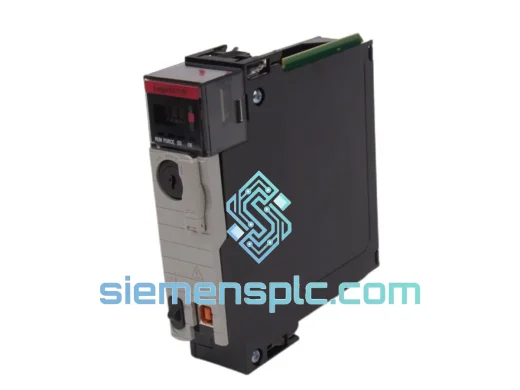
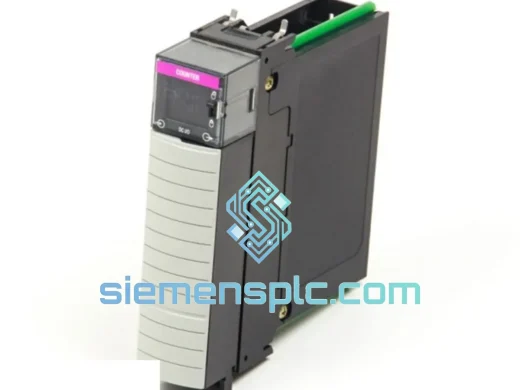
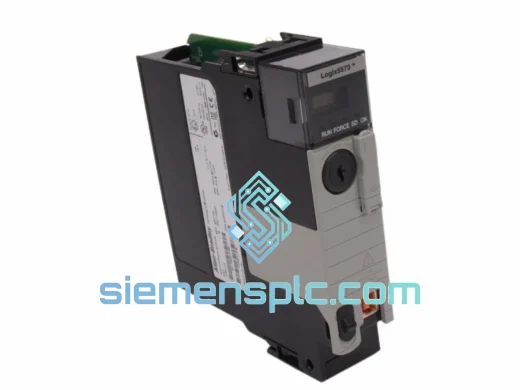
Allen-Bradley 1756-L73 PLC Processor Module – ControlLogix Logix5573
ControlLogix
Origin US
PLC Processor Module
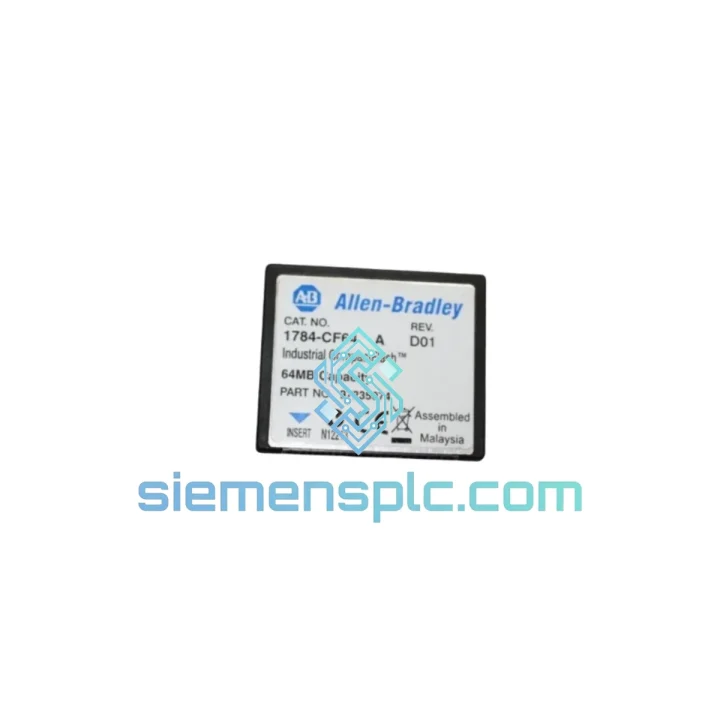
Request verified availability, condition, replacement risk review, packing options and courier lead time for 1784-CF64.
Click Request Quote and the part number is inserted into the inquiry form automatically.
Core fields for model confirmation and RFQ routing. Detailed product narrative remains below.
The Allen-Bradley 1784-CF64 is a 64 MB CompactFlash Type I memory card engineered specifically for use within Rockwell Automation’s 1784-series programming terminal ecosystem. Its primary function is to provide deterministic, non-volatile program storage for ladder logic, function block diagrams (FBD), sequential function charts (SFC), and structured text (ST) programs developed under RSLogix 5000 and Studio 5000 Logix Designer environments. Unlike general-purpose CF media, the 1784-CF64 is validated against Rockwell’s internal write-endurance and thermal cycling protocols, making it a qualified component within SIL-assessed and FDA-regulated control architectures.
In a ControlLogix control loop, the programming terminal serves as the offline configuration and commissioning interface. The 1784-CF64 card occupies the CF slot of terminals such as the 1784-PCMK and 1784-U2CN, acting as the persistent storage medium for project files transferred between the engineering workstation and the controller backplane. When a field technician performs a controller swap or firmware update on a live production line, the 1784-CF64 eliminates the dependency on a networked workstation by carrying the validated project image directly to the rack. This architecture reduces mean time to repair (MTTR) in high-availability manufacturing cells where downtime costs are measured in thousands of dollars per minute.
The card interfaces with the host terminal via the ATA/IDE protocol layer embedded in the CompactFlash specification (CF+ and CompactFlash Specification Revision 4.1). Data transfer rates are sufficient for full project file reads and writes within the latency budget of a commissioning workflow, where throughput is not the bottleneck — data integrity is. The 1784-CF64 uses SLC (Single-Level Cell) NAND flash architecture internally, which provides a write endurance of approximately 100,000 program/erase cycles per cell block — a figure that far exceeds the operational demand of a PLC program storage application where write cycles are infrequent and deliberate.
Real-time Stock & RFQ: [email protected] | WhatsApp: +86 18359268345
| Parameter | Specification |
|---|---|
| Part Number | 1784-CF64 |
| Manufacturer | Allen-Bradley / Rockwell Automation |
| Memory Capacity | 64 MB |
| Form Factor | CompactFlash Type I |
| Interface Protocol | ATA / IDE (CF+ Rev 4.1 compliant) |
| Flash Cell Architecture | SLC NAND |
| Write Endurance (typical) | ≥ 100,000 P/E cycles per block |
| Operating Temperature | 0 °C to +60 °C |
| Storage Temperature | -40 °C to +85 °C |
| Relative Humidity | 5% to 95% RH, non-condensing |
| Supply Voltage | 3.3 V / 5 V (dual-voltage compatible) |
| Data Retention | Non-volatile; ≥ 10 years at 25 °C without power |
| Compatible Terminals | 1784-PCMK, 1784-PCMK/B, 1784-U2CN |
| Compatible Software | RSLogix 5000 v16+, Studio 5000 Logix Designer v21+, RSLinx Classic/Enterprise |
| Compatible Controllers | ControlLogix 1756 series, CompactLogix 1769 series (via terminal) |
| Certifications | CE, UL (system-level, as part of validated Rockwell architecture) |
| Shock Resistance | 1,000 G / 0.5 ms (half-sine) |
| Vibration Resistance | 20 G, 20–2,000 Hz |
| Warranty | 12 months from date of shipment |
The 1784-CF64’s hardware design reflects the constraints of an industrial-grade embedded storage device rather than a consumer media card. Several architectural decisions distinguish it from commodity CompactFlash products available in the retail market.
SLC vs. MLC Cell Selection: Consumer-grade CF cards frequently use MLC (Multi-Level Cell) or TLC (Triple-Level Cell) NAND to maximize capacity per die at lower cost. The 1784-CF64 employs SLC NAND, where each cell stores exactly one bit. This eliminates the inter-cell charge interference that degrades MLC endurance under repeated write cycles. In a PLC programming terminal context, the write pattern is bursty and infrequent — but when a write occurs (e.g., project download, firmware update), data integrity is non-negotiable. SLC architecture provides a deterministic error floor that MLC cannot match.
ECC (Error Correction Code) Engine: The onboard controller implements hardware ECC, typically BCH (Bose–Chaudhuri–Hocquenghem) coding, which detects and corrects multi-bit errors within a page read operation. This is transparent to the host ATA interface — the terminal reads corrected data without software intervention. In environments with elevated ambient temperature or long storage periods, NAND charge retention degrades; the ECC engine compensates for this drift without requiring a read-retry at the application layer.
Wear-Leveling Algorithm: The CF controller implements static wear-leveling across the full NAND address space. Even if the host OS repeatedly writes to the same logical block address (LBA) — as occurs when a project file is incrementally saved — the controller remaps writes across physically distinct erase blocks. This prevents premature block exhaustion in the sectors most frequently targeted by the file system.
EMC Design Posture: The card’s metal enclosure provides a Faraday shield effect, attenuating radiated emissions from the NAND die and controller IC. The 50-pin CF connector uses a ground-referenced signal return path, reducing common-mode noise injection into the terminal’s ATA bus. In industrial environments where variable-frequency drives (VFDs), servo amplifiers, and high-current contactors generate broadband EMI, this shielding architecture maintains signal integrity on the data bus without requiring additional filtering at the terminal level.
Dual-Voltage Compatibility: The 1784-CF64 supports both 3.3 V and 5 V supply rails via the CF specification’s dual-voltage keying mechanism. This ensures backward compatibility with older 1784-series terminals that operate on a 5 V I/O bus, while remaining forward-compatible with lower-power 3.3 V designs. The onboard voltage regulator handles rail selection automatically based on the host’s key pin assertion.
Every Allen-Bradley 1784-CF64 unit supplied through siemensplc.com is sourced from verified supply channels and subjected to a structured incoming inspection process before dispatch. Visual examination confirms label authenticity, connector pin integrity, and enclosure condition. Where applicable, functional verification is performed using a compatible 1784-series terminal to confirm read/write operation and ATA bus enumeration prior to packaging.
Units are packed in anti-static (ESD) shielding bags, placed in foam-lined cartons, and sealed with tamper-evident tape. Traceability documentation — including Certificate of Conformance (COC) and packing records — is available upon request for quality-system audits.
Logistics operations are based in Xiamen, China, a major port city with direct access to international air freight hubs (Xiamen Gaoqi International Airport) and sea freight lanes. In-stock orders are dispatched within 1–3 business days via DHL Express, FedEx International Priority, or UPS Worldwide Expedited, with typical transit times of 3–7 business days to North America, Europe, Southeast Asia, and the Middle East. Customs documentation, including commercial invoices with accurate HS code classification (8473.30), is prepared to minimize clearance delays at destination ports.
For bulk procurement, MRO stocking programs, or project-based supply agreements, contact the sales team directly to discuss lead times, pricing tiers, and consignment options.
Email: [email protected]
WhatsApp: +86 18359268345
Web: siemensplc.com
Location: Xiamen, China
© 2026 siemensplc.com. All rights reserved.
We check the full part number, brand, series and visible nameplate information before quotation.
Sales confirms stock path, condition option, quantity and realistic lead time for export dispatch.
DHL, FedEx, UPS or buyer courier arrangements can be reviewed with packing requirements.
Similar brand or category products for fast comparison and multi-item RFQ lists.