Mitsubishi Electric
RFQ Ready
Mitsubishi FX3U-4AD-PT-ADP Analog Input Adapter
MELSEC FX
Origin JP
PLC Analog Input Adapter
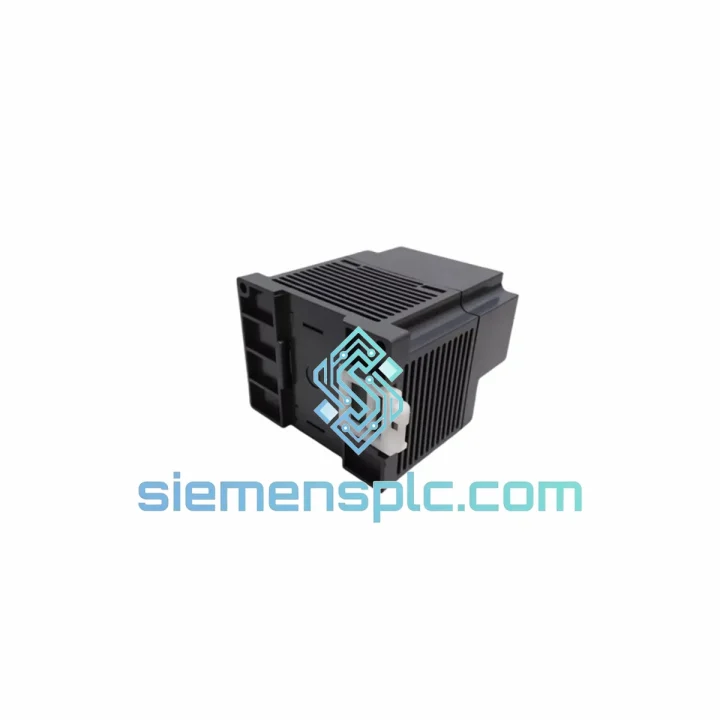
Request verified availability, condition, replacement risk review, packing options and courier lead time for CL1PAD1.
Click Request Quote and the part number is inserted into the inquiry form automatically.
Core fields for model confirmation and RFQ routing. Detailed product narrative remains below.
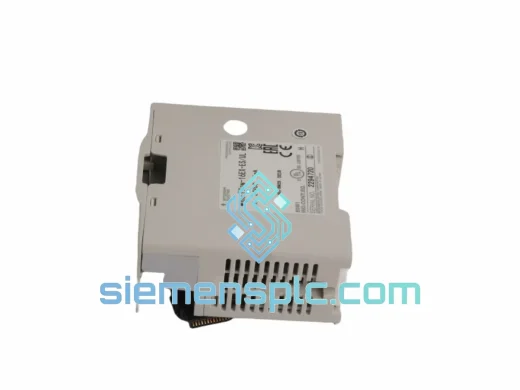
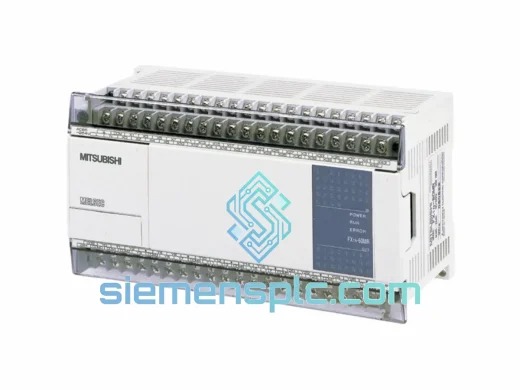
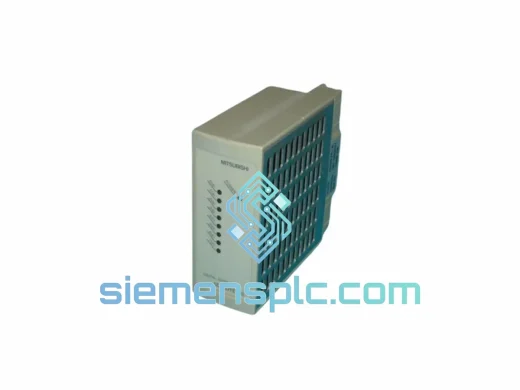
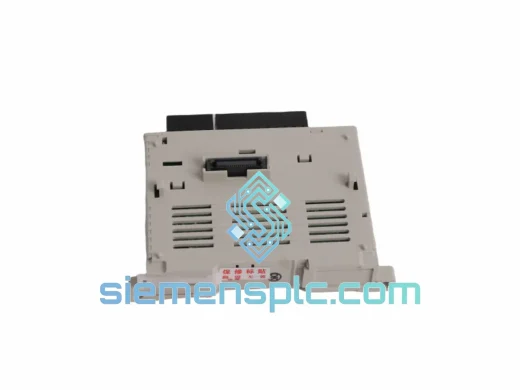
The Mitsubishi Electric CL1PAD1 is a 24 VDC input power supply module engineered exclusively for the CC-Link IE Field Network remote I/O station platform. Within a distributed control architecture, the CL1PAD1 occupies the power slot of a CL1BS-series base unit and converts the externally supplied 24 VDC rail into the regulated internal bus voltage required by all I/O modules mounted on that base. Without a correctly rated power module in this slot, the remote station cannot enumerate on the CC-Link IE Field segment, making the CL1PAD1 a non-optional, safety-critical component in any CL1BS-based field node.
In a typical CC-Link IE Field topology, a master station — such as the RJ71GF11-T2 on an iQ-R rack or the FX5-CCLIEF on an iQ-F system — communicates with remote I/O stations over a 1 Gbps full-duplex Ethernet backbone. Each remote station base (CL1BSIOC, CL1BS04D) requires one CL1PAD1 per base unit to power the local I/O module complement. The module draws from the 24 VDC cabinet supply, isolates the internal logic bus, and distributes conditioned power across the backplane connectors. This architecture ensures that field-side wiring faults — including short circuits on sensor or actuator loops — do not propagate into the backplane bus or corrupt the network communication layer.
The CL1PAD1 is not a general-purpose DIN rail power supply. It is a form-factor-specific module with a proprietary backplane connector keyed to the CL1BS base unit slot. Substituting a generic 24 VDC PSU in this position is mechanically and electrically incompatible. Engineers specifying replacement units must confirm the base unit model number and slot assignment before procurement.
📧 Real-time Stock & RFQ: [email protected] | WhatsApp: +86 18359268345
| Parameter | Specification |
|---|---|
| Model Number | CL1PAD1 |
| Manufacturer | Mitsubishi Electric Corporation |
| Series | CC-Link IE Field Network Remote I/O Station |
| Module Function | Backplane power supply for CL1BS-series remote I/O base units |
| Input Voltage | 24 VDC (external cabinet supply) |
| Input Voltage Tolerance | 20.4 VDC – 28.8 VDC (±15% of rated 24 VDC) |
| Internal Bus Output | Regulated backplane bus voltage for I/O module logic |
| Compatible Base Units | CL1BSIOC, CL1BS04D (CC-Link IE Field remote station bases) |
| Mounting Method | Dedicated power slot on CL1BS base unit (not DIN rail standalone) |
| Operating Temperature | 0 °C to +55 °C |
| Storage Temperature | -25 °C to +75 °C |
| Relative Humidity | 5% to 95% RH, non-condensing |
| Vibration Resistance | 5 to 8.4 Hz: 3.5 mm amplitude; 8.4 to 150 Hz: 9.8 m/s² |
| Shock Resistance | 147 m/s² (3 times per axis) |
| Dielectric Withstand | 500 VAC for 1 minute (between external terminals and ground) |
| Insulation Resistance | ≥10 MΩ at 500 VDC |
| EMC Compliance | CE Marking (EMC Directive), UL, cUL listed |
| Weight | Approx. 100 g (module only) |
| Warranty | 12 months from date of shipment (siemensplc.com) |
The CL1PAD1 implements a galvanically isolated DC-DC conversion stage between the 24 VDC external supply and the CL1BS backplane bus. This isolation boundary is the primary EMC defense mechanism for the remote I/O station. In industrial cabinet environments, the 24 VDC rail is shared with solenoid valves, relay coils, and motor starters — all of which generate conducted transients in the range of 1 kV to 4 kV (per IEC 61000-4-5 surge immunity test levels). The isolation stage in the CL1PAD1 attenuates these transients before they reach the logic bus, preventing data corruption on the CC-Link IE Field communication layer.
The module’s backplane connector is a multi-pin proprietary interface that carries both power rails and a module-present signal. The CL1BS base unit reads this presence signal during power-on self-test (POST). If the CL1PAD1 is absent or improperly seated, the base unit will not assert its network participation flag, and the master station will log a station disconnection error (error code 0xC070 in GX Works3 diagnostics). This hardware interlock prevents the system from operating with an under-powered I/O station, which could cause indeterminate output states on connected actuators.
Thermal management in the CL1PAD1 relies on natural convection through the module housing vents. The internal switching frequency is selected to minimize core losses at the rated load, keeping the junction temperature of the primary switching element within safe operating limits at the maximum ambient of 55 °C. No forced-air cooling is required under standard load conditions, which simplifies cabinet thermal design and reduces maintenance intervals associated with fan replacement.
The module’s input filter network suppresses high-frequency noise (>150 kHz) conducted from the 24 VDC supply rail, meeting the Class A conducted emission limits of CISPR 11. This is particularly relevant in cabinets where variable-frequency drives (VFDs) share the same DC bus, as VFD switching harmonics in the 10 kHz to 1 MHz range are a common source of I/O module malfunction in field installations.
Every CL1PAD1 unit supplied by siemensplc.com is sourced as genuine Mitsubishi Electric factory-manufactured hardware. Each module undergoes incoming inspection covering label authenticity verification, connector pin integrity check, and functional power-on test before being added to available stock. Units are stored in ESD-safe packaging in a climate-controlled warehouse in Xiamen, China, maintaining storage conditions within Mitsubishi’s specified -25 °C to +75 °C range.
Shipment from Xiamen reaches major industrial hubs on the following typical transit schedules: Southeast Asia (2–4 business days via DHL Express or FedEx International Priority), Europe (3–5 business days), North America (3–5 business days), Middle East and South Asia (3–6 business days). All shipments include a commercial invoice with HS code 8538.90 for customs clearance, and export documentation is prepared in compliance with Chinese customs regulations for industrial electronic components.
A 12-month warranty from the date of shipment covers manufacturing defects and functional failures under normal operating conditions as defined in the Mitsubishi CL1PAD1 hardware manual. Warranty claims are processed via email with photographic evidence of the defect; replacement units are dispatched within 3 business days of claim approval. Traceability documentation including batch records is available upon request for customers with ISO 9001 or IATF 16949 quality management requirements.
📧 Email: [email protected]
📱 WhatsApp: +86 18359268345
🌐 Web: siemensplc.com
📍 Location: Xiamen, China
© 2026 siemensplc.com. All rights reserved.
We check the full part number, brand, series and visible nameplate information before quotation.
Sales confirms stock path, condition option, quantity and realistic lead time for export dispatch.
DHL, FedEx, UPS or buyer courier arrangements can be reviewed with packing requirements.
Similar brand or category products for fast comparison and multi-item RFQ lists.