Mitsubishi Electric
RFQ Ready
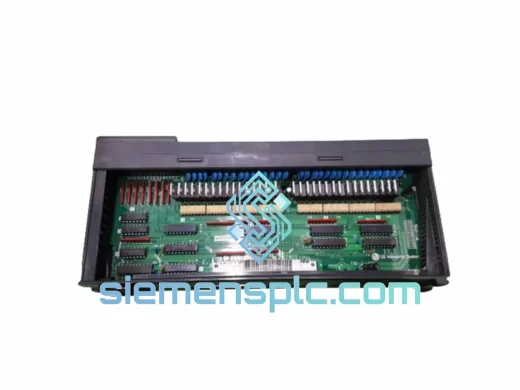
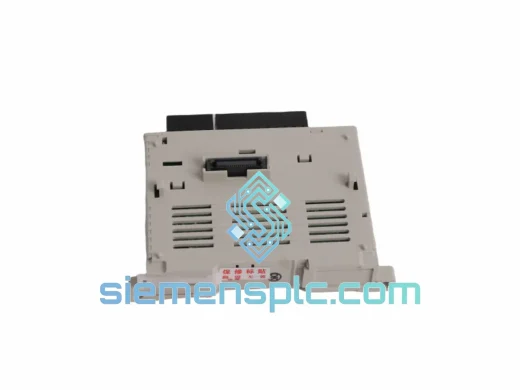
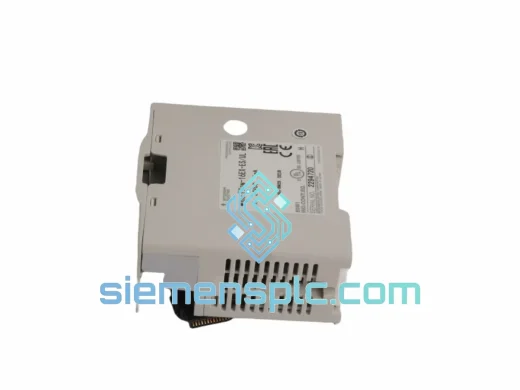
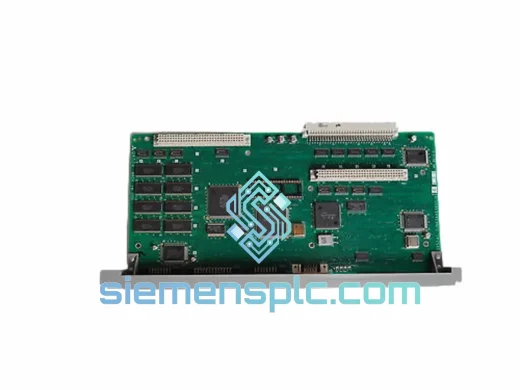
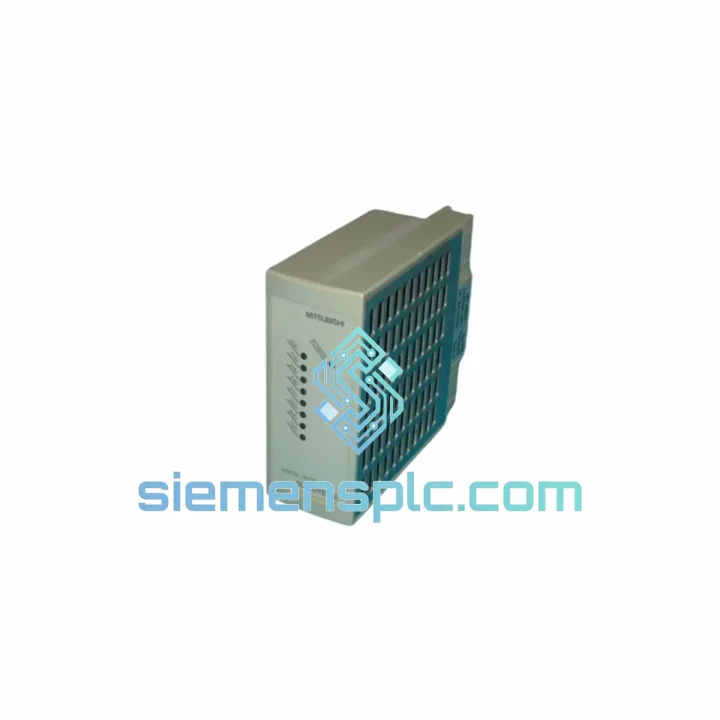
MITSUBISHI QX524 BN634A636G51 Digital Input Module
MELSEC-Q
Origin JP
Digital Input Module
Request verified availability, condition, replacement risk review, packing options and courier lead time for SD2DYE-A.
Click Request Quote and the part number is inserted into the inquiry form automatically.
Core fields for model confirmation and RFQ routing. Detailed product narrative remains below.
The SD2DYE-A (catalog alias SD-2DYE-05) is a 32-point transistor sink-type digital output module engineered for the Mitsubishi Electric MELSEC-Q series programmable controller platform. Within a Q-series rack, this module occupies a single slot on the main or extension base unit and communicates with the CPU via the high-speed Q-bus backplane, which sustains a synchronous data transfer rate of up to 50 MB/s across all mounted I/O and intelligent function modules. Each output channel is driven by an NPN open-collector transistor stage rated at 0.1 A per point with a collective load ceiling of 2.0 A per common group, making the module well-suited for driving solenoid valves, relay coils, indicator lamps, and solid-state relay inputs in process and discrete manufacturing environments.
Output switching response is specified at ≤1 ms ON and ≤1 ms OFF under resistive load conditions, a figure that supports deterministic ladder-scan cycle alignment in applications where output latency directly affects process timing — for example, high-speed conveyor indexing or pneumatic valve sequencing. The module’s internal circuit architecture separates the field-side load supply (12–24 V DC, externally provided) from the backplane logic supply (5 V DC, internally sourced from the power supply module), enforcing a hard galvanic boundary that prevents field transients from propagating into the CPU bus domain.
Optical isolation is implemented at each output channel using a photocoupler with a minimum isolation voltage of 500 V AC. This design choice is not cosmetic: in panel environments where inductive loads generate back-EMF spikes of 100–400 V during de-energization, the photocoupler barrier absorbs the transient before it can couple into the logic-side circuitry. Each output channel also incorporates a built-in surge suppressor (TVS diode network) on the field side, clamping transient voltages to within the transistor’s safe operating area without requiring external snubber circuits on every load terminal.
The module supports Mitsubishi’s module READY flag and I/O error detection mechanism. If a channel detects an overcurrent condition — typically triggered when load current exceeds the 0.1 A per-point rating — the module sets the corresponding error bit in the I/O diagnostic buffer, which the CPU can read via FROM/TO instructions or direct device mapping. This allows the application program to implement fault-response logic (e.g., alarm activation, safe-state output forcing) without relying on external current monitoring hardware.
Physically, the SD2DYE-A conforms to the MELSEC-Q module form factor: 27.4 mm width, 98 mm height, 90 mm depth, with a mass of approximately 0.18 kg. The front-face terminal block accepts 0.3–0.75 mm² wire cross-sections and is removable for wiring pre-commissioning without the module installed in the rack. LED indicators for each of the 32 output points are arranged in a two-column matrix on the front face, providing real-time channel state visibility without requiring a programming device connection.
Operating temperature range is 0–55 °C with a storage range of −20–75 °C. Relative humidity tolerance is 5–95% RH non-condensing. The module carries CE marking for EMC Directive 2014/30/EU compliance and meets IEC 61131-2 environmental class requirements for industrial control equipment. Vibration resistance is rated to 5–8.4 Hz at 3.5 mm amplitude and 8.4–150 Hz at 9.8 m/s², per JIS B 3502 test methodology.
Real-time Stock & RFQ: [email protected] | WhatsApp: +86 18359268345
| Parameter | Specification |
|---|---|
| Part Number | SD2DYE-A / SD-2DYE-05 |
| Manufacturer | Mitsubishi Electric |
| Series | MELSEC-Q |
| Module Type | Digital Output, Transistor Sink (NPN) |
| Number of Output Points | 32 points |
| Rated Load Voltage | 12–24 V DC |
| Max Load Current per Point | 0.1 A |
| Max Load Current per Common | 2.0 A |
| Output ON Response Time | ≤1 ms |
| Output OFF Response Time | ≤1 ms |
| Isolation Method | Photocoupler (500 V AC min.) |
| Internal Current Consumption (5 V DC) | 90 mA |
| Operating Temperature | 0–55 °C |
| Storage Temperature | −20–75 °C |
| Relative Humidity | 5–95% RH (non-condensing) |
| Vibration Resistance | 5–150 Hz, 9.8 m/s² (JIS B 3502) |
| Module Dimensions (W×H×D) | 27.4 × 98 × 90 mm |
| Mass | Approx. 0.18 kg |
| Compliance | CE (EMC Directive 2014/30/EU), IEC 61131-2 |
| Country of Origin | Japan |
| Warranty | 12 months against manufacturing defects |
The SD2DYE-A’s output stage is built around a discrete NPN transistor array rather than an integrated Darlington pack, a deliberate design choice that preserves individual channel isolation and avoids the shared emitter resistance that can cause cross-channel interference in high-density Darlington arrays. Each transistor is biased through a dedicated base resistor network, ensuring that the gate drive current is independent of adjacent channel states — a property that matters when switching mixed inductive and resistive loads within the same common group.
The photocoupler selection for this module uses a high-speed LED-phototransistor pair with a current transfer ratio (CTR) maintained over the full operating temperature range. Unlike lower-cost designs that allow CTR to degrade at elevated temperatures (causing marginal switching at 55 °C), Mitsubishi’s component screening process specifies CTR at both 25 °C and 55 °C, guaranteeing that the 1 ms switching specification holds across the entire rated thermal envelope.
EMC performance is addressed at three levels: (1) the photocoupler barrier provides primary isolation against conducted interference from the field side; (2) the PCB layout routes field-side and logic-side traces on separate copper layers with a ground plane interposed, reducing capacitive coupling between domains; (3) the module housing is a conductive die-cast frame that bonds to the rack’s chassis ground rail, providing a low-impedance return path for radiated interference and meeting the shielding effectiveness requirements of EN 55011 Class A. The result is a module that maintains specified output accuracy in environments with radiated field strengths up to 10 V/m across the 80 MHz–1 GHz band.
The terminal block design uses a spring-cage clamping mechanism (on applicable variants) that maintains consistent contact force over thermal cycling, eliminating the contact resistance drift that occurs with screw-type terminals subjected to repeated heating and cooling. This is particularly relevant in applications where the module operates near its 55 °C ceiling and the terminal block undergoes daily thermal excursions of 30–40 °C.
Every SD2DYE-A / SD-2DYE-05 unit supplied by siemensplc.com is sourced as genuine Mitsubishi Electric OEM hardware. Units are procured through verified supply channels with full traceability to the original manufacturer’s production batch. Prior to dispatch, each module undergoes a physical inspection covering label authenticity, housing integrity, connector pin condition, and ESD packaging compliance. Functional bench verification is performed on selected units using a MELSEC-Q test rack to confirm output switching response and isolation integrity against the manufacturer’s published specifications.
Logistics operations are based in Xiamen, China — a major export hub with direct access to international express carriers including DHL Express, FedEx International Priority, and UPS Worldwide Expedited. Standard transit times to major industrial markets are 3–5 business days to Southeast Asia, 4–7 business days to Europe and the Middle East, and 5–8 business days to North America. For bulk orders, sea freight consolidation via Xiamen Port is available with full export documentation: commercial invoice, packing list, certificate of origin, and HS Code 8537.10 declaration. All units are shipped in anti-static ESD bags within rigid outer packaging, with foam cushioning rated to withstand the 1.0 m drop test per ISTA 1A protocol. A 12-month warranty against manufacturing defects is provided on all units, covering failure modes attributable to component or workmanship defects under normal operating conditions.
Email: [email protected]
WhatsApp: +86 18359268345
Web: siemensplc.com
Location: Xiamen, China
© 2026 siemensplc.com. All rights reserved.
We check the full part number, brand, series and visible nameplate information before quotation.
Sales confirms stock path, condition option, quantity and realistic lead time for export dispatch.
DHL, FedEx, UPS or buyer courier arrangements can be reviewed with packing requirements.
Similar brand or category products for fast comparison and multi-item RFQ lists.