Bently Nevada
RFQ Ready
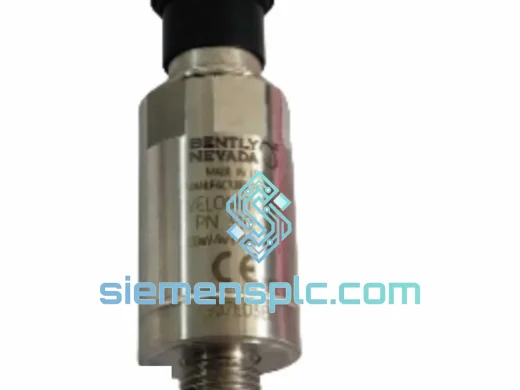
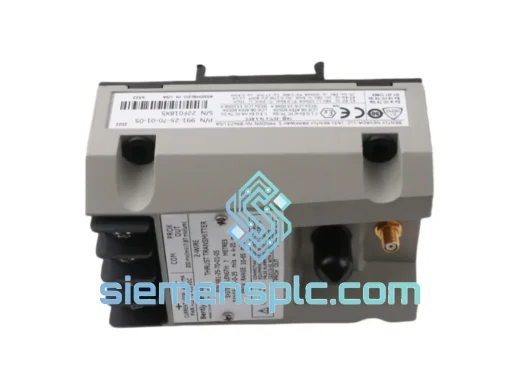
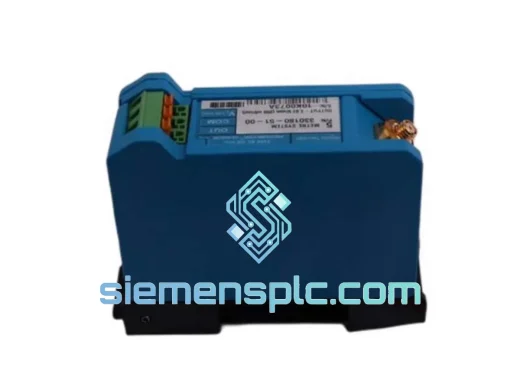
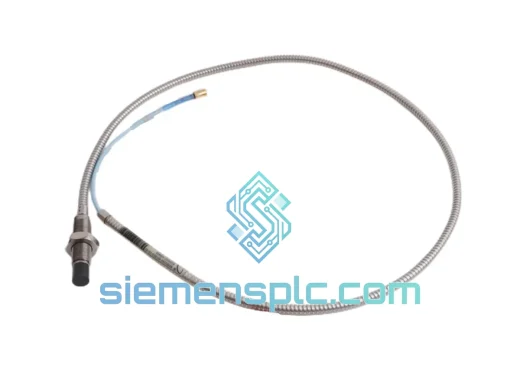
Bently Nevada RS901104-03-050-10-01 Proximitor Sensor – 3300 XL Series
3300 XL
Origin US
Proximitor Sensor
Request verified availability, condition, replacement risk review, packing options and courier lead time for 1900/65.
Click Request Quote and the part number is inserted into the inquiry form automatically.
Core fields for model confirmation and RFQ routing. Detailed product narrative remains below.
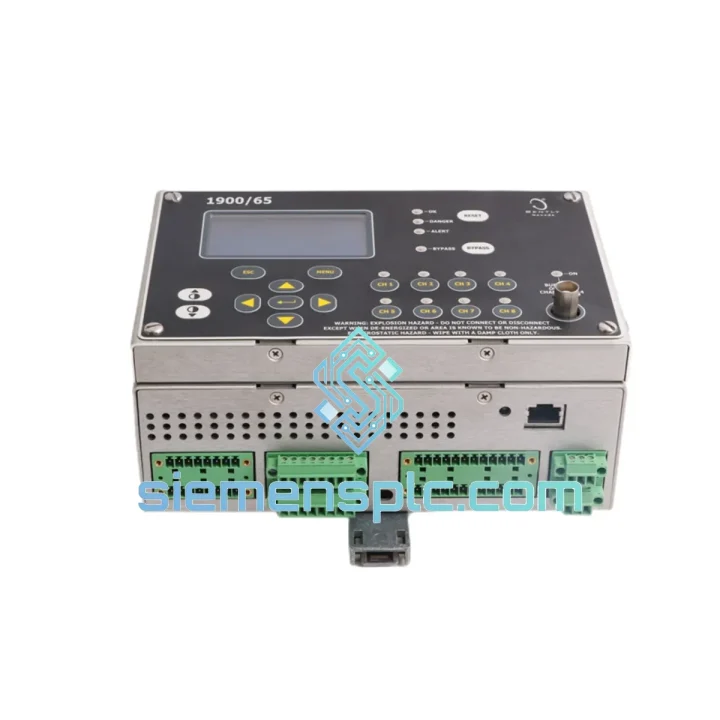
Every minute a critical machine sits idle, the losses compound. A tripped compressor train, a turbine offline, a pump protection relay locked out — the 1900/65 is the module standing between your process and a catastrophic event. When it fails, you don’t have days to wait. We stock the Bently Nevada 1900/65 in Xiamen and ship globally via DHL/FedEx express. From your purchase order to a tracking number in your inbox: measured in hours, not weeks.
The 1900/65 is a dual-channel equipment monitor from Baker Hughes’ Bently Nevada 1900 Series — the field-proven platform for standalone machinery protection in oil & gas, power generation, petrochemical, and heavy manufacturing. It accepts proximity probe, velocity, and accelerometer inputs, computes overall vibration and gap/DC values, and drives configurable Alert and Danger relay outputs directly into your DCS or safety logic. When this module goes down, your machine goes unprotected. Get it replaced today.
URGENT REQUIREMENT? Contact: [email protected] | WhatsApp: +86 18359268345
| Parameter | Specification |
|---|---|
| Part Number | 1900/65 |
| Manufacturer | Bently Nevada (Baker Hughes) |
| Series | 1900 Machinery Protection System |
| Function | Dual-Channel Equipment / Vibration Monitor |
| Input Types | Eddy-current proximity probes, velocity transducers, accelerometers (ICP/IEPE) |
| Measured Parameters | Overall vibration amplitude, gap/DC voltage, shaft speed (RPM), phase |
| Alarm Outputs | Configurable Alert & Danger relay outputs (dry contact) |
| Analog Output | 4–20 mA proportional to measured parameter |
| Communication | Optional Modbus RTU (revision-dependent) |
| Supply Voltage | 18–30 VDC |
| Operating Temperature | -20°C to +70°C |
| Storage Temperature | -40°C to +85°C |
| Humidity | 5–95% RH, non-condensing |
| Mounting | DIN-rail or panel-mount |
| Compliance | API 670, ISO 10816, CE |
| Weight | ~1,320 g |
| Availability | ✔ Ready to Ship — Xiamen Stock |
The 1900/65 fails in predictable ways. Here’s what to check before you pull the module — and what to configure when you install the replacement:
Common Failure Signatures:
Replacement Configuration Checklist:
The 1900/65 was not designed for a climate-controlled server room. It was built for the machinery deck of an offshore platform, the turbine hall of a power station, and the compressor building of a gas processing facility — environments where temperature swings 50°C between day and night, where VFD switching noise saturates the ground plane, and where humidity condenses on every cold surface at startup.
The module’s conformal-coated PCB resists moisture ingress and corrosive atmospheres. Its wide supply voltage range (18–30 VDC) tolerates the voltage sag and surge that characterizes industrial panel power supplies under load transients. The DIN-rail housing is mechanically robust against the continuous low-frequency vibration present on any machinery skid — the same vibration it is tasked with measuring. EMC filtering on all input and output terminals suppresses the high-frequency interference generated by proximity probe drivers, VFDs, and high-current motor starters sharing the same cable tray.
Units in our stock are stored in controlled-humidity, ESD-safe conditions. Each module is visually inspected and functionally verified before dispatch. We do not ship modules with damaged connectors, missing terminal blocks, or illegible labeling — if it leaves our warehouse, it is ready to install.
Our warehouse is located in Xiamen, Fujian Province — one of China’s primary export hubs with direct DHL and FedEx service center access. This is not a drop-ship arrangement. Stock is physically on our shelves.
Typical dispatch timeline:
For projects requiring import permits, FORM E certificates, or specific country-of-origin documentation, contact us before ordering — we handle these routinely for customers in the Middle East, South Asia, and Latin America.
Email: [email protected]
WhatsApp: +86 18359268345
Web: siemensplc.com
© 2026. All rights reserved.
We check the full part number, brand, series and visible nameplate information before quotation.
Sales confirms stock path, condition option, quantity and realistic lead time for export dispatch.
DHL, FedEx, UPS or buyer courier arrangements can be reviewed with packing requirements.
Similar brand or category products for fast comparison and multi-item RFQ lists.