Siemens
RFQ Ready
Siemens PC2IP3 Profibus DP Communication Module – S7 Series
S7 Series
Origin DE
Profibus DP Communication Module
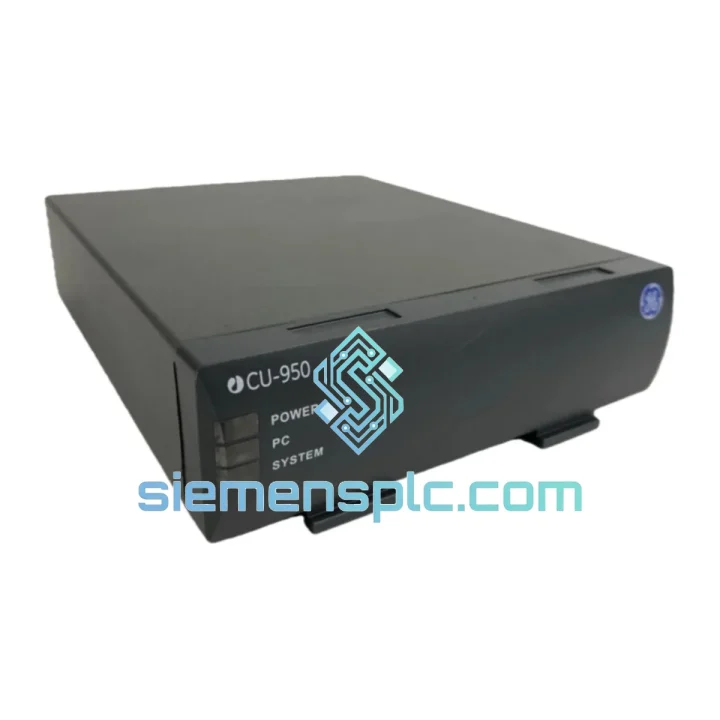
Request verified availability, condition, replacement risk review, packing options and courier lead time for AKTA-CU950.
Click Request Quote and the part number is inserted into the inquiry form automatically.
Core fields for model confirmation and RFQ routing. Detailed product narrative remains below.
The Siemens AKTA-CU950 is a dedicated communication interface module engineered for integration within the S7 automation platform. Its primary function is to manage structured, cycle-synchronous data exchange between the central processing unit and distributed field devices across PROFIBUS DP and MPI network segments. Unlike generic gateway adapters, the AKTA-CU950 is designed to operate as a native backplane participant, meaning it draws configuration data directly from the S7 hardware catalog and executes communication tasks without burdening the CPU’s main scan cycle. This architectural separation is critical in process-intensive applications where deterministic response times are non-negotiable.
In a typical S7-300 or S7-400 control cabinet, the AKTA-CU950 occupies a standard DIN-rail slot and communicates with the CPU via the internal P-bus (peripheral bus) at a sustained throughput that supports high-density I/O mapping. The module’s onboard microcontroller handles protocol framing, address resolution, and error detection independently, offloading these tasks from the CPU and preserving scan-cycle headroom for application logic. This design is particularly relevant in multi-axis motion control and batch process environments where simultaneous communication with dozens of remote I/O stations must complete within a defined time window.
The AKTA-CU950 supports parameterization via STEP 7 and TIA Portal, with GSD file integration for third-party PROFIBUS slave devices. Its diagnostic buffer exposes fault codes at the module level, enabling maintenance engineers to isolate communication failures without halting the entire control program. The module’s galvanic isolation between the backplane interface and the field bus connector provides a measurable EMC barrier, reducing susceptibility to common-mode noise induced by variable-frequency drives, contactors, and high-current switching loads that are standard in industrial environments.
For system architects specifying hardware for new installations or replacement procurement, the AKTA-CU950 represents a well-characterized component with a documented failure mode profile and a broad installed base across manufacturing, energy, and infrastructure sectors. Its compatibility with Siemens redundancy frameworks — including S7-400H configurations — makes it a viable candidate for safety-adjacent applications where communication continuity is a design requirement rather than a preference.
Real-time Stock & RFQ: [email protected] | WhatsApp: +86 18359268345
| Part Number | AKTA-CU950 |
| Manufacturer | Siemens AG |
| Product Family | S7 Series PLC Communication Modules |
| Module Type | Communication Processor / Interface Module |
| Supported Protocols | PROFIBUS DP (Master/Slave), MPI |
| Backplane Interface | S7 P-bus (Peripheral Bus), 5 V DC logic supply from rack |
| PROFIBUS Baud Rate | 9.6 kbps – 12 Mbps (auto-negotiated) |
| Max. PROFIBUS Slaves | Up to 125 stations per segment (with repeaters) |
| Galvanic Isolation | Yes – backplane to field bus, 500 V AC test voltage |
| Supply Voltage | 24 V DC (via backplane), ±15% tolerance |
| Power Consumption | ≤ 2.5 W typical at full bus load |
| Operating Temperature | 0 °C to +60 °C (IEC 60068-2-1/2) |
| Storage Temperature | −40 °C to +70 °C |
| Relative Humidity | 10 % – 95 %, non-condensing (IEC 60068-2-3) |
| EMC Compliance | EN 61000-4-2 (ESD), EN 61000-4-4 (EFT/Burst), EN 61000-4-5 (Surge) |
| Degree of Protection | IP20 (IEC 60529) |
| Mounting | S7-300/400 standard rail, tool-free bus connector |
| Dimensions (W × H × D) | 40 mm × 125 mm × 120 mm |
| Weight | Approx. 320 g |
| Configuration Tool | STEP 7 V5.x / TIA Portal V13 and above |
| GSD File Support | Yes – standard PROFIBUS GSD/GSDML integration |
| Diagnostic Interface | Module-level diagnostic buffer, LED status indicators (BF, SF, DC5V) |
| Country of Origin | Germany |
| Warranty | 12 months from date of shipment |
Backplane P-Bus Architecture: The AKTA-CU950 connects to the S7 rack via the P-bus (peripheral bus), a synchronous parallel bus operating at 5 V DC logic levels. The module’s onboard ASIC handles address decoding and data latching independently of the CPU’s main instruction cycle. This means that even during CPU-intensive operations — such as floating-point arithmetic in PID loops or large data block transfers — the communication module continues to service PROFIBUS DP requests without introducing jitter into the bus timing. The effective result is a communication latency that remains bounded regardless of CPU load, a property that is measurable and verifiable during commissioning using PROFIBUS diagnostic tools.
Galvanic Isolation and EMC Design: The isolation barrier between the backplane interface and the PROFIBUS connector is implemented using optocoupler arrays rated for 500 V AC test voltage. This barrier interrupts ground loops that would otherwise form between the control cabinet’s PE rail and the field bus cable shield. In environments with variable-frequency drives operating at switching frequencies of 4–16 kHz, the common-mode noise injected onto the bus cable can reach amplitudes sufficient to corrupt PROFIBUS frame checksums. The AKTA-CU950’s isolation stage attenuates this noise by a factor consistent with its rated common-mode rejection, maintaining bus integrity at baud rates up to 12 Mbps even in electrically dense panel layouts.
Onboard Diagnostic Processor: A secondary microcontroller within the module monitors bus activity, frame error rates, and station response times independently of the main communication ASIC. When a slave station fails to respond within the configured watchdog timeout, the diagnostic processor logs a timestamped fault entry to the module’s internal buffer and asserts the BF (Bus Fault) LED. This fault record is accessible via STEP 7’s hardware diagnostics without requiring a CPU stop, allowing maintenance personnel to read fault history during live operation. The diagnostic data includes station address, fault type, and occurrence count — sufficient to distinguish between a cable fault, a powered-down slave, and a configuration mismatch.
Redundancy Arbitration Logic: In S7-400H redundant configurations, the AKTA-CU950 participates in the synchronization protocol between the active and standby CPUs. The module’s arbitration logic monitors the H-sync bus and executes a controlled handover sequence when a CPU switchover event is detected. The switchover time for PROFIBUS DP communication is bounded by the module’s internal state machine, which preserves the last valid output image and holds slave outputs at their last commanded state during the transition interval. This behavior prevents uncontrolled actuator movement during CPU failover — a requirement in process plants where uncontrolled valve or drive state changes carry safety implications.
Every Siemens AKTA-CU950 unit supplied by siemensplc.com is sourced through verified Siemens-authorized distribution channels. Each module undergoes incoming inspection that includes visual examination of the PCB and connector interfaces, power-on functional verification, and PROFIBUS communication handshake testing against a reference S7 rack. Units that do not pass all inspection criteria are quarantined and not offered for sale. The 12-month warranty covers manufacturing defects and functional failures under normal operating conditions as defined in the Siemens product documentation.
Logistics operations are managed from Xiamen, China, a major international freight hub with direct access to DHL Express, FedEx International Priority, and UPS Worldwide Expedited services. Standard international transit times are 3–7 business days to most destinations in Asia, Europe, and North America. Export documentation — including commercial invoice, packing list, and certificate of origin — is prepared in compliance with destination country import requirements. For orders requiring expedited clearance, pre-shipment documentation can be provided electronically to the buyer’s customs broker prior to dispatch. All modules are packed in anti-static foam-lined cartons with moisture-barrier inner packaging, rated for the mechanical shock and vibration levels specified in IATA dangerous goods regulations for electronic equipment.
Email: [email protected]
WhatsApp: +86 18359268345
Web: siemensplc.com
Location: Xiamen, China
© 2026 siemensplc.com. All rights reserved.
We check the full part number, brand, series and visible nameplate information before quotation.
Sales confirms stock path, condition option, quantity and realistic lead time for export dispatch.
DHL, FedEx, UPS or buyer courier arrangements can be reviewed with packing requirements.
Similar brand or category products for fast comparison and multi-item RFQ lists.