
VAISALA
In Stock OK
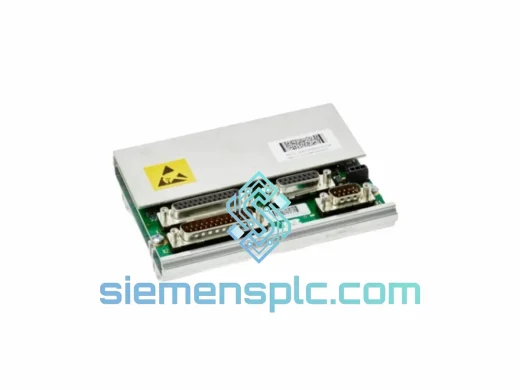
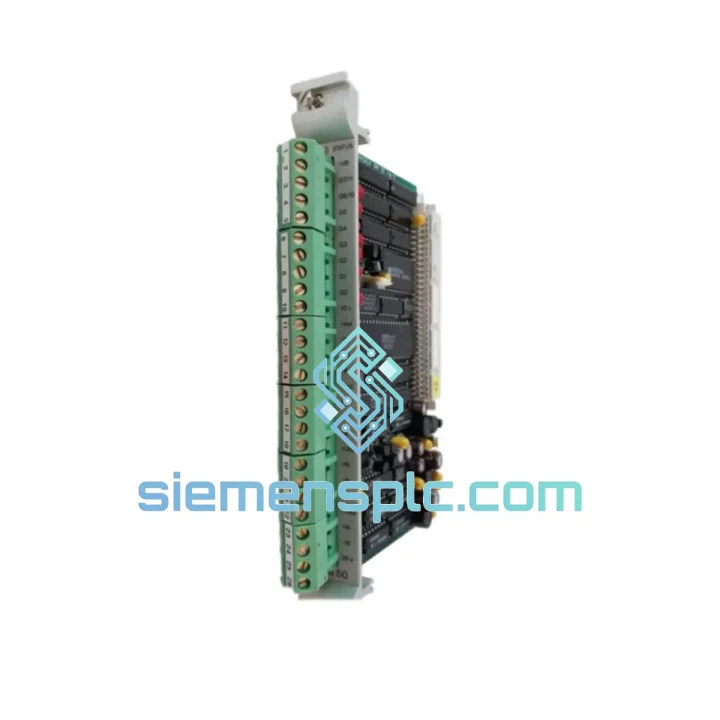
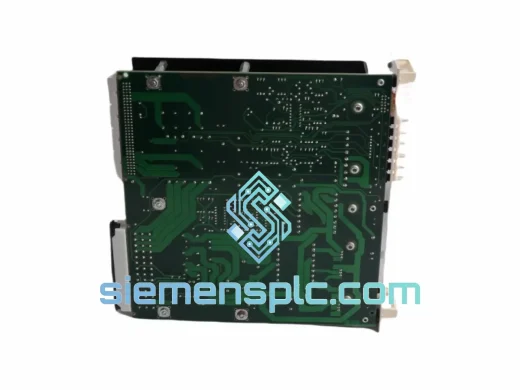
VAISALA DMI50 Printed Circuit Board – DMI Series
Request verified availability, condition, replacement risk review, packing options and courier lead time for DMI50.
BrandVAISALA
Part NumberDMI50
ConditionAvailability Check
Lead TimeRFQ Confirmation
DocumentsDatasheet / photos by RFQ
ShippingExport packing available
Auto-filled RFQ
DMI50
Click Request Quote and the part number is inserted into the inquiry form automatically.
- Reply by email: [email protected]
- WhatsApp / Tel: +86 18359268345
- Mon-Sat 9:00-18:00 GMT+8
Procurement Data
Key Product Information
Core fields for model confirmation and RFQ routing. Detailed product narrative remains below.
- Brand
- VAISALA
- Primary Part Number
- DMI50
- Product Type
- Printed Circuit Board
- Series / Family
- DMI Series
- Manufacturer
- VAISALA Oyj
- Country of Origin
- Finland
- Catalog Category
- Industrial Automation Spares
- Warranty
- 12 months against manufacturing defects from date of dispatch
Model confirmed for inquiry
DMI50
Send quantity, destination and urgency. The RFQ form keeps this part number attached.
Request Quote
Product Overview
VAISALA DMI50 Printed Circuit Board — Signal Conditioning Core for Meteorological Measurement Systems
The VAISALA DMI50 is a purpose-engineered printed circuit board serving as the signal conditioning and data processing backbone within VAISALA’s DMI-series automatic weather station platforms. Unlike generic industrial PCBs, the DMI50 is architected around the specific electrical characteristics of meteorological transducers — low-amplitude analog outputs from temperature, humidity, barometric pressure, and wind sensors — where signal integrity at the board level directly determines measurement accuracy at the system level. This module occupies a non-negotiable position in the measurement chain: it receives raw transducer signals, conditions them against noise and offset drift, and presents clean digital or analog outputs to the station’s data acquisition layer.
Procurement engineers and field maintenance teams operating AWOS (Automated Weather Observation Systems), RWIS (Road Weather Information Systems), and hydrometeorological monitoring networks specify the DMI50 as a primary spare-holding component. The rationale is straightforward: a failed signal conditioning board renders an entire station blind, and OEM lead times through standard channels frequently exceed acceptable downtime windows for safety-critical infrastructure. Holding verified DMI50 stock eliminates that exposure.
Real-time Stock & RFQ: [email protected] | WhatsApp: +86 18359268345
Technical Parameters
| Parameter | Specification |
|---|---|
| Part Number / SKU | DMI50 |
| Manufacturer | VAISALA Oyj |
| Component Classification | Printed Circuit Board — Signal Conditioning & Processing Module |
| Product Series | DMI Series (Automatic Weather Station Platform) |
| Primary Function | Analog signal conditioning, sensor interface, data pre-processing |
| Compatible Platform | VAISALA DMI Series Weather Stations |
| Sensor Interface Types | Resistive (RTD/NTC), capacitive (humidity), frequency (wind), analog voltage/current |
| Operating Temperature Range | −40 °C to +60 °C (board-level, within station enclosure) |
| Storage Temperature | −55 °C to +85 °C |
| Supply Voltage | Derived from station backplane (typically 12–24 VDC regulated) |
| PCB Construction | Multi-layer FR4, conformal coating for humidity resistance |
| Connector Interface | OEM-specific board-to-board and terminal block connectors |
| Weight | 380 g |
| Country of Origin | Finland |
| RoHS Compliance | Yes |
| Warranty | 12 months against manufacturing defects from date of dispatch |
Hardware Logical Analysis
The DMI50’s hardware architecture addresses three fundamental challenges inherent to outdoor meteorological measurement: low-level signal amplification in electrically noisy environments, long-term thermal stability of reference circuits, and mechanical resilience under continuous vibration and condensation cycling.
Analog Front-End Architecture: Meteorological transducers — particularly capacitive humidity sensors and platinum RTDs — produce output signals in the millivolt range with source impedances that make them susceptible to common-mode interference from nearby power conductors and RF sources. The DMI50 employs instrumentation amplifier topology at each sensor input channel, providing high common-mode rejection ratio (CMRR) to suppress interference without attenuating the differential measurement signal. Input filtering networks ahead of the amplifier stage establish a defined bandwidth that passes the DC-to-low-frequency measurement content while rejecting conducted EMI above the sensor’s physical response bandwidth.
EMC Design Discipline: The board layout follows IEC 61000-series EMC design practices. Ground plane segmentation separates analog measurement ground from digital logic ground, with a single-point star connection preventing digital switching currents from injecting noise into the analog measurement path. Decoupling capacitors are placed at each IC power pin with values selected to address both high-frequency (ceramic, 100 nF) and mid-frequency (electrolytic, 10–47 µF) supply impedance. Ferrite bead filters on power rails attenuate conducted emissions from the digital section before they reach the analog supply domain.
Thermal Reference Stability: Precision measurement at the accuracy levels required by WMO instrumentation guidelines demands that the board’s own reference voltages remain stable across the operating temperature range. The DMI50 uses bandgap voltage reference ICs with temperature coefficients in the low-ppm/°C range, ensuring that ADC full-scale accuracy does not degrade as enclosure temperature varies between winter and summer extremes.
Conformal Coating & Mechanical Protection: Outdoor station enclosures are not hermetically sealed. Condensation, salt fog in coastal deployments, and fungal growth in tropical climates all attack unprotected PCBs. The DMI50’s conformal coating — applied over the assembled board — provides a dielectric barrier that prevents surface leakage currents between conductors and inhibits corrosion of solder joints and component leads. This is not a cosmetic treatment; it is a functional reliability measure that directly extends mean time between failures in field conditions.
System Integration Benefits
- Drop-in OEM Compatibility: The DMI50 is dimensioned and connector-pinned to the original VAISALA DMI-series station chassis. No mechanical modification, wiring adaptation, or firmware reconfiguration is required for a board swap — maintenance technicians can complete a replacement in the field without specialized tooling.
- Deterministic Measurement Latency: The board’s fixed-pipeline signal processing architecture ensures that sensor data is available to the station’s data logger within a defined, repeatable time window after each measurement cycle trigger. This determinism is essential for AWOS systems where observation timestamps must meet ICAO Annex 3 synchronization requirements.
- Multi-Sensor Channel Isolation: Individual sensor input channels are electrically isolated from one another at the board level. A fault condition on one sensor — such as a short circuit from lightning-induced surge — does not propagate to adjacent measurement channels, preserving partial station operability during fault events.
- Diagnostic Transparency: The DMI50 supports the station’s built-in self-test routines. On-board test points and status indicators allow field technicians to verify supply voltages, reference levels, and signal chain continuity without removing the board from the enclosure, reducing diagnostic time from hours to minutes.
- Low Standby Power Consumption: In stations operating on solar or battery backup power, the board’s quiescent current draw is minimized through careful component selection and sleep-mode management of non-essential circuits between measurement cycles. This extends autonomous station operation during extended overcast periods.
- Calibration Traceability Preservation: Because the DMI50 interfaces directly with calibrated sensors, its own gain and offset characteristics are factory-trimmed to match the sensor calibration chain. Replacing a failed board with a verified DMI50 unit preserves the station’s calibration traceability without requiring a full sensor recalibration — a significant cost and time saving for operators of large monitoring networks.
- Compatibility with Station Data Protocols: The board’s output interface is compatible with the DMI-series station’s internal data bus, supporting standard meteorological data formats used by national weather services and aviation authorities. No protocol conversion layer is required between the DMI50 and the station’s communication module.
- Reduced Spare Parts Inventory Complexity: A single DMI50 board addresses signal conditioning for multiple sensor types within the station. Operators maintaining fleets of DMI-series stations can standardize on a single spare board SKU rather than stocking separate conditioning modules for each sensor type, simplifying inventory management and reducing carrying costs.
Quality Assurance & Global Logistics
Every VAISALA DMI50 unit supplied through siemensplc.com is sourced through verified industrial component channels with full traceability documentation. Pre-dispatch handling follows ESD-safe procedures throughout — boards are handled at grounded workstations, stored in anti-static shielding bags, and packed with foam cushioning to prevent mechanical stress during international transit.
Our logistics operation is based in Xiamen, China, a major export hub with direct access to DHL Express, FedEx International Priority, and UPS Worldwide Expedited services. Standard export documentation — commercial invoice, packing list, and certificate of conformance — is prepared for every shipment. For customers requiring additional compliance documentation such as material declarations or sourcing records for procurement audit purposes, these are available upon request prior to order confirmation.
Typical dispatch timeline for in-stock units is 1–2 business days from order confirmation. Transit times to major destinations: Europe 3–5 business days (DHL Express), North America 4–6 business days, Southeast Asia 2–4 business days, Middle East 4–7 business days. All shipments are fully tracked with proactive exception management — if a customs delay or carrier issue arises, our logistics team contacts the customer directly with resolution options.
The 12-month warranty covers manufacturing defects and verified component failures under normal operating conditions. Warranty claims are processed with a target response time of 48 hours from receipt of the defective unit. Replacement units are dispatched from Xiamen stock upon claim verification, minimizing station downtime for customers operating under maintenance SLAs.
Contact Information
Email: [email protected]
WhatsApp: +86 18359268345
Web: siemensplc.com
Location: Xiamen, China
© 2026 siemensplc.com. All rights reserved.
Ready to quote
[email protected]
Send This Part Number to Sales
RFQ workflow
Quality workflow ->
Confirmation Process
01Model confirmation
We check the full part number, brand, series and visible nameplate information before quotation.
02Availability reply
Sales confirms stock path, condition option, quantity and realistic lead time for export dispatch.
03Packing & courier
DHL, FedEx, UPS or buyer courier arrangements can be reviewed with packing requirements.
Continue sourcing
Browse full catalog ->
Related Automation Parts
Similar brand or category products for fast comparison and multi-item RFQ lists.
ABB
RFQ Ready
ABB 3HAC9330-1 Robot Speed Reducer – IRB6640-205/2.7
lRB240046 RB460
Origin SE
Robot Speed Reducer
ABB
RFQ Ready
ABB YPP109A YPN106A EG2401S-AR DCS Power Module
Symphony Plus
Origin SE
DCS Power Module