Bently Nevada
RFQ Ready
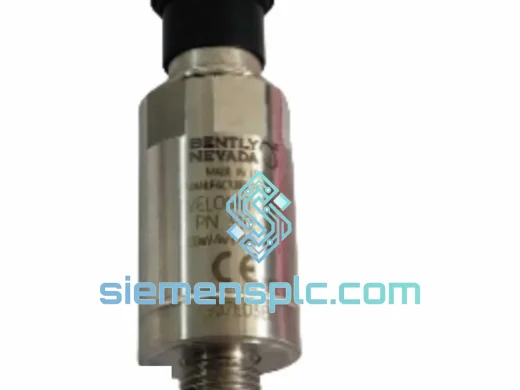
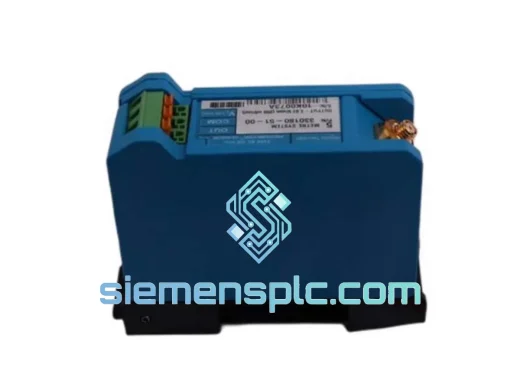
Bently Nevada RS901104-03-050-10-01 Proximitor Sensor – 3300 XL Series
3300 XL
Origin US
Proximitor Sensor
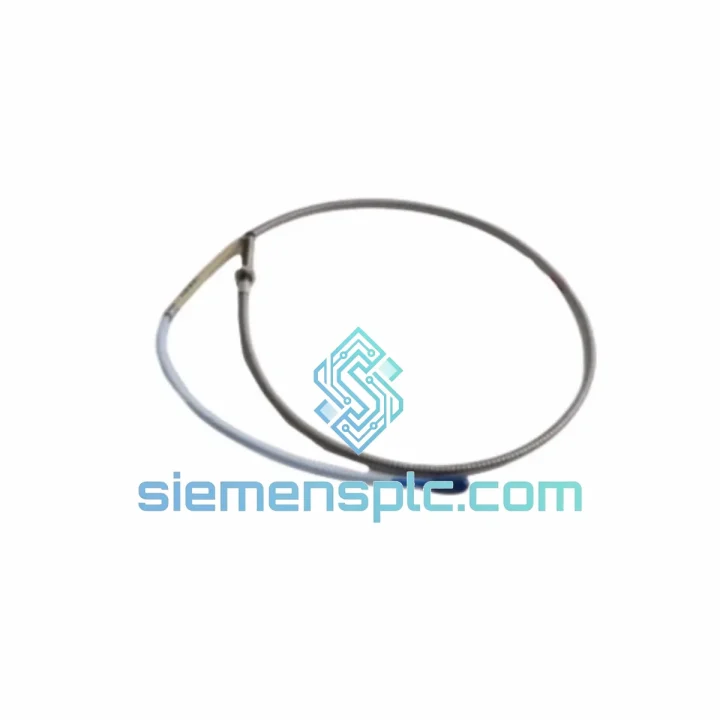
Request verified availability, condition, replacement risk review, packing options and courier lead time for 102244-22-50-01.
Click Request Quote and the part number is inserted into the inquiry form automatically.
Core fields for model confirmation and RFQ routing. Detailed product narrative remains below.
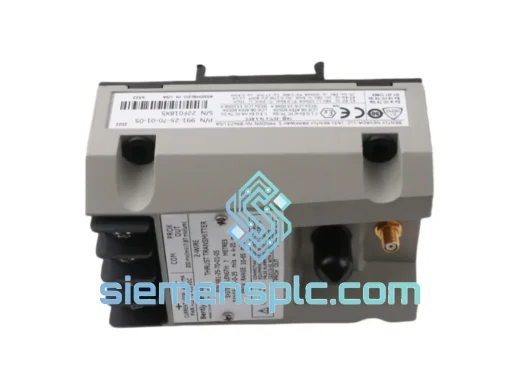
The Bently Nevada 102244-22-50-01 is a two-wire, loop-powered vibration transmitter designed to interface directly with the buffered output of Bently Nevada Proximitor sensors in the 3300 XL and 7200 Series eddy-current measurement chains. Its primary function is to translate the DC-biased, vibration-modulated gap voltage produced by the Proximitor into a standardized 4–20 mA analog current signal, enabling direct termination at DCS, SCADA, or PLC analog input cards without intermediate signal conditioning hardware.
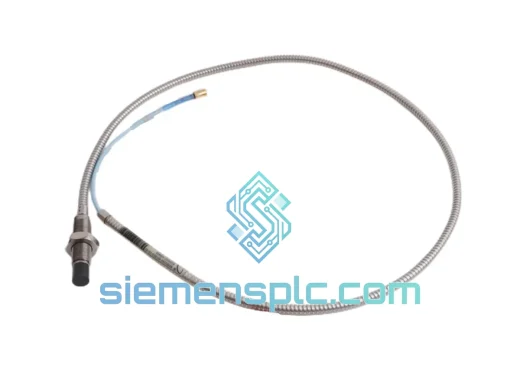
In rotating machinery protection architectures, the proximity probe is installed radially or axially against the shaft journal. The Proximitor sensor drives the probe at a fixed oscillator frequency — typically 200 kHz for 3300 XL 8 mm probes — and outputs a DC voltage proportional to the probe-to-target gap. Shaft vibration modulates this DC level at the rotational frequency and its harmonics. The 102244-22-50-01 accepts this modulated signal, applies a defined transfer function encoded by the -22- and -50- suffix digits, and outputs a 4–20 mA current proportional to the configured vibration range (0–50 mil peak-to-peak full scale for the -50- variant).
The transmitter draws its operating power from the same two-wire loop that carries the measurement signal, eliminating the need for a separate auxiliary supply cable to the field device. This architecture reduces conduit fill, simplifies marshalling cabinet wiring, and lowers the total installed cost per measurement point compared to three-wire or four-wire transmitter configurations. The loop operates from an 18–30 VDC supply, with a maximum allowable loop resistance of 600 Ω at 24 VDC — a budget that must account for cable resistance, IS barrier resistance where applicable, and DCS analog input impedance.
This transmitter is specified by rotating equipment engineers and reliability teams in power generation, oil and gas, petrochemical refining, and heavy process industries where continuous shaft vibration data must be integrated into a plant DCS historian or safety instrumented system without deploying a full Bently Nevada 3500 Series rack at every measurement point. It provides a cost-proportionate monitoring solution for auxiliary machinery trains — boiler feed pumps, cooling water pumps, compressor auxiliaries — where the economics of a dedicated rack-mounted monitor are not justified by the number of measurement points per machine.
Real-time Stock & RFQ: [email protected] | WhatsApp: +86 18359268345
| Parameter | Specification |
|---|---|
| Part Number | 102244-22-50-01 |
| Manufacturer | Bently Nevada (Baker Hughes) |
| Product Series | 3300 XL / 7200 Series Compatible Vibration Transmitter |
| Output Signal | 4–20 mA, two-wire loop-powered |
| Input Signal | Bently Nevada Proximitor buffered output; nominal gap voltage -18 VDC; sensitivity -200 mV/mil (3300 XL 8 mm probe) |
| Input Range Suffix (-22-) | Encodes input scaling matched to specific Proximitor model and probe sensitivity |
| Output Range Suffix (-50-) | 0–50 mil peak-to-peak full scale mapped to 4–20 mA |
| Measurement Type | Radial shaft vibration (displacement, pk-pk); axial position monitoring |
| Supply Voltage | 18–30 VDC (loop-powered, no auxiliary supply required) |
| Maximum Loop Resistance | ≤ 600 Ω at 24 VDC supply |
| Fault Output State | Below 3.6 mA or above 21 mA (hardware fault indication, DCS-detectable) |
| Operating Temperature | −40 °C to +85 °C |
| Storage Temperature | −55 °C to +100 °C |
| Enclosure Rating | IP66 / NEMA 4X |
| Hazardous Area Certification | ATEX / IECEx / FM (zone and division per revision suffix) |
| Mounting | DIN rail or panel mount |
| Connector Type | Screw-clamp terminal block |
| Weight | Approx. 100 g (module only) |
| Warranty | 12 months from date of shipment |
The internal signal chain of the 102244-22-50-01 can be decomposed into three functional stages: input reception and scaling, analog conversion, and output drive. Each stage has specific design characteristics that determine measurement accuracy, EMC immunity, and fault behavior under abnormal operating conditions.
Input Reception and Suffix-Encoded Scaling: The -22- suffix in the part number encodes the input range and scaling coefficients applied to the incoming Proximitor signal. These coefficients define the voltage-to-displacement transfer function used by the transmitter’s analog front end. A mismatch between the transmitter’s encoded scaling and the actual Proximitor model in the field produces a span error that is proportional across the full 4–20 mA output range — it will not manifest as a zero offset but as a gain error, making it detectable only by comparing the transmitter output against a known reference displacement at two or more points. Engineers commissioning this transmitter must verify the -22- suffix against the Proximitor model number and probe sensitivity specification before loop calibration.
Analog Conversion and Temperature Stability: The voltage-to-current conversion is performed by a precision analog circuit with low temperature coefficient components. The design maintains output accuracy across the full −40 °C to +85 °C operating range without field recalibration under normal service conditions. Drift over the operating temperature range is controlled by component selection rather than active compensation, which eliminates the failure mode associated with temperature compensation circuits in harsh environments.
EMC Design and Common-Mode Rejection: Rotating machinery environments present conducted and radiated interference from variable frequency drives, high-current motor cables, and RF emissions from wireless instrumentation. The transmitter housing provides shielded enclosure attenuation, and internal filtering on both input and output circuits suppresses conducted interference. The two-wire loop architecture provides inherent common-mode noise rejection when the loop shield is grounded at a single point — typically at the DCS analog input card — preventing ground loop currents from introducing measurement error. Engineers must verify single-point grounding of the cable shield during installation; dual-point grounding of the shield creates a ground loop that degrades common-mode rejection.
Hazardous Area Compliance Architecture: The -01 suffix denotes the standard non-intrinsically-safe variant. For Zone 1 or Division 1 installations, the transmitter must be used in conjunction with a certified IS barrier or galvanic isolator installed in the safe area. The barrier limits the energy available at the transmitter terminals to below the ignition threshold for the applicable gas group. Engineers must verify that the barrier’s entity parameters (Voc, Isc, Ca, La) are compatible with the transmitter’s input entity parameters before installation in classified areas. Intrinsically safe variants of this transmitter carry different suffix codes and must be ordered separately.
Fault State Output Logic: A disconnected or failed Proximitor drives the transmitter input outside its valid operating range. The transmitter responds by driving the output current to a defined fault state — below 3.6 mA or above 21 mA depending on the failure mode — which the DCS analog input module can detect as a hardware fault distinct from a process alarm. This diagnostic transparency allows the control system to differentiate between a genuine high-vibration condition and a sensor or wiring fault, reducing unnecessary machinery trips and accelerating fault isolation during maintenance.
Every Bently Nevada 102244-22-50-01 unit dispatched by siemensplc.com passes a structured incoming inspection protocol before it enters available stock. Inspection covers part number verification against the physical label and original manufacturer packaging, terminal block and connector integrity, housing condition, and — where bench test equipment is available — functional verification of the 4–20 mA output at defined input signal levels using a calibrated signal source.
Traceability documentation is retained for each unit, including original manufacturer packaging, date codes, and certificates of conformance where available from the supply chain. Units are graded by condition — New Surplus, Refurbished, or Used-Tested — and the applicable grade is confirmed in writing at the time of quotation. A 12-month warranty covering functional performance applies from the date of shipment, with replacement or credit issued for units that fail to perform within specification under normal operating conditions.
Logistics operations are based in Xiamen, China, a major port city with established air freight connections to international hubs including Hong Kong, Singapore, Dubai, Frankfurt, and Los Angeles. Standard export documentation — commercial invoice, packing list, and certificate of origin — is prepared for all international shipments. DDP and DAP Incoterms are available for most destinations. Plant shutdown and emergency procurement requirements are handled on a priority basis, with same-day quotation response and next-available-flight dispatch where confirmed stock is available. Export compliance screening is applied to all orders in accordance with applicable trade regulations.
Email: [email protected]
WhatsApp: +86 18359268345
Web: siemensplc.com
Location: Xiamen, China
© 2026 siemensplc.com. All rights reserved.
We check the full part number, brand, series and visible nameplate information before quotation.
Sales confirms stock path, condition option, quantity and realistic lead time for export dispatch.
DHL, FedEx, UPS or buyer courier arrangements can be reviewed with packing requirements.
Similar brand or category products for fast comparison and multi-item RFQ lists.