WAGO
In Stock OK
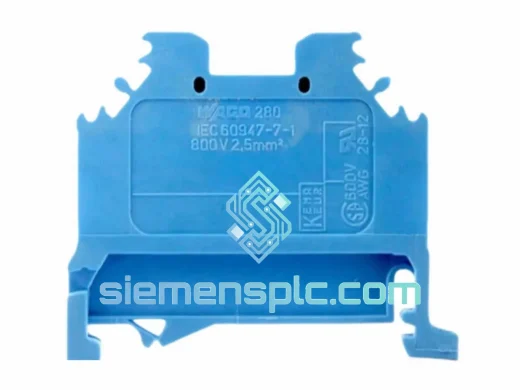
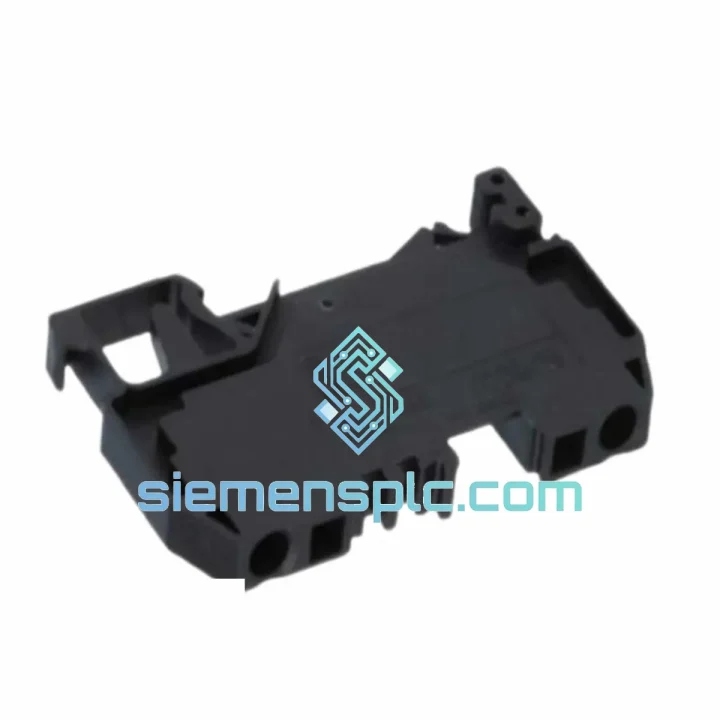
WAGO 280-905 Feed-Through Terminal Block
Request verified availability, condition, replacement risk review, packing options and courier lead time for 280-905.
BrandWAGO
Part Number280-905
ConditionAvailability Check
Lead TimeRFQ Confirmation
DocumentsDatasheet / photos by RFQ
ShippingExport packing available
Auto-filled RFQ
280-905
Click Request Quote and the part number is inserted into the inquiry form automatically.
- Reply by email: [email protected]
- WhatsApp / Tel: +86 18359268345
- Mon-Sat 9:00-18:00 GMT+8
Procurement Data
Key Product Information
Core fields for model confirmation and RFQ routing. Detailed product narrative remains below.
- Brand
- WAGO
- Primary Part Number
- 280-905
- Product Type
- Terminal Block
- Product Family
- Other series
- Manufacturer
- WAGO
- Country of Origin
- DE
- Catalog Category
- Industrial Automation Spares
- Operating Temp.
- −50 °C to +85 °C
- Compliance
- IEC 60947-7-1 / UL 508 / CSA C22.2
Model confirmed for inquiry
280-905
Send quantity, destination and urgency. The RFQ form keeps this part number attached.
Request Quote
Product Overview
WAGO 280-905: Stop the Clock on Your Downtime — Ship Today from Xiamen
Your panel is down. The line is stopped. Every hour without a functioning terminal strip is money bleeding out of the operation. The WAGO 280-905 feed-through terminal block is a precision-engineered component — and when it fails or gets damaged during a rewire, there is no acceptable substitute for speed. We stock the 280-905 in Xiamen and dispatch same-day via DHL Express or FedEx International Priority. From our warehouse shelf to your panel in 48–72 hours, anywhere in the world.
This is not a catalog page. This is a field-ready sourcing resource written by engineers who have pulled failed terminal blocks off DIN rails at 2 AM. If you need it, we have it. If you need it fast, we ship it faster.
URGENT REQUIREMENT? Contact: [email protected] | WhatsApp: +86 18359268345
Quick Technical Datasheet
| Parameter | Specification |
|---|---|
| Manufacturer | WAGO |
| Part Number | 280-905 |
| Series | 280 Series |
| Terminal Type | Feed-Through (Through Terminal Block) |
| Connection Technology | CAGE CLAMP® (spring-clamp, tool-free) |
| Rated Voltage | 400 V AC/DC |
| Rated Current | 16 A |
| Conductor Cross-Section | 0.08–4 mm² (AWG 28–12) |
| Conductor Types Accepted | Solid, stranded, fine-stranded (with ferrule) |
| Mounting | DIN 35 rail (EN 60715) |
| Housing Color | Grey |
| Degree of Protection | IP20 |
| Operating Temperature | −50 °C to +85 °C |
| Compliance | IEC 60947-7-1 / UL 508 / CSA C22.2 |
| Origin | Germany |
| Stock Status | ✅ Ready to Ship — Xiamen Warehouse |
Troubleshooting & Replacement Tips
The 280-905 fails in predictable ways. Here is what field experience actually looks like:
Failure Mode 1 — Cracked Housing from Over-Torque or Impact
The CAGE CLAMP® housing is polycarbonate. A dropped screwdriver or a technician forcing a screw-type tool into the spring actuator will crack the body. Visual inspection is enough — if the housing is cracked, replace the block. Do not tape it. Do not leave it. A cracked housing in a 400 V circuit is a fire risk.
Failure Mode 2 — Spring Fatigue After Repeated Re-Wiring
The CAGE CLAMP® spring is rated for thousands of insertion cycles, but in high-churn environments (frequent field modifications, commissioning loops), the spring tension degrades. Symptom: wire pulls out with less than 20 N force, or intermittent continuity on a circuit that should be solid. Test with a calibrated pull-force gauge. If below spec, replace the terminal — do not re-crimp and hope.
Failure Mode 3 — Oxidation on Fine-Stranded Conductors Without Ferrules
In humid environments (coastal plants, food processing, chemical facilities), fine-stranded copper without ferrules oxidizes at the contact point inside the CAGE CLAMP®. Resistance creeps up. You will see this as a warm terminal block during thermal imaging or as a voltage drop across a circuit that should be lossless. Fix: replace the terminal block and re-terminate with properly crimped DIN 46228-4 ferrules.
Replacement Procedure — Step by Step
- Step 1: De-energize the circuit. Verify with a calibrated multimeter. Lock out / tag out per your site procedure. The 280-905 is rated 400 V — treat it accordingly.
- Step 2: Photograph the existing wiring before removal. Label every conductor with a wire marker or cable flag. The 280 series does not have built-in marking — use WAGO 280-series marker cards or equivalent.
- Step 3: Open the CAGE CLAMP® using a 2.5 mm flat-blade screwdriver or WAGO operating tool (part 210-119). Insert into the actuator slot — do not pry the housing. Pull the conductor straight out.
- Step 4: Slide the failed terminal block off the DIN rail. Note its position relative to adjacent terminals — the 280 series can be combined with ground (280-907), fuse, and disconnect variants. Maintain the assembly sequence.
- Step 5: Snap the new 280-905 onto the DIN rail. Verify it seats fully — you should hear a positive click from the rail locking tab.
- Step 6: Re-insert conductors. For fine-stranded wire, use ferrules. Strip length: 8–9 mm. Insert fully into the CAGE CLAMP® port, release the actuator. Perform a pull-force check — minimum 20 N for 1.5 mm² conductors.
- Step 7: Re-energize, verify continuity and voltage at the terminal. Document the replacement in your maintenance log with date, technician ID, and new part serial/date code.
Configuration Note: The 280-905 is a passive feed-through terminal — there are no DIP switches, address settings, or firmware considerations. However, if you are replacing a terminal in a mixed 280-series strip that includes disconnect or fuse variants, verify the replacement position matches the original function. A grey 280-905 installed where a red 280-907 ground terminal should be is a wiring error that will not be obvious until the next fault.
Reliability in Harsh Conditions
The WAGO 280 series was not designed for a climate-controlled server room. It was designed for the floor — the actual factory floor, with vibration from presses and conveyors, temperature swings from furnace proximity, and humidity from wash-down cycles in food and beverage plants.
The CAGE CLAMP® spring-clamp connection is inherently vibration-resistant. Unlike screw terminals, which require periodic re-torquing as thermal cycling loosens the clamping force, the spring-clamp maintains constant contact pressure regardless of temperature variation. This is not a marketing claim — it is the physical reason that spring-clamp terminals are specified in railway (EN 50155), automotive manufacturing, and offshore applications where screw terminals are explicitly prohibited.
The polycarbonate housing of the 280-905 is rated for continuous operation from −50 °C to +85 °C. In practice, this means it survives cold-start conditions in unheated outdoor enclosures in northern climates and sustained elevated temperatures in panels mounted near heat-generating equipment. The IP20 rating covers the terminal block itself — the enclosure provides the environmental protection for the overall installation.
Vibration testing per IEC 60068-2-6 confirms the 280-905 maintains electrical continuity under sinusoidal vibration profiles representative of industrial machinery. If your application involves continuous vibration above 5g, verify your conductor termination method — ferrule-terminated fine-stranded wire outperforms solid wire in high-vibration environments due to better fatigue resistance at the termination point.
Humidity and condensation: the CAGE CLAMP® contact is tin-plated copper alloy. In environments with sustained high humidity or condensation cycles, ensure the panel enclosure provides adequate protection. The terminal block itself is not the weak point — the conductor insulation and ferrule crimp quality are the variables that determine long-term reliability in wet environments.
Global Express Logistics
Our Xiamen warehouse operates on a same-day dispatch model for orders confirmed before 15:00 CST. Here is exactly how your shipment moves:
- Order Confirmation: You contact us via email or WhatsApp with your quantity and delivery address. We confirm stock, issue a proforma invoice, and receive payment. For established accounts, we ship on open terms.
- Same-Day Packing: The 280-905 units are pulled from bonded stock, inspected for packaging integrity and date code, and packed in anti-static bubble wrap inside a rigid outer carton. Each shipment includes a packing list and, on request, a certificate of conformity.
- Carrier Selection: DHL Express Worldwide is our primary carrier for most destinations — typical transit time 1–3 business days to Europe, 2–4 days to North America, 1–2 days to Southeast Asia. FedEx International Priority is available as an alternative. For shipments to destinations with DHL service restrictions, we route via TNT or UPS.
- Customs Documentation: We prepare commercial invoice, packing list, and HS code declaration (HS 8536.90 for terminal blocks) for all international shipments. For DDP (Delivered Duty Paid) shipments, we handle import duty and VAT on your behalf — you receive the parts, we handle the paperwork.
- Tracking: A tracking number is sent to your email within 2 hours of dispatch. We monitor all express shipments and proactively notify you of any customs holds or carrier delays.
- Emergency Protocol: If your line is down and you need parts in under 24 hours to a major hub city, contact us directly on WhatsApp. We have access to same-day courier options for critical situations — the cost is higher, but it is less than another day of downtime.
Contact Information
Email: [email protected]
WhatsApp: +86 18359268345
Web: siemensplc.com
© 2026 siemensplc.com. All rights reserved.
Ready to quote
[email protected]
Send This Part Number to Sales
RFQ workflow
Quality workflow ->
Confirmation Process
01Model confirmation
We check the full part number, brand, series and visible nameplate information before quotation.
02Availability reply
Sales confirms stock path, condition option, quantity and realistic lead time for export dispatch.
03Packing & courier
DHL, FedEx, UPS or buyer courier arrangements can be reviewed with packing requirements.
Continue sourcing
Browse full catalog ->
Related Automation Parts
Similar brand or category products for fast comparison and multi-item RFQ lists.