Siemens
RFQ Ready
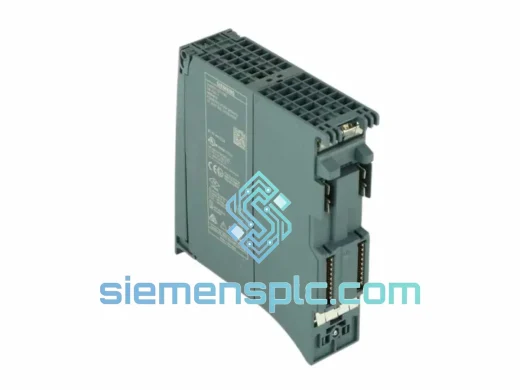
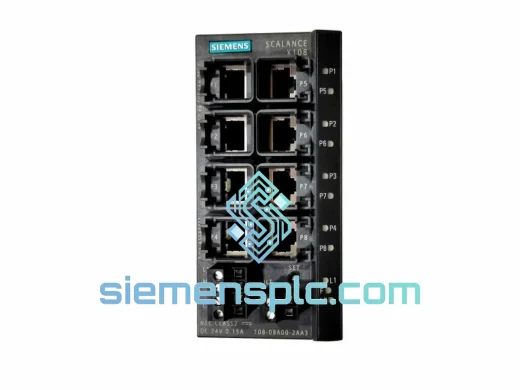
SIEMENS 6GK5108-0BA00-2AA3 Industrial Ethernet Switch
SIMATIC
Origin DE
Industrial Ethernet Switch
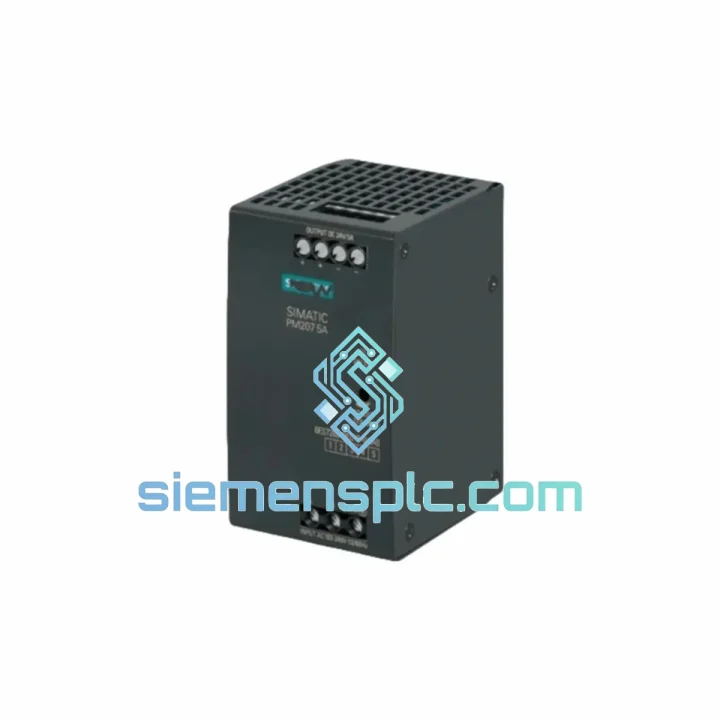
Request verified availability, condition, replacement risk review, packing options and courier lead time for 6ES7288-0ED10-0AA0.
Click Request Quote and the part number is inserted into the inquiry form automatically.
Core fields for model confirmation and RFQ routing. Detailed product narrative remains below.
The 6ES7288-0ED10-0AA0 is a CPU module within the SIMATIC S7-200 SMART product family, a platform Siemens developed specifically for cost-sensitive yet performance-demanding small-scale automation. This unit integrates 24 digital inputs (24 V DC, sink/source) and 16 digital relay outputs on a single substrate, eliminating the need for a separate base I/O expansion in the majority of standalone machine applications. The onboard PROFINET port operates at 10/100 Mbit/s and supports simultaneous Modbus TCP, USS, and Modbus RTU communication stacks — a capability that allows the CPU to serve as both a field-level controller and a gateway node without additional hardware.
The processor executes a Boolean instruction in approximately 0.15 µs, with a program memory capacity of 24 KB and a data memory block of 10 KB. Retentive memory (10 KB) is maintained through an integrated supercapacitor buffer, preserving critical process variables across unplanned power interruptions without requiring an external battery module. Four high-speed counter channels operate at up to 200 kHz, and three pulse-train output channels deliver up to 100 kHz — parameters that position this CPU for stepper-motor indexing, encoder-based positioning, and high-frequency counting tasks that would otherwise require a dedicated motion controller.
The supply voltage range is 20.4–28.8 V DC, providing a ±15% tolerance band around the nominal 24 V DC rail — a design margin that accommodates the voltage droop common in long cable runs and shared DC bus architectures. The unit draws a maximum of 7 W from the 24 V supply under full I/O load, making it compatible with compact SITOP PSU100S or equivalent 10 W DIN-rail power supplies without thermal derating.
Programming is performed exclusively through STEP 7-Micro/WIN SMART V2.x, which communicates with the CPU over standard RJ-45 Ethernet — no proprietary programming cable or MPI adapter is required. The IDE supports Ladder Diagram (LAD), Function Block Diagram (FBD), and Statement List (STL) editors, and includes an integrated motion wizard for configuring the pulse-train outputs in open-loop stepper applications. Firmware updates are delivered over the same Ethernet interface using the STEP 7-Micro/WIN SMART firmware update utility.
At siemensplc.com, every 6ES7288-0ED10-0AA0 unit is sourced through verified supply channels, inspected against Siemens factory label and serial-number standards, and dispatched from our Xiamen, China facility with full commercial documentation. Stock is maintained for immediate dispatch on standard orders, and bulk procurement inquiries receive a proforma invoice within one business day.
Real-time Stock & RFQ: [email protected] | WhatsApp: +86 18359268345
| Parameter | Value |
|---|---|
| Part Number (SKU) | 6ES7288-0ED10-0AA0 |
| Product Family | SIMATIC S7-200 SMART |
| Module Category | CPU with Integrated I/O |
| Digital Inputs | 24 × DI, 24 V DC, IEC Type 1 sink/source |
| Digital Outputs | 16 × DO, Relay, 2 A per point, 10 A common |
| Supply Voltage | 24 V DC (20.4–28.8 V DC operating range) |
| Power Consumption | ≤ 7 W at full I/O load |
| Program Memory | 24 KB |
| Data Memory | 10 KB |
| Retentive Memory | 10 KB (supercapacitor-backed, no battery) |
| Boolean Execution Time | ~0.15 µs per instruction |
| High-Speed Counters | 4 channels × 200 kHz max |
| Pulse-Train Outputs (PTO/PWM) | 3 channels × 100 kHz max |
| Integrated Communication Port | 1 × PROFINET (RJ-45, 10/100 Mbit/s) |
| Supported Protocols | PROFINET, Modbus TCP, Modbus RTU, USS |
| Programming Software | STEP 7-Micro/WIN SMART V2.x |
| Programming Languages | LAD, FBD, STL |
| Firmware Version | V2.x compatible |
| Mounting | DIN rail (EN 60715 TH35) |
| Operating Temperature | 0 °C to +55 °C |
| Storage Temperature | −40 °C to +70 °C |
| Relative Humidity | 5–95%, non-condensing |
| Protection Class | IP20 |
| Weight | 700 g |
| Certifications | CE, UL, RoHS |
| Country of Origin | Germany |
| Warranty | 12 months from dispatch date |
The 6ES7288-0ED10-0AA0 employs a galvanically isolated input front-end on all 24 digital input channels. Each input passes through an optocoupler stage rated at 5 mA nominal input current, providing a minimum 500 V AC isolation barrier between field wiring and the CPU backplane logic. This architecture suppresses common-mode transients generated by inductive loads — motor contactors, solenoid valves, and relay coils — that would otherwise couple noise into the logic bus and cause spurious interrupt events on the high-speed counter channels.
The relay output stage uses electromechanical relays with bifurcated gold-flashed contacts, rated at 2 A resistive per point and a mechanical endurance of 10 million operations. The bifurcated contact geometry maintains reliable continuity at low-current signal loads (as low as 5 mA at 5 V DC), which is significant in applications where the relay output drives a PLC input on a downstream device rather than a power load. Output commons are grouped in banks of 8, allowing mixed-voltage loads (24 V DC, 120 V AC, 230 V AC) to coexist on the same CPU without an external relay interface module.
The PROFINET stack is implemented in a dedicated communication ASIC separate from the main application processor. This hardware partitioning ensures that network traffic — including Modbus TCP polling from SCADA systems — does not consume application CPU cycles or introduce jitter into the scan cycle. The result is a deterministic scan time that remains stable regardless of network load, a property critical in motion-control and PID-loop applications where scan-cycle variation directly affects control accuracy.
The supercapacitor retentive memory buffer provides a hold-up time of approximately 100 hours at 25 °C ambient, sufficient to bridge planned maintenance shutdowns without data loss. Unlike lithium battery backup solutions, the supercapacitor requires no periodic replacement and is not subject to transport restrictions under IATA dangerous goods regulations — a logistical advantage for international spare-parts shipments.
EMC performance is achieved through a combination of multi-layer PCB ground-plane shielding, ferrite bead filtering on all I/O signal lines, and a metal housing that provides a Faraday cage effect. The unit is tested to EN 61000-4-2 (ESD, 4 kV contact / 8 kV air), EN 61000-4-4 (EFT, 2 kV), and EN 61000-4-5 (surge, 1 kV line-to-line / 2 kV line-to-earth), meeting the requirements of the IEC 61131-2 standard for programmable controllers used in industrial environments.
Every 6ES7288-0ED10-0AA0 unit dispatched from siemensplc.com is a genuine Siemens product sourced through verified supply channels. Prior to dispatch, each unit undergoes a structured inspection protocol: factory label and serial-number format verification against Siemens published standards, housing integrity check, firmware version confirmation, and a functional power-on test with Ethernet port communication verification. Units that do not pass all four checkpoints are quarantined and not offered for sale.
Our warehouse is located in Xiamen, China — a major export hub with direct access to DHL Express, FedEx International Priority, and UPS Worldwide Expedited services. Standard orders ship within 1–2 business days of payment confirmation. Typical transit times are 3–5 business days to Europe and North America via express courier. Bulk orders can be consolidated for sea freight with full commercial invoice, packing list, and Certificate of Origin documentation provided for customs clearance.
All shipments are packed in anti-static ESD bags within foam-lined cartons, meeting IEC 61340-5-1 electrostatic discharge protection requirements for sensitive electronic assemblies. A 12-month warranty from the dispatch date covers manufacturing defects. Dead-on-arrival units are replaced within the same warranty period upon photographic evidence submission to [email protected].
Email: [email protected]
WhatsApp: +86 18359268345
Web: siemensplc.com
Location: Xiamen, China
© 2026 siemensplc.com. All rights reserved.
We check the full part number, brand, series and visible nameplate information before quotation.
Sales confirms stock path, condition option, quantity and realistic lead time for export dispatch.
DHL, FedEx, UPS or buyer courier arrangements can be reviewed with packing requirements.
Similar brand or category products for fast comparison and multi-item RFQ lists.