Siemens
RFQ Ready
Siemens 6ES7467-5GJ02-0AB0 PLC Interface Module
SIMATIC S7-400
Origin DE
PLC Interface Module
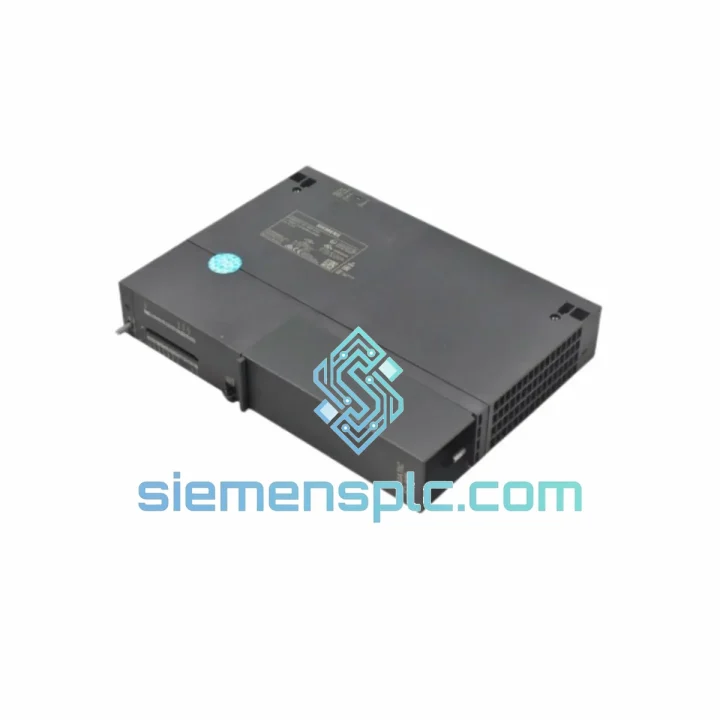
Request verified availability, condition, replacement risk review, packing options and courier lead time for 6ES7414-4HM14-0AB0.
Click Request Quote and the part number is inserted into the inquiry form automatically.
Core fields for model confirmation and RFQ routing. Detailed product narrative remains below.
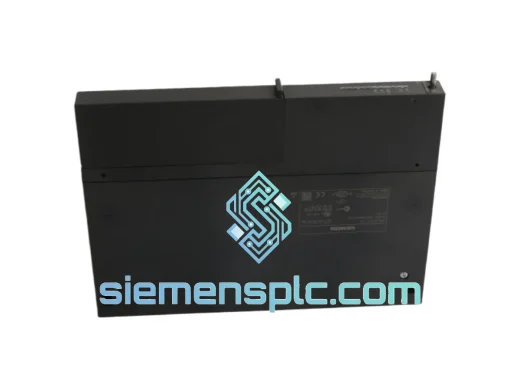
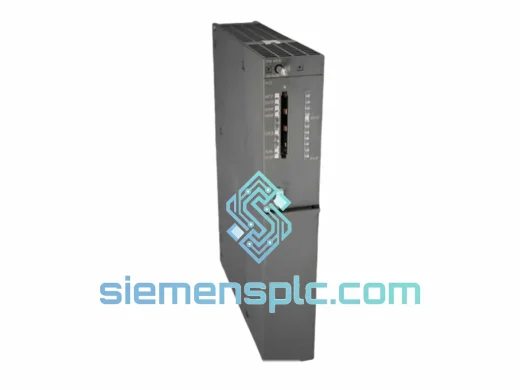
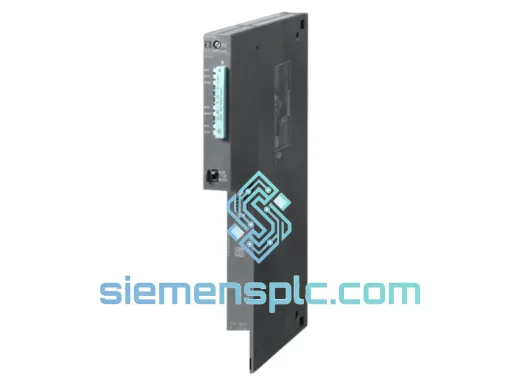
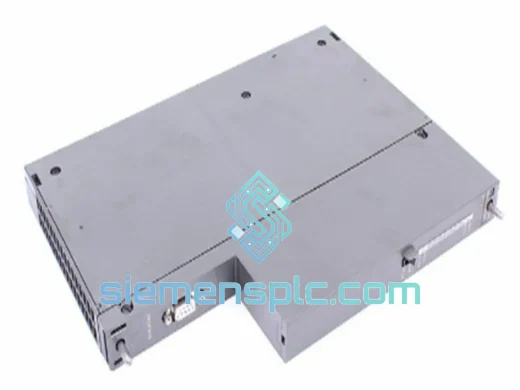
The Siemens 6ES7414-4HM14-0AB0 is the CPU 414-4H central processing unit within the SIMATIC S7-400H high-availability controller platform. Its primary function in a control loop is to execute the user program on two physically separate CPUs simultaneously — both processors run the identical program cycle in lock-step synchronization via fiber-optic H-sync links, so that if one CPU or its associated rack encounters a hardware fault, the partner CPU assumes sole control within a bumpless switchover window of less than 100 milliseconds. This architecture eliminates the single point of failure inherent in standard simplex PLC configurations, making the 6ES7414-4HM14-0AB0 the correct choice for continuous processes where an unplanned stop carries measurable financial or safety consequences.
Within the S7-400 product hierarchy, the CPU 414-4H sits at the intersection of processing capacity and redundancy capability. Its 4 MB work memory (2 MB code + 2 MB data) accommodates large structured control programs with multiple PID loops, sequential function charts, and extensive diagnostic routines without memory pressure. The integrated PROFIBUS DP master interface — operating at up to 12 Mbit/s — connects directly to distributed I/O stations, variable-speed drives, and intelligent field devices across the plant floor, while the MPI port serves as the programming and HMI communication channel. Two dedicated sync submodule slots accept the 6ES7960-series fiber-optic coupling modules that form the physical H-sync backbone between the two redundant racks.
Real-time Stock & RFQ: [email protected] | WhatsApp: +86 18359268345
| Parameter | Value |
|---|---|
| Order Number (SKU) | 6ES7414-4HM14-0AB0 |
| Product Series | SIMATIC S7-400H / S7-400F/FH |
| CPU Designation | CPU 414-4H |
| Work Memory | 4 MB (2 MB code + 2 MB data) |
| Load Memory (integrated) | 512 KB RAM |
| Load Memory (max. with card) | 64 MB (via 6ES7952-series Flash Card) |
| Binary Instruction Execution Time | 0.1 µs |
| Floating-Point Instruction Time | 0.3 µs |
| Max. I/O Address Space | 16 KB inputs / 16 KB outputs |
| Counters / Timers | 2048 / 2048 |
| Data Blocks | Max. 8191 DBs, up to 64 KB each |
| MPI/PROFIBUS DP Interface | 1× combined port, max. 12 Mbit/s |
| Integrated PROFIBUS DP Master | 1× port, max. 12 Mbit/s, up to 125 slaves |
| H-Sync Submodule Slots | 2× (accepts 6ES7960-1AA04-0XA0) |
| Redundancy Architecture | 1-of-2 hot-standby, switchover <100 ms |
| Supply Voltage | 24 V DC (via S7-400 backplane bus) |
| Current Consumption (5 V bus) | max. 2.0 A |
| Operating Temperature | 0 °C to +60 °C |
| Storage Temperature | -40 °C to +70 °C |
| Relative Humidity | 10–95%, non-condensing |
| Dimensions (W × H × D) | 50 × 290 × 219 mm |
| Weight | approx. 980 g |
| Degree of Protection | IP20 |
| Certifications | CE, UL, cULus, ATEX Zone 2, IECEx |
| Safety Integrity Level | SIL 2 / SIL 3 (in F/FH configuration) |
| Warranty | 12 months from dispatch date |
The 6ES7414-4HM14-0AB0 implements a 1-of-2 (1oo2) hot-standby architecture at the backplane bus level. Both CPUs — installed in separate UR2-H racks — execute the identical OB/FB/FC call hierarchy within the same program scan cycle. Synchronization is maintained through the H-sync fiber-optic link (plastic optical fiber, 1 mm POF, max. 10 m; or glass fiber up to 10 km with appropriate modules), which carries a continuous data-consistency checksum between the two processors. The sync protocol operates at the end of each scan cycle: if the checksum comparison passes, both CPUs advance to the next cycle; if a discrepancy is detected, the system identifies the faulty CPU and isolates it before the next output update — ensuring that no corrupted output state is ever written to the process.
The backplane bus of the S7-400 rack uses a parallel P-bus and serial K-bus architecture. The P-bus (parallel peripheral bus) handles high-speed I/O data exchange between the CPU and local I/O modules at cycle-synchronous transfer rates, while the K-bus (communication bus) manages configuration, diagnostic, and parameter data. The CPU 414-4H arbitrates both buses simultaneously, with the P-bus transfer completing within a single CPU cycle to guarantee deterministic I/O latency. This dual-bus design prevents I/O communication overhead from interfering with the main program execution time.
From an EMC design perspective, the S7-400H rack and CPU module comply with EN 61000-6-2 (industrial immunity) and EN 61000-6-4 (industrial emissions). The CPU’s internal power regulation uses isolated DC/DC conversion referenced to the backplane ground plane, and all external communication interfaces — MPI, PROFIBUS DP — are galvanically isolated via optocoupler stages rated at 500 V AC isolation voltage. The fiber-optic H-sync link inherently provides galvanic isolation between the two redundant racks, eliminating ground loop interference as a failure mode in the synchronization path. The module housing is a die-cast aluminum front panel with EMC gasket sealing at the rack slot interface, providing shielding continuity across the rack assembly.
The PROFIBUS DP master integrated into the CPU 414-4H uses a dedicated ASIC (Application-Specific Integrated Circuit) for fieldbus protocol handling, offloading token-ring management, slave polling, and diagnostic collection from the main CPU core. This means PROFIBUS cycle time does not directly consume CPU processing bandwidth — the ASIC handles bus arbitration autonomously and presents the I/O image to the CPU as a memory-mapped data block updated at the configured DP cycle rate. For a network of 64 slaves at 12 Mbit/s, the DP cycle time is typically 2–5 ms, well within the deterministic response requirements of most process control loops.
Every Siemens 6ES7414-4HM14-0AB0 unit dispatched from our Xiamen, China facility is a genuine Siemens-manufactured module sourced through traceable supply channels. Before shipment, each unit undergoes a structured inspection sequence: physical label and part number verification against Siemens product documentation, housing and connector integrity check, power-on functional test with firmware version confirmation, and ESD-safe packaging in anti-static bag with foam-lined export carton. A 12-month warranty from dispatch date covers manufacturing defects and functional failures under normal operating conditions.
Logistics from Xiamen port to major industrial hubs: DHL Express to Germany (Frankfurt) typically 3–5 business days; to the United States (Chicago, Houston) 4–6 business days; to Singapore and Southeast Asia 2–3 business days; to the Middle East (Dubai) 3–4 business days. FedEx and UPS options are available for time-critical orders. All shipments include a commercial invoice, packing list, and certificate of origin. Export classification and customs documentation are prepared in compliance with applicable trade regulations. Volume orders (5+ units) qualify for consolidated freight options with reduced per-unit shipping cost.
Email: [email protected]
WhatsApp: +86 18359268345
Web: siemensplc.com
Location: Xiamen, China
© 2026 siemensplc.com. All rights reserved.
We check the full part number, brand, series and visible nameplate information before quotation.
Sales confirms stock path, condition option, quantity and realistic lead time for export dispatch.
DHL, FedEx, UPS or buyer courier arrangements can be reviewed with packing requirements.
Similar brand or category products for fast comparison and multi-item RFQ lists.