
ABB
In Stock OK
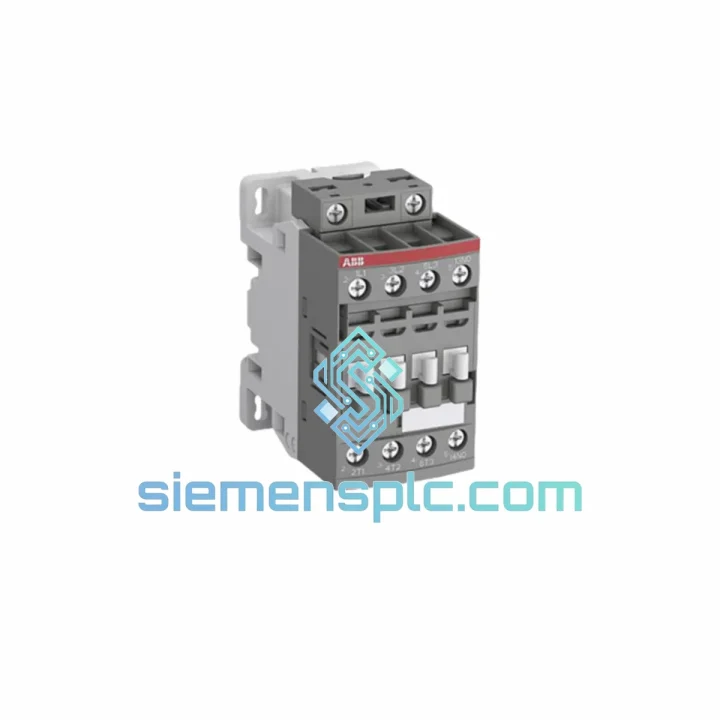
ABB 1SBL157001R1310 Magnetic Contactor
Request verified availability, condition, replacement risk review, packing options and courier lead time for 1SBL157001R1310.
BrandABB
Part Number1SBL157001R1310
ConditionAvailability Check
Lead TimeRFQ Confirmation
DocumentsDatasheet / photos by RFQ
ShippingExport packing available
Auto-filled RFQ
1SBL157001R1310
Click Request Quote and the part number is inserted into the inquiry form automatically.
- Reply by email: [email protected]
- WhatsApp / Tel: +86 18359268345
- Mon-Sat 9:00-18:00 GMT+8
Procurement Data
Key Product Information
Core fields for model confirmation and RFQ routing. Detailed product narrative remains below.
- Brand
- ABB
- Primary Part Number
- 1SBL157001R1310
- Product Type
- Magnetic Contactor
- Series / Family
- 9A 3-Pole 100-250V AC/DC
- Country of Origin
- SE
- Catalog Category
- Relays & Protection
Model confirmed for inquiry
1SBL157001R1310
Send quantity, destination and urgency. The RFQ form keeps this part number attached.
Request Quote
Product Overview
ABB 1SBL157001R1310 AF09-30-10-13 — Stop the Clock on Your Downtime
A failed contactor does not wait for a convenient moment. When the AF09-30-10-13 drops out mid-cycle — whether from coil burnout, contact welding, or mechanical wear — the motor stops, the line stops, and the losses start stacking. At a conservative estimate of $5,000–$15,000 per hour of unplanned downtime in a mid-scale manufacturing environment, every hour spent waiting for a part is money that cannot be recovered. We stock the ABB 1SBL157001R1310 precisely for this scenario: verified genuine, bench-tested, and ready to leave Xiamen on the next available DHL or FedEx flight.
The 1SBL157001R1310 is ABB’s catalog order number for the AF09-30-10-13 — a 9A, 3-pole, IEC-rated low-voltage contactor from the AF Series. Its universal electronic coil (100–250V AC/DC, 50/60 Hz) is the defining feature that makes this part a staple in global MRO inventories: one SKU covers virtually every control voltage scenario you will encounter in the field, from 110V North American panels to 230V European systems. No coil swaps, no cross-referencing headaches at 2 AM.
URGENT REQUIREMENT? Contact: [email protected] | WhatsApp: +86 18359268345
Quick Technical Datasheet
| Parameter | Specification | Status |
|---|---|---|
| Part Number / SKU | 1SBL157001R1310 | ✅ Ready to Ship |
| Model Designation | AF09-30-10-13 | |
| Brand | ABB | |
| Series | AF Series Low Voltage Contactor | |
| Rated Current (AC-3) | 9 A | |
| Rated Power (AC-3, 400V) | 4 kW | |
| Main Poles | 3-pole | |
| Auxiliary Contacts | 1 NO (built-in) | |
| Coil Voltage | 100–250V AC/DC (universal) | |
| Coil Frequency | 50 / 60 Hz | |
| Mounting | 35mm DIN rail / screw | |
| Standard | IEC 60947-4-1 | |
| Electrical Endurance (AC-3) | 10 million operations | |
| Mechanical Endurance | 30 million operations | |
| Ambient Temperature | -25°C to +60°C | |
| Country of Origin | Germany | |
| Weight (packaged) | ~1,240 g |
Troubleshooting & Replacement Tips
After ten years of field work, the failure patterns on the AF09 are predictable. Here is what to check before you pull the unit and what to watch when you install the replacement.
Common Failure Modes:
- Coil burnout / no pull-in: Measure coil resistance across A1–A2. An open circuit or dramatically low resistance (shorted turns) confirms coil failure. On the AF Series, the electronic coil module is not field-replaceable — the entire contactor must be swapped. Verify your control voltage is within the 100–250V AC/DC window before condemning the coil; a 90V supply during a brownout will cause intermittent drop-out that looks like a coil fault.
- Contact welding (won’t open): Caused by sustained overload or fault current through undersized contacts. If the motor runs but the contactor won’t de-energize, do not force the armature mechanically — you risk damaging the frame. De-energize the coil, confirm zero voltage at A1–A2, then check for welded main contacts with a continuity tester. Replace the contactor; welded contacts cannot be safely dressed in the field on a 9A frame.
- Chattering / buzzing: On AC coil versions this typically means low control voltage or a failing rectifier in the coil module. On the AF09’s universal coil, chattering under normal voltage usually points to a loose A1/A2 terminal connection or a failing coil driver circuit. Tighten terminals to 0.8 Nm and retest before replacing.
- Auxiliary contact fault (control circuit drops out): The built-in 1 NO auxiliary is a common failure point in high-cycle applications. Test continuity across 13–14 with the contactor energized. If open, check whether a snap-on auxiliary block (CA5 series) has been added — these have independent failure modes and can be replaced without swapping the main contactor body.
Replacement Procedure — Key Steps:
- Isolate and lock out the motor circuit and control circuit before removal. Verify zero energy with a calibrated meter — do not rely on indicator lights alone.
- Photograph the existing wiring before disconnecting. The AF09 terminal layout is standard, but field modifications are common and photographs save time during re-commissioning.
- Note the control voltage source. The AF09-30-10-13 accepts 100–250V AC/DC — confirm your supply is within range. If the previous unit failed from coil burnout and the supply voltage is at the high end (>250V), investigate the source before installing the replacement.
- Torque main power terminals to 2.5 Nm and auxiliary/coil terminals to 0.8 Nm. Under-torqued terminals are the leading cause of premature contact failure on replacement units.
- No DIP switch or address configuration is required on the AF09 — it is a purely electromechanical device with no firmware or addressing. Unlike some intelligent motor management relays, the AF09 is plug-and-play once wired correctly.
- If adding snap-on auxiliary blocks (CA5-10, CA5-01, CA5-22), ensure they are fully seated and the locking tab clicks before energizing. A partially seated block will cause intermittent auxiliary circuit faults that are difficult to diagnose under load.
- First energization: apply control voltage and listen for a clean, single-click pull-in. Chattering or buzzing on first energization indicates a wiring issue or out-of-range control voltage — do not leave the contactor energized in this state.
Reliability in Harsh Conditions
The AF Series was not designed for a climate-controlled server room. ABB engineered this contactor family for the environments where contactors actually fail — foundry floors, offshore platforms, outdoor pump stations, and food processing facilities where washdown cycles are daily events.
The AF09-30-10-13 carries a rated ambient operating range of -25°C to +60°C, covering everything from unheated Siberian substations in winter to tropical compressor rooms running at full load in August. The electronic coil’s low power consumption (holding power typically under 1W) means the coil itself generates minimal heat, reducing thermal stress on the coil insulation over the unit’s service life — a key advantage over conventional AC coil designs that run hot continuously.
Vibration resistance meets IEC 60068-2-6 test requirements, making the AF09 suitable for mobile equipment, compressor skids, and marine applications where mechanical shock and vibration are constant. The reinforced housing resists deformation under the mechanical stress of repeated high-current switching, and the silver-alloy main contacts are rated for 10 million AC-3 operations — a figure that translates to years of service in high-cycle conveyor or pump applications.
Humidity and condensation are handled by the coil’s conformal coating and the sealed coil module design. In environments where daily temperature swings cause condensation inside panels, the AF09 has a proven track record of outlasting conventional contactors that use open-frame coil assemblies. For extreme humidity applications (tropical coastal, underground mining), we recommend pairing the contactor with a panel heater and thermostat to keep the enclosure above the dew point — but the contactor itself will not be the weak link.
Global Express Logistics
Our warehouse is located in Xiamen, Fujian Province — one of China’s primary export hubs with direct access to Xiamen Gaoqi International Airport and daily consolidated freight departures to DHL and FedEx international gateways in Shanghai and Guangzhou.
For urgent orders confirmed before 14:00 CST, same-day dispatch is standard. Transit times from Xiamen to major industrial regions are typically 2–3 business days to Southeast Asia, 3–5 days to Europe and the Middle East, and 4–6 days to North and South America via DHL Express or FedEx International Priority. Every shipment includes a full commercial invoice, packing list, and certificate of origin — the documentation your customs broker needs to clear the shipment without delays.
For customers in regions with complex import requirements (Brazil, India, Russia, Turkey), we have established freight forwarding relationships and can advise on HS code classification (typically 8536.49 for contactors rated ≤1000V) and duty optimization strategies. We do not ship via postal services for industrial components — every order moves on a tracked express courier with real-time visibility and a dedicated account manager for escalation if a shipment is held at customs.
Volume orders (10+ units) qualify for consolidated packing to reduce dimensional weight charges. Contact us before placing a large order and we will quote the most cost-effective shipping configuration for your destination.
Contact Information
📧 Email: [email protected]
💬 WhatsApp: +86 18359268345
🌐 Web: siemensplc.com
© 2026 siemensplc.com. All rights reserved.
Ready to quote
[email protected]
Send This Part Number to Sales
RFQ workflow
Quality workflow ->
Confirmation Process
01Model confirmation
We check the full part number, brand, series and visible nameplate information before quotation.
02Availability reply
Sales confirms stock path, condition option, quantity and realistic lead time for export dispatch.
03Packing & courier
DHL, FedEx, UPS or buyer courier arrangements can be reviewed with packing requirements.
Continue sourcing
Browse full catalog ->
Related Automation Parts
Similar brand or category products for fast comparison and multi-item RFQ lists.
ABB
RFQ Ready
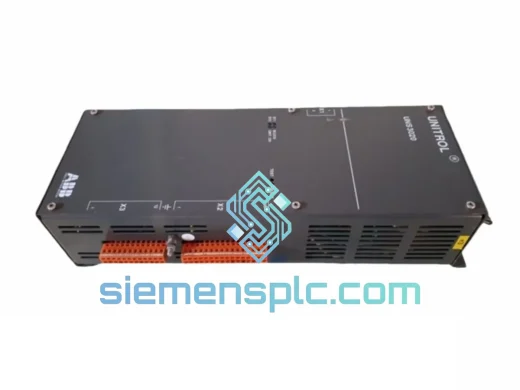
ABB UNS3020A-Z HIEE205010R0001 Ground Fault Relay
UNITROL
Origin SE
Ground Fault Relay
ABB
RFQ Ready
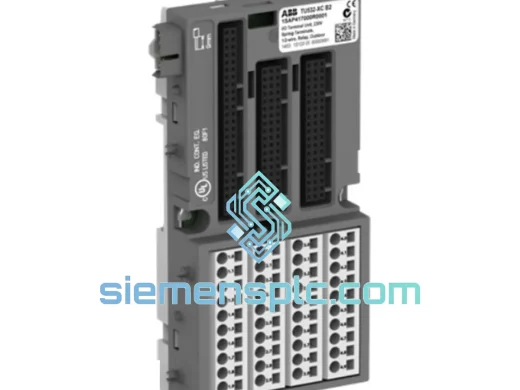
ABB TU532-XC 1SAP417000R0001 Relay Terminal Unit – AC500 XC Series
AC500
Origin SE
Relay Terminal Unit
ABB
RFQ Ready
ABB TPM810 Turbine Protection Module
Symphony Plus
Origin SE
Turbine Protection Module