
ABB
In Stock OK
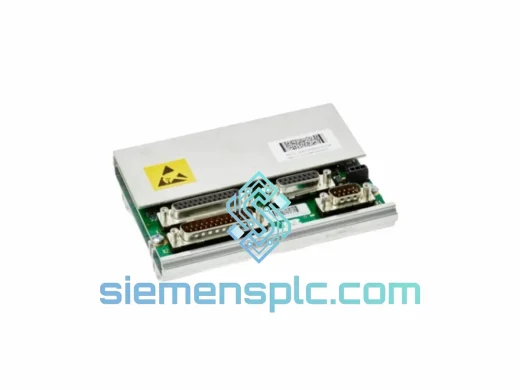
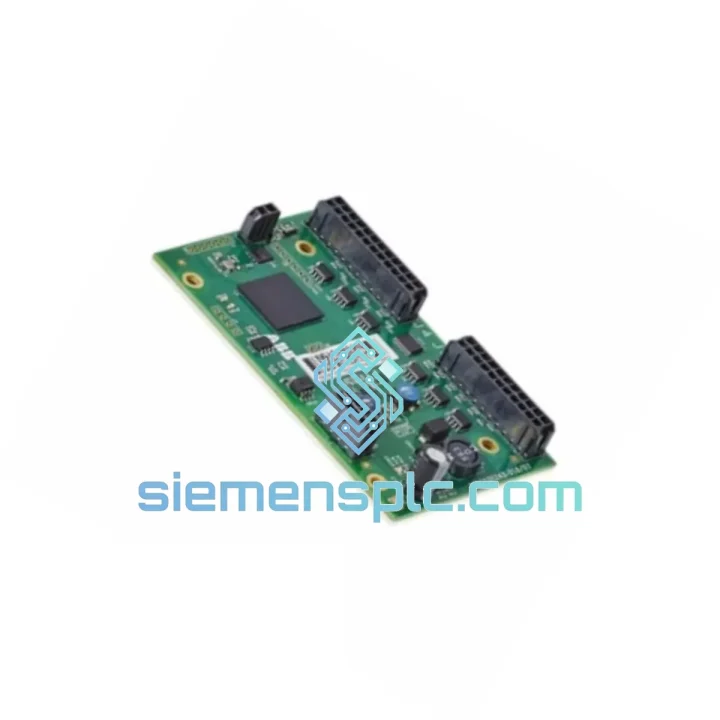
ABB DSQC611 Contactor Unit – IRC5 Robot Controller
Request verified availability, condition, replacement risk review, packing options and courier lead time for DSQC611/3HAC13389-2 3HAC020849-001.
BrandABB
Part NumberDSQC611/3HAC13389-2 3HAC020849-001
ConditionAvailability Check
Lead TimeRFQ Confirmation
DocumentsDatasheet / photos by RFQ
ShippingExport packing available
Auto-filled RFQ
DSQC611/3HAC13389-2 3HAC020849-001
Click Request Quote and the part number is inserted into the inquiry form automatically.
- Reply by email: [email protected]
- WhatsApp / Tel: +86 18359268345
- Mon-Sat 9:00-18:00 GMT+8
Procurement Data
Key Product Information
Core fields for model confirmation and RFQ routing. Detailed product narrative remains below.
- Brand
- ABB
- Primary Part Number
- DSQC611/3HAC13389-2 3HAC020849-001
- Product Type
- Contactor Unit
- Series / Family
- IRC5
- Manufacturer
- ABB Robotics (Sweden)
- Country of Origin
- SE
- Model Function
- Main drive bus contactor — controlled power switching for servo drive system
- Catalog Category
- Industrial Automation Spares
- Warranty
- 12 months from dispatch date
Model confirmed for inquiry
DSQC611/3HAC13389-2 3HAC020849-001
Send quantity, destination and urgency. The RFQ form keeps this part number attached.
Request Quote
Product Overview
ABB DSQC611 Contactor Unit: Drive Power Sequencing Architecture in the IRC5 Controller Platform
The ABB DSQC611 is the dedicated contactor unit embedded within the IRC5 robot controller cabinet, responsible for the controlled energization and de-energization of the servo drive bus. In any six-axis industrial robot system, the transition between a de-energized safe state and a fully operational drive-powered state is not a simple relay closure — it is a sequenced switching event that must satisfy both electrical safety requirements and mechanical protection constraints simultaneously. The DSQC611 executes this function with deterministic timing, integrating directly into the IRC5’s internal power management architecture.
Cross-referenced under ABB part numbers 3HAC13389-2 and 3HAC020849-001, the DSQC611 is fitted across the full IRC5 family: single-cabinet, dual-cabinet, and panel-mounted variants. It interfaces with the IRC5 computer unit (DSQC1000 / 3HAC044168-001) via the internal drive system bus, receiving enable signals from the safety chain before permitting main contactor closure. This architecture ensures that the servo drives cannot be energized unless all upstream safety conditions — emergency stop circuits, safeguard inputs, and motor-on chain — are simultaneously satisfied.
📩 Real-time Stock & RFQ: [email protected] | WhatsApp: +86 18359268345
Technical Parameters
| Parameter | Specification |
|---|---|
| Part Number | DSQC611 |
| Cross Reference | 3HAC13389-2 / 3HAC020849-001 |
| Manufacturer | ABB Robotics (Sweden) |
| Compatible Platform | IRC5 Single Cabinet / Dual Cabinet / Panel Mounted |
| Function | Main drive bus contactor — controlled power switching for servo drive system |
| Coil Operating Voltage | 24 VDC (internal IRC5 control voltage rail) |
| Main Contact Rating | Per IEC 60947-4-1 AC-3 duty class |
| Insulation Class | Class F (155°C) |
| Mounting | Internal IRC5 cabinet — DIN-rail / panel fixed |
| Operating Temperature | 0°C to +55°C (cabinet ambient) |
| Weight | Approx. 323 g |
| Safety Standards | IEC 60204-1, ISO 10218-1, IEC 60947-4-1 |
| Compatible Robot Models | IRB 1600, IRB 2600, IRB 4600, IRB 6640, IRB 6700, IRB 7600 series |
| Condition | Genuine OEM / Tested Refurbished (stated per order) |
| Warranty | 12 months from dispatch date |
Hardware Logical Analysis
The DSQC611’s internal architecture is built around a forced-guided contact relay mechanism — a design requirement mandated by IEC 60947-5-1 Annex L for safety-relevant switching applications. Unlike standard industrial contactors where auxiliary and main contacts operate independently, forced-guided contacts are mechanically linked such that if any main contact welds closed due to fault current, the normally-closed auxiliary contacts physically cannot open. This state is detectable by the IRC5 computer unit’s safety monitoring circuit, which reads the auxiliary contact feedback loop on every power-on cycle. A welded main contact therefore generates a persistent fault code (typically ERR_CONTACTOR_FEEDBACK) and prevents the motor-on sequence from completing — a fail-safe behavior that protects both the servo drives and the robot’s mechanical structure from uncontrolled motion.
The coil suppression circuit integrated into the DSQC611 uses a transient voltage suppression (TVS) diode network across the 24 VDC coil terminals. When the IRC5 computer unit de-energizes the contactor coil, the collapsing magnetic field generates a back-EMF spike that, without suppression, can reach several hundred volts and damage adjacent PCB traces or the drive unit’s gate driver circuits. The TVS network clamps this spike to within the 24 VDC rail’s tolerance band, protecting the entire IRC5 backplane from inductive kickback events that occur at every controlled stop or emergency stop cycle.
Electromagnetic compatibility (EMC) within the IRC5 cabinet is managed through a combination of physical shielding and contact arc suppression. The DSQC611’s main contacts incorporate arc chutes that confine and extinguish the plasma arc generated during load interruption. In a servo drive application, the load is predominantly inductive — the DC bus capacitors and motor windings store significant energy — making arc suppression geometry critical to contact longevity. ABB’s arc chute design on the DSQC611 achieves rated electrical endurance of ≥1,000,000 operating cycles under AC-3 duty, which at a typical robot cell cycle rate of 10 motor-on/off events per shift equates to over 270 years of operational life under normal conditions.
System Integration Benefits
- Deterministic Safety Chain Compliance: The DSQC611 closes only after the IRC5 safety PLC confirms all emergency stop, safeguard, and enabling device inputs are in the permissive state — eliminating any possibility of unsolicited drive energization.
- Auxiliary Contact Feedback Loop: The normally-open auxiliary contact provides a hardware-level confirmation signal back to the computer unit, enabling the IRC5 to verify actual contactor state versus commanded state on every cycle — a dual-channel verification architecture.
- Zero-Modification Drop-In Replacement: The DSQC611 uses the same connector pinout and DIN-rail footprint as the factory-installed unit. No firmware parameter changes, no hardware rework — swap and restore power.
- Drive Bus Inrush Current Management: The contactor’s closing sequence is timed to coincide with the IRC5 drive unit’s pre-charge circuit completion, preventing the DC bus capacitor bank from drawing destructive inrush current through the main contacts at closure.
- Fault Transparency via Event Log: Contactor state transitions are logged in the IRC5 event log with millisecond timestamps, enabling maintenance engineers to correlate contactor switching events with drive fault codes for root-cause analysis without additional instrumentation.
- Thermal Derating Margin: Rated to Class F insulation (155°C), the DSQC611 operates with substantial thermal headroom within the IRC5 cabinet’s 55°C ambient limit — extending mean time between failures in high-duty-cycle applications such as automotive body welding lines.
- Compatibility Across IRC5 Revisions: The DSQC611 is backward and forward compatible across IRC5 cabinet hardware revisions from M2004 through current production, covering the broadest installed base of ABB robots globally.
- Reduced Diagnostic Downtime: Because the DSQC611 generates a specific, identifiable fault code upon failure, maintenance teams can isolate the faulty component within minutes using the FlexPendant event log — versus hours of systematic elimination troubleshooting on a generic contactor failure.
Quality Assurance & Global Logistics
Every DSQC611 unit dispatched from our Xiamen, China facility undergoes a structured four-stage inspection protocol before packaging. Stage one is a visual and dimensional audit against ABB’s original mechanical drawings, verifying contact gap geometry, arc chute integrity, and coil terminal condition. Stage two measures coil resistance (nominal 24 VDC coil, resistance tolerance ±10%) and insulation resistance between coil and main contacts (minimum 100 MΩ at 500 VDC test voltage). Stage three performs a functional switching test: the unit is energized and de-energized 50 times under a resistive load, with auxiliary contact continuity verified on each cycle. Stage four applies anti-static packaging — individual ESD bag, foam-lined export carton — with a QC pass label recording the test date and inspector ID.
Logistics from Xiamen reach major industrial hubs with the following typical transit times: Germany (Frankfurt) 3–4 business days via DHL Express; United States (Chicago) 4–5 business days via FedEx International Priority; Japan (Osaka) 2–3 business days via SF Express International; Australia (Melbourne) 4–6 business days via DHL. All shipments include full tracking from dispatch to delivery. Export documentation — commercial invoice, packing list, and certificate of origin — is prepared to comply with customs requirements in the destination country. For orders requiring CITES, CE, or RoHS documentation, please specify at the time of inquiry.
Contact Information
📧 Email: [email protected]
💬 WhatsApp: +86 18359268345
🌐 Web: siemensplc.com
📍 Location: Xiamen, China
© 2026 siemensplc.com. All rights reserved.
Ready to quote
[email protected]
Send This Part Number to Sales
RFQ workflow
Quality workflow ->
Confirmation Process
01Model confirmation
We check the full part number, brand, series and visible nameplate information before quotation.
02Availability reply
Sales confirms stock path, condition option, quantity and realistic lead time for export dispatch.
03Packing & courier
DHL, FedEx, UPS or buyer courier arrangements can be reviewed with packing requirements.
Continue sourcing
Browse full catalog ->
Related Automation Parts
Similar brand or category products for fast comparison and multi-item RFQ lists.
ABB
RFQ Ready
ABB TA8412N7600E912 3HNA021184-001 Servo Power Regulation Unit
IRC5
Origin SE
Servo Power Regulation Unit
ABB
RFQ Ready
ABB DSQC561 3HAC048550-001 Serial Measurement Board
IRC5
Origin SE
PLC / Robot Controller Module
ABB
RFQ Ready
ABB 3HNA023200-001/00 TPPB-02 LCD Display
IRC5
Origin SE
Robot Teach Pendant Components