ABB
In Stock OK
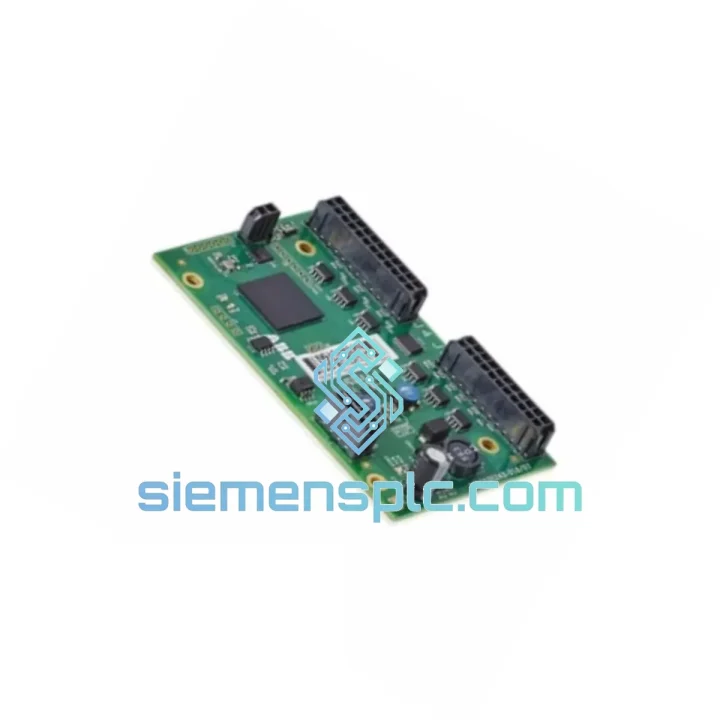
ABB DSQC643 3HAC024488-001/03 Operator Panel Board – IRC5 Series
Request verified availability, condition, replacement risk review, packing options and courier lead time for 3HAC024488-001/03.
BrandABB
Part Number3HAC024488-001/03
ConditionAvailability Check
Lead TimeRFQ Confirmation
DocumentsDatasheet / photos by RFQ
ShippingExport packing available
Auto-filled RFQ
3HAC024488-001/03
Click Request Quote and the part number is inserted into the inquiry form automatically.
- Reply by email: [email protected]
- WhatsApp / Tel: +86 18359268345
- Mon-Sat 9:00-18:00 GMT+8
Procurement Data
Key Product Information
Core fields for model confirmation and RFQ routing. Detailed product narrative remains below.
- Brand
- ABB
- Primary Part Number
- 3HAC024488-001/03
- Product Type
- Robot Controller Board
- Series / Family
- IRC5
- Manufacturer
- ABB Robotics
- Country of Origin
- SE
- Catalog Category
- HMI Panels
- Operating Temp.
- 0 °C to +55 °C (cabinet ambient)
- Humidity
- 5 % to 95 % RH, non-condensing
- Warranty
- 12 months from date of shipment
Model confirmed for inquiry
3HAC024488-001/03
Send quantity, destination and urgency. The RFQ form keeps this part number attached.
Request Quote
Product Overview
ABB DSQC643 (3HAC024488-001/03): Operator Panel Interface Board for IRC5 Robot Controller Architecture
The ABB DSQC643, catalogued under part number 3HAC024488-001 revision /03, is the dedicated operator panel interface board integrated into the ABB IRC5 robot controller cabinet platform. Within the IRC5 control architecture, this board occupies the physical and logical boundary between the main computer unit (MCU) and the front-panel operator interface — managing keyswitch state decoding, emergency stop chain monitoring, mode selector signal conditioning, and status LED drive logic. Its role is not peripheral: without a functioning DSQC643, the IRC5 cabinet cannot complete its boot sequence or accept operator commands, making this board a single-point dependency in the controller’s human-machine interface (HMI) layer.
The IRC5 platform routes operator panel signals through a dedicated backplane connector on the DSQC643, which interfaces with the main computer unit via an internal CAN bus segment. This architecture isolates panel I/O from the primary motion control bus, preventing transient noise generated by panel switch actuation from propagating into the servo drive command chain. The /03 revision of this board incorporates updated firmware-compatible logic for RobotWare 5.14 and later, with verified compatibility extending through RobotWare 6.x releases used in IRC5 M2004 and IRC5 M2016 cabinet generations.
Real-time Stock & RFQ: [email protected] | WhatsApp: +86 18359268345
Technical Parameters
| Parameter | Specification |
|---|---|
| Manufacturer | ABB Robotics |
| Part Number | DSQC643 |
| ABB Order Number | 3HAC024488-001 |
| Revision | /03 |
| Controller Platform | ABB IRC5 (M2004 / M2016) |
| Board Function | Operator Panel Interface — keyswitch, E-stop chain, mode selector, status LED |
| Internal Bus Interface | CAN bus (isolated segment, panel I/O domain) |
| Supply Voltage | 24 V DC (from IRC5 internal PSU, DSQC661 or equivalent) |
| Operating Temperature | 0 °C to +55 °C (cabinet ambient) |
| Storage Temperature | -25 °C to +70 °C |
| Humidity | 5 % to 95 % RH, non-condensing |
| Board Dimensions (approx.) | 220 mm × 130 mm |
| Weight | 560 g (approx.) |
| RobotWare Compatibility | RobotWare 5.14+, 6.x |
| Cabinet Compatibility | IRC5 Single Cabinet, IRC5 Dual Cabinet |
| Connector Type | Molex MicroFit 3.0 and D-sub panel connectors |
| Protection Class | IP20 (board-level, within sealed cabinet) |
| Warranty | 12 months from date of shipment |
| Country of Origin | Germany |
Hardware Logical Analysis
The DSQC643 implements a dual-channel emergency stop monitoring circuit that conforms to IEC 62061 SIL 2 and ISO 13849-1 PLd requirements as part of the IRC5 safety chain. Each E-stop input channel is monitored independently by dedicated optocoupler stages — the board uses 4N35-series phototransistor isolators with a minimum isolation voltage of 5,000 V RMS — before the signals are fed into a cross-monitoring logic block. This cross-monitoring compares the two channel states within a defined time window (typically ≤ 500 ms discrepancy tolerance); any asymmetric state triggers a safety fault that latches the controller into a safe-stop condition and logs a diagnostic event accessible via the FlexPendant event log.
The keyswitch decoder on the DSQC643 uses a Gray-code input matrix to read the three-position mode selector (Manual, Manual Full Speed, Automatic). Gray-code encoding eliminates the possibility of transient multi-bit errors during switch rotation — a critical design choice given that a false Automatic-mode assertion during manual operation would bypass speed-limiting logic in the motion controller. The decoded mode state is transmitted over the internal CAN segment to the main computer unit, where it gates the velocity envelope applied to all six robot axes.
EMC hardening on the DSQC643 is achieved through a combination of board-level filtering and layout discipline. Ferrite bead arrays are placed on all panel cable entry points, suppressing common-mode noise in the 1 MHz–1 GHz range. The board’s ground plane is split between the panel-side (noisy) domain and the CAN-bus-side (clean) domain, with a single-point star ground connection at the board’s mounting bracket — a topology that prevents ground loop currents from coupling panel switching transients into the CAN bus differential pair. This design allows the IRC5 to maintain deterministic CAN bus timing even during rapid, repeated E-stop actuation sequences.
The status LED driver circuit uses constant-current sink topology rather than simple resistor-limited drive, ensuring consistent LED luminosity across the 18 V–30 V supply range that the IRC5 PSU may present under load variation. This prevents the visual ambiguity that resistor-limited designs exhibit when supply voltage sags during heavy servo load cycles.
System Integration Benefits
- Deterministic safety chain latency: The dual-channel E-stop monitoring logic resolves and transmits a safety fault state to the MCU within one CAN bus cycle (1 ms at 1 Mbit/s), ensuring the motion controller receives the stop command within the IRC5’s defined safe-stop response window.
- Mode-change integrity: Gray-code keyswitch decoding eliminates transient multi-bit errors during mode selector rotation, preventing spurious Automatic-mode assertions that could bypass manual-speed limiting.
- Panel noise isolation: CAN bus domain separation via split ground plane and ferrite filtering prevents operator panel switching transients from degrading motion command timing on the servo drive bus.
- Diagnostic transparency: All panel-level fault events — E-stop channel asymmetry, keyswitch decode errors, LED driver faults — are logged as discrete event codes in the IRC5 event log, accessible via FlexPendant without requiring external diagnostic tools.
- Firmware forward-compatibility: The /03 revision hardware is validated against RobotWare 5.14 through 6.x, covering the full operational lifespan of IRC5 M2004 and M2016 cabinets without requiring board replacement on software upgrades.
- Supply voltage tolerance: Constant-current LED drive and wide-range optocoupler input stages maintain correct operation across the 18 V–30 V DC supply envelope, accommodating PSU aging and load-induced voltage variation without false fault states.
- Reduced integration risk: Direct OEM form-factor and connector compatibility eliminates the need for wiring adaptation or firmware reconfiguration during board replacement, reducing mean time to repair (MTTR) in production environments.
- Safety standard compliance: The dual-channel E-stop architecture supports IEC 62061 SIL 2 and ISO 13849-1 PLd classification at the system level, preserving the IRC5 cabinet’s certified safety rating without requiring re-validation after board replacement with an identical revision.
Quality Assurance & Global Logistics
Every DSQC643 unit supplied by siemensplc.com is sourced as genuine ABB Robotics original hardware — not third-party clone or reverse-engineered equivalent. Boards are procured through verified supply channels with full traceability: each unit carries its original ABB serial number, revision marking, and batch code, allowing cross-reference against ABB’s production records. Prior to dispatch, each board undergoes a functional verification procedure covering E-stop channel continuity, keyswitch decoder output states, CAN bus termination resistance, and LED driver current output — results are documented and available on request.
Packaging follows ESD-safe protocols: boards are sealed in anti-static poly bags with humidity indicator cards, placed in foam-lined rigid cartons rated for international air freight handling. From our warehouse in Xiamen, China, we dispatch via DHL Express, FedEx International Priority, and UPS Worldwide Expedited — typical transit times are 3–5 business days to Europe, 4–6 business days to North America, and 2–4 business days to Southeast Asia. Export documentation including commercial invoice, packing list, and certificate of origin is prepared for all international shipments. HS code 8537.10 applies for customs classification. A 12-month warranty covers all units against manufacturing defects and functional failure under normal operating conditions.
Contact Information
Email: [email protected]
WhatsApp: +86 18359268345
Web: siemensplc.com
Location: Xiamen, China
© 2026 siemensplc.com. All rights reserved.
Ready to quote
[email protected]
Send This Part Number to Sales
RFQ workflow
Quality workflow ->
Confirmation Process
01Model confirmation
We check the full part number, brand, series and visible nameplate information before quotation.
02Availability reply
Sales confirms stock path, condition option, quantity and realistic lead time for export dispatch.
03Packing & courier
DHL, FedEx, UPS or buyer courier arrangements can be reviewed with packing requirements.
Continue sourcing
Browse full catalog ->
Related Automation Parts
Similar brand or category products for fast comparison and multi-item RFQ lists.
ABB
RFQ Ready
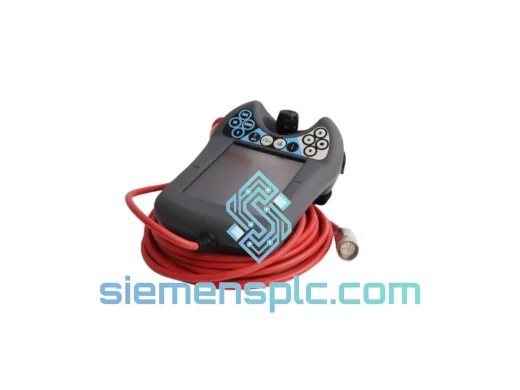
ABB DSQC679 3HAC028357-027 Robot Teach Pendant Display Module – IRC5 FlexPendant
IRC5
Origin SE
Robot Teach Pendant Display Module