
ABB
In Stock OK
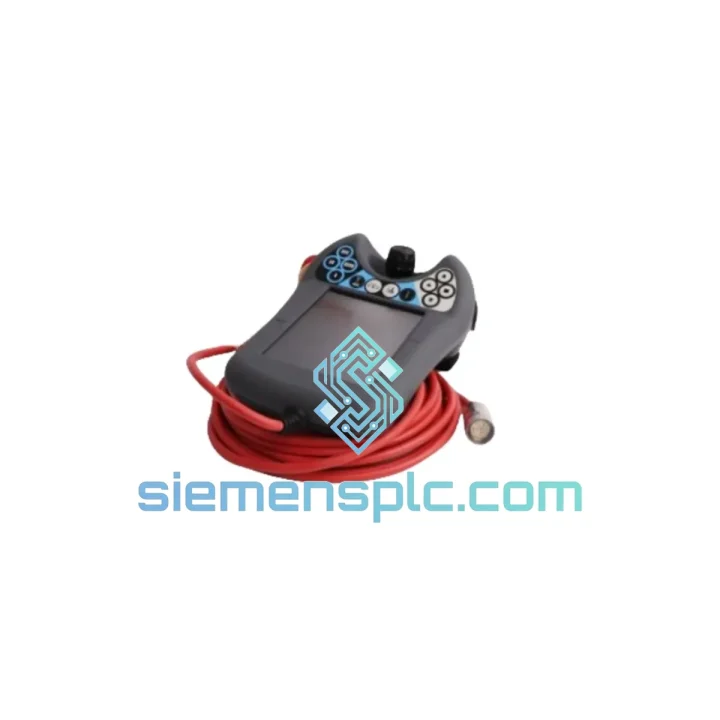
ABB DSQC679 Teach Pendant – IRC5 FlexPendant
Request verified availability, condition, replacement risk review, packing options and courier lead time for DSQC679.
BrandABB
Part NumberDSQC679
ConditionAvailability Check
Lead TimeRFQ Confirmation
DocumentsDatasheet / photos by RFQ
ShippingExport packing available
Auto-filled RFQ
DSQC679
Click Request Quote and the part number is inserted into the inquiry form automatically.
- Reply by email: [email protected]
- WhatsApp / Tel: +86 18359268345
- Mon-Sat 9:00-18:00 GMT+8
Procurement Data
Key Product Information
Core fields for model confirmation and RFQ routing. Detailed product narrative remains below.
- Brand
- ABB
- Primary Part Number
- DSQC679
- Product Type
- Teach Pendant
- Series / Family
- IRC5
- Manufacturer
- ABB Robotics (Sweden)
- Country of Origin
- SE
- Catalog Category
- HMI Panels
- Operating Temp.
- 0 °C to +45 °C
- Warranty
- 12 months from dispatch date (siemensplc.com)
Model confirmed for inquiry
DSQC679
Send quantity, destination and urgency. The RFQ form keeps this part number attached.
Request Quote
Product Overview
ABB DSQC679 FlexPendant: Operator Interface Architecture for IRC5 Motion Control Systems
The ABB DSQC679 is the dedicated handheld operator terminal engineered for the IRC5 robot controller platform. Within the IRC5 control architecture, the FlexPendant functions as the primary human-machine interface node, handling real-time RAPID program execution commands, axis jogging, I/O state monitoring, and system event logging. Unlike generic HMI panels, the DSQC679 communicates with the IRC5 main computer (DSQC1000 or DSQC562) via a dedicated Ethernet link embedded in the cable assembly, maintaining deterministic data exchange at the application layer without competing for the fieldbus bandwidth used by peripheral I/O modules.
The pendant’s processor runs ABB’s RobotWare operating environment, which manages the graphical interface, touch input processing, and safety-critical signal routing simultaneously. The three-position enabling device circuit is hardwired independently of the software stack, ensuring that enabling device state changes propagate directly to the safety controller regardless of application-layer software status. This hardware-level separation is a fundamental requirement under ISO 10218-1 for robot operator control devices.
At siemensplc.com, we maintain verified stock of the ABB DSQC679 sourced through traceable supply channels. Each unit is inspected prior to dispatch from our Xiamen, China facility, with export documentation prepared for international customs clearance. Our technical team provides pre-sales consultation on firmware compatibility, IRC5 controller variant matching, and integration with existing robot cell configurations.
Real-time Stock & RFQ: [email protected] | WhatsApp: +86 18359268345
Technical Parameters
| Part Number | DSQC679 |
| Manufacturer | ABB Robotics (Sweden) |
| Compatible Platform | IRC5 Single Cabinet, Dual Cabinet, Compact, Panel Mounted |
| Display Type | Color TFT touchscreen, graphical RobotWare UI |
| Communication Interface | Dedicated Ethernet over integrated cable to IRC5 main computer |
| Enabling Device | 3-position hardware enabling device (ISO 10218-1 compliant) |
| Emergency Stop | Integrated E-stop button, hardwired to IRC5 safety circuit |
| Cable Length | Approx. 10 m (standard); extension cables available separately |
| Unit Weight | Approx. 323 g |
| Operating Temperature | 0 °C to +45 °C |
| Storage Temperature | -25 °C to +55 °C |
| Ingress Protection | IP54 (dust and splash resistant) |
| Power Supply | Supplied via IRC5 controller cable (no external power required) |
| Software Environment | ABB RobotWare (version compatibility depends on IRC5 main computer firmware) |
| Applicable Standards | ISO 10218-1, IEC 61800, CE (as part of IRC5 system), RoHS 2011/65/EU |
| Warranty | 12 months from dispatch date (siemensplc.com) |
Hardware Logical Analysis
The DSQC679’s internal architecture separates three functional domains: the user interface processing layer, the communication stack, and the safety signal path. This separation is not merely a software partition — it reflects distinct hardware circuits that operate independently under fault conditions.
Safety Signal Independence: The enabling device and E-stop button are connected through a dedicated safety relay circuit that bypasses the pendant’s main processor. When the enabling device is released or the E-stop is activated, the signal reaches the IRC5 safety controller (DSQC400 or equivalent) through a hardwired path. This means a software hang or touchscreen failure on the pendant does not compromise the ability to halt robot motion — a critical design requirement for Category 3 / PLd safety architectures per EN ISO 13849-1.
EMC Design Considerations: The DSQC679 cable assembly incorporates shielding to suppress conducted and radiated interference from the robot arm’s servo drives and motor cables. In high-EMI environments such as resistance welding cells or plasma cutting stations, the shielded Ethernet-over-cable design maintains signal integrity without requiring additional filtering at the controller end. The pendant housing is constructed from impact-resistant polymer with internal grounding provisions to dissipate electrostatic discharge.
Touchscreen Input Processing: The resistive touchscreen controller operates independently of the RobotWare application layer. Input events are queued and processed by the pendant’s embedded OS before being passed to the RobotWare UI framework. This architecture prevents a UI rendering delay from blocking safety-relevant input events such as E-stop acknowledgment or enabling device state changes.
Firmware and RobotWare Compatibility: The DSQC679 loads its operating firmware from the IRC5 main computer at connection time. This means the pendant itself does not carry a fixed firmware version — it adapts to the RobotWare version installed on the controller. This design simplifies spare parts management: a single DSQC679 unit can serve as a replacement across multiple IRC5 controllers running different RobotWare versions without manual firmware flashing.
System Integration Benefits
- Direct RAPID Program Control: Operators can start, stop, step through, and debug RAPID programs directly from the pendant without requiring a PC connection, reducing commissioning time on the production floor.
- Real-Time I/O Monitoring: The FlexPendant provides live visibility into digital and analog I/O states mapped to the IRC5 I/O system, enabling rapid fault isolation without external diagnostic tools.
- Axis Jogging with Configurable Increments: Manual jogging supports world, tool, workobject, and joint coordinate modes with selectable increment sizes, allowing precise positioning during program verification and fixture setup.
- Event Log Access: The pendant displays the IRC5 system event log in real time, including error codes, warning messages, and operational events, supporting faster root-cause analysis during unplanned stops.
- Multi-Robot Support: In MultiMove configurations, the DSQC679 can switch operator context between coordinated robot units within the same IRC5 system, eliminating the need for multiple pendants in multi-arm cells.
- Operator-Level Safety Enforcement: User authorization levels configured in RobotWare are enforced at the pendant UI layer, preventing unauthorized program modification or parameter changes by production operators.
- Plug-and-Play Replacement: The DSQC679 connects to the IRC5 controller via a single cable with a keyed connector. No controller reconfiguration or software update is required when replacing a faulty pendant with a unit of the same part number.
- Ergonomic Design for Extended Use: The pendant’s grip geometry and button layout are designed for single-hand operation, reducing operator fatigue during extended programming or maintenance sessions in confined robot cells.
Quality Assurance & Global Logistics
Every ABB DSQC679 unit dispatched from siemensplc.com originates from verified supply channels with documented traceability. Our inspection process covers physical condition assessment of the housing, cable, connectors, and touchscreen surface; continuity verification of the E-stop and enabling device circuits; and power-on functional check where test equipment permits. Units that do not pass inspection are quarantined and not offered for sale.
Our Xiamen, China logistics hub provides access to major international express carriers including DHL Express, FedEx International Priority, and UPS Worldwide. Standard in-stock orders are processed within 1–2 business days. Export documentation — commercial invoice, packing list, and certificate of origin — is prepared for each shipment to support customs clearance in the destination country. For bulk procurement or project-based orders, sea freight consolidation is available with full export compliance documentation.
All units are dispatched with anti-static packaging and physical protection appropriate for precision electronic components. The 12-month warranty covers verified manufacturing defects and functional failures under normal operating conditions. Warranty claims are processed through our Xiamen office with direct technical support from our engineering team.
Contact Information
Email: [email protected]
WhatsApp: +86 18359268345
Web: siemensplc.com
Location: Xiamen, China
© 2026 siemensplc.com. All rights reserved.
Ready to quote
[email protected]
Send This Part Number to Sales
RFQ workflow
Quality workflow ->
Confirmation Process
01Model confirmation
We check the full part number, brand, series and visible nameplate information before quotation.
02Availability reply
Sales confirms stock path, condition option, quantity and realistic lead time for export dispatch.
03Packing & courier
DHL, FedEx, UPS or buyer courier arrangements can be reviewed with packing requirements.
Continue sourcing
Browse full catalog ->
Related Automation Parts
Similar brand or category products for fast comparison and multi-item RFQ lists.
ABB
RFQ Ready
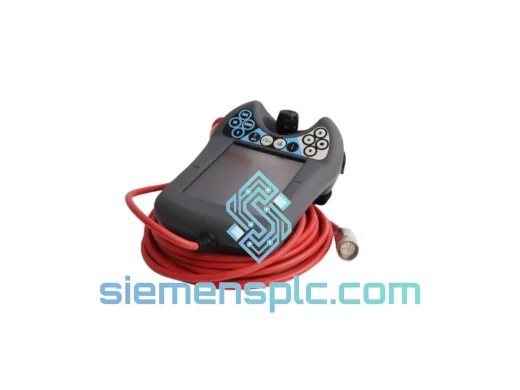
ABB DSQC679 3HAC028357-027 Robot Teach Pendant Display Module – IRC5 FlexPendant
IRC5
Origin SE
Robot Teach Pendant Display Module
ABB
RFQ Ready
ABB DSQC643 3HAC024488-001/03 Operator Panel Board – IRC5 Series
IRC5
Origin SE
Robot Controller Board